A visa refusal in Australia can feel like a dead end, but it’s not. You have legal rights and practical options available to challenge the decision.
At Jameson Law, we’ve helped many people navigate visa refusal Australia situations and understand their next steps. The key is acting quickly and knowing exactly what remedies are available to you.
Why Visas Get Refused and What That Means
Visa refusals happen for concrete, preventable reasons. The Department of Home Affairs refuses thousands of applications each year, and the majority stem from avoidable mistakes rather than circumstances beyond your control. Incomplete or inaccurate documentation tops the list across student, visitor, and skilled visas. Missing bank statements, unverified translations, or outdated identity documents trigger automatic refusals before anyone even assesses your actual eligibility. Financial insufficiency ranks second. The Department needs current bank statements showing you can support yourself, and if you’re relying on a sponsor, you must demonstrate they meet income thresholds.
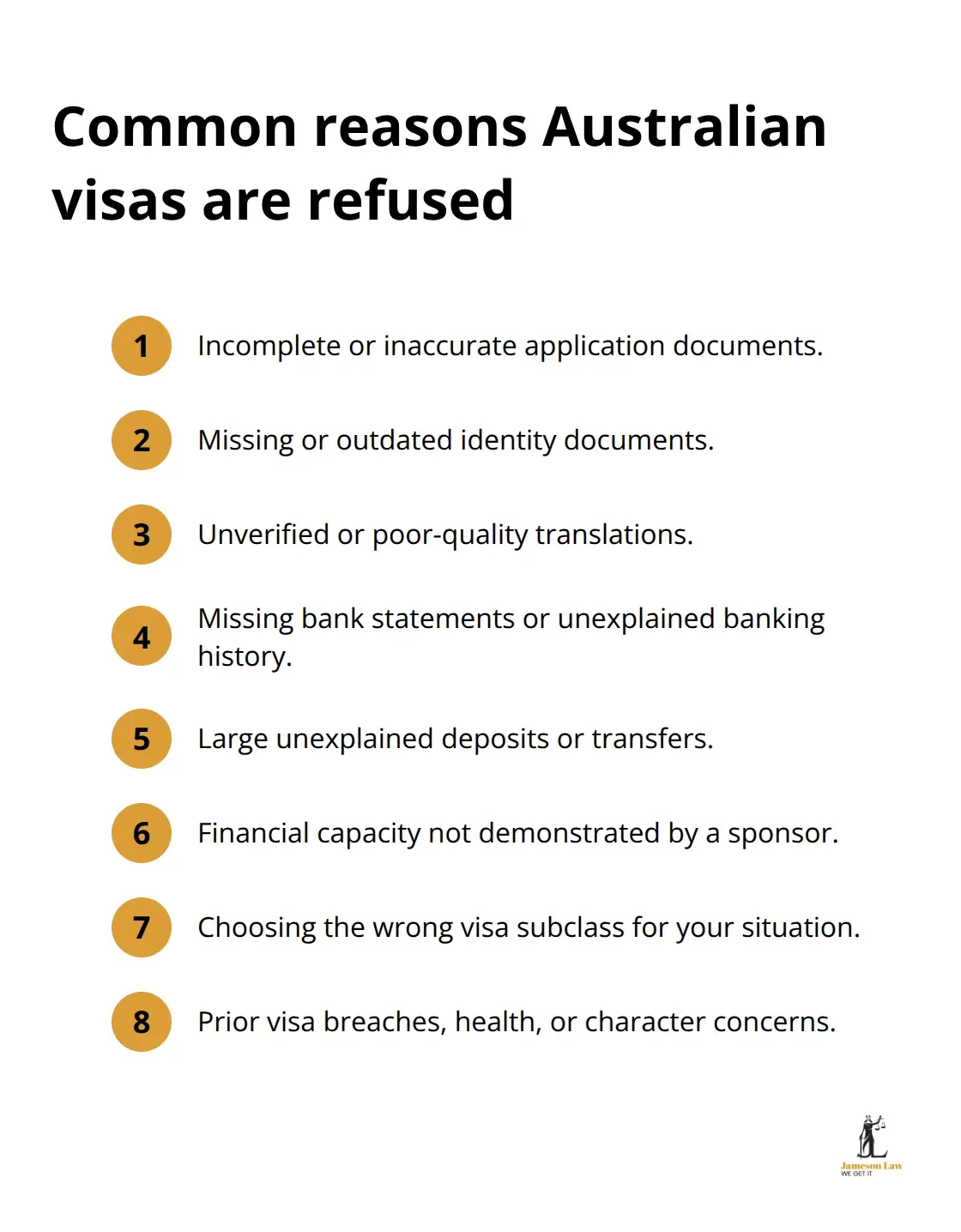
Large deposits or transfers without explanation raise red flags.
For student visas, the Genuine Temporary Entrant requirement is non-negotiable. The Department wants a personalised statement showing clear study motivation, realistic career progression, and genuine ties to your home country. Generic statements copied from templates fail this test. Prior visa breaches create immediate problems. Overstays, condition breaches, or failure to declare past refusals can trigger section 48 bars that complicate your entire migration future. Health and character issues sink applications too. Missing health checks with approved panel doctors or incomplete police clearance certificates for every country you’ve lived in lead to refusals. Weak ties to your home country signal presumed overstay risk. The Department examines your employment status, ongoing study, property ownership, and return travel plans. Applying without meeting visa criteria wastes time and money. Skilled visa applicants often fall short on points, family visa applicants lack genuine relationships, or applicants choose the wrong visa subclass entirely.
Understanding Your Refusal Letter
Your refusal decision is a legal document with specific structure and meaning. At the top, verify your personal details match your case. Identify the exact decision date, because this triggers strict time limits for any review rights and bridging visa expiry. These are separate deadlines and critical to understand. The letter specifies the legal grounds for refusal using Migration Act 1958 references. Common grounds include failure to meet visa eligibility criteria, Schedule 3 issues onshore applications, failure to meet Public Interest Criteria, and health or character requirements.
The letter explicitly states whether you have a right to seek review, which tribunal handles it, and your deadline. If review rights exist, follow the exact deadline stated. If they don’t exist, this is clearly stated. The what happens next section outlines consequences if you don’t apply for review or if review fails, including bridging visa cessation and time to depart. Ignoring the letter won’t resolve the situation. You must seek professional migration advice immediately to interpret the reasons accurately and map your options. A qualified migration agent or lawyer can assess whether merits review is viable, whether a fresh application with stronger evidence makes sense, or whether an alternative visa pathway exists.
Acting Within Strict Timeframes
Time limits for applying for review are rigid and cannot be extended in most circumstances. If you are in immigration detention, you have 14 days to lodge an appeal with the Administrative Review Tribunal. If you are not detained, you have 28 days. These deadlines are absolute. Missing them removes your review rights permanently. The ART replaced the AAT and IAA on 14 October 2024, so all new review applications go directly to the ART.
You must lodge applications online where possible, which provides automatic confirmation and allows you to upload documents at any time. Offline forms exist only if you cannot apply online. Fees vary by decision type. Protection visa appeals have no upfront application fee but require payment of $2,151 if unsuccessful. General visa appeals cost $3,496 standard application fee, though a 50% concession may apply if payment causes severe financial hardship. Character-related appeals cost $1,121 standard or $100 in concessional circumstances. If you win your appeal, 50% of the fee is refunded for general visas.
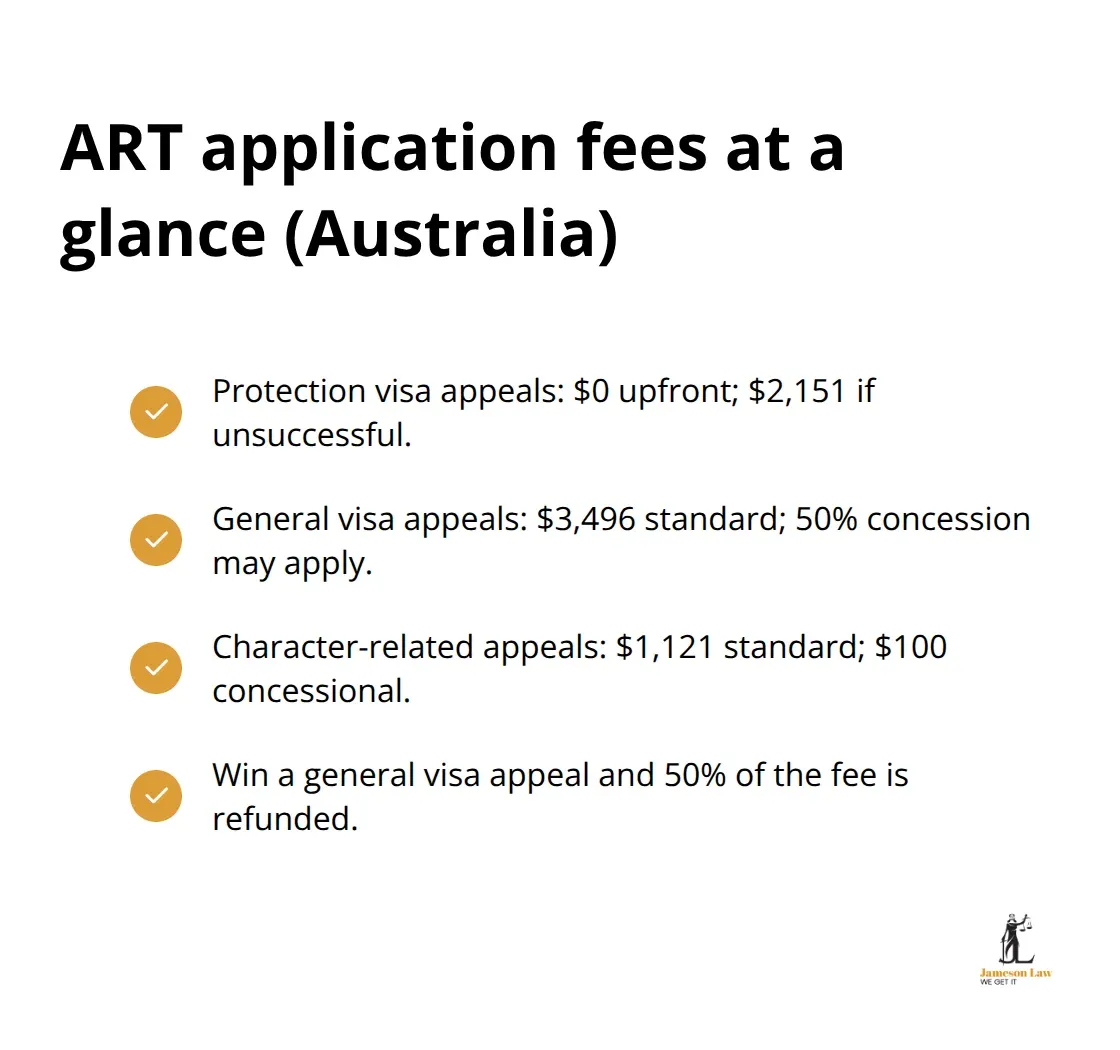
Understanding costs early helps you plan financially and decide whether to proceed.
Preparing Your Evidence
You must start collecting documents immediately after you receive your refusal letter. Collect everything relating to your original visa application and the refusal decision itself. Organise these chronologically so your representative can identify what strengthens your case and what requires explanation. This preparation phase determines whether your review application succeeds or fails, making it the most important step you take after receiving your refusal. Your representative will use this material to build submissions that address the Department’s specific concerns and demonstrate why the original decision was wrong.
What Review Rights Do You Actually Have
After a visa refusal, your legal remedies depend entirely on the decision type and the specific grounds cited in your refusal letter. Not every refusal can be reviewed, and understanding which tribunal has jurisdiction over your case is fundamental to protecting your rights. The Administrative Review Tribunal now handles all migration and protection visa appeals following its establishment on 14 October 2024, replacing the former AAT and IAA. The ART can review decisions about protection visas, general visa applications (including visitor, student, partner, family, business and skilled visas), and decisions not to revoke cancellations on character grounds. However, certain mandatory cancellations for serious offences such as 12 months imprisonment or sexual offences involving a child cannot be reviewed by the ART at all, though you can seek revocation within 28 days of notification. Your refusal letter explicitly states whether review rights exist, which tribunal handles your case, and your non-extendable deadline. If the letter says no review rights apply, appealing is impossible, and you must explore alternative pathways such as reapplication with stronger evidence or switching to a different visa subclass.
The Merits Review Process
A merits review means the ART reassesses your entire case on its merits rather than examining only whether the Department followed proper procedure. This is your strongest option because the Tribunal can reach a completely different conclusion from the Department’s decision. For protection visa appeals, you pay no upfront application fee, but if unsuccessful you must pay $2,151 as a cost of review. For general visa appeals, the standard application fee is $1,148, though a concession may apply if payment causes severe financial hardship. Character-related appeals cost $1,121 standard or $100 in concessional circumstances. Importantly, if you win your appeal, 50% of your general visa fee is refunded, and if the Tribunal finds your appeal invalid, you receive a full refund. This fee structure means you should calculate costs before proceeding and understand your financial obligations upfront.
The Tribunal will examine whether you genuinely meet the visa criteria, whether the Department properly considered your evidence, and whether procedural fairness applied throughout. You must lodge your application online where possible within 14 days if detained or 28 days if not detained, providing your full name, address, contact details, decision date, and a description of the decision plus personal identifiers such as date of birth, country of birth, citizenship or passport number.
Representation and Professional Assistance
You can represent yourself at the ART, but this approach carries substantial risk given the technical legal requirements and the Tribunal’s strict procedural standards. A registered migration agent or Australian lawyer can communicate with the Tribunal, submit written evidence and submissions, request access to documents, and attend hearings with you. They can also request expedited decisions in certain circumstances such as when you were in immigration detention at decision time, when you are reviewing a visa cancellation, or when newly met criteria or exceptional circumstances warrant acceleration. Expedited decisions for character cases typically reach completion within 84 days of Department notification if you were in Australia when the decision was made.
Your representative must be formally appointed using the MR5 form and updated using the MR6 form if changes occur. Professional representation is not optional for most people in practice, because the ART expects detailed written submissions addressing the Department’s specific reasons for refusal and explaining why the original decision was legally or factually wrong. If you cannot afford private representation, Victoria Legal Aid provides free or subsidised legal help for protection visa appeals through contact at PVAssistance@vla.vic.gov.au or 1300 792 387, including access to online Legal Help chat and interpreter services in multiple languages. The ART itself provides interpreters and disability assistance free of charge, so accessibility should not prevent you from pursuing your review rights.
Moving Forward with Your Application
The decision to pursue a merits review requires careful consideration of costs, timelines, and your prospects of success. Your representative will assess whether the Department made factual errors, misapplied the law, or failed to properly consider your evidence. They will identify weaknesses in the original decision and build submissions that address these points directly. The strength of your case depends on the specific grounds for refusal and the additional evidence you can now provide. Some refusals stem from incomplete documentation that you can now complete. Others result from the Department’s misunderstanding of your circumstances, which your representative can clarify through detailed submissions. Still others reflect genuine gaps in your eligibility that no amount of additional evidence will overcome. Your representative will give you honest advice about your prospects before you commit financially to the review process.
What to Do Right Now
The 14 or 28-day window after your refusal letter arrives determines whether your case succeeds or fails. If you are in immigration detention, you have 14 days to lodge your appeal with the Administrative Review Tribunal. If you are not detained, you have 28 days. These deadlines cannot be extended, and missing them destroys your review rights permanently.
Lodge Your Application Immediately
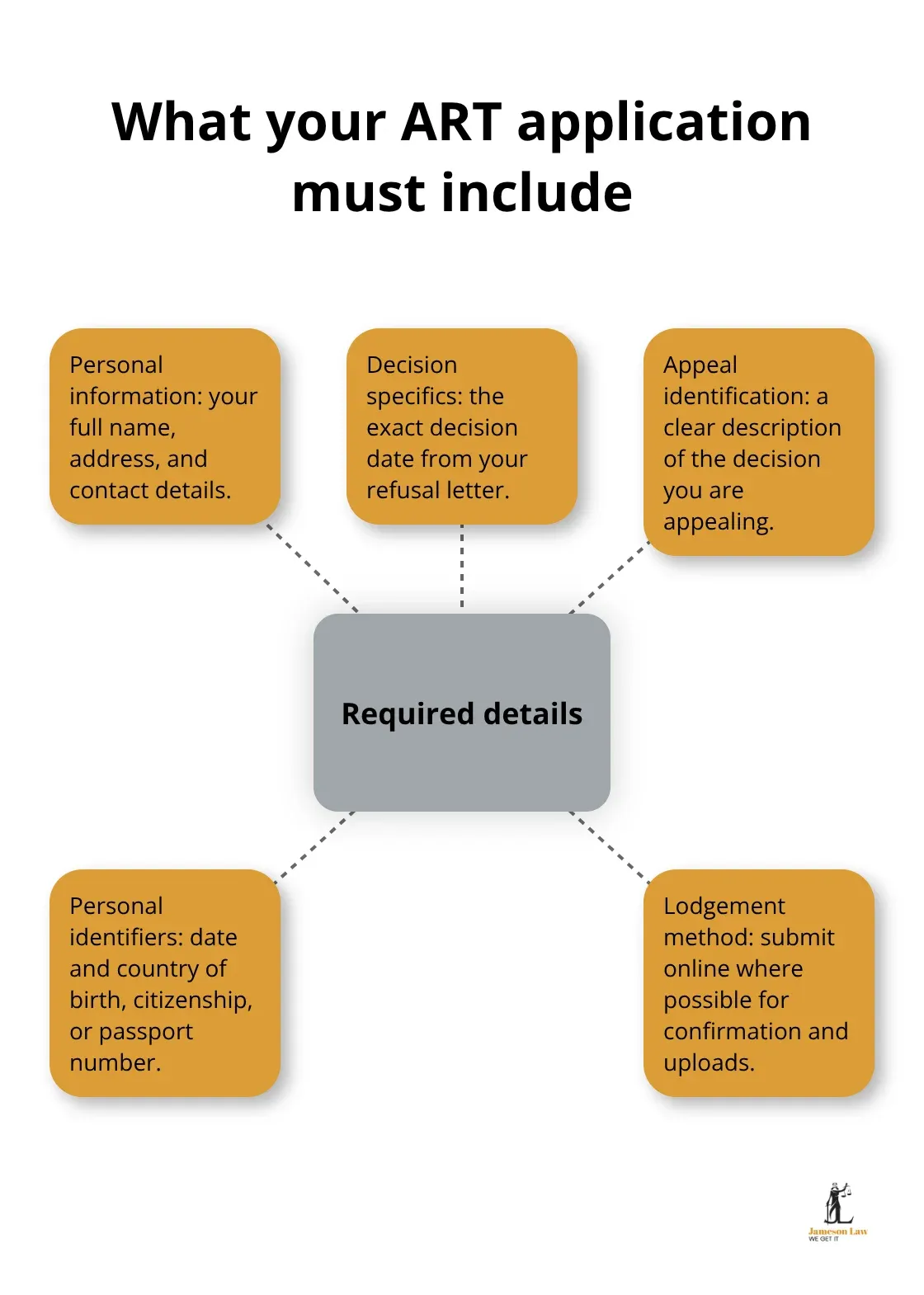
You must lodge your application online through the ART system, which provides automatic confirmation and allows you to upload documents whenever you gather them. Offline forms exist only if you genuinely cannot access the online portal. Your application must include your full name, address, contact details, the exact decision date from your refusal letter, and a clear description of which decision you are appealing. Add personal identifiers such as your date of birth, country of birth, citizenship, or passport number.
Understand your financial obligations before you submit. For protection visa appeals, you pay nothing upfront, but unsuccessful reviews cost $2,151. General visa appeals cost $3,496 standard application fee, though 50% concessions apply if payment causes severe financial hardship. Character-related appeals cost $1,121 standard or $100 in concessional circumstances. If you win, 50% of your fee gets refunded for general visas, and invalid appeals trigger full refunds. Calculate your financial exposure upfront because these costs are real obligations you must plan for.
Collect and Organise Your Evidence
Start gathering every document from your original application and your refusal decision simultaneously with lodging. Organise materials chronologically so your representative identifies exactly what weakens your case and what requires explanation. This evidence phase determines whether your review succeeds, making it the single most important step you take after receiving your refusal letter. Your representative will build detailed written submissions addressing the Department’s specific reasons for refusal and explaining precisely why the original decision was legally or factually wrong.
The ART expects technical precision in these submissions, not general arguments about fairness. You cannot represent yourself effectively at this level without substantial legal knowledge. Hiring a registered migration agent or Australian lawyer is not optional in practice because the Tribunal’s procedural standards demand expertise.
Work with a Legal Representative
Your representative communicates with the ART, submits written evidence and detailed submissions, requests access to Department documents, and attends hearings with you. They also request expedited decisions when you were in immigration detention at decision time, when you are reviewing a visa cancellation, or when exceptional circumstances warrant acceleration. Expedited character case decisions typically complete within 84 days of Department notification if you were in Australia when the decision was made.
For protection visa appeals, Victoria Legal Aid provides free or subsidised legal help through PVAssistance@vla.vic.gov.au or 1300 792 387, with online Legal Help chat and interpreter services available. The ART itself provides interpreters and disability assistance free of charge, removing accessibility barriers to pursuing your rights. If you need language or accessibility support, the ART can arrange interpreters and assistance for people who require it, with services provided in multiple languages.
Final Thoughts
A visa refusal in Australia does not end your migration prospects. You hold concrete legal rights, strict timeframes to exercise them, and practical pathways forward through the Administrative Review Tribunal. The ART reassesses your entire case and can reach a completely different conclusion from the Department’s original decision, with protection visa appeals carrying no upfront fee and general visa appeals costing $3,496 standard application fee (though concessions apply if payment causes severe financial hardship).
Time demands immediate action because you have 14 days if detained or 28 days if not detained to lodge your appeal, and these deadlines cannot extend. Lodge your application online immediately, gather your evidence simultaneously, and engage a registered migration agent or Australian lawyer to build your case, as the ART expects technical precision in written submissions addressing the Department’s specific reasons for refusal. Victoria Legal Aid provides free or subsidised legal help for protection visa appeals through PVAssistance@vla.vic.gov.au or 1300 792 387, and the ART itself provides interpreters and disability assistance free of charge.
We at Jameson Law understand that visa refusal Australia situations create genuine stress and uncertainty. Our immigration law team can assess your specific circumstances, explain your review rights honestly, and guide you through the ART process before your deadline passes. Contact Jameson Law today to discuss your options and protect your migration future.