If you’ve suffered a personal injury, understanding how your compensation payout is calculated can feel overwhelming. The amount you receive depends on several specific factors that NSW courts assess carefully.
At Jameson Law, we’ve helped countless clients navigate personal injury settlements and secure fair payouts. This guide breaks down exactly what influences your compensation amount.
What Determines Your Compensation Amount
The compensation you receive depends on three measurable factors that NSW courts assess systematically. The severity of your injuries forms the foundation of your payout, but medical evidence is what actually proves that severity to insurers and courts.
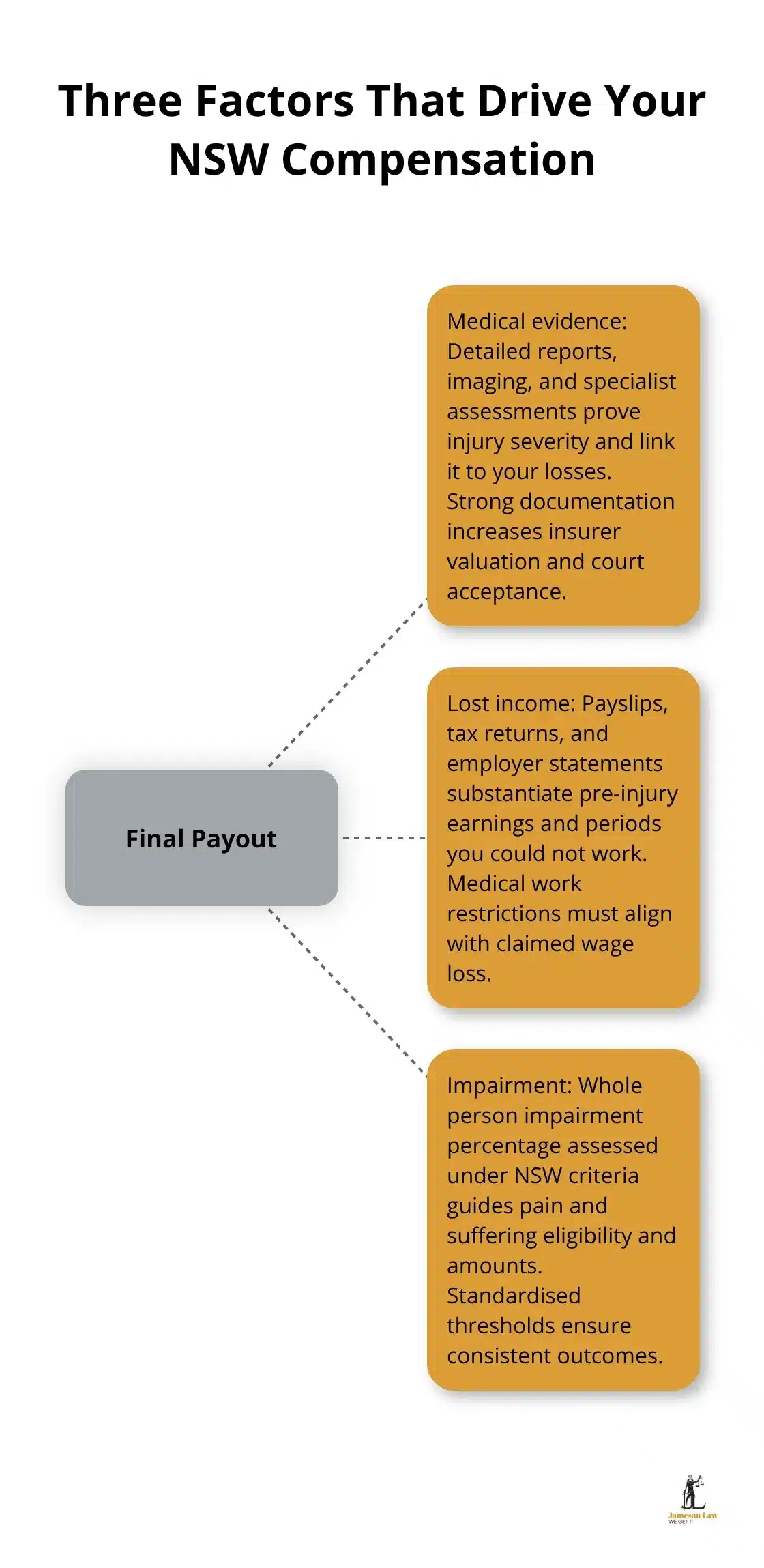
Without comprehensive medical documentation, insurers will undervalue your claim significantly. Obtaining detailed reports from treating doctors, specialists, and allied health professionals is not optional-it directly impacts your final amount. A claim with thorough imaging, specialist assessments, and treatment records will be valued far higher than one with minimal medical support.
Medical Evidence Shapes Your Claim’s Foundation
The strength of your medical evidence determines how insurers initially assess your claim. Insurers rely on medical reports to establish baseline injury severity, and they will dispute any injury not clearly documented in medical records. Photographs of visible injuries, emergency department reports, imaging results, and specialist opinions all strengthen your position. If you delay treatment or skip appointments, insurers interpret gaps as evidence your injuries are less serious than claimed. Acting immediately after an injury matters because the medical timeline becomes part of the claim narrative. Your lost income calculation depends directly on medical evidence showing you were unable to work, so documentation of medical restrictions and treatment appointments is essential.
Lost Income Requires Documented Earnings and Work Restrictions
Your compensation for lost wages must be supported by payslips, tax returns, and employer statements confirming both your pre-injury earnings and your inability to work. Self-employed individuals face particular challenges here and should maintain detailed financial records showing consistent income patterns. If your injury prevents return to your previous role, you may claim the difference between your former earnings and reduced capacity work-but this requires medical evidence of work restrictions and evidence of actual wage loss from reduced hours or lower-paying work.
Pain and Suffering Payouts Follow Impairment Thresholds
Pain and suffering payouts in NSW follow the whole person impairment framework, not subjective claims about your suffering. Motor accident claims require a minimum 10% whole person impairment to qualify for any pain and suffering payout at all. Your impairment percentage comes from medical assessment using standardised criteria, which is why the quality of your medical evidence directly controls this component of your payout. These figures are not negotiable-legislation sets them and applies them uniformly across NSW claims. This systematic approach ensures that two claimants with similar injuries and similar documentation will receive similar payouts, regardless of which insurer or court handles their claim.
How Courts Apply These Factors to Your Claim
NSW courts assess each of these three factors systematically when determining your final payout amount. The court examines your medical evidence first, then calculates your lost income based on documented earnings and work capacity restrictions, and finally applies the impairment scale to determine pain and suffering compensation. Courts do not award compensation based on how much you believe you deserve or how much your injury has affected you emotionally. Instead, they apply objective criteria drawn from legislation and established case precedent. Understanding how courts apply these factors helps you prepare your evidence strategically and identify gaps before you submit your claim.
How NSW Courts Assess Your Injury Claim
Medical Reports and Expert Evidence Form Your Claim’s Foundation
Medical reports and expert evidence form the foundation of how NSW courts evaluate your injury claim. Courts treat these documents as the primary evidence of your injury’s severity and impact. A court will rarely accept an injury as proven unless a treating doctor or specialist has documented it in writing. The quality and detail of your medical reports directly determines whether a court accepts your claim or dismisses it as unsubstantiated.
Courts specifically examine whether your medical evidence supports the restrictions and losses you claim. If you claim you cannot work but your medical reports show no work restrictions, the court will reject your lost income claim entirely. Specialist reports carry more weight than general practitioner assessments because specialists have specific training in assessing permanent impairment using the standardised criteria NSW courts apply.
The Furzer Crestani Assessment Handbook Guides Impairment Evaluation
The Furzer Crestani Assessment Handbook provides the framework courts use to evaluate impairment. If your medical evidence aligns with this handbook’s assessment methods, courts will accept your impairment percentage more readily. Courts also scrutinise the timeliness of your medical treatment because gaps in treatment are interpreted as evidence your injuries are less serious than claimed. Delays between injury and first medical assessment can reduce your payout significantly.
Precedent and Comparable Cases Shape Court Decisions
NSW courts assessment of injury claims by case precedent shapes how your claim is evaluated. Courts look at how similar claims have been valued in previous cases rather than treating each claim as entirely unique. This approach creates consistency across the court system, meaning two claimants with identical injuries and identical documentation should receive identical payouts regardless of which court or judge handles their case.
Legislative Caps and Guidelines Set Maximum Payouts
Courts apply damages caps and guidelines from legislation that establish the maximum amounts you can receive. For motor accidents in NSW, the pain and suffering cap reached approximately $804,000 for the most severe injuries as of January 2026. Workers compensation permanent impairment payouts follow the NSW compensation scale that translates impairment percentages into fixed dollar amounts. A 20 per cent whole person impairment typically yields approximately $64,250, a 30 per cent impairment yields approximately $102,850, and a 40 per cent impairment yields approximately $166,180 under current NSW rates.
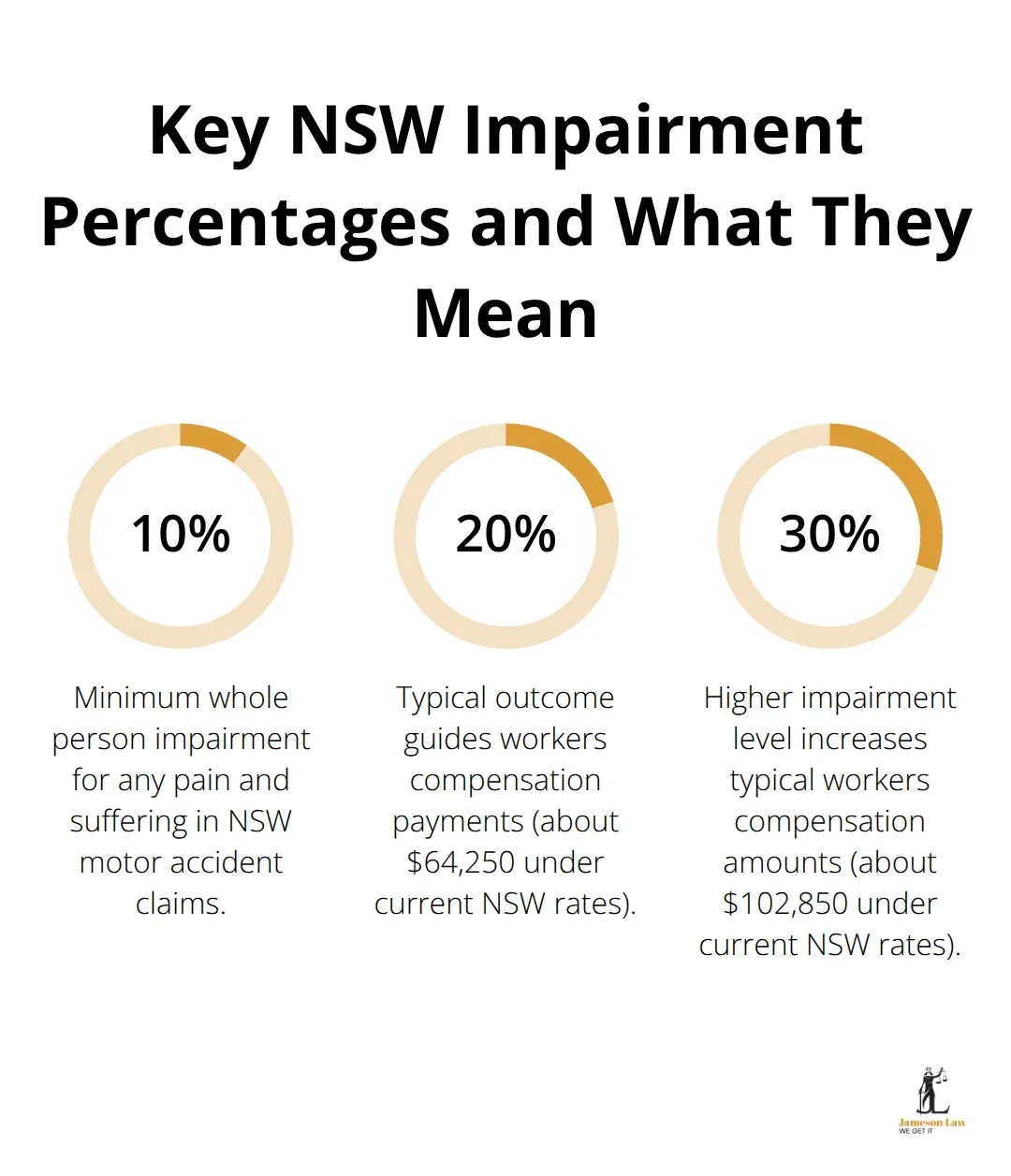
Courts will not award compensation above these legislative caps regardless of how severe your injury feels. Understanding these caps early helps you set realistic expectations for your claim’s value. The court’s role is to apply objective criteria consistently, not to compensate you based on your emotional suffering or financial hardship.
Recognised Loss Categories Determine Compensable Damages
Courts examine whether your claimed losses fall within the categories legislation allows. Losses that fall outside recognised categories receive no compensation even if the injury caused them. This is why identifying which losses courts will actually compensate matters significantly before you submit your claim-and why common mistakes in how you document and present your losses can eliminate entire portions of your potential payout.
How to Avoid Destroying Your Payout Before You Settle
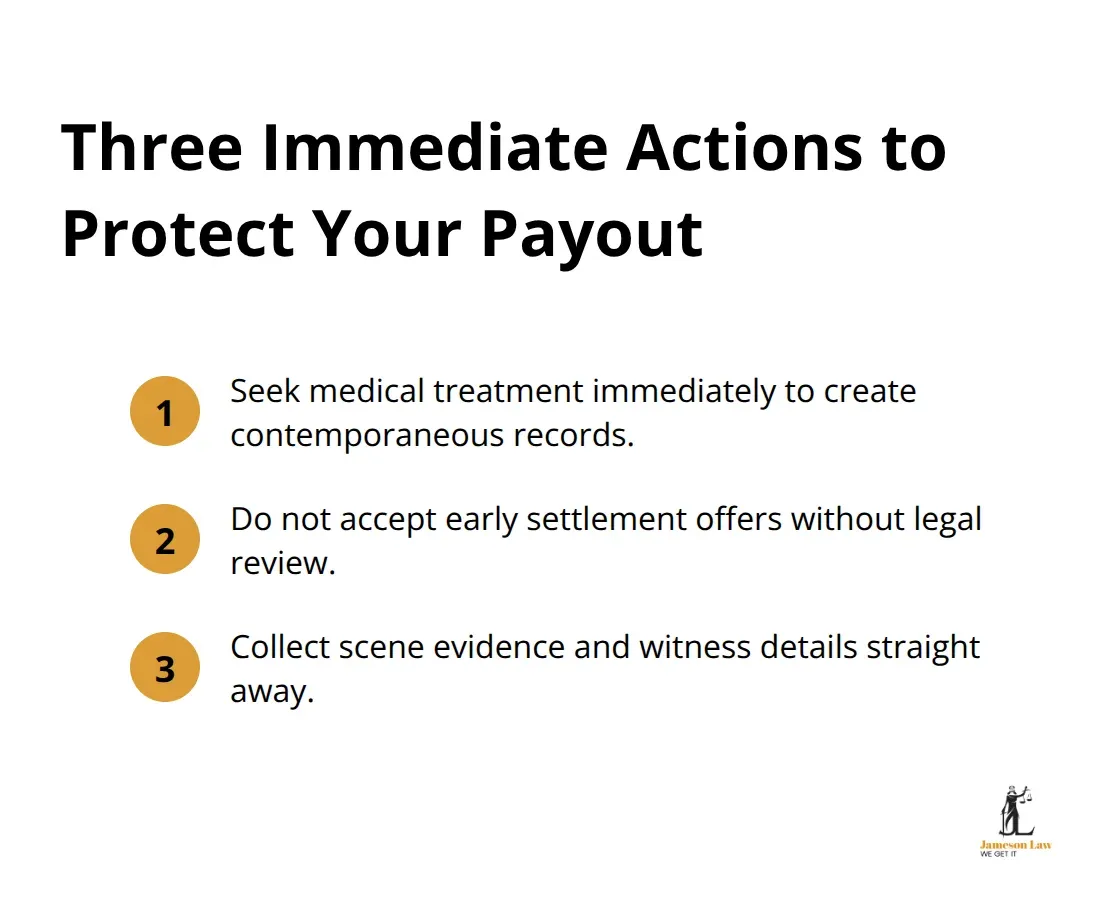
The mistakes that reduce payouts happen long before you reach a settlement discussion. Most claimants undermine their own compensation by making decisions in the days and weeks immediately after their injury, often without realising the financial consequences. The damage is almost always irreversible once the claim reaches court or negotiation. The first critical error is treating medical treatment as optional or postponing it because you feel you should manage the injury yourself.
Seek Medical Treatment Immediately After Your Injury
When you delay seeing a doctor, you create a gap in medical records that insurers exploit to argue your injuries are minor. Courts interpret gaps in treatment as evidence you were not seriously injured, regardless of your actual condition. If you were injured on a Monday and did not see a medical professional until three weeks later, the insurer will argue those three weeks prove you were functional and therefore less damaged than you claim. That gap reduces your payout substantially because medical documentation establishes injury severity.
If you have a motor vehicle accident, attend the emergency department immediately even if you feel relatively fine, because that first medical contact creates an official record of your condition on the injury date. For work-related injuries, report the incident to your employer within 24 hours and seek medical assessment the same day. Photographs of visible injuries taken at the scene or within hours of injury carry far more weight than photographs taken weeks later when swelling has reduced or bruising has faded. Document your condition immediately, not when you decide to pursue compensation.
Never Accept an Early Settlement Offer Without Legal Review
The second mistake is accepting an early settlement offer without legal review, and this error costs claimants tens of thousands of dollars. Insurers make initial settlement offers that are deliberately lower than your actual entitlements because they know most people will accept the first number presented to them. NSW motor accident claimants received average payouts of approximately $118,000 per new claim in 2025, yet many claimants accept offers of $40,000 or $50,000 without understanding they qualify for significantly more. Workers compensation claimants similarly averaged approximately $61,158 per new claim in the 12 months to November 2025, but individual claims regularly exceed $200,000 in practice when properly assessed.
An insurer’s initial offer reflects their opening negotiating position, not your actual entitlements. Having a lawyer review any settlement offer takes hours but can increase your payout by $50,000 to $150,000 or more because lawyers identify damages you did not know you could claim and identify calculation errors in the insurer’s assessment. The difference between accepting the first offer and obtaining proper legal review often exceeds the cost of legal representation many times over.
Collect Evidence at the Scene Immediately
The third critical mistake is failing to gather evidence at the scene or immediately after the incident. Witness contact details disappear, photographs of scene conditions fade from memory, and police report details become harder to locate weeks later. Obtain names and contact information from every witness, photograph the scene from multiple angles, document weather conditions and lighting, and collect the incident report number from police if applicable. These details matter because they support your claim that the incident occurred as you describe it and help establish liability.
Without scene evidence, you rely entirely on your memory and the other party’s account, which creates opportunities for disputes that reduce your settlement value. Eyewitness accounts and scene photographs carry substantial weight in court proceedings because they provide independent corroboration of how the incident occurred. The evidence you collect in the first hours after an injury often determines whether your claim succeeds or fails.
Final Thoughts
Your compensation payout depends on three measurable factors: injury severity supported by medical evidence, documented lost income, and impairment assessed against NSW legislative scales. Courts apply these factors consistently across all claims, which means understanding them early allows you to prepare strategically and identify gaps before your claim reaches negotiation. The mistakes that destroy payouts happen immediately after injury, not during settlement discussions, so seeking medical treatment within hours, collecting scene evidence, and avoiding early settlement offers without legal review protect your entitlements from the start.
Legal representation matters because lawyers identify damages you may not know you can claim and catch calculation errors insurers make deliberately. A personal injury settlement that appears reasonable often falls short of your actual entitlements by tens of thousands of dollars (NSW motor accident claimants averaged $118,000 in 2025, yet many accept initial offers half that amount). Workers compensation claimants similarly average $61,158 per claim, but individual claims regularly exceed $200,000 when properly assessed.
If you were injured recently, prioritise medical assessment and evidence collection immediately. If you have already received a settlement offer, have a lawyer review it before accepting. We at Jameson Law provide personal injury assistance on a No Win No Fee basis for plaintiff claims, which means you pay nothing unless your claim succeeds.