

A criminal conviction can follow you for years, affecting employment, housing, and your reputation. The good news is that criminal record expungement is possible in Australia under specific circumstances.
At Jameson Law, we help clients understand their options for clearing their records. This guide walks you through the pathways available, eligibility requirements, and the steps you’ll need to take.
Understanding Criminal Records in Australia
How Criminal Convictions Appear on Your Record
When you are convicted of a crime in Australia, that conviction enters official records maintained by NSW Police and the courts. These records remain permanent unless you formally clear them through specific legal processes. Your criminal history appears on official police records and court documents, and while some convictions become spent under certain conditions, they do not automatically disappear from view.
The reality is stark: many employers, landlords, and licensing bodies will find your conviction during background checks, and this significantly limits your opportunities. NSW has specific laws governing spent convictions, which allow certain offences to be hidden after a waiting period, but eligibility depends heavily on the type of offence and how much time has passed. Some convictions never qualify for this protection-particularly serious offences or those involving violence-and they remain permanently accessible to relevant parties.
Who Can Access Your Criminal History
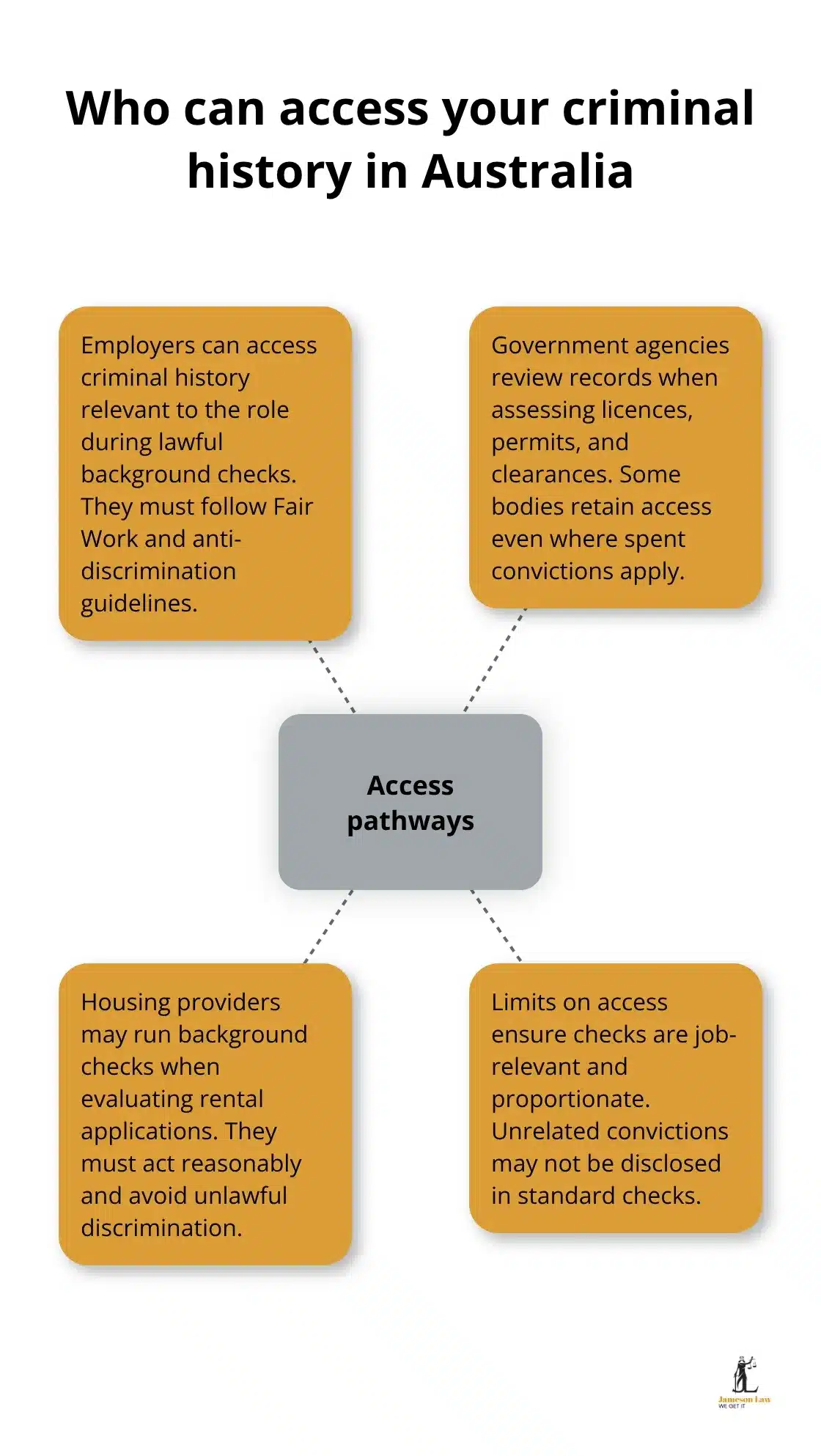
Access to your criminal history varies depending on who requests the information and why they want it. NSW Police maintain detailed records that employers can access during background checks, government agencies can review when assessing applications for licences or permits, and housing providers can examine when evaluating rental applications.
However, not everyone can access your full history in the same way. Employers in Australia can only access criminal history information relevant to the position, and they must follow guidelines set out by fair work legislation. This means a conviction unrelated to your role may not be disclosed, though the employer still conducts the background check.
Impact on Employment, Housing, and Professional Licensing
A criminal conviction creates substantial barriers across multiple areas of your life. Research by the Brotherhood of St Laurence shows that having a criminal conviction reduces employment prospects significantly, with many employers using blanket exclusion policies rather than assessing individual circumstances. This approach eliminates candidates before they even have a chance to explain their situation.
Housing presents equally serious challenges. Landlords routinely conduct background checks and can refuse rental applications based on criminal history, though they must act reasonably and not discriminate unlawfully. Professional licences create another barrier entirely. If you seek to work in fields like security, childcare, aged care, or driving heavy vehicles, a criminal conviction can disqualify you entirely or require formal clearance before you can proceed.
The financial impact extends beyond lost employment opportunities. Court fines, legal costs, and the expense of addressing your record accumulate quickly. A conviction also affects travel, insurance applications, and personal relationships-consequences that ripple through your life long after the sentence ends.
Exploring Your Options for Relief
Understanding how your record currently affects you is the foundation for exploring whether you can clear it. Different pathways exist depending on your offence type, how long ago your conviction occurred, and your circumstances since then. The next section outlines the specific legal processes available in NSW that allow you to remove or hide convictions from your record.
Legal Pathways to Clear Your Criminal Record in NSW
Spent Convictions: The Most Common Route
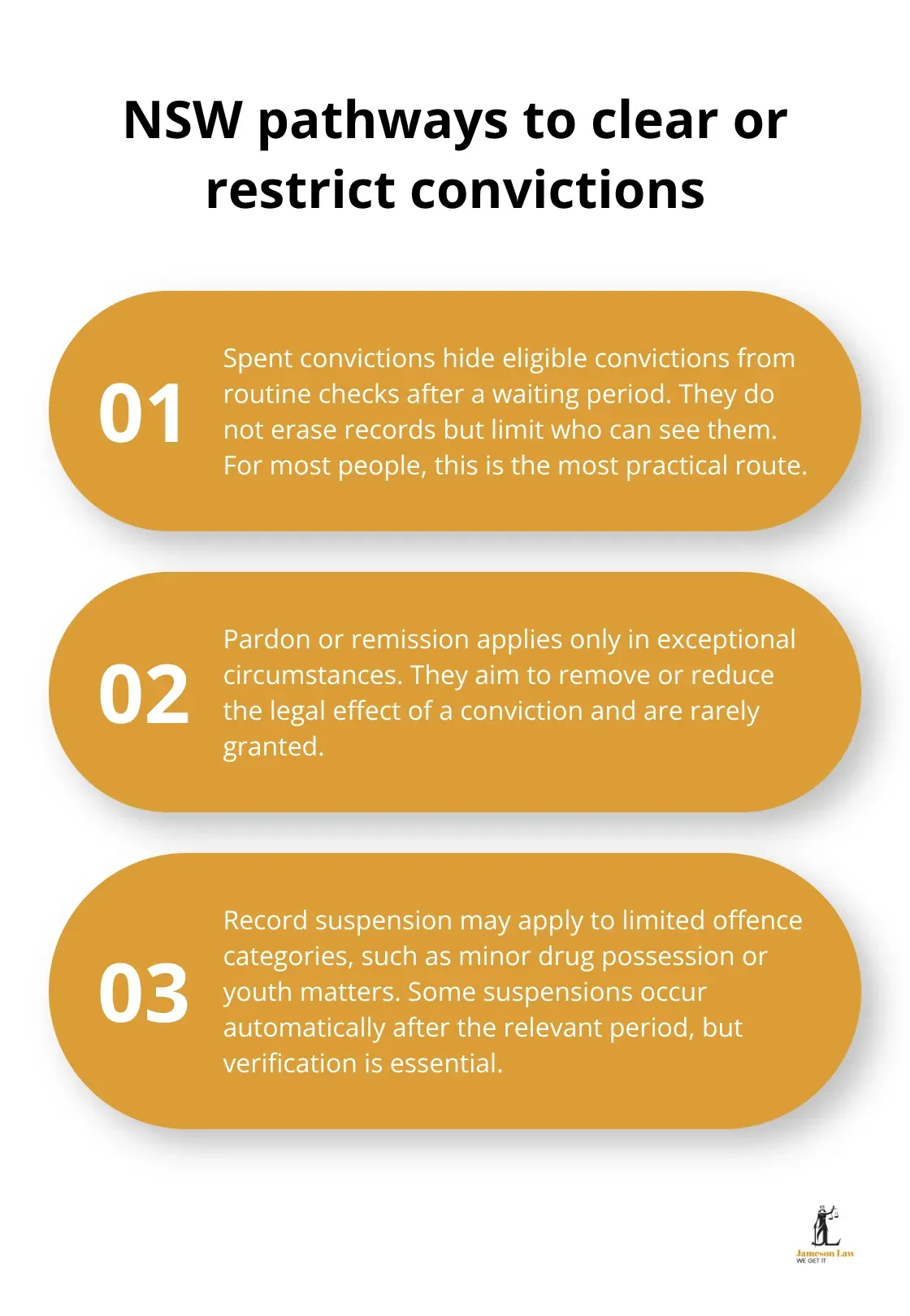
NSW law provides three distinct mechanisms to remove or restrict access to your criminal conviction, each with different eligibility criteria and outcomes. The most common pathway involves applying for a spent conviction under the Crimes (Sentencing Procedure) Act 1999, which allows certain convictions to become hidden from public view after a waiting period. This process does not erase your conviction from official records but restricts who can access it. Employers, landlords, and licensing bodies generally cannot access spent convictions during standard background checks, though some government agencies and professional bodies retain access for specific purposes.
The waiting period varies significantly depending on the offence and your sentence. For offences where you received a sentence of six months or less, the waiting period is typically five years from the date of conviction. For sentences between six months and three years, the waiting period extends to ten years. Serious offences, violence-related crimes, and sexual offences rarely qualify for spent conviction status at all, making this pathway unavailable for many applicants.
You can apply through the NSW Police Force Records and Disclosure Unit, and the application costs around $100 to $150. Processing times generally take between four to eight weeks, though complex cases may take longer. The application requires you to demonstrate that you have been of good behaviour since conviction and that granting the application serves the interests of justice. This is where many applications fail because authorities assess your post-conviction conduct carefully.
Pardon and Remission: Pathways for Exceptional Circumstances
Pardon and remission represent alternative pathways but operate differently from spent convictions. A pardon, granted by the Governor of NSW on ministerial recommendation, acknowledges that a conviction was wrongful or that you have been rehabilitated sufficiently to warrant removing the conviction entirely from your record. Remission, by contrast, reduces or eliminates the legal consequences of a conviction without necessarily declaring it wrongful.
Both pathways are rarely granted and require compelling circumstances such as evidence of significant miscarriage of justice, extraordinary rehabilitation, or changed circumstances that fundamentally alter the case. The practical reality is that most applicants do not qualify for these options, as authorities apply stringent assessment criteria before recommending either pathway to the Governor.
Record Suspension for Specific Offence Categories
Record suspension for specific offence categories provides another option for certain applicants. Some offences, particularly those involving minor drug possession or youth offences, may qualify for automatic or streamlined suspension after the relevant waiting period passes. Unlike spent convictions, which require active application, automatic suspension can occur without your involvement, though you should verify this with NSW Police.
Understanding the Key Distinctions
The critical distinction between these pathways is that spent convictions remain in official records but hidden from routine access, while pardons and remissions aim to overturn or eliminate the conviction’s legal effect entirely. Most people find spent conviction applications the most realistic option because they address the practical problem immediately-stopping employers and landlords from discovering your conviction during standard checks.
Determining Your Next Steps
The key is understanding which pathway applies to your specific offence type and circumstances, as choosing the wrong one wastes time and money. Your eligibility depends on factors including the nature of your offence, the length of your sentence, how much time has passed since conviction, and your conduct since then. Each pathway has distinct requirements, and what works for one person may not work for another. Legal advice at this stage is not optional but essential, as eligibility rules contain numerous exceptions and the application itself must demonstrate rehabilitation convincingly. Once you understand which pathway suits your situation, the next step involves gathering the documentation authorities require to assess your application.
Eligibility Requirements and Timeframes
Waiting Periods Before You Can Apply
The waiting period before you can apply represents the first hurdle, and it varies dramatically depending on your sentence length. If NSW Police sentenced you to six months or less, you wait five years from your conviction date before applying for a spent conviction. Sentences between six months and three years require a ten-year wait. This means someone convicted of a minor offence in 2021 could potentially apply now in 2026, while someone with a longer sentence from the same year must wait until 2031 or beyond.
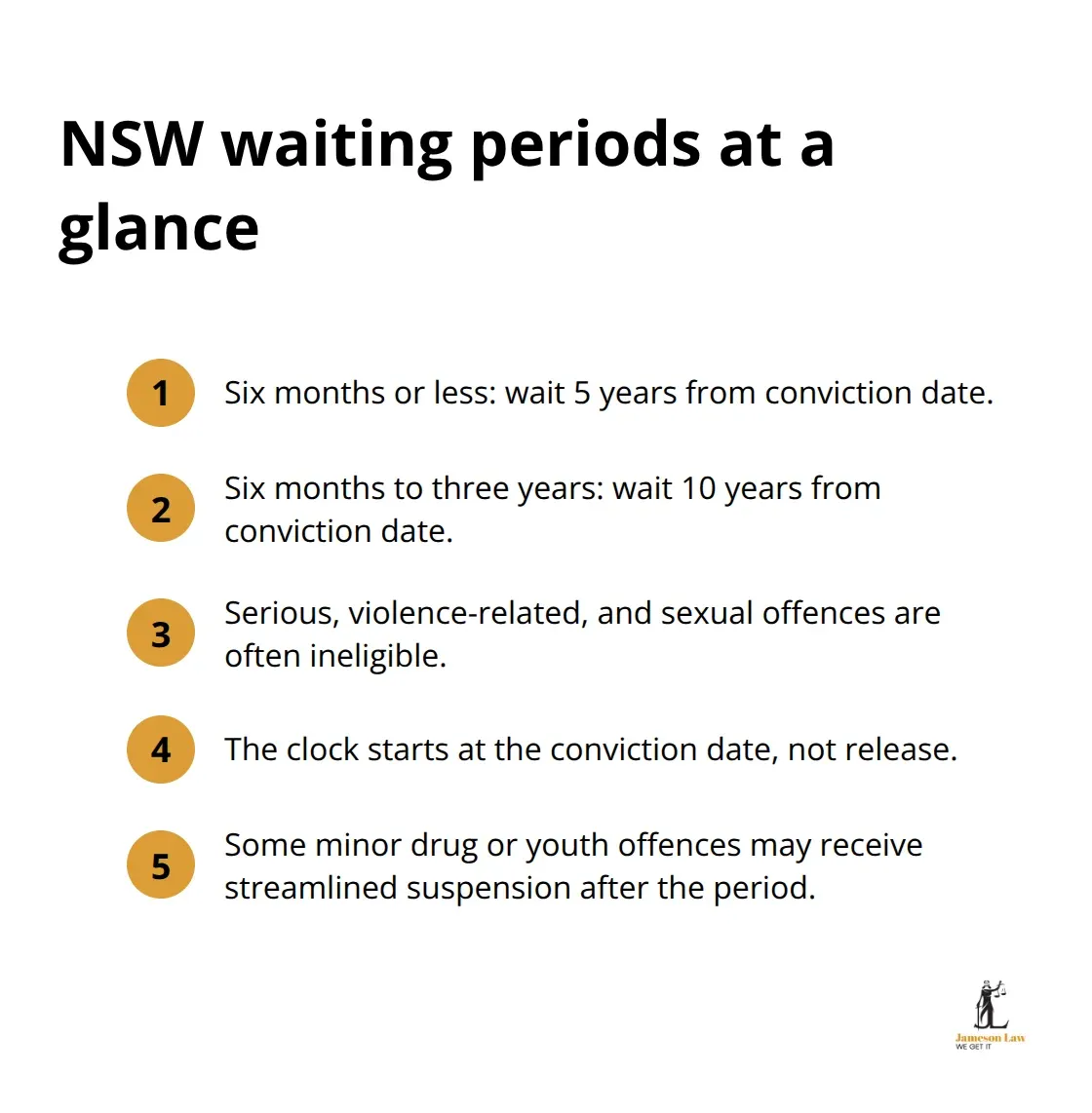
The clock starts from conviction date, not release date, so time spent in prison counts towards your waiting period. This distinction matters because parole or early release does not restart the clock or extend your timeline. However, serious offences create a different problem entirely: many do not qualify for spent conviction status regardless of how much time passes.
Offences That Qualify for Removal
Violence-related crimes, sexual offences, and offences against children rarely qualify for spent conviction status, meaning your waiting period is effectively infinite. NSW Police maintains a list of excluded offences, and checking this list early saves you from pursuing an application that will be rejected automatically.
Drug trafficking, robbery, assault causing serious injury, and terrorism-related offences typically fall into this excluded category, though some lower-level drug possession charges may qualify depending on circumstances. The distinction between qualifying and excluded offences determines whether you can proceed at all, so verification with NSW Police should happen before you invest time and money into an application.
Assessment Criteria: Demonstrating Rehabilitation
Authorities focus heavily on your post-conviction behaviour and rehabilitation when they assess your application. They ask whether you have been convicted of any offence since your original conviction, as even minor subsequent convictions can disqualify you. They examine your employment history, community involvement, and character references to determine whether granting the application serves the interests of justice.
This phrase carries significant weight in NSW law, and it means authorities balance your rehabilitation against the seriousness of your original offence and its impact on victims. A person with a single conviction fifteen years ago, steady employment since, and no further contact with the law has a strong application. Someone with multiple convictions or ongoing legal issues faces rejection.
NSW Police also consider the nature of your original offence and whether it indicates a pattern of behaviour or was an isolated incident. Authorities view youthful mistakes more favourably than offences committed as an adult, and they assess whether circumstances have genuinely changed since conviction. Providing detailed character references from employers, community leaders, or rehabilitation program coordinators strengthens your application considerably.
Building a Strong Application
Documentation showing course completion, volunteer work, or community contribution demonstrates genuine rehabilitation rather than mere time passing. The application itself requires you to explain your offence, acknowledge its seriousness, and articulate what has changed in your life since conviction. Generic or defensive statements fail; authorities want evidence that you understand the impact of your actions and have actively worked to rebuild your life.
Processing typically takes four to eight weeks, though complex cases extend beyond this timeframe. Submitting a weak application wastes this time and costs the application fee without result, making proper preparation essential before you lodge anything with NSW Police. If you are uncertain about your eligibility or how to present your rehabilitation effectively, criminal lawyers can clarify your position and strengthen your chances of success.
Final Thoughts
Clearing a criminal conviction from your record in NSW is achievable, but the pathway depends entirely on your specific circumstances. Spent convictions represent the most realistic option for most people, allowing you to hide your conviction from employers and landlords after meeting the waiting period and demonstrating rehabilitation. Pardon and remission pathways exist for exceptional cases, though they remain difficult to obtain, and understanding which option applies to you requires careful assessment of your offence type, sentence length, time elapsed, and post-conviction behaviour.
The eligibility requirements are strict, and authorities scrutinise applications thoroughly. Your waiting period begins immediately after conviction, and for sentences under six months you typically wait five years before applying. Serious offences, violence-related crimes, and sexual offences rarely qualify for criminal record expungement, meaning some convictions cannot be cleared regardless of time passed.
The application process itself demands careful preparation, and weak applications waste time and money without result. Character references, evidence of employment stability, and course completion all strengthen your case, and processing typically takes four to eight weeks. Our criminal law team understands NSW legislation and the assessment criteria authorities apply, so contact us to discuss your specific situation and determine the best pathway forward for your circumstances.