


Violence in relationships affects thousands of Australians every year, and a family violence AVO is often the first legal step to protect yourself or someone you care about. At Jameson Law, we’ve helped many people navigate this process, and we know it can feel overwhelming.
This guide walks you through exactly what you need to do, from gathering evidence to attending court. Whether you’re applying for the first time or need clarity on the process, we’ll break it down into manageable steps.
What You Need to Know About AVOs
An Apprehended Violence Order is a legal protection that stops someone from threatening, harassing, or assaulting you or someone you care about. In NSW, AVOs fall under the Crimes (Domestic and Personal Violence) Act 2007, which sets out exactly how courts can protect people from violence. The Act recognises that violence happens in different contexts, not just within families, and the law treats all forms of threatening behaviour seriously. When a court issues an AVO, it creates legally binding conditions that the other person must follow. Breaking these conditions can result in criminal charges, fines, or imprisonment. This is why AVOs carry real weight-they’re not just pieces of paper, they’re enforceable court orders backed by the criminal justice system.
Two Main Types of AVOs You Can Access
NSW law provides two distinct pathways depending on your situation. A standard AVO applies when you need protection from someone you have a domestic relationship with (current or former spouses, de facto partners, or people you have a child with). A personal violence AVO covers situations where someone has assaulted you, threatened you, or engaged in a pattern of harassment, regardless of whether a domestic relationship exists. This might include violence from a neighbour, colleague, acquaintance, or stranger. The distinction matters because it affects where you apply and what evidence you need to present. Courts can issue both simultaneously if circumstances warrant it.
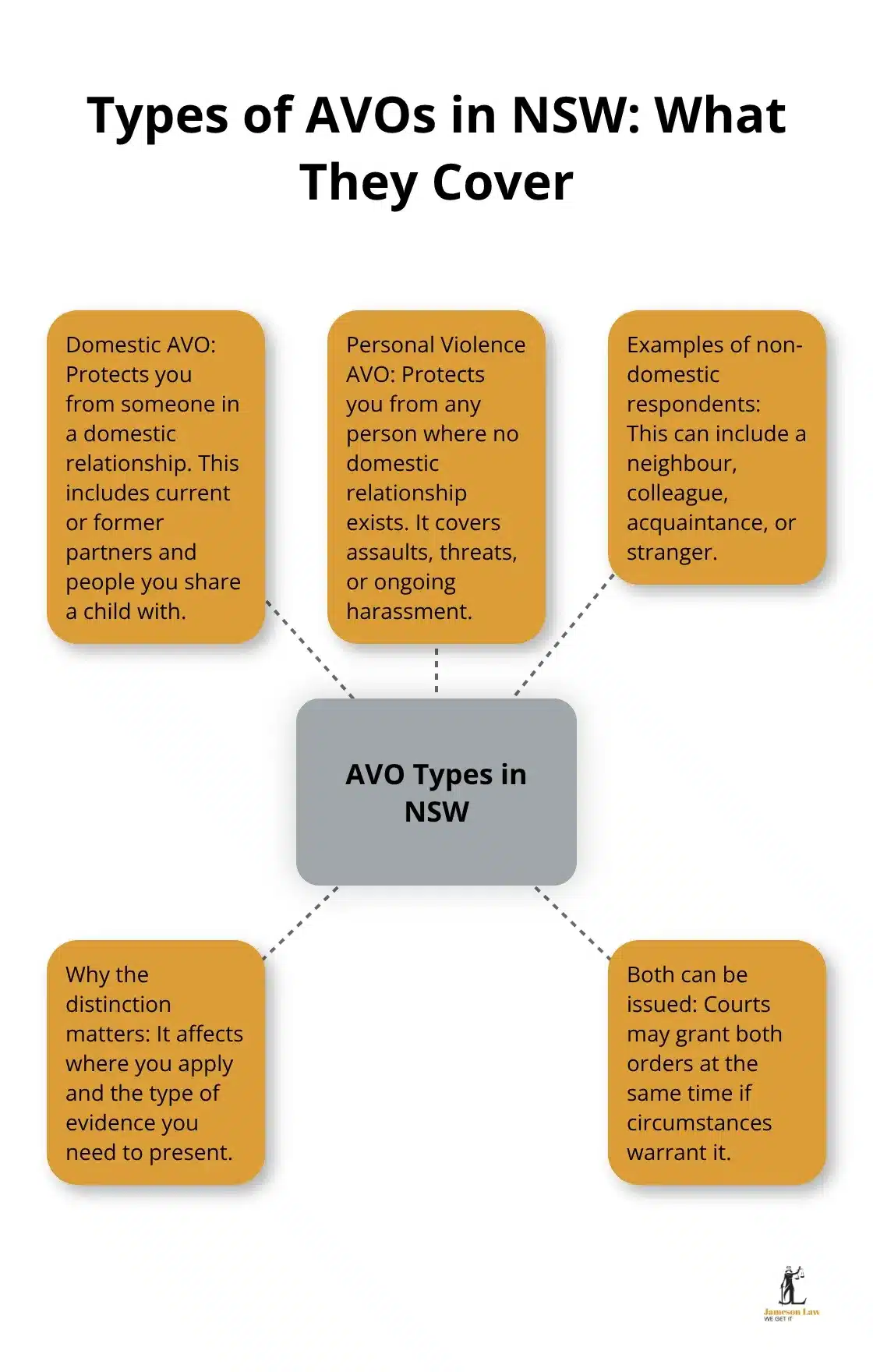
The key difference is that domestic AVOs focus on relationship-based violence, while personal violence AVOs address any threatening or violent behaviour from anyone.
Who Can Actually Apply
You can apply for an AVO if you’ve experienced violence, threats, harassment, or intimidation from another person. NSW Police can also apply on your behalf without your consent if they believe it’s necessary to protect you-this happens regularly when officers respond to domestic violence incidents. A parent or guardian can apply for a minor, and in some cases, other family members or support services can initiate applications. If you’re unsure whether your situation qualifies, the safest approach is to contact your local police station or seek legal advice. Courts have broad discretion to decide what counts as violence or threatening behaviour, so situations that might seem minor to you could still warrant an AVO.
What Happens Next in the Application Process
Once you understand what an AVO is and which type applies to your situation, you’ll need to prepare your application. This involves collecting evidence, completing the required forms, and understanding what the court will ask you to prove.
How to Build Your Case and Apply
Gather Your Evidence First
Building a strong application starts with gathering concrete evidence that demonstrates the pattern or incident of violence, threats, or harassment. Collect anything that supports your claim: text messages, emails, social media screenshots, photos of injuries or property damage, medical records from hospitals or doctors who treated you, police incident reports from previous calls, and witness statements from people who saw what happened. The more specific your evidence, the stronger your position in court.
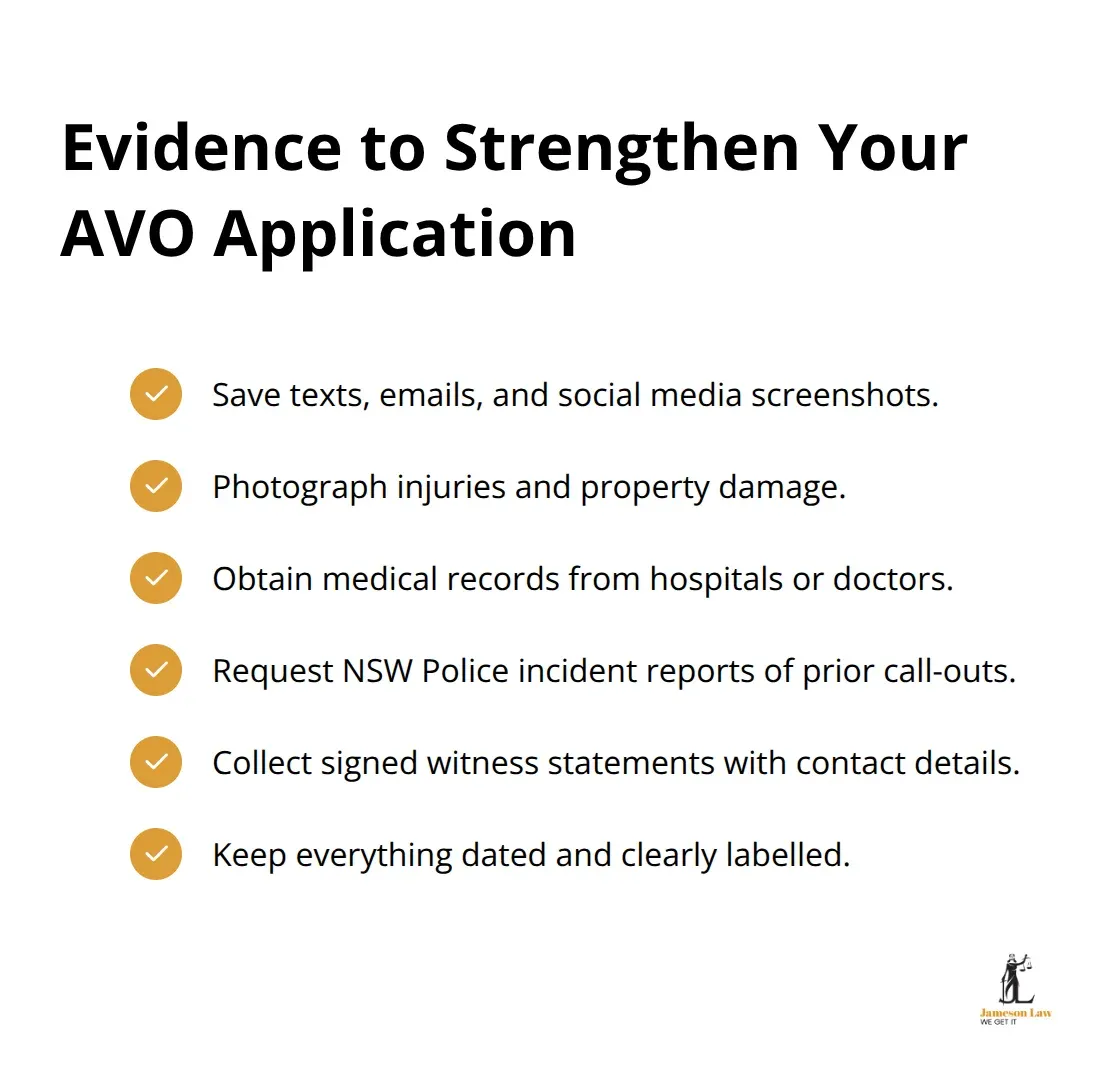
NSW Police records carry particular weight because they create an official timeline that magistrates take seriously. If you’ve called police before about this person, request copies of those incident reports through Service NSW or directly from your local station. Medical records also carry significant weight, especially if you sought treatment after an assault. Courts understand that people in abusive situations often don’t report everything, so even a single documented incident combined with witness accounts can be sufficient to support your application.
Complete the Application Form With Precision
Once you’ve assembled your evidence, you’ll complete the application form, which asks you to describe what happened in detail and explain why you need protection. The form requires you to be specific about dates, locations, and what the other person did or said-vague descriptions like “they were aggressive” won’t satisfy a magistrate. Instead, write “On 15 August 2026 at approximately 7pm at my home, they sent me a text message stating ‘I know where you live and I’m coming over to sort you out.'” This specificity matters because magistrates need to understand exactly what behaviour prompted your application.
Include all relevant context that helps explain why you fear this person. If they have a history of violence, mention it. If they’ve made specific threats, document them word-for-word. Courts assess applications based on the evidence you present, so clarity and detail work in your favour.
Submit Your Application and Prepare for Court
You can submit your application to your local court in person, by post, or through online channels depending on your local court’s systems. After submission, you’ll receive a date for your hearing, which typically occurs within weeks. At the hearing, you’ll present your evidence to a magistrate who decides whether to grant the AVO.
Bring all your documents, any witnesses who can speak to what happened, and consider having legal representation to guide you through the process. Courts grant AVOs when they’re satisfied on the balance of probabilities that you need protection from violence, threats, harassment, or intimidation-a lower threshold than criminal conviction requires.
What Happens at Your Court Hearing
The magistrate will listen to your evidence and may ask questions about the incidents you’ve described. You’ll have the opportunity to present your case, and the other person will have the chance to respond. This is why having your evidence organised and your witnesses prepared matters-the magistrate needs to understand the full picture of what you’ve experienced.
If the court grants your AVO, it will set out specific conditions that the other person must follow. Understanding these conditions and what happens if someone breaches them is the next critical part of the process.
Understanding AVO Conditions and Enforcement
What Courts Order and Why It Matters
Once a magistrate grants your AVO, the court sets out specific conditions that the other person must follow. These aren’t suggestions-they’re legally binding requirements backed by criminal penalties. Common conditions include not approaching you within a specified distance (typically 100 metres), not contacting you directly or indirectly through others, not damaging your property, not possessing weapons, and surrendering their firearms licence if applicable. Some courts add conditions requiring the person to attend counselling or anger management programs.
Magistrates tailor conditions based on your specific circumstances. If you’ve experienced repeated assault, courts often impose stricter distance requirements. If harassment occurred through social media, courts add specific prohibitions about online contact. The strength of these conditions depends entirely on the evidence you presented and what the magistrate believes will genuinely protect you. Vague or weak conditions fail to provide real protection, which is why detailed evidence during your hearing matters so much.
Criminal Penalties for Breaching an AVO
Breaching an AVO is treated as a criminal offence in NSW under the Crimes (Domestic and Personal Violence) Act 2007. The consequences escalate significantly depending on how serious the breach is and whether the person has previous breaches. A first breach might result in a fine or imprisonment, but magistrates often impose harsher penalties for serious breaches like physical contact or threats. Repeat breaches typically result in jail time rather than fines alone.
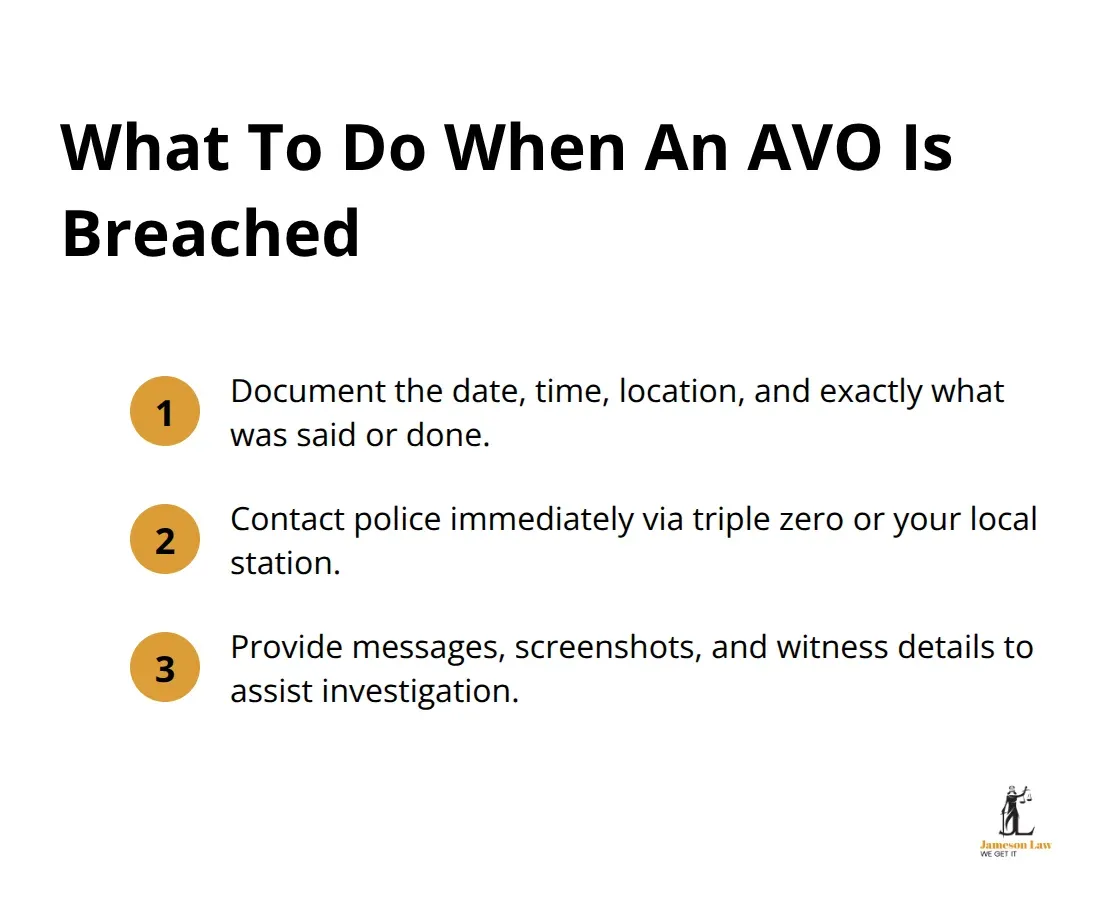
Police take breaches seriously because they indicate the protected person faces genuine ongoing risk. When you report a breach to police, document exactly what happened-the date, time, location, what the person did or said, and any witnesses. Police will investigate and may charge the person with breaching the AVO, which then proceeds through the criminal justice system. If the person is found guilty, a conviction is recorded on their criminal history, which affects employment, travel, and other areas of their life.
This creates real consequences that motivate compliance. Some people test boundaries by having friends deliver messages or standing just outside the specified distance-these actions still constitute breaches because they violate the spirit of the order.
How Police Enforce AVOs in NSW
Police enforcement of AVOs in NSW operates through a coordinated system where officers can access orders through their database and respond quickly when breaches occur. If you call triple zero reporting a breach, police will attend and assess whether the person has violated the conditions. NSW Police domestic violence teams have specialised training in recognising breaches and responding appropriately.
The burden falls on you to report breaches-police cannot monitor compliance 24/7, so you need to contact them immediately when a breach occurs. Keep detailed records of any contact attempts, messages, or approaches, including screenshots, dates, and times. This documentation strengthens police investigations and supports potential prosecution. Some people assume minor breaches won’t matter or that police won’t act, but this misunderstanding has led to escalating violence in many cases. Police take repeated breaches very seriously because they indicate the person won’t respect court orders, which suggests they pose an ongoing threat. If you’re experiencing repeated breaches and feel police responses are inadequate, contact your local police station commander or seek legal advice about additional protective measures.
Final Thoughts
Applying for a family violence AVO requires you to gather evidence, complete your application form with precision, submit it to your local court, and present your case to a magistrate. Courts take these applications seriously because they recognise that violence represents a genuine threat to your safety. When you provide concrete evidence-text messages, medical records, police reports, witness statements-magistrates have what they need to make informed decisions about granting protection.
After your AVO is granted, you must understand the conditions imposed and report any breaches immediately to police. The order only works if you actively monitor compliance and report violations. Police take repeated breaches seriously because they signal the person won’t respect court orders, indicating ongoing risk to you.
If you’re navigating this process alone, consider seeking legal assistance from Jameson Law. Our team understands the complexities of AVO applications and can guide you through each stage, helping you organise your evidence and prepare for your court hearing. Getting professional advice early often strengthens your case significantly.