Most NSW residents put off estate planning because they think it’s complicated or only for the wealthy. The truth is simpler: without a clear plan, your family faces unnecessary stress, delays, and costs when you’re gone.
We at Jameson Law help people get estate planning basics right. A few key documents-a will, powers of attorney, and possibly a trust-protect what matters most and give your family clarity when they need it.
Why Estate Planning Matters in NSW
What Happens Without a Will
Without a will or estate plan, NSW law treats your death as intestacy. The Succession Act 1965 (NSW) sets strict rules about who inherits, and these rules often don’t match what families actually want. If you die without a will, your spouse might receive only part of your estate, your children could wait months for inheritance, and your assets might go to relatives you barely knew. The intestacy hierarchy in NSW prioritises spouses and children first, but the distribution formula can leave significant portions unclaimed or create family disputes that cost thousands in legal fees to resolve.
Protecting Your Family Through Powers of Attorney
Financial protection for your family starts with naming who controls your money and property while you’re alive and after you’re gone. A power of attorney document lets you appoint someone to manage your finances if you become unable to do so yourself, avoiding court intervention and frozen bank accounts. Without this document in place, your family faces costly applications to the NSW Supreme Court for guardianship orders. A healthcare directive works similarly, letting you specify your medical wishes and appoint someone to make decisions if you can’t communicate. These documents cost far less than emergency court applications and prevent your family from guessing what you would have wanted.
Coordinating Superannuation and Insurance
Superannuation and life insurance often pass outside your will entirely, which means they don’t fall under your estate plan unless you’ve named beneficiaries correctly. The ATO data shows that many Australians lose significant superannuation benefits because they never updated their beneficiary nominations after major life events like marriage or divorce. Failing to coordinate these assets with your will creates tax inefficiencies and can leave your family with unexpected bills.
Minimising Tax and Legal Costs
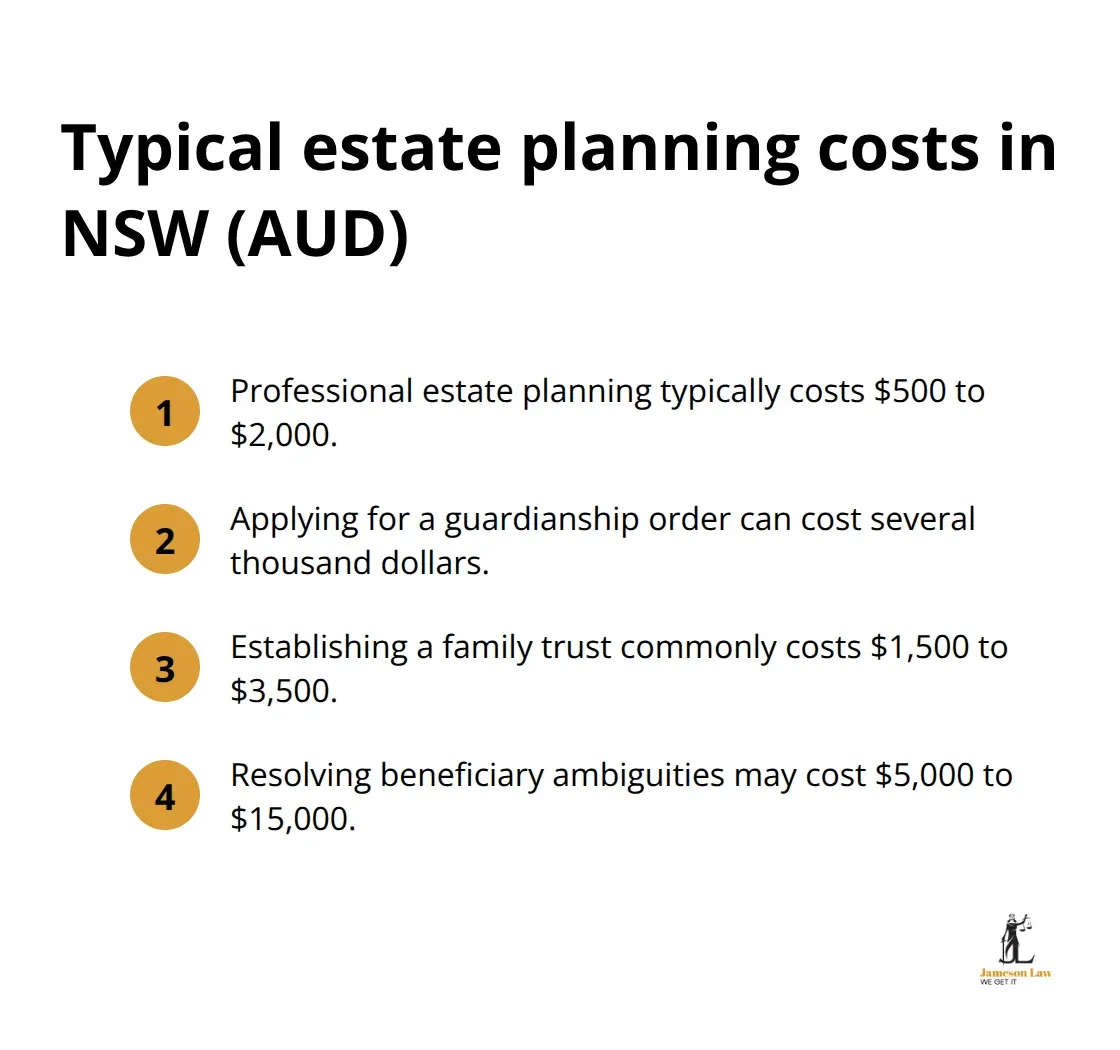
Estate planning reduces the tax burden on what you leave behind. Proper structuring through trusts or careful beneficiary designation can minimise capital gains tax and allow your family to keep more of what you’ve built. The cost of professional estate planning typically ranges between 500 and 2,000 dollars depending on complexity, but poor planning costs families several times that amount in unnecessary taxes, legal disputes, and court proceedings. Understanding these key documents and how they work together sets the foundation for protecting your family’s future.
Key Documents You Need for Your Estate Plan
Your Will: The Foundation of Your Plan
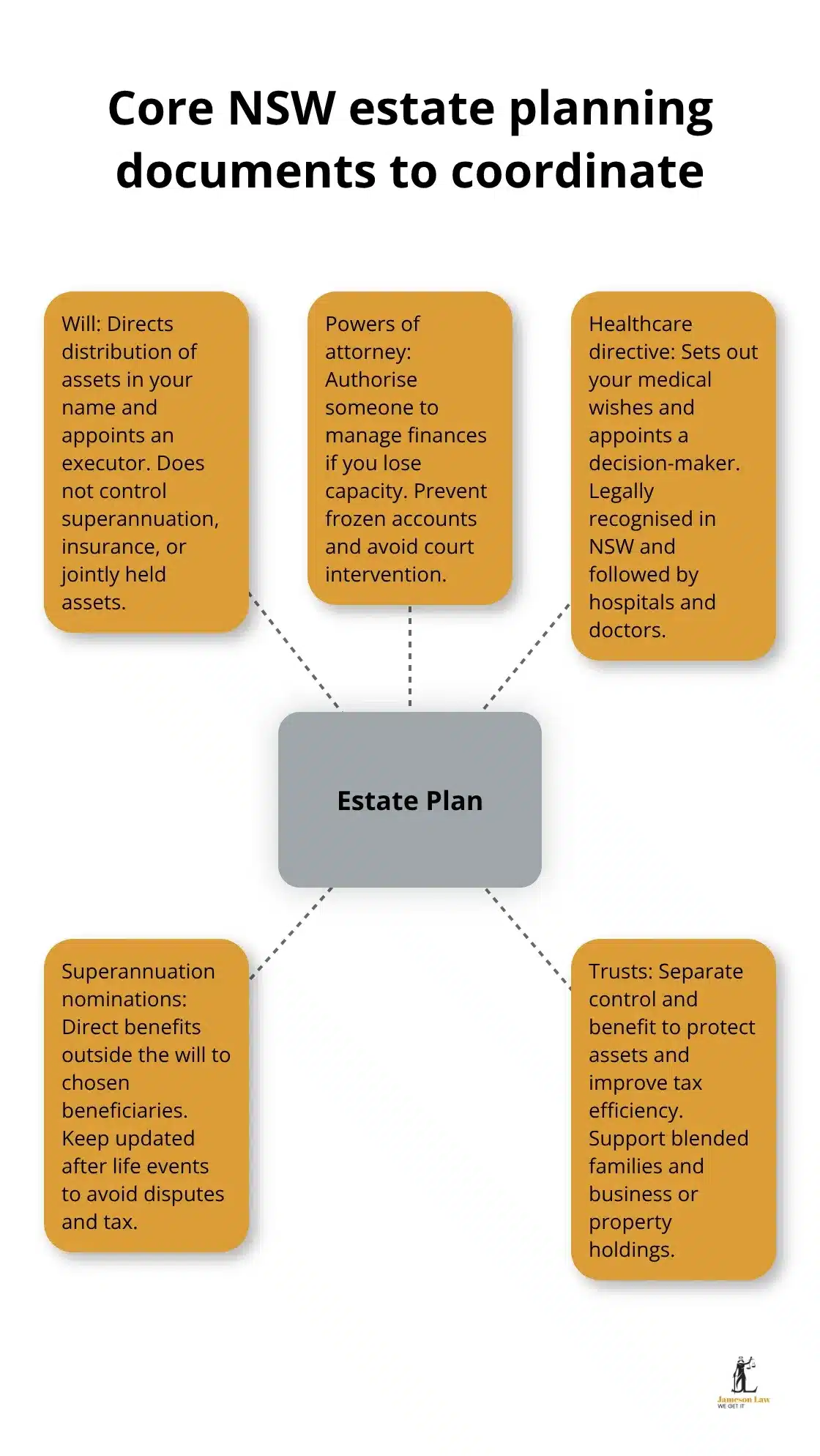
A will forms the backbone of any estate plan, but it only covers assets in your name alone. In NSW, your will directs who receives your property, who manages your estate, and who cares for minor children, yet it cannot control superannuation benefits, life insurance payouts, or assets held in joint names. The Succession Act 1965 (NSW) requires you to sign your will and have two independent witnesses sign it as well-any deviation from this process can render the document invalid and force your estate through intestacy rules instead.
Many NSW residents mistakenly believe their will covers everything they own, then discover too late that their largest assets bypass the document entirely. Your will should clearly name an executor, specify exactly who inherits what, and address any complex situations like blended families or significant charitable gifts.
Powers of Attorney: Managing Your Affairs While Alive
A power of attorney document operates while you’re alive, letting you appoint someone to manage your finances if illness or injury prevents you from doing so. Without this document, your family cannot access your bank accounts or pay bills without obtaining a guardianship order from the NSW Supreme Court-a process that costs several thousand dollars and takes weeks.
A healthcare directive, sometimes called an advance care directive, specifies your medical wishes and appoints someone to make health decisions on your behalf if you cannot communicate. NSW recognises these directives under the Guardianship Act 1987 (NSW) and Health Care Complaints Act 1987 (NSW), making them legally binding documents that hospitals and doctors must follow.
Trusts and Superannuation: Protecting Your Largest Assets
Trusts and superannuation beneficiary nominations deserve equal attention because they often hold more value than assets covered by your will. A trust separates legal ownership from beneficial ownership, meaning trustees hold assets for the benefit of others, which provides asset protection and tax efficiency that a will alone cannot achieve.
Superannuation passes directly to nominated beneficiaries outside your will, and outdated beneficiary nominations can result in estates going to unintended recipients. Life insurance works the same way, passing directly to named beneficiaries rather than through your estate, which means coordinating these assets with your overall plan prevents tax complications and ensures your family receives what you intended.
Structuring Assets for Your Family’s Benefit
If you hold investment properties, run a business, or have a blended family, a trust structure often makes sense because it protects assets from creditors and minimises capital gains tax when beneficiaries eventually inherit. The cost of establishing a proper trust typically ranges from $1,500 to $3,500 depending on complexity, but the tax savings and asset protection often justify this investment within just a few years.
Without coordinating your will, powers of attorney, superannuation nominations, and trust structures, your estate plan remains incomplete. The next section examines the common mistakes NSW residents make when building these documents-oversights that cost families thousands in unnecessary taxes, legal disputes, and delays.
Common Estate Planning Mistakes NSW Residents Make
Letting Documents Become Outdated
Most NSW residents with existing estate plans have outdated documents sitting in a drawer. Life changes fast-marriage, divorce, children, grandchildren, property purchases, business sales-yet wills and powers of attorney often remain frozen in time for ten or fifteen years. Superannuation beneficiary nominations go unreviewed in many Australian estates, meaning retirees frequently have outdated nominations naming ex-spouses or deceased relatives. This single oversight costs families thousands in unnecessary tax bills and contested inheritance disputes.
When you marry or enter a de facto relationship, your previous will becomes invalid under NSW succession law, yet many people don’t realise this and assume their old document still applies. Divorce similarly revokes gifts to your former spouse in your will, but only if your will explicitly names them as a beneficiary-ambiguous wording leaves room for legal challenges that drain estate funds. Set calendar reminders to review your estate plan every two to three years, or immediately after major life events like marriage, separation, or significant property purchases.
Using Vague Language for Beneficiaries
Naming beneficiaries with precision matters far more than most people think, yet vague language creates expensive disputes. Saying your estate goes to your children sounds simple until one child predeceases you-does their share go to their children, or do the surviving siblings split it? NSW courts spend months resolving these ambiguities, costing $5,000 to $15,000 in legal fees for straightforward cases.
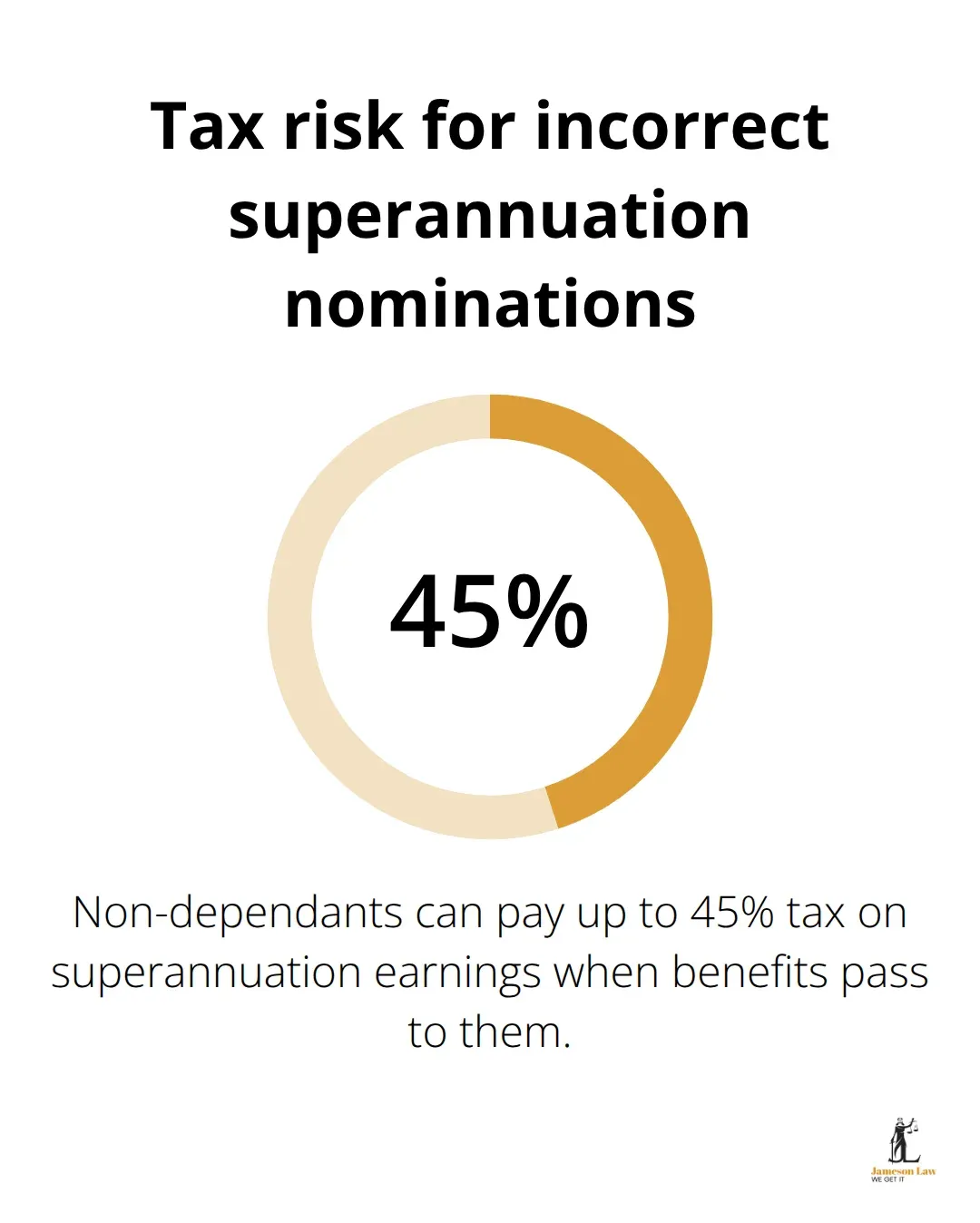
Superannuation and insurance beneficiary forms demand equal clarity: naming a deceased person, an ex-partner, or your estate as beneficiary instead of specific family members triggers tax complications and delays. The ATO applies different tax rates depending on whether superannuation passes to dependants or non-dependants, with non-dependants paying up to 45% tax on earnings-an avoidable loss if you’d simply named the right person.
Fragmenting Assets Across Multiple Documents
Life insurance policies held in your name should name beneficiaries directly rather than leaving them to flow through your will, because direct nomination bypasses probate delays and costs. Overlapping superannuation, insurance, and will provisions create the worst outcomes: your superannuation goes to one person, your insurance to another, and your will to a third, fragmenting your family’s inheritance and generating competing claims.
Specify exactly who receives what, use full legal names rather than nicknames, and include their relationship to you-these details prevent administrators from misinterpreting your intentions. Coordinate your will, powers of attorney, superannuation nominations, and trust structures so your entire estate plan works as one cohesive document rather than conflicting pieces that contradict each other.
Final Thoughts
Estate planning basics don’t require you to be wealthy or have complex finances. A will, powers of attorney, and coordinated beneficiary nominations form the foundation that protects your family and prevents unnecessary stress when you’re gone. Start by listing your assets-property, superannuation, life insurance, bank accounts, and investments-then identify who should manage your affairs if you become unable to do so and who should inherit what you’ve built.
Review your existing documents immediately if you’ve experienced marriage, divorce, children, or significant property changes. Update superannuation and insurance beneficiary nominations to match your current wishes, not decisions you made years ago. Set a calendar reminder to review your entire estate plan every two to three years, catching outdated information before it creates problems.
We at Jameson Law help NSW residents build estate plans that actually work. Contact Jameson Law to discuss your estate planning needs and get started on protecting your family’s future.