

Work-related psychological injury is one of the most misunderstood areas of workers compensation in NSW. Many employees suffer in silence, unsure whether their condition qualifies for a claim or how to navigate the process.
At Jameson Law, we’ve helped countless workers secure compensation for mental health conditions caused by their employment. This guide walks you through everything you need to know, from understanding what qualifies as a psychological injury to maximising your claim.
What counts as a work-related psychological injury
Under NSW workers compensation law, a psychological injury qualifies for compensation when it arises out of or in the course of your employment. This standard is more straightforward than in some other states. Unlike Victoria, which introduced a predominant-cause test from 31 March 2024, NSW doesn’t require your work to be the single largest contributing factor. However, you still need to demonstrate a clear connection between your job and your mental health condition. A medical professional must diagnose a recognised psychiatric condition-anxiety, depression, post-traumatic stress disorder, and adjustment disorders rank among the most common claims we see. Your employment circumstances must have directly caused or significantly contributed to the condition, rather than merely aggravating pre-existing vulnerabilities.
Workplace bullying and harassment claims
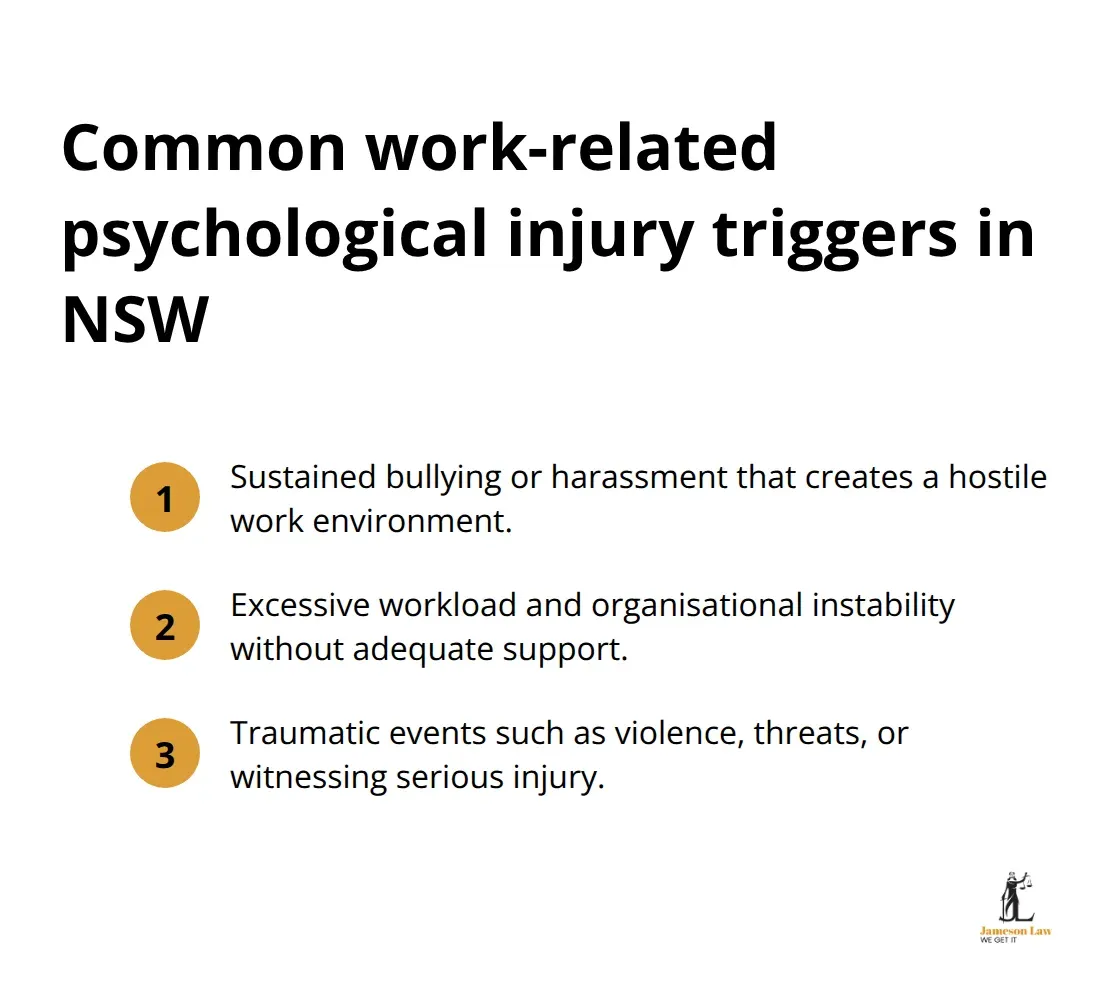
Workplace bullying and harassment generate a substantial portion of psychological injury claims in NSW. When management or colleagues engage in sustained, unreasonable conduct that undermines your dignity or creates a hostile environment, this forms solid grounds for compensation. The behaviour must meet a threshold of severity and persistence-isolated incidents or minor conflicts typically fail to establish a compensable injury. Documentation of specific incidents, dates, and witnesses strengthens your position considerably. Emails, messages, performance reviews, and witness statements all provide objective evidence of the conduct you experienced.
Stress from workload and organisational factors
Work-related stress from excessive workload, unrealistic deadlines, or constant organisational instability also qualifies for compensation, particularly when your employer failed to provide adequate support or resources. A sudden restructure, repeated role changes without consultation, or prolonged uncertainty about your position can trigger psychological injury. The assessment focuses on whether a reasonable person in your position would have experienced psychological injury under the same circumstances, not whether you happened to be particularly sensitive to workplace pressures.
Traumatic workplace incidents
Traumatic workplace incidents create strong claims because the psychological impact is immediate and directly traceable to a specific event. Witnessing serious injuries, being threatened by clients or the public, or experiencing violent confrontations all establish clear causation. These claims typically progress faster through assessment because the connection between the incident and your psychological condition is more obvious to medical examiners and insurers.
Why psychological injuries need different handling
Psychological injuries differ fundamentally from broken legs or back strains in how insurers assess them. Medical evidence becomes more complex because psychological conditions lack objective measurements like X-rays or scans. Your GP’s clinical records, treatment history, and statements from colleagues or supervisors become critical evidence. Insurers scrutinise the timeline carefully-they examine whether your symptoms emerged during or after periods of workplace stress, and they investigate your personal circumstances to establish that work genuinely triggered the condition. Documentation from the moment you first noticed symptoms matters enormously. If you delayed reporting your injury or seeking treatment, insurers may argue your condition developed from personal factors rather than employment. The assessment process typically takes longer than physical injury claims because independent medical examiners require comprehensive information about your work history, the specific incidents or circumstances you’re claiming about, and how those circumstances affected your functioning at work and home. This complexity is precisely why understanding the next stage-notifying your employer and gathering evidence-becomes so important to your claim’s success.
How to Protect Your Claim From the Start
Report your injury in writing immediately
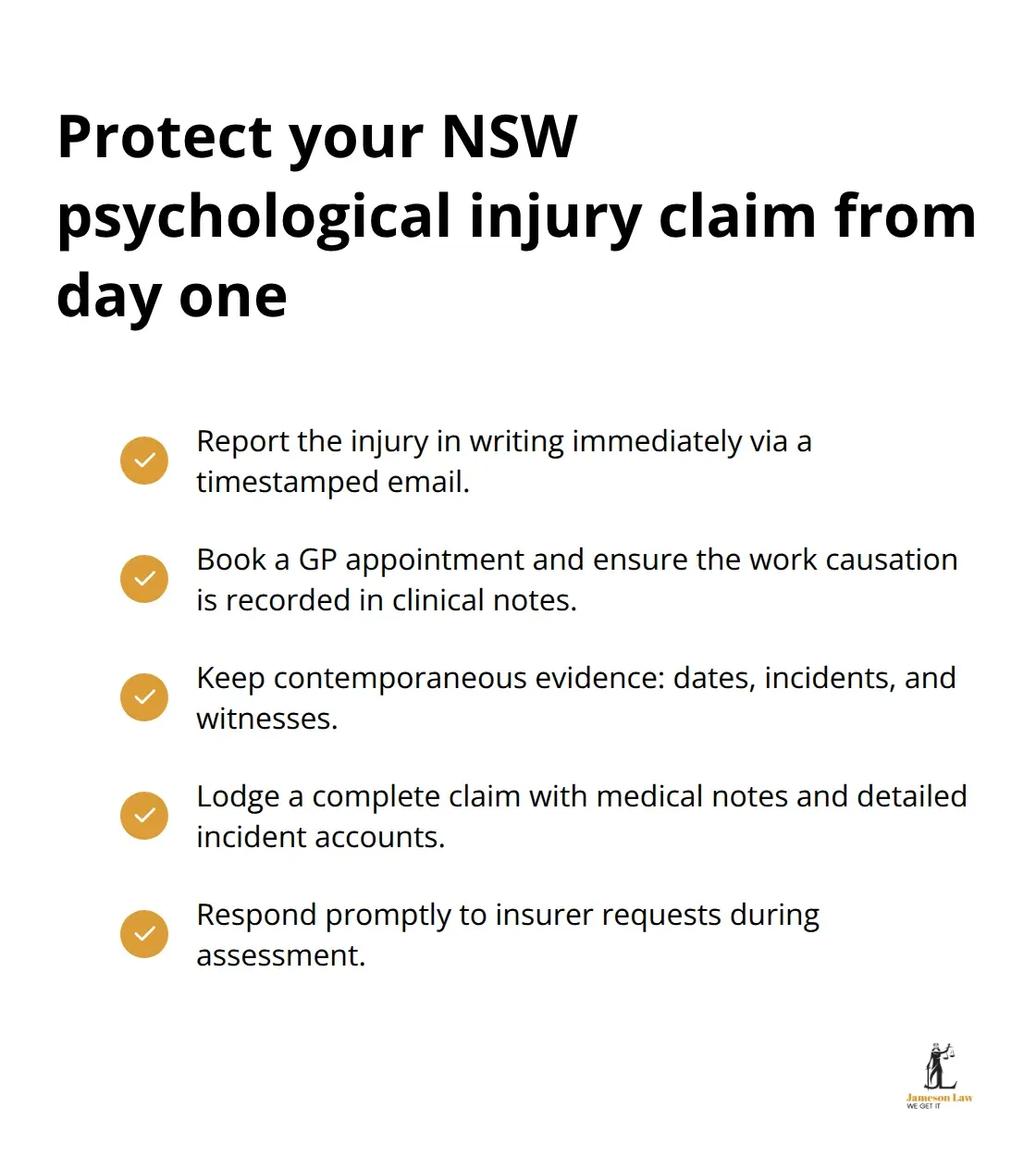
Notifying your employer immediately is not just recommended-it’s essential to your compensation case. NSW workers compensation law requires you to report your injury as soon as practicable, and delays create ammunition for insurers to reject your claim. When you notify your employer, provide written notice rather than a casual conversation. Email works effectively because it creates a timestamped record. State clearly that you’re reporting a work-related psychological injury, describe the circumstances or incidents that triggered it, and mention any medical appointments you’ve scheduled. Avoid minimising your condition or hedging your language with phrases like “I think” or “it might be.” Insurers scrutinise the language workers use in initial reports-vague or uncertain language suggests doubt about causation.
If your employer pressures you to keep the injury quiet or suggests you wait before making a formal report, that’s a red flag. Document these conversations immediately. Your employer must notify the insurer within 48 hours after becoming aware that a worker has received a workplace injury, and psychological injuries can qualify depending on their severity and impact on your capacity to work.
Build medical evidence from day one
Medical evidence determines whether your claim succeeds or fails, so start building it immediately. Schedule an appointment with your GP as soon as symptoms emerge, even if they’re mild. GPs create clinical records that form the foundation of your claim-insurers weight these records heavily because they’re contemporaneous and independent. When you see your GP, explain the specific workplace circumstances that triggered your psychological injury, not just your symptoms. Tell your doctor about the bullying incident with dates, the workload changes that occurred, or the traumatic event you witnessed. Provide context about how your workplace environment affected your functioning. Request your GP document this information in their clinical notes.
Insurers later compare the timeline in your medical records against the timeline in your claim-mismatches create doubt. If you delay seeking treatment after the incident, insurers argue personal factors caused your condition rather than work. Treatment delays of more than a few weeks significantly weaken psychological injury claims. Consider engaging a psychologist or psychiatrist who specialises in workplace mental health-these specialists understand the causation framework and can articulate how your employment directly triggered your condition rather than merely aggravating existing vulnerabilities.
Submit comprehensive documentation with your claim
When you lodge your claim with your insurer, attach comprehensive medical evidence from day one. Insurers assess claims partly on the strength of documentation provided upfront. Incomplete claims take longer to assess and give insurers legitimate grounds to request additional information, which delays payments. Include your GP’s clinical notes, any psychological or psychiatric assessments, and a detailed account of the workplace circumstances. Describe specific incidents with dates, times, and names of witnesses. Explain how these circumstances affected your work performance, your relationships, and your daily functioning.
Cooperate fully during the assessment phase
The assessment phase typically takes four to eight weeks for psychological injury claims, though this varies depending on medical complexity and the amount of supporting evidence you provide. During assessment, the insurer’s medical examiner reviews your claim independently. This examiner-usually an occupational physician or psychiatrist-determines whether your psychological injury genuinely arose from your employment. They examine your work history, personal circumstances, medical history, and the specific events you’re claiming about. They consider whether a reasonable person in your position would have experienced psychological injury under the same circumstances.
Cooperate fully with the assessment process. If the insurer’s medical examiner requests additional information or wants to interview you, respond promptly. Delays in providing information extend the assessment timeline and can work against you. If you disagree with the insurer’s medical examiner’s findings, you have the right to obtain your own independent medical assessment. This second opinion costs money, but it’s worthwhile if the initial assessment seems flawed or dismissive of your condition. Keep copies of all correspondence, medical records, and claim documents throughout this process. Once the assessment concludes, the insurer either approves your claim, rejects it, or requests further information-and understanding what happens next determines your next move.
Why Claims Get Rejected and How to Recover
Common reasons insurers reject psychological injury claims
Insurers reject approximately 30-40% of psychological injury claims in NSW, and most rejections stem from preventable mistakes rather than genuine ineligibility. The most common rejection reason is insufficient evidence linking your psychological injury to employment circumstances. Insurers argue that personal factors-relationship breakdown, financial stress, health issues unrelated to work-caused your condition instead.
This happens when workers fail to document specific workplace incidents with dates and detail, or when they delay seeking medical treatment by weeks or months after the triggering event. A gap between when the workplace incident occurred and when you first consulted your GP signals to insurers that personal factors likely caused your injury. If you were already receiving mental health treatment before the workplace incident, insurers scrutinise whether work genuinely triggered a new injury or merely worsened a pre-existing condition.
How inconsistencies undermine your claim
Another frequent rejection ground involves workers who minimised their injury in initial communications with their employer or insurer, then later claimed significant psychological damage. Insurers treat these inconsistencies as evidence you didn’t genuinely believe the injury was work-related at the time. Your initial report to your employer carries substantial weight throughout the assessment process-vague or uncertain language in that first notification creates doubt that persists through the entire claim.
Overturning rejected claims with new evidence
If your claim gets rejected, you have the right to request the insurer reconsider, and many rejections can be overturned with additional evidence-particularly updated medical assessments from your GP or a psychologist who explains why employment was the genuine cause. Some workers accept rejections without challenge, costing themselves thousands in compensation and ongoing treatment costs. The reconsideration process typically takes 2-4 weeks, and providing new medical evidence showing clear causation between your workplace circumstances and your psychological condition significantly increases approval chances.
Legal representation becomes genuinely valuable at this stage because lawyers identify weaknesses in the insurer’s reasoning and present evidence in a framework that addresses the insurer’s specific objections. Most insurers settle overturned claims within 4-6 weeks rather than proceeding to dispute resolution.
Compensation amounts and payment timelines
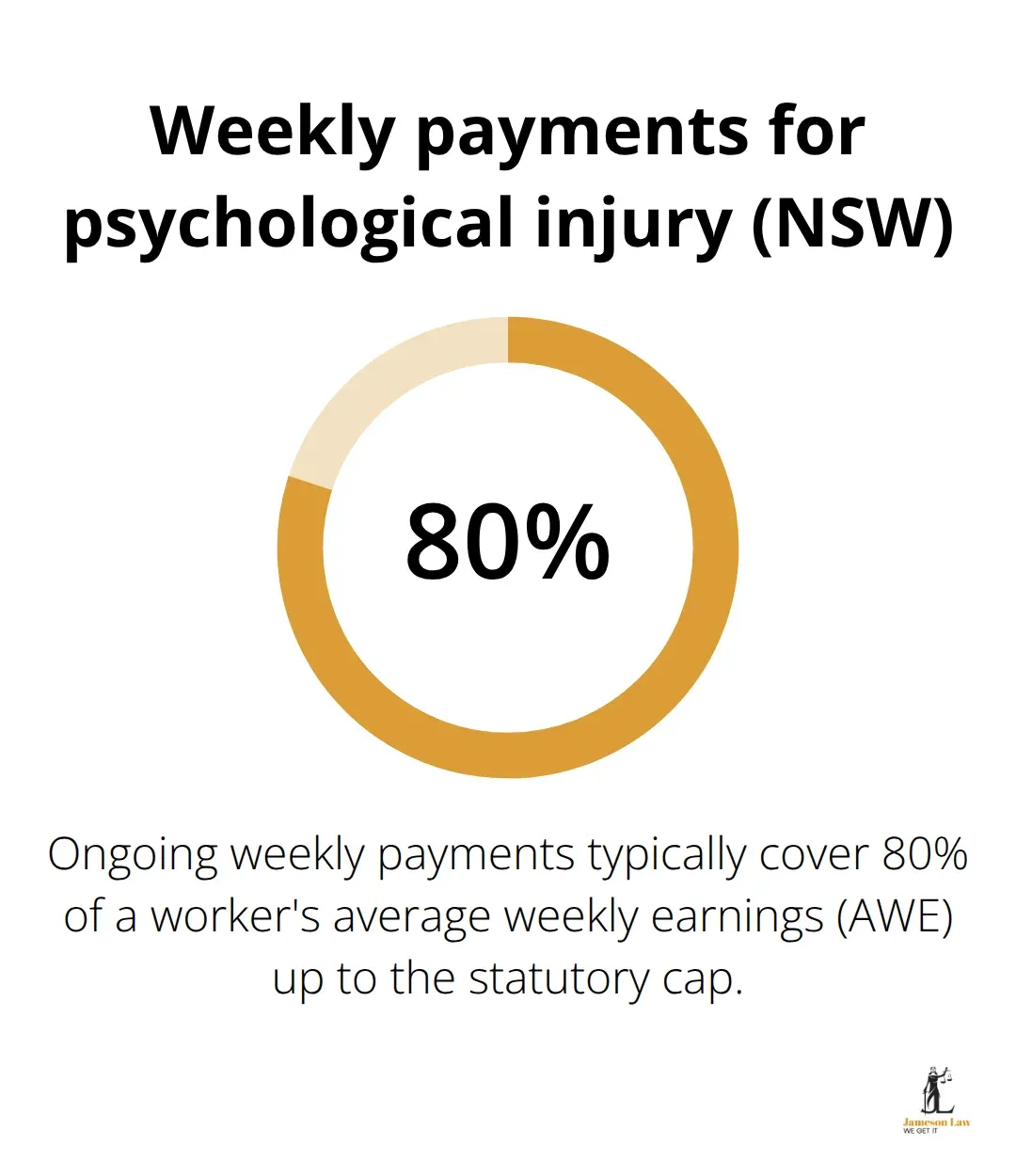
Psychological injury claims approved in NSW typically result in payouts ranging from $15,000 to $150,000 depending on injury severity, age, income, and whether you can return to work. Workers receiving ongoing weekly payments for psychological injury typically receive 80% of their average weekly earnings up to the maximum weekly payment amount set by legislation.
Treatment costs including psychology, psychiatry, and counselling sessions are covered separately from weekly payments, and insurers must approve reasonable treatment recommended by your medical practitioners. The entire assessment and approval process typically takes 4-8 weeks from lodgement, though complex claims involving multiple medical opinions or disputes about causation can extend to 3-4 months. Rejected claims that proceed to reconsideration add another 2-4 weeks.
Financial support while your claim is assessed
During this waiting period, you can access provisional payments for reasonable treatment and services related to your psychological injury while the claim assessment proceeds, meaning you’re not financially abandoned while waiting for approval. If your claim is ultimately rejected, provisional payments can continue for up to 13 weeks after rejection, providing breathing room to obtain legal advice and decide whether to pursue dispute resolution.
The timeline matters because your income stops if you can’t work, and delayed compensation creates financial pressure that sometimes forces workers to accept inadequate settlement offers. Legal representation from the outset streamlines this process because lawyers coordinate with medical practitioners to ensure evidence is comprehensive and submitted strategically, reducing assessment delays and rejection risk substantially.
Final Thoughts
Psychological injury work requires immediate action, comprehensive documentation, and persistence through the assessment process. The three critical steps that determine claim success are notifying your employer in writing as soon as symptoms emerge, building medical evidence from your first GP appointment, and submitting detailed documentation that clearly connects your workplace circumstances to your psychological condition. Delays in any of these areas give insurers legitimate grounds to reject your claim, and rejections occur far more often than workers anticipate.
If you’re experiencing work-related psychological injury but haven’t reported it yet, send your employer written notice today describing the specific workplace circumstances affecting your mental health. Schedule a GP appointment immediately and ensure your doctor documents the connection between your employment and your symptoms. If you’ve already lodged a claim, monitor your correspondence carefully and respond promptly to any requests for additional information from the insurer.
If your claim was rejected, don’t accept that decision without challenge-many rejections can be overturned with updated medical evidence or legal representation that identifies flaws in the insurer’s reasoning. We at Jameson Law have extensive experience helping workers navigate psychological injury claims, identifying weaknesses in insurer assessments, and securing compensation that reflects the genuine impact of work-related mental health conditions. Contact Jameson Law for practical legal advice tailored to your circumstances.