


An Apprehended Violence Order can significantly restrict your freedom and daily life. Whether the circumstances have changed or the order was issued unfairly, you have legal options to modify or remove it.
At Jameson Law, we help NSW residents navigate AVO variation requirements and cancellation processes. Understanding your rights is the first step toward reclaiming your situation.
What an Apprehended Violence Order Actually Is
An Apprehended Violence Order in NSW is a court order designed to protect someone from violence, threats, harassment or intimidation. NSW Police or a private person can apply for an AVO through the Local Court, and the order legally prohibits the respondent from committing further acts of violence or intimidation against the protected person. The order typically includes conditions that the respondent must follow, such as staying away from a specific address, not contacting the protected person, or maintaining a certain distance. Courts take AVOs seriously because breaching one is a criminal offence that can result in a maximum fine of $5,500 and/or imprisonment for 2 years according to the Crimes (Domestic and Personal Violence) Act 2007.
Interim Orders Versus Final Orders
An AVO can be issued as an interim order while the case is being heard or as a final order after the court decides the case. The distinction matters significantly because interim orders have lower evidentiary thresholds and provide temporary protection, while final orders require the court to be satisfied on the balance of probabilities that the respondent has committed or threatens to commit an act of violence or intimidation. This difference affects how you approach variation or cancellation applications later.
How an AVO Restricts Your Life
If you’re the person bound by an AVO, you face real restrictions on where you can go, who you can contact and how you can behave. Many people find these conditions affect their employment, family relationships and living arrangements significantly. The protected person, on the other hand, gains legal protection with a clear court order backing their right to safety.
Your Position Determines Your Options
Your position matters greatly when considering variation or cancellation because the court will assess applications differently depending on whether you’re the person bound by the order or the person it protects. If you’re bound by the order and circumstances have genuinely changed, you have the right to apply to vary or cancel it, but you’ll need to show substantial reasons and obtain the court’s permission first. If you’re the protected person and the conditions have become unnecessary or too restrictive, you can also apply to modify the order. Understanding which party you are in the AVO proceeding directly affects your application strategy and the grounds you can rely on when seeking changes to the order. The next section explains the specific grounds that courts accept when you want to vary an AVO.
How to Vary an Apprehended Violence Order
Grounds That Courts Accept for Variation
The court recognises that circumstances change, and an AVO that made sense at one point may no longer fit your situation. NSW courts require you to demonstrate that there has been a change of circumstances since the order was made. This might include securing stable employment that conflicts with a condition, establishing a new living arrangement, or completing a rehabilitation programme. The key involves showing concrete evidence of change, not just claiming things are different now.
When you’re the protected person, variation becomes easier because you can request modifications if the conditions feel too restrictive or if circumstances suggest they’re no longer necessary. You might want to remove a non-contact condition to allow communication about shared children, adjust a distance requirement, or add new protections if the situation has worsened. Courts assess these requests by weighing the safety of the protected person against the fairness of the conditions imposed on the respondent.
Starting Your Variation Application
To start a variation application in the Local Court, you’ll need to complete the Application to Vary an Apprehended Violence Order form, available from the court registry or the NSW Courts website. If you’re the respondent, you must first obtain leave from the court to make the application, which means filing a separate leave application explaining why the court should hear your variation request. This requires genuine evidence that circumstances have changed substantially.
You’ll need to provide supporting documentation such as employment letters, lease agreements, character references, or evidence of completed courses or counselling. The Local Court will set a hearing date once your application is filed, and both parties will be notified.
Presenting Your Case at the Hearing
At the hearing, you’ll present your case directly to the magistrate, explaining what has changed and why the variation is appropriate. The magistrate will ask questions, and the other party gets the opportunity to respond. Prepare to answer questions about how the variation protects the safety of the protected person while addressing your genuine circumstances (this balance matters significantly to the court’s decision).
If the magistrate grants leave and is persuaded by your evidence, they can vary the order immediately or schedule another hearing to finalise the changes. The next section covers the cancellation process, which operates under different grounds and requires a distinct application strategy.
How to Cancel an Apprehended Violence Order
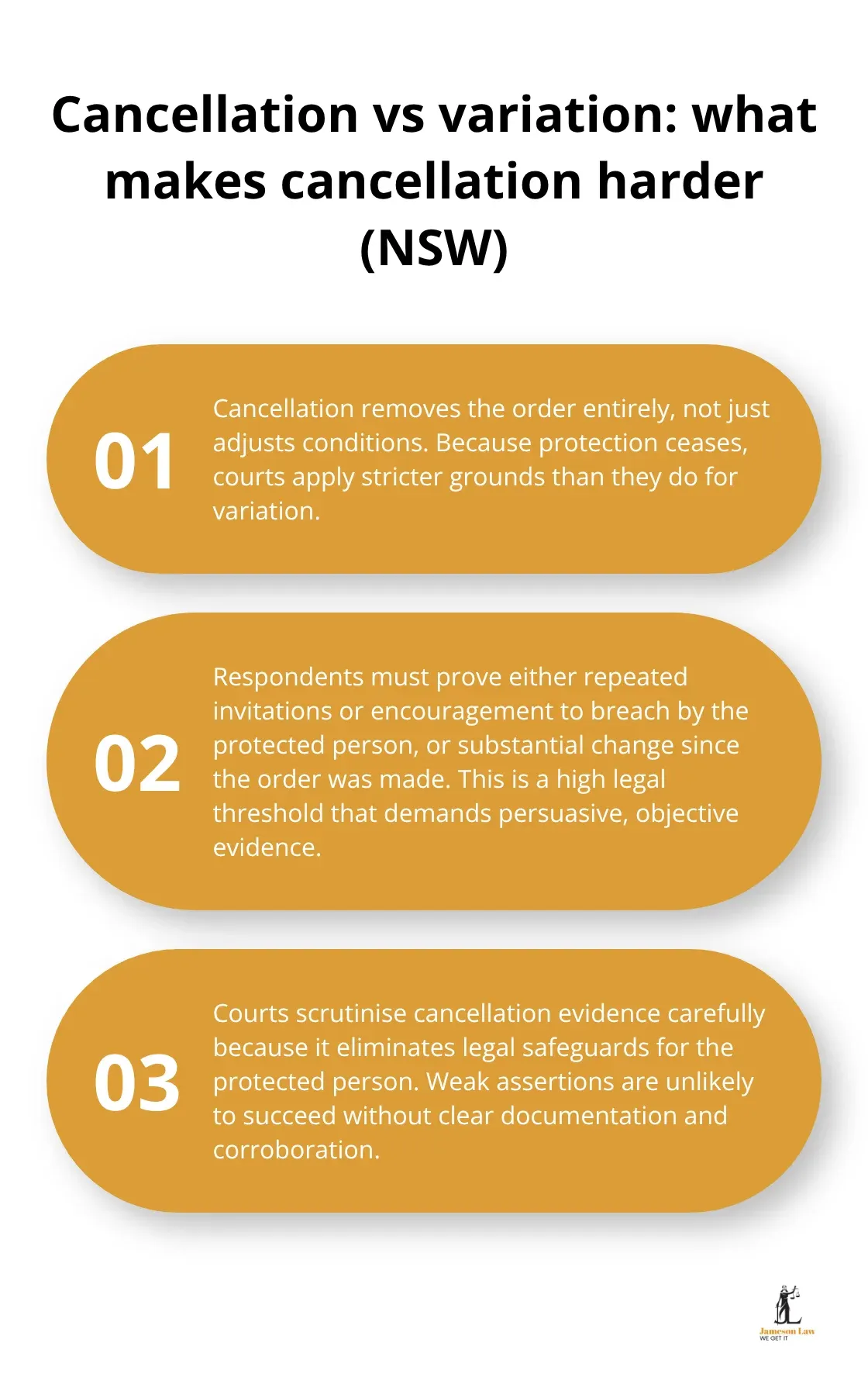
Cancellation differs fundamentally from variation because you ask the court to remove the order entirely rather than adjust its conditions. The grounds for cancellation are stricter than those for variation, and the court will only grant cancellation in specific circumstances. If you’re the respondent, you must show either that the protected person has repeatedly invited or encouraged you to breach the order, or that circumstances have changed so substantially since the order was made that it no longer serves its purpose. This is a high bar to meet, and courts examine the evidence carefully because cancellation removes all legal protections for the protected person.
When the Protected Person Seeks Cancellation
If you’re the protected person seeking cancellation, the process is more straightforward because you can withdraw your request for protection without needing to prove anything to the court. However, this decision carries weight because once cancelled, you lose the legal backing of the court order if the situation deteriorates later.
Filing Your Cancellation Application
Filing your cancellation application follows the same procedural pathway as variation. You’ll complete the Application to Cancel an Apprehended Violence Order form from the Local Court registry or the NSW Courts website. If you’re the respondent, you must obtain leave first by submitting a leave application that explains why the court should consider your cancellation request. This preliminary step filters out applications lacking genuine merit.
Gather documentation that supports your grounds, such as communications showing the protected person encouraging breach, evidence of substantial life changes since the order was made, character references, or records showing you’ve completed rehabilitation programmes or counselling. The court registry will schedule a hearing once your application is filed, and both parties receive notice.
Presenting Your Evidence at the Hearing
At the hearing, present your case directly to the magistrate, focusing on concrete evidence rather than assertions. If you’re the respondent arguing that the protected person repeatedly invited breach, bring communications such as text messages, emails or witness statements that demonstrate this pattern. If you’re arguing changed circumstances, show employment letters, housing arrangements, or completion certificates from programmes you’ve undertaken.
The magistrate will question you about your evidence, and the protected person has the right to respond and present their own evidence about why the order should remain. The magistrate will then decide whether cancellation is appropriate based on whether you’ve met the legal threshold.
Understanding What Courts Will Not Accept
Some respondents mistakenly believe that simply not breaching the order or maintaining good behaviour is sufficient grounds for cancellation, but courts view compliance as the minimum expectation, not a reason to remove the order. The decision ultimately rests on whether genuine, material change has occurred since the order was made or whether the protected person’s actions demonstrate they no longer need the court’s protection.
Final Thoughts
Varying or cancelling an Apprehended Violence Order requires you to understand the legal grounds, gather solid evidence, and present your case clearly to the magistrate. The AVO variation requirements differ significantly depending on whether you’re the person bound by the order or the protected person, and courts assess each application on its specific merits. Courts won’t accept vague claims or good behaviour alone as grounds for cancellation-you need employment letters, housing arrangements, character references, communications, or evidence of completed rehabilitation programmes.
The magistrate will examine whether your circumstances have genuinely changed since the order was made and whether the variation or cancellation protects everyone’s interests fairly. If you’re the respondent, you must demonstrate genuine change in circumstances or show that the protected person has repeatedly invited breach. If you’re the protected person, you can modify conditions more readily by showing they’re no longer necessary or appropriate.
Navigating this process can feel overwhelming, particularly when you’re the respondent seeking to obtain leave before your application is even heard. The procedural steps, evidentiary standards, and courtroom presentation all matter significantly to your outcome. We at Jameson Law help NSW residents understand their options and prepare strong applications for AVO variation or cancellation, so contact us to discuss your specific situation.