


Medical evidence forms the backbone of any successful injury claim. Without solid documentation of your injuries and treatment, insurers and courts have little reason to accept your case.
At Jameson Law, we’ve seen countless claims weakened or dismissed because claimants didn’t gather the right medical records or failed to follow treatment plans. The difference between winning and losing often comes down to how thoroughly you’ve documented your injury from day one.
Medical Records Form the Foundation of Your Claim
Medical documentation is a key component of personal injury cases, providing evidence that helps establish the nature and extent of injuries. They demonstrate how serious it is, and they connect your injury directly to the incident that caused it. Without comprehensive medical records, insurers have every reason to question whether your injury is real, how severe it is, or whether the incident actually caused it. Courts rely heavily on what medical professionals wrote down at the time of treatment, not on what you remember months or years later.
The Critical Timing of Your First Medical Appointment
The sooner you seek medical attention after an injury, the sooner a healthcare provider creates an official record that supports your claim. Any delay between the incident and your first medical appointment gives insurers ammunition to argue that your injury wasn’t serious enough to warrant immediate care or that something else caused it. We’ve seen claims severely weakened because claimants waited weeks or months before seeing a doctor, allowing insurers to suggest the injury developed from other causes or wasn’t as significant as claimed.
Why Treatment Records Outweigh Your Personal Account
Your medical records carry far more weight than your own description of what happened. A doctor’s clinical notes, test results, and treatment recommendations represent objective professional assessment, while your personal account can be dismissed as biased or inaccurate. Healthcare providers document your pain levels, physical limitations, and functional impact in real time, creating a chronological record of how your injury progressed.
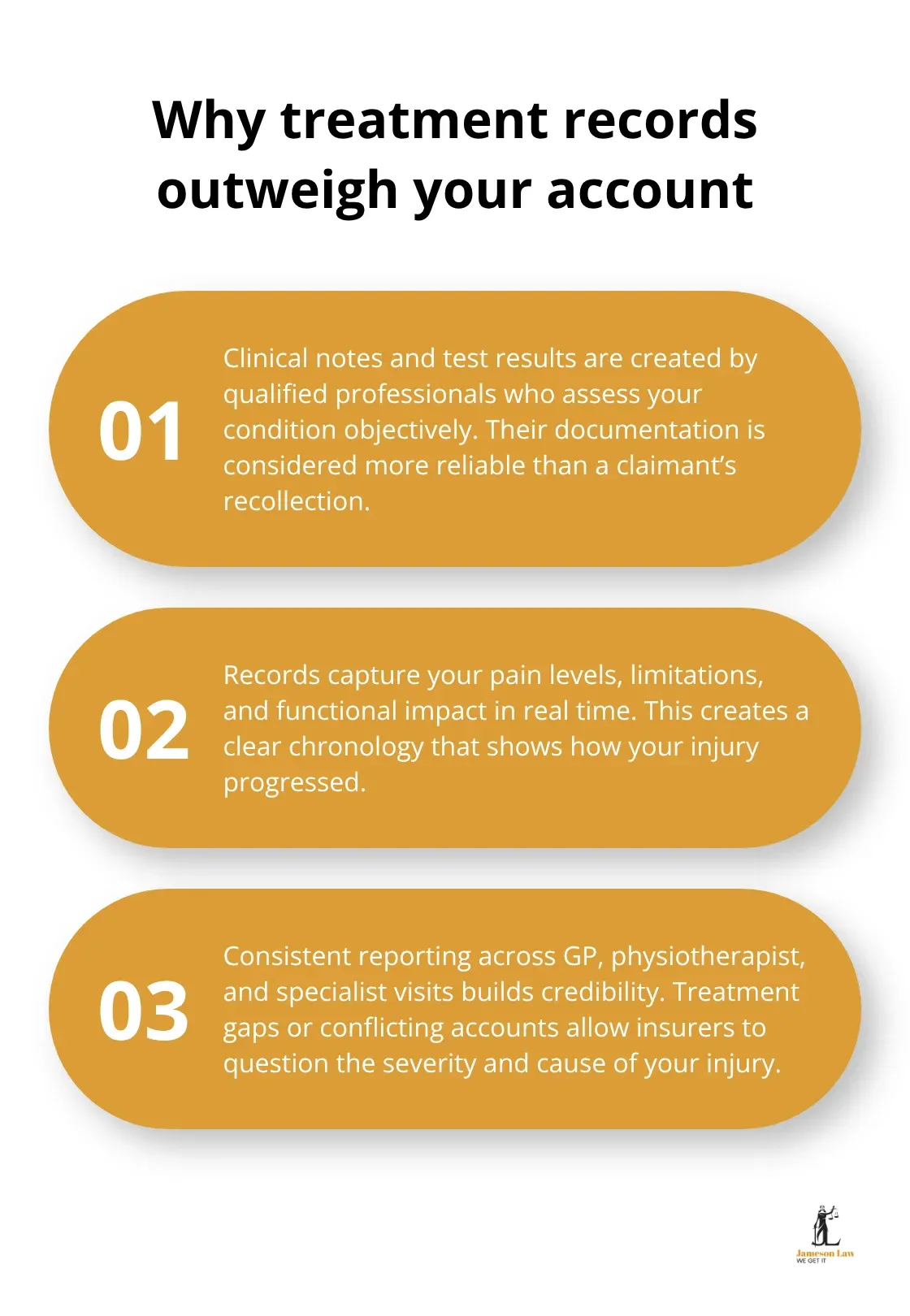
When you report symptoms consistently across multiple appointments-whether with your GP, physiotherapist, or specialist-that consistency builds credibility. Treatment gaps can directly affect the value of your claim, as they give defendant lawyers room to question your injury. If your medical records show you stopped treatment for months then suddenly resumed, insurers will argue your injury improved or that you weren’t genuinely committed to recovery.
The Weight of Expert Medical Reports
Expert medical reports can influence the settlement negotiations or court judgements regarding the compensation amount awarded to you as the injured party. An independent medical examination (arranged by your legal team) establishes diagnosis, prognosis, work capacity, and potential permanent impairment in language that judges and insurers take seriously. When your treating doctor’s assessment conflicts with an insurer’s independent medical examiner, multiple independent opinions strengthen your position considerably and give your lawyer concrete grounds to challenge the insurer’s findings.
This foundation of solid medical evidence becomes essential as you move forward with gathering and preserving the complete documentation your claim requires.
Gathering and Preserving Medical Evidence
Getting complete medical records is not optional-it forms the foundation of everything that follows in your claim. Contact every healthcare provider who treated you after the injury, including your GP, physiotherapist, specialist, hospital, and any allied health professionals. Request records in writing and ask specifically for clinical notes, test results, imaging reports, treatment plans, and progress notes.
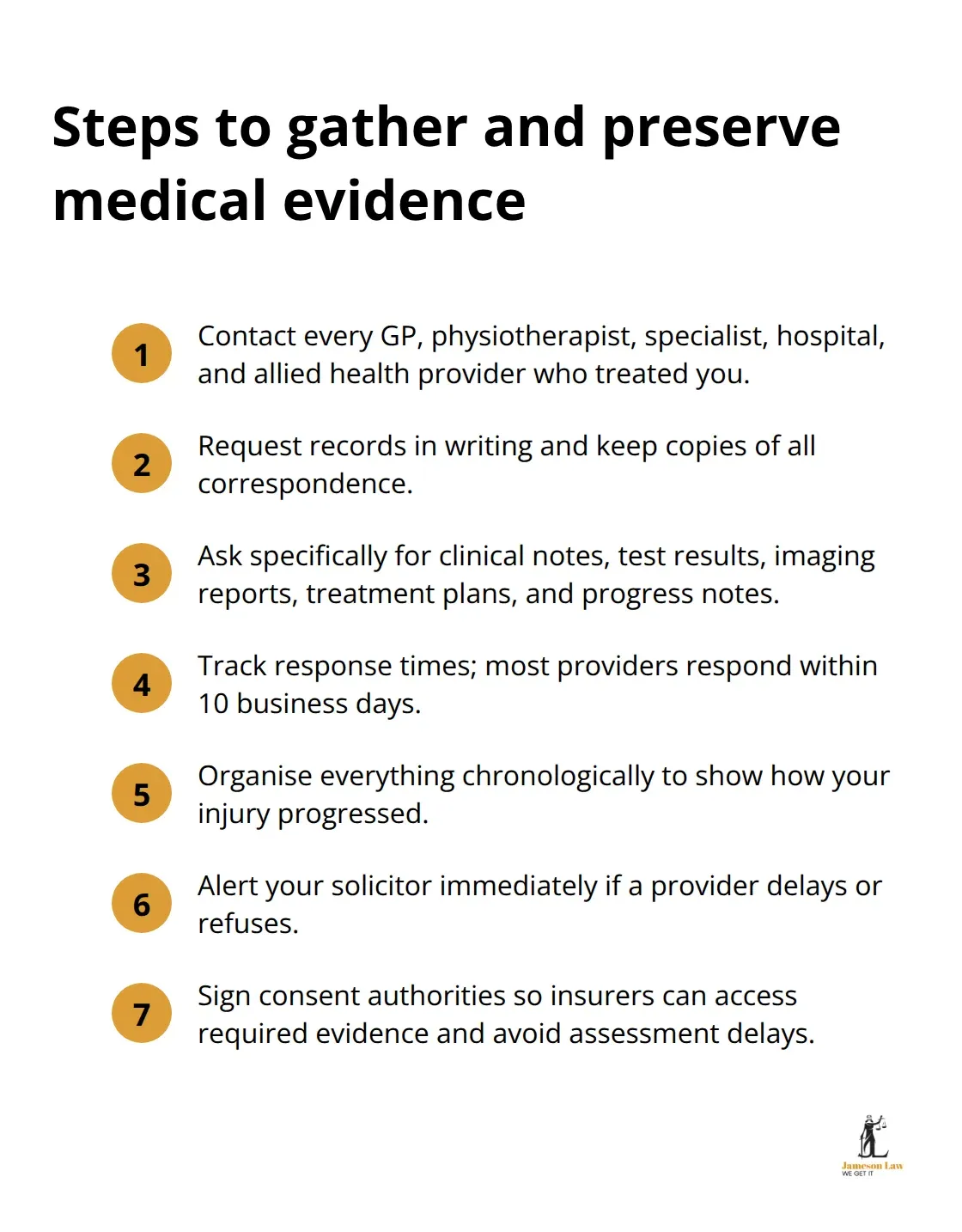
Most providers respond within 10 business days. Keep copies of everything you receive and organise them chronologically so you can see exactly how your injury progressed. If a provider delays or refuses, tell your solicitor immediately; they can use formal channels to access records on your behalf. Don’t assume your GP automatically sent records to specialists-many don’t, and gaps in your medical history weaken your claim considerably. Signing consent authorities for medical records is essential because without them, insurers cannot access the evidence they need to assess liability, which directly delays decisions on your claim.
Consistency across appointments strengthens your position
Your medical records must show consistency across multiple appointments and providers. Report all symptoms at every medical visit, including pain levels, functional limitations, how the injury affects your work and daily activities, and any changes in your condition. Doctors document what you tell them, so vague or incomplete descriptions create gaps that insurers exploit. If you see a physiotherapist, ask them to record specific measurements of your range of motion, strength, and functional capacity. If you’re experiencing mental health impacts from your injury, report these to your doctor as well; psychological injuries are legitimate components of many claims but only if documented. Avoid embellishing symptoms because insurers assess the reliability of your account, and inflated claims can backfire during settlement negotiations or if they arrange an independent medical examination. Treatment gaps are particularly damaging-if your records show you stopped physiotherapy for two months then resumed, insurers will argue your injury improved or that you weren’t genuinely committed to recovery, directly affecting your compensation.
Independent assessments challenge conflicting findings
When an insurer’s independent medical examiner reaches a different conclusion than your treating doctor, you need multiple independent opinions to challenge their findings. Work with your solicitor to arrange alternative independent medical assessments from specialists in your injury type. These assessments establish diagnosis, prognosis, work capacity, and permanent impairment in language that carries weight with judges and settlement negotiators. If you’re claiming for ongoing impacts on your earning capacity, ask your doctor to provide specific information about work restrictions and how long recovery might take. Keep your Progress Certificate of Capacity current if you’re on workers’ compensation; if it’s not up to date, the insurer can move to cease payments. For non-workers’ compensation claims, follow any work restrictions issued by your doctors to avoid re-injury and further delays in your recovery timeline. The strength of your independent assessments directly influences how insurers evaluate your claim and what compensation they offer.
Common Mistakes That Weaken Medical Evidence in Your Claim
Delays in Seeking Medical Treatment
Delays in seeking medical treatment hand insurers the perfect excuse to question whether your injury is genuine. If you wait weeks or months after an incident before seeing a doctor, insurers argue your injury wasn’t serious enough to warrant immediate care or that something else caused it. A gap between the incident and your first appointment creates reasonable doubt about causation, which is exactly what defendant lawyers exploit during settlement negotiations.
Seek medical attention within days of your injury, not weeks. The sooner a healthcare provider creates an official record, the sooner you have objective evidence supporting your claim. If cost presents a barrier, contact your GP first-bulk-billing options exist across NSW, and your solicitor can advise on available support.
Inconsistencies in Your Medical Records
Inconsistencies in your medical records actively damage your credibility with insurers and courts. If you report severe pain at one appointment then mention you’ve been playing sport at the next, insurers use that contradiction to argue your injury is exaggerated or that you’ve recovered more than you claim. Treatment gaps are particularly damaging-if your records show you stopped physiotherapy for two months without explanation then resumed, insurers assume your injury improved or that you weren’t genuinely committed to recovery.
Report all symptoms at every appointment, including pain levels, functional limitations, how the injury affects your work capacity, and any psychological impacts. Be honest about what you can and cannot do; embellishing symptoms backfires when insurers arrange independent medical examinations or hire investigators to assess your actual capacity.
Failure to Follow Medical Advice
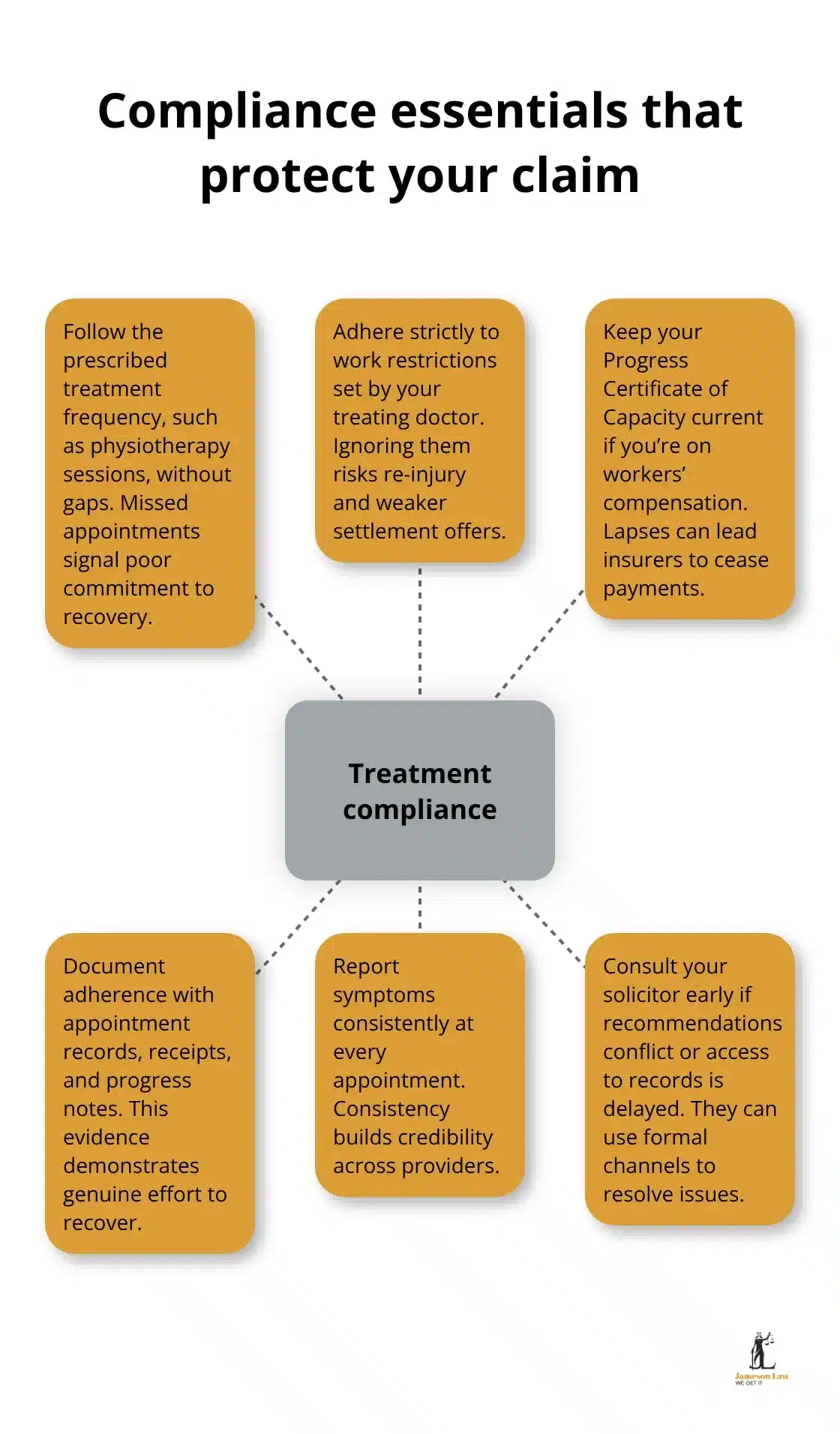
Failure to Follow Medical Advice signals to insurers that your injury isn’t serious enough to warrant compliance. If your doctor recommends physiotherapy twice weekly and you attend once monthly, insurers argue you’re not genuinely pursuing recovery. Work restrictions issued by your treating doctor must be followed strictly-if you ignore restrictions and re-injure yourself, your claim becomes significantly harder to pursue and settlement offers drop substantially.
Keep your Progress Certificate of Capacity current if you’re on workers’ compensation; allowing it to lapse gives insurers grounds to cease payments immediately. Document your adherence to treatment plans by keeping appointment records, receipts, and progress notes from all healthcare providers. This evidence demonstrates your commitment to recovery and strengthens your position when negotiating with insurers.
Final Thoughts
Strong medical evidence transforms your injury claim from a dispute into a documented case that insurers and courts take seriously. Every appointment you attend, every treatment you complete, and every symptom you report becomes part of an objective record that proves what happened to you and how it affected your life. Medical evidence injury claimants gather in the first weeks and months after an incident often determines whether they receive fair compensation or face rejection.
Contact every healthcare provider who treated you and request complete medical records in writing. Organise these records chronologically so you can see your injury’s progression clearly, report all symptoms consistently at every appointment, and follow your doctor’s treatment recommendations without gaps. If an insurer’s independent medical examiner disagrees with your treating doctor, work with your legal team to arrange alternative assessments that challenge their findings.
At Jameson Law, we coordinate with medical professionals, arrange independent assessments, and ensure your medical records are complete and organised before settlement negotiations begin (we handle formal requests for records, manage consent authorities, and challenge conflicting medical opinions on your behalf). Contact Jameson Law for a free assessment of your claim-we work on a No Win, No Fee basis for personal injury claims, so you can pursue your case without upfront legal costs.