

Workplace harassment that causes injury is more common than many Australians realise, and it can have serious legal consequences for employers who fail to act.
If you’ve experienced harassment at work that’s left you injured-whether physically or psychologically-you have legal rights and options available to you. At Jameson Law, we help clients understand their protections under Australian law and pursue the compensation they deserve.
What Harassment and Bullying Actually Mean in Australian Law
How Australian Law Defines Workplace Harassment
Australian law defines workplace harassment as unwelcome conduct, statement or action based on a protected attribute that offends, humiliates, intimidates or frightens a worker. Under the Fair Work Act 2009, protected attributes include race, colour, sex, sexual orientation, age, physical or mental disability, marital or family status, religion, political opinion, national extraction and social origin. This definition matters because not every unpleasant workplace interaction qualifies as harassment.
A single critical comment from a manager does not meet the threshold. However, a pattern of exclusion targeting someone because of their gender, repeated derogatory comments about someone’s age or disability, or threats based on religious beliefs constitute harassment. The key distinction is that harassment must be unwelcome and tied to a protected attribute, whereas general rudeness or poor management practices fall outside the legal definition.
The NSW Workers Compensation Pathway for Bullying
In NSW, the Workers Compensation scheme recognises workplace bullying as relevant conduct that triggers a separate claims pathway for primary psychological injuries first notified on or after 1 July 2026. Bullying sits alongside sexual harassment, racial harassment and excessive work demands as conduct that can cause compensable injury. This change reflects the serious impact that workplace misconduct has on workers’ mental health and safety.
How Harassment and Bullying Differ
Harassment and bullying operate differently under Australian law, though people often use the terms interchangeably. Bullying typically involves repeated, unreasonable behaviour directed toward a worker that creates a risk to health and safety, but it does not require a protected attribute as the basis. Someone can experience bullying through aggressive yelling, deliberate exclusion from work activities, sabotage of their work or constant criticism regardless of whether the target belongs to a protected group.
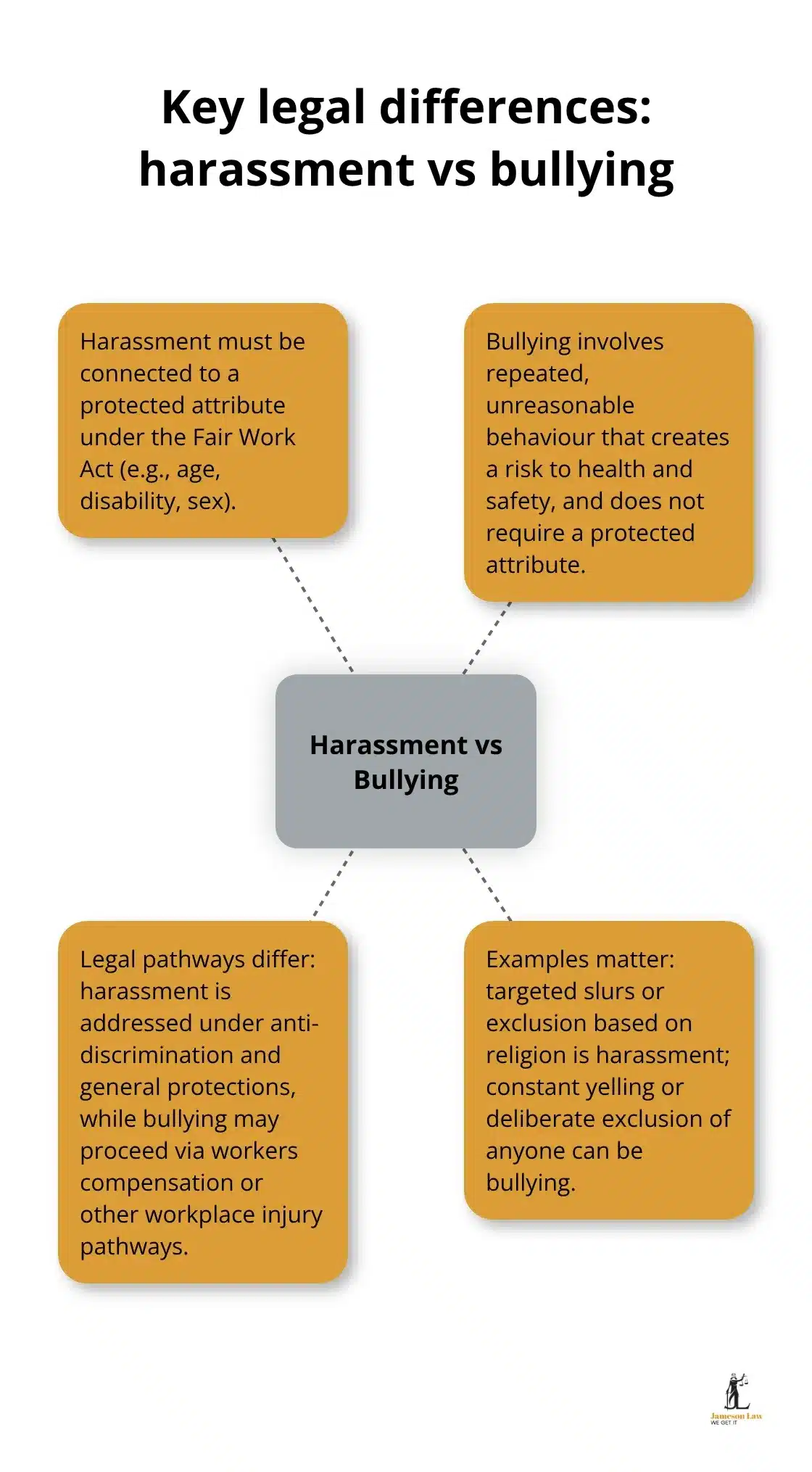
Harassment, by contrast, must connect to a protected attribute. A supervisor who bullies everyone indiscriminately faces different legal exposure than one who targets workers based on age or disability. This distinction affects which legal remedies apply. Harassment claims fall under anti-discrimination legislation, while bullying claims may proceed through workers compensation, general protections claims or workplace injury pathways depending on when the conduct occurred and what harm resulted.
The Impact on Workers and Employers
Safe Work Australia data shows psychological injury claims result in significantly longer time lost compared to physical injuries, reflecting the serious impact of harassment and bullying. Employers must treat psychosocial hazards (including harassment) with the same rigour as physical risks through regular risk assessments, documented controls and worker consultation. Early reporting of harassment matters because it creates an evidence trail and triggers employer obligations to investigate and respond within reasonable timeframes.
Understanding these distinctions helps you identify whether your situation qualifies for legal action and which pathway suits your circumstances best. Your next step involves understanding what protections the law actually provides to you as a worker.
What Legal Protections Apply to You
The Fair Work Act 2009 and Your Right to Be Free from Harassment
The Fair Work Act 2009 provides the foundation of your protection against workplace harassment in Australia. Under this legislation, employers must take reasonable steps to prevent harassment based on protected attributes and respond appropriately when it occurs. This means your employer cannot simply ignore complaints or fail to investigate allegations. If harassment happens and your employer does nothing, they have breached their legal duty.
The Fair Work Commission can award compensation for breaches of general protections, which includes the right to be free from harassment. In practice, this means if you have reported harassment and your employer failed to act, you have grounds for a claim. The strength of your position depends on whether you documented the harassment when it occurred and whether you formally reported it to management or HR.
Why Psychological Injury Claims Matter
Safe Work Australia data shows psychological injury claims result in median time lost of 34.8 working weeks, which is almost 5 times longer than physical injuries, underscoring why employers must take harassment seriously rather than treating it as a minor workplace issue. This disparity reflects the genuine impact that harassment has on workers’ ability to function and recover. Employers who dismiss harassment complaints expose themselves to significant liability and demonstrate a failure to meet their duty of care.
NSW Workers Compensation and the Bullying Pathway
NSW workers benefit from additional protections under state legislation and the Workers Compensation scheme. From 1 July 2026, new eligibility requirements and thresholds now apply to primary psychological injury claims first notified on or after 1 July 2026, recognising workplace bullying as relevant conduct triggering a separate pathway in NSW. This means if bullying causes you psychological injury, you can pursue compensation through workers compensation even if the bullying does not connect to a protected attribute.
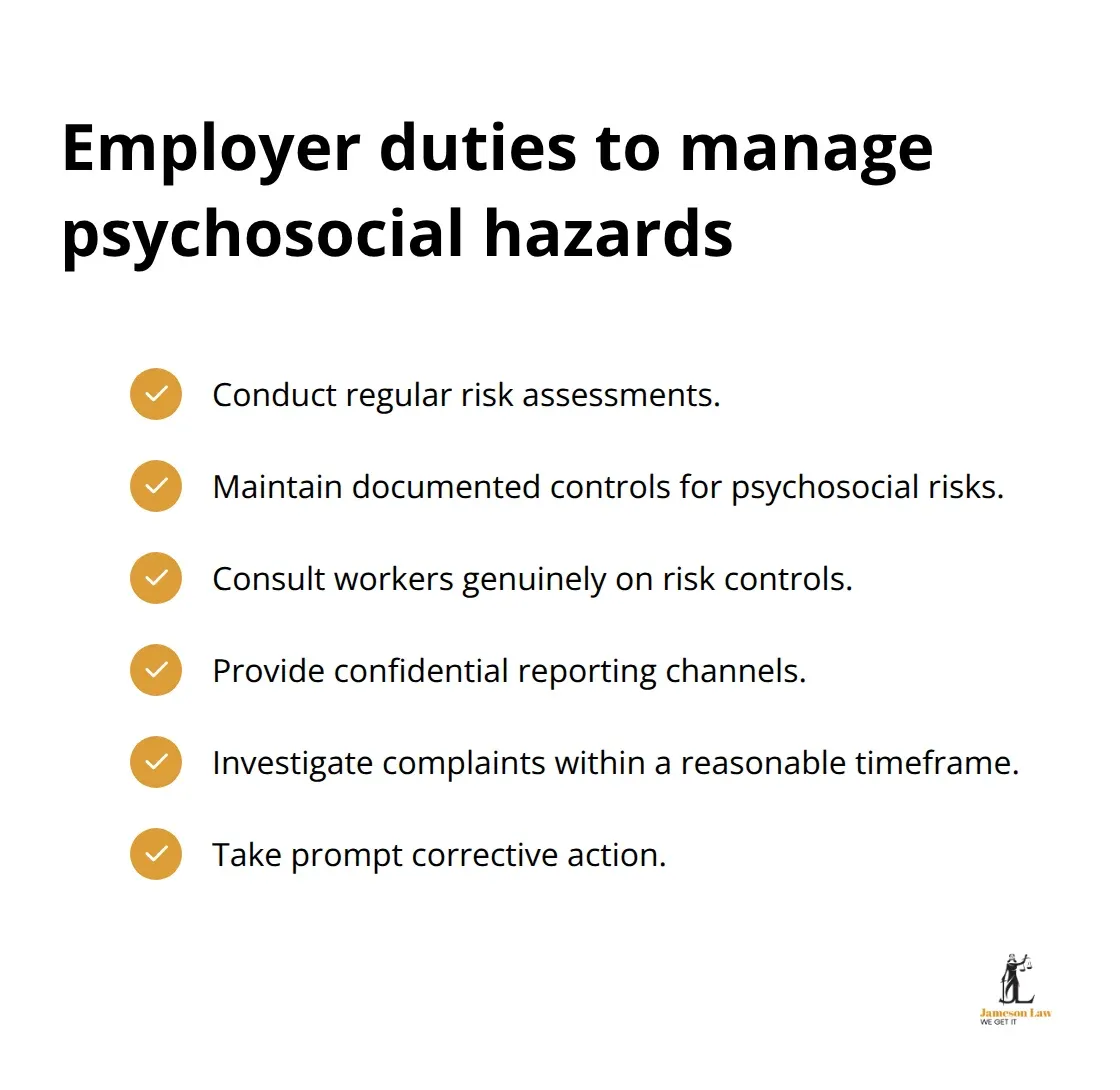
Your employer has a duty to identify and control psychosocial hazards including harassment with the same rigour applied to physical risks. This requires regular risk assessments, documented controls and genuine worker consultation. Practically speaking, your employer should have processes in place to report harassment confidentially, investigate complaints within a reasonable timeframe and take corrective action.
Building Your Documentation and Evidence
If your workplace lacks these systems, that failure itself demonstrates breach of duty. When documenting incidents, keep records brief and factual-focused on what happened rather than emotional impact-as this protects your wellbeing without creating additional distress. If harmful behaviour continues after you have reported it, prioritise your safety and wellbeing while engaging with treatment and support.
Your legal claim will be stronger if you can show you raised concerns through proper channels and your employer failed to respond adequately. The evidence you gather now directly affects your ability to pursue compensation later. This documentation becomes critical when you move toward formal claims processes.
Moving Forward with Your Claim
Understanding what protections apply to you is only the first step. The next phase involves understanding how to actually pursue compensation and what the claims process requires of you.
How to Pursue Your Harassment Compensation Claim
Understanding Your Three Claim Pathways
Three distinct pathways exist for claiming compensation for harassment-related injury in NSW, and which one applies depends on when you first notified your claim and the nature of the harm. If your psychological injury from harassment was first notified on or after 1 July 2026, you may qualify for the relevant-conduct pathway under NSW Workers Compensation, which has specific eligibility criteria and a determination period from SIRA. For claims notified before that date, the older framework applies.
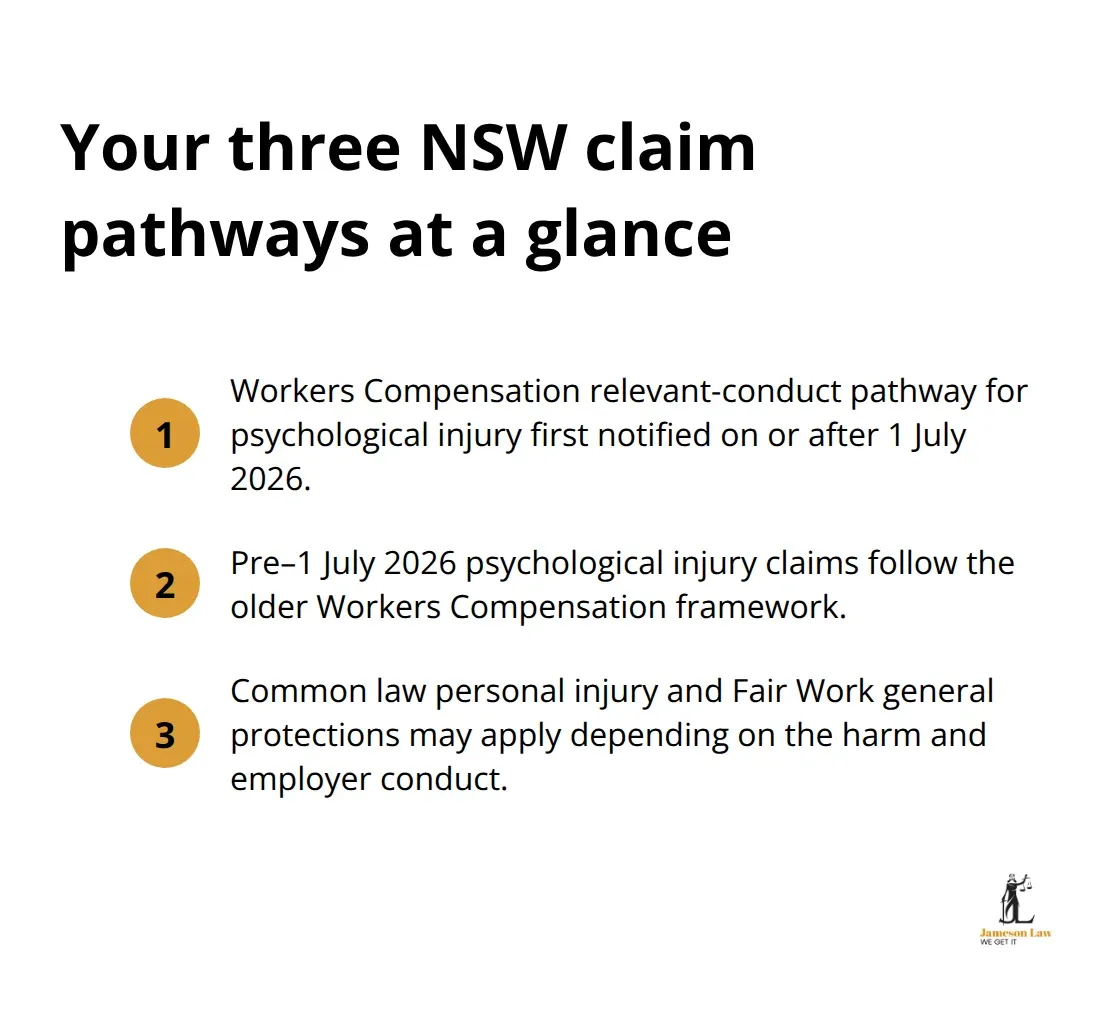
If you’ve suffered physical injury from harassment-such as stress-related cardiovascular events or musculoskeletal damage from physical assault-you can pursue a personal injury claim against your employer under common law negligence. Additionally, you can lodge a general protections claim with the Fair Work Commission if your employer failed to prevent harassment or retaliated against you for reporting it. Each pathway has different timeframes, evidence requirements and compensation structures.
Building Your Evidence and Documentation
Your evidence determines your claim’s strength far more than the legal pathway you choose. Safe Work Australia data from 2020–21 shows psychological injury claims result in median time lost of 34.8 weeks compared to 7.1 weeks for physical injuries, which means insurers and courts take the severity seriously-but they require solid proof that harassment actually occurred and caused measurable harm. Document every incident factually: date, time, who was present, what was said or done, how you responded and any witnesses. Keep these records separate from your emotional reflections so that reviewing them does not compound your distress. If you reported the harassment to your manager, HR or a union representative, obtain copies of that report and any response your employer provided.
Demonstrating Your Employer’s Failure to Act
If your employer ignored your report or failed to investigate within a reasonable timeframe (typically 10 to 15 working days for serious allegations), that inaction strengthens your claim substantially because it demonstrates breach of duty. Medical evidence linking harassment to psychological injury is equally critical: have your treating doctor or psychologist document the connection between the harassment and your injury, including sleep disturbance, anxiety, avoidance of work tasks or physiological symptoms. This medical evidence bridges the gap between what happened and the harm you suffered. Under NSW Workers Compensation rules, a psychologist assesses your symptoms and functioning while the insurer determines whether legal criteria are met, so ensure your treatment records clearly establish causation rather than treating therapy as separate from your claim.
Meeting Critical Timeframes and Deadlines
The statute of limitations for personal injury claims NSW is three years from the date of injury, but this can be extended in some circumstances if you can demonstrate you did not know the injury was caused by negligence. For Workers Compensation claims notified before 1 July 2026, different timeframes apply, so contact SIRA or your insurer immediately to confirm your deadline. The determination period for relevant-conduct claims notified after 1 July 2026 means your insurer must decide liability within that window, though interim medical support may be available while determination occurs. Early notification protects your rights and creates a contemporaneous record that courts and insurers view as more reliable than delayed complaints reconstructed months later.
Final Thoughts
Workplace harassment injury claims follow multiple legal pathways, each with distinct requirements and timeframes. The Fair Work Act 2009 allows you to pursue general protections claims for harassment tied to protected attributes, while NSW Workers Compensation provides a separate route for bullying-related psychological injuries first notified from 1 July 2026 onwards. Personal injury claims under common law negligence apply when harassment causes physical or psychological harm through your employer’s breach of duty, and the strength of your claim depends on solid documentation, medical evidence, and proof that your employer failed to prevent or respond appropriately to the conduct.
Your immediate action involves documenting incidents factually and reporting harassment through your workplace channels if safe to do so. Obtain copies of any reports you have made and your employer’s response, then seek medical assessment from your GP or a psychologist to establish the connection between harassment and your injury. Contact your insurer or SIRA to confirm notification deadlines and claim eligibility, particularly if your workplace harassment injury was first notified after 1 July 2026, as timeframes directly affect your legal rights.
We at Jameson Law specialise in personal injury claims and understand the complexities of workplace harassment cases. Our team can review your circumstances, explain which legal pathway applies to you and guide you through the claims process on a no win, no fee basis for personal injury claims. Contact Jameson Law at https://jamesonlaw.com.au to discuss your situation with an experienced legal adviser who can provide tailored guidance based on your specific facts and circumstances.