

A partner visa is one of the most significant immigration pathways for couples wanting to build their life together in Australia. Getting it right from the start matters, because rejections often stem from preventable oversights in your application.
At Jameson Law, we’ve seen countless applications succeed or fail based on how thoroughly applicants prepare. This guide walks you through the core partner visa eligibility requirements in Australia so you can assess your situation before you apply.
Partner Visa Eligibility: The Three Core Requirements
Relationship Status and Legal Recognition
Your eligibility for a partner visa hinges on three interconnected factors that the Department of Home Affairs assesses simultaneously. First, your genuine and ongoing relationship with legal recognition in Australia is essential. This isn’t about how you feel-it’s about what you can prove.
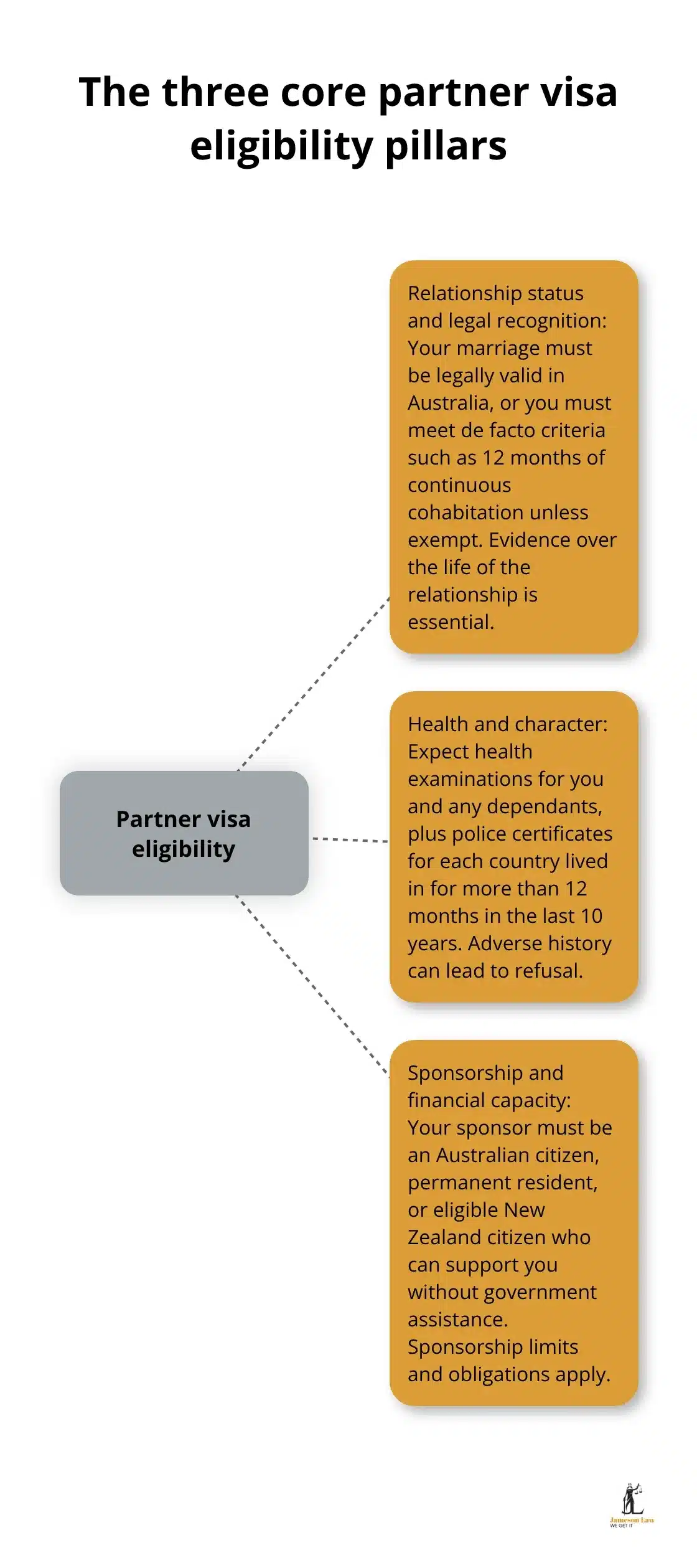
Marriages must be legally valid under Australian law, and overseas marriages may not receive recognition, so your first step involves confirming your marriage’s legal status in Australia. De facto relationships require more than simply living together; the Department expects at least 12 months of continuous cohabitation, though this waiver applies for registered relationships, compelling and compassionate circumstances, or if you hold a humanitarian visa. Same-sex couples follow the same rules.
Health and Character Requirements
Second, you must meet health and character requirements. The Department will request health examinations for you and any dependent children included in your application. You’ll need police certificates from every country where you’ve lived for more than 12 months in the last 10 years since turning 16. The character test assesses criminal history and risk to the Australian community; past offences can lead to outright refusal.
Sponsorship and Financial Capacity
Third, your Australian sponsor-who must be a citizen, permanent resident, or eligible New Zealand citizen-must demonstrate financial capacity to support you. There’s no specific income threshold published, but the Department considers whether the sponsor can reasonably support you without relying on government assistance. Sponsorship obligations typically last two years after your initial visa grant, and sponsors face strict limits: generally you cannot sponsor more than two partners in your lifetime, with a five-year wait before sponsoring another unless compelling circumstances apply.
Building Your Evidence Package
Your relationship status carries the most weight in refusals we observe regularly. The Department requires detailed evidence spanning the entire history of your relationship, not just recent months. Sporadic or recent-only documentation raises serious doubts about genuineness, even if your relationship is completely authentic. Financial documents matter here too-joint bank accounts, shared bills, and property ownership demonstrate commitment beyond emotion. Social evidence including photographs together, invitations to events, travel records, and testimony from two Australian citizens or permanent residents (via Form 888 statutory declarations) form the backbone of a strong application.
Processing Timelines and Visa Costs
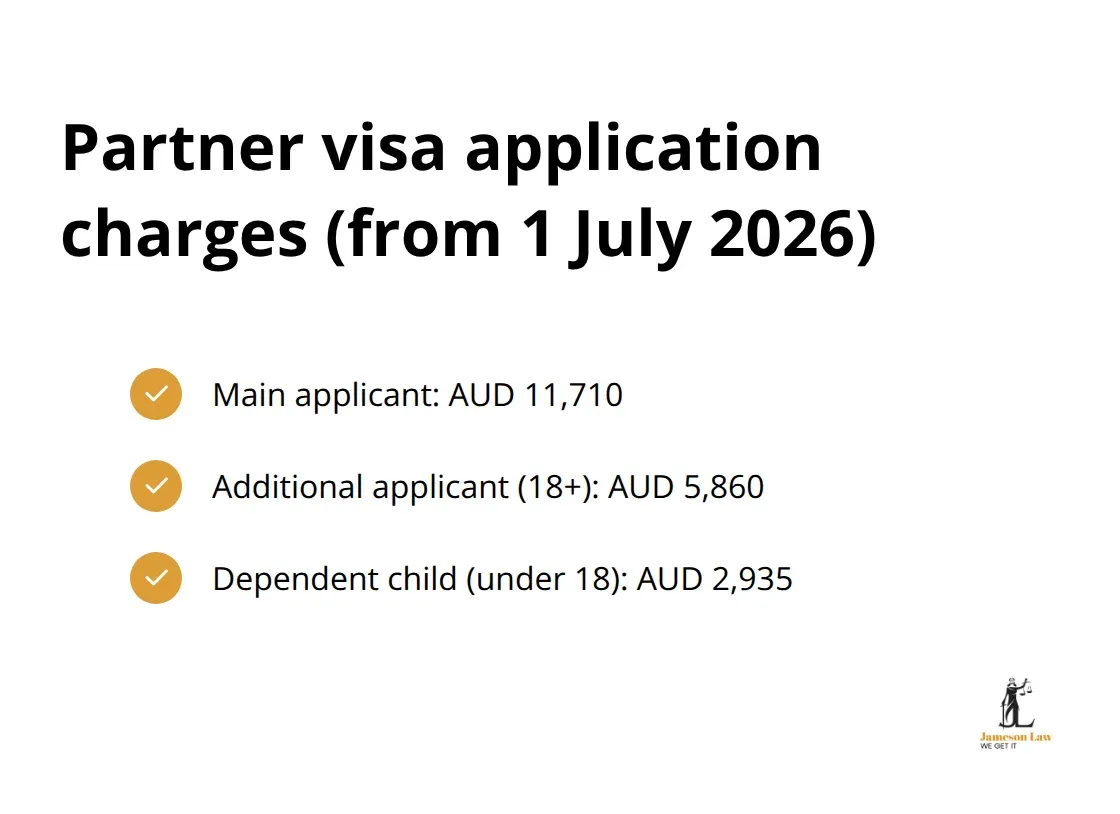
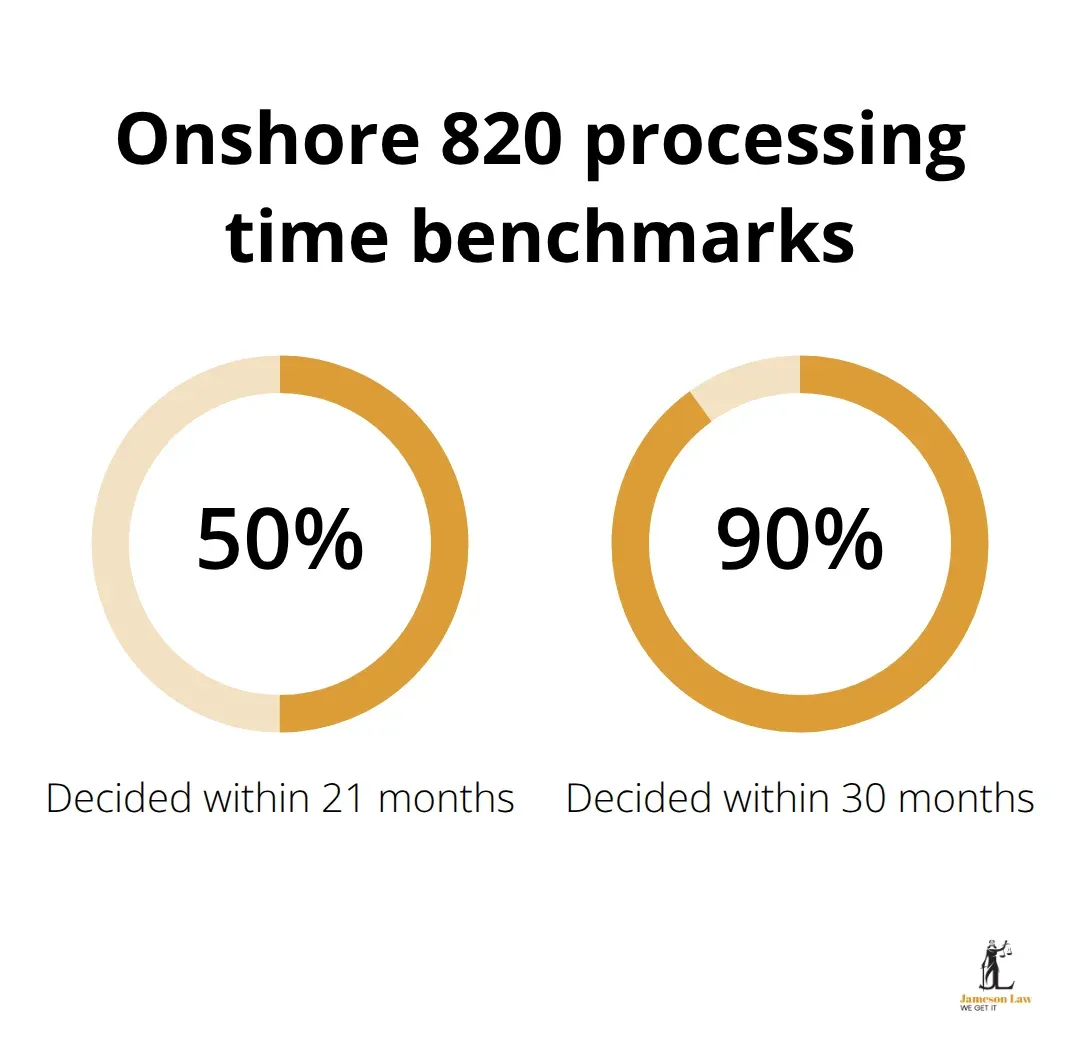
If you apply onshore as a temporary 820 visa holder, you’ll eventually transition to permanent residency via the 801 visa; processing typically sees 50% of 820 applications decided within 21 months and 90% within 30 months according to Department of Home Affairs data current as of November 2026. Ministerial Direction 117, effective from 25 July 2026, prioritises onshore 820 and 801 applications among all partner visas, meaning your application receives faster processing if you’re already in Australia. The visa charge from 1 July 2026 is AUD 11,710 for the main applicant, AUD 5,860 for additional applicants aged 18 and over, and AUD 2,935 per dependent child under 18; this single charge covers both your temporary and permanent stages.
Inconsistency across your documents, forms, and any interview responses will undermine your case-the Department flags conflicting information as a red flag for fabricated relationships. If you submit misleading, false, or incomplete information, you face refusal and potentially a multi-year visa ban under Public Interest Criteria 4020. Understanding these requirements now positions you to gather the right evidence and avoid the documentation gaps that commonly derail applications.
Documentation and Evidence You’ll Need
Financial Records Prove Your Commitment
The Department of Home Affairs assesses your relationship based on what you can document, not on feelings. This distinction matters enormously because applications fail when couples submit sporadic evidence or focus only on recent months. Start your evidence collection at least three months before you apply, working backwards through your entire relationship history. The Department expects to see financial integration, social recognition, and household commitment spanning years, not weeks.
Joint bank accounts and shared bills form the foundation of your financial evidence. If you’ve operated separate accounts throughout your relationship, open a joint account now and maintain it for at least two to three months before lodging. The Department views consistent joint spending on household expenses, groceries, and utilities as proof of genuine commitment. Gather your last 12 months of bank statements showing regular transfers between accounts if one partner contributes to shared expenses, mortgage or rent payments in both names, and any joint credit card statements. Property ownership or a joint lease strengthens your case significantly-these documents prove you’ve made long-term commitments together.
Social Evidence and Witness Declarations
Social evidence carries equal weight to financial documentation. Collect photographs spanning your entire relationship, not just recent holidays or celebrations. Include photos from everyday moments, family gatherings where you appear together, travel records showing joint trips, and any invitations to social events in both your names.
Two Form 888 statutory declarations from Australian citizens or permanent residents who know you as a couple are mandatory. These witnesses must attest to knowing you both for at least one year and be willing to confirm the genuineness of your relationship. Select witnesses who can speak to specific details about your relationship-how you met, your living arrangements, how you interact together-rather than general character references. Documentation such as marriage certificates strengthens these declarations by providing official proof of your commitment.
Medical Examinations and Police Clearances
Medical examinations and police clearances form the second pillar of your evidence package, and timing matters here because delays in obtaining these documents frequently push back processing. The Department requests health assessments only after your application progresses, but you should obtain police certificates before lodging. Police certificates must come from every country where you’ve lived for more than 12 months in the last 10 years. This requirement catches many applicants off guard-if you’ve worked abroad, studied overseas, or lived in another country during this period, you need certificates from each location. Order these now rather than waiting for a Department request because international processing can take two to three months.
Health examinations occur through approved panel doctors in Australia, and the Department will direct you to attend once your application reaches the appropriate stage. Ensure any dependent children under 18 included in your application complete health examinations when requested.
Consistency and Organisation Across All Documents
Inconsistency between your documents, your partner’s statements, and your interview responses (if required) signals fabrication to Department officers. If your bank statements show you living in different cities but your Form 888 witnesses claim you’ve shared a home for three years, the application faces serious scrutiny. Cross-check every date mentioned in your evidence-lease commencement dates, utility account start dates, travel records-against what appears in your application form and sponsorship documents.
Submit all evidence in chronological order with a cover sheet listing each document. This organisation demonstrates professionalism and makes the Department’s assessment faster, reducing delays in processing. Once you’ve compiled your complete evidence package, you’ll move toward understanding the specific reasons applications face rejection-knowledge that helps you identify and eliminate weak points before you lodge.
Common Reasons Partner Visa Applications Get Rejected
The Department of Home Affairs rejects partner visa applications for specific, preventable reasons. Most rejections stem not from relationship problems but from documentation failures. The Department’s own processing data shows that insufficient evidence of a genuine relationship remains the leading rejection factor, followed by character or health issues, and inadequate financial records. Your application faces rejection when the Department cannot verify what you claim, when gaps appear between your evidence and your statements, or when you fail to meet objective criteria like health and character standards. The most damaging rejections occur when you submit misleading or false information, triggering Public Interest Criteria 4020 which can result in a multi-year visa ban and severely compromise future visa prospects.
Insufficient Relationship Evidence
Insufficient relationship evidence causes the majority of rejections observed in partner visa applications, and the problem typically isn’t that couples lack genuine relationships but that they submit incomplete documentation. The Department expects evidence spanning your entire relationship history, yet many applicants provide only recent materials from the past six to twelve months. If your bank statements show separate accounts with minimal joint transactions, if your photographs focus only on holidays rather than everyday life together, or if your Form 888 witnesses cannot articulate specific details about how your relationship functions, the Department concludes it cannot verify genuineness. One common trap involves timing: couples who formalise their relationship status shortly before applying (marriage within three months of lodging, or a de facto relationship formalised shortly before application) face heightened scrutiny because the Department suspects the visa application motivated the relationship formalisation rather than the reverse.
Character and Health Test Failures
Police clearance failures occur when you fail to obtain certificates from every country where you lived for more than twelve months in the last decade, or when you conceal past criminal convictions and the Department later discovers them through its own checks. Character test failures extend beyond criminal history to include fraud, dishonesty, or failure to comply with visa conditions. Health examination refusals happen when you have communicable diseases or health conditions that pose risks to public health or Australian health services, though these are less common than documentation failures.
Financial Inadequacy and Sponsor Issues
Financial inadequacy becomes grounds for rejection when your sponsor cannot demonstrate capacity to support you without government assistance, particularly if the sponsor has recently experienced unemployment, bankruptcy, or substantial debt. The Department assesses whether your sponsor can reasonably meet your living costs without relying on welfare payments or other government support.
Inconsistency Across Your Application
The most preventable rejections involve inconsistency: when your lease agreement shows one address but your bank statements show another, when your partner’s sponsorship form contradicts dates mentioned in your Form 888 declarations, or when interview responses conflict with submitted documents, the Department flags these discrepancies as potential fabrication. Schedule 3 criteria apply if you are already in Australia on a visa; failure to satisfy these requirements (particularly if you hold a Bridging Visa or have overstayed) results in immediate rejection regardless of relationship strength.
Final Thoughts
Before you lodge your partner visa application, verify three critical areas that determine success or rejection. Confirm your relationship meets legal recognition requirements in Australia-marriages must be valid under Australian law, and de facto relationships require at least 12 months of continuous cohabitation unless you qualify for an exemption. Gather comprehensive evidence spanning your entire relationship history, not just recent months, including joint financial records, photographs, travel documentation, and two Form 888 statutory declarations from Australian citizens or permanent residents who know you as a couple.
Ensure you and your sponsor meet health and character requirements by obtaining police certificates from every country where you’ve lived for more than 12 months in the last decade. If you’re already in Australia, you can lodge a combined 820 and 801 application onshore, which receives priority processing under Ministerial Direction 117-the Department typically decides 50 percent of onshore 820 applications within 21 months.
Budget AUD 11,710 for the main applicant visa charge, which covers both temporary and permanent stages, and check every document for consistency with your application form and sponsorship details.
Partner visa eligibility Australia depends on thorough preparation and accurate documentation that withstands Department scrutiny. If you’re uncertain about your eligibility, have complex circumstances, or want to avoid preventable mistakes, professional legal advice protects your application and strengthens your prospects. Contact us at Jameson Law to review your circumstances before you apply.