

To resolve construction disputes NSW, start with an evidence-based process tailored to the contract, the type of work and the remedy sought. Whether you are dealing with defective workmanship, unauthorized contract variations, project delays, or payment withholding, early, structured steps can help preserve evidence and legal options.
At Jameson Law, we guide homeowners, builders, and subcontractors through the practical workflow of resolving building conflicts. (For a detailed analysis of statutory warranty periods, NCAT pathways and Security of Payment legislation, see our comprehensive guide on navigating NSW building disputes.)
Step 1: Documenting Evidence and Serving Formal Notice
The foundation of any successful dispute resolution strategy is contemporaneous, objective documentation. In NSW building matters, verbal agreements or informal telephone conversations carry little evidentiary weight when tested before a tribunal or court.
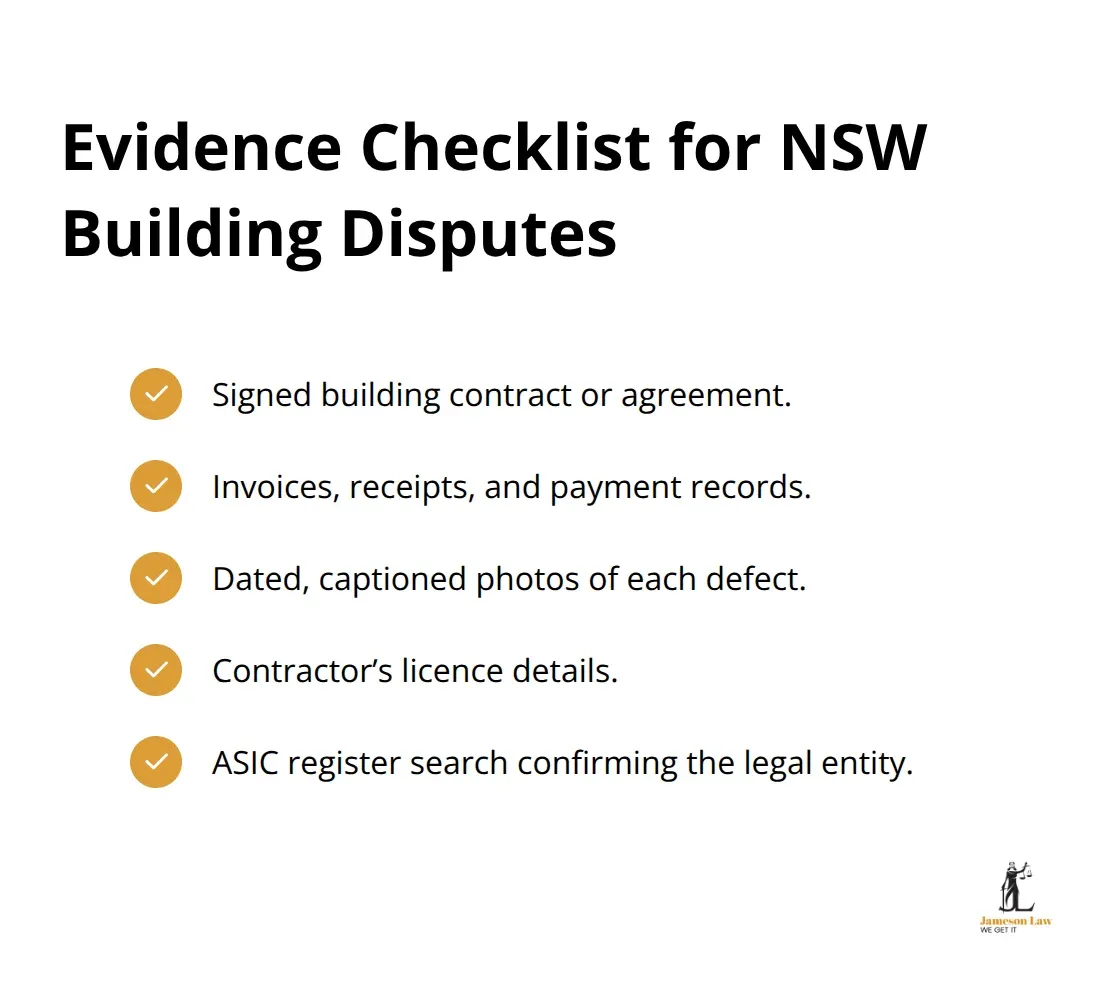
| Evidentiary Component | Requirements & Best Practice | Purpose in Dispute |
|---|---|---|
| Contract Documents | Complete signed building contract, architectural plans, engineering specifications, and schedule of finishes. | Establishes the agreed scope of work and contractual milestones. |
| Variations & Invoices | Written variation requests signed by both parties, itemized tax invoices, and bank transaction receipts. | Proves whether cost and timeline changes were contractually authorized. |
| Defect Documentation | High-resolution photographs with date/time stamps, chronological logs, and video walkthroughs. | Demonstrates the physical condition and progression of defective or incomplete work. |
Serving a Formal Written Notice
Once your evidence is assembled, a formal written notice to the other party is usually an important next step and may be required by the contract. Under standard NSW residential and commercial contracts, this notice should:
- Identify the specific contractual clauses alleged to have been breached.
- Provide an itemized schedule of defects or incomplete items.
- Set a clear, reasonable timeframe (e.g., 14 to 28 calendar days) for the builder to inspect the site and propose a rectification plan.
- Be transmitted in accordance with the contract’s formal notice provisions (e.g., registered post or designated email).
Step 2: Without-Prejudice Negotiations and Expert Reports
Before proceedings, parties may attempt commercial negotiation. Genuine settlement communications may attract without-prejudice protection, but simply adding the words “Without Prejudice” is not conclusive and exceptions can apply.
The Critical Value of an Independent Expert Report
In technical disputes involving structural movement, waterproofing failure, or non-compliance with the National Construction Code, subjective opinions are insufficient. You should engage an independent, qualified building consultant or structural engineer.
An appropriately qualified expert report can identify observed defects, relevant standards or contract requirements, causation issues, a rectification scope and estimated cost. Whether expert evidence is needed, and its required form, depends on the forum and dispute.
Step 3: Formal Escalation Pathways in NSW
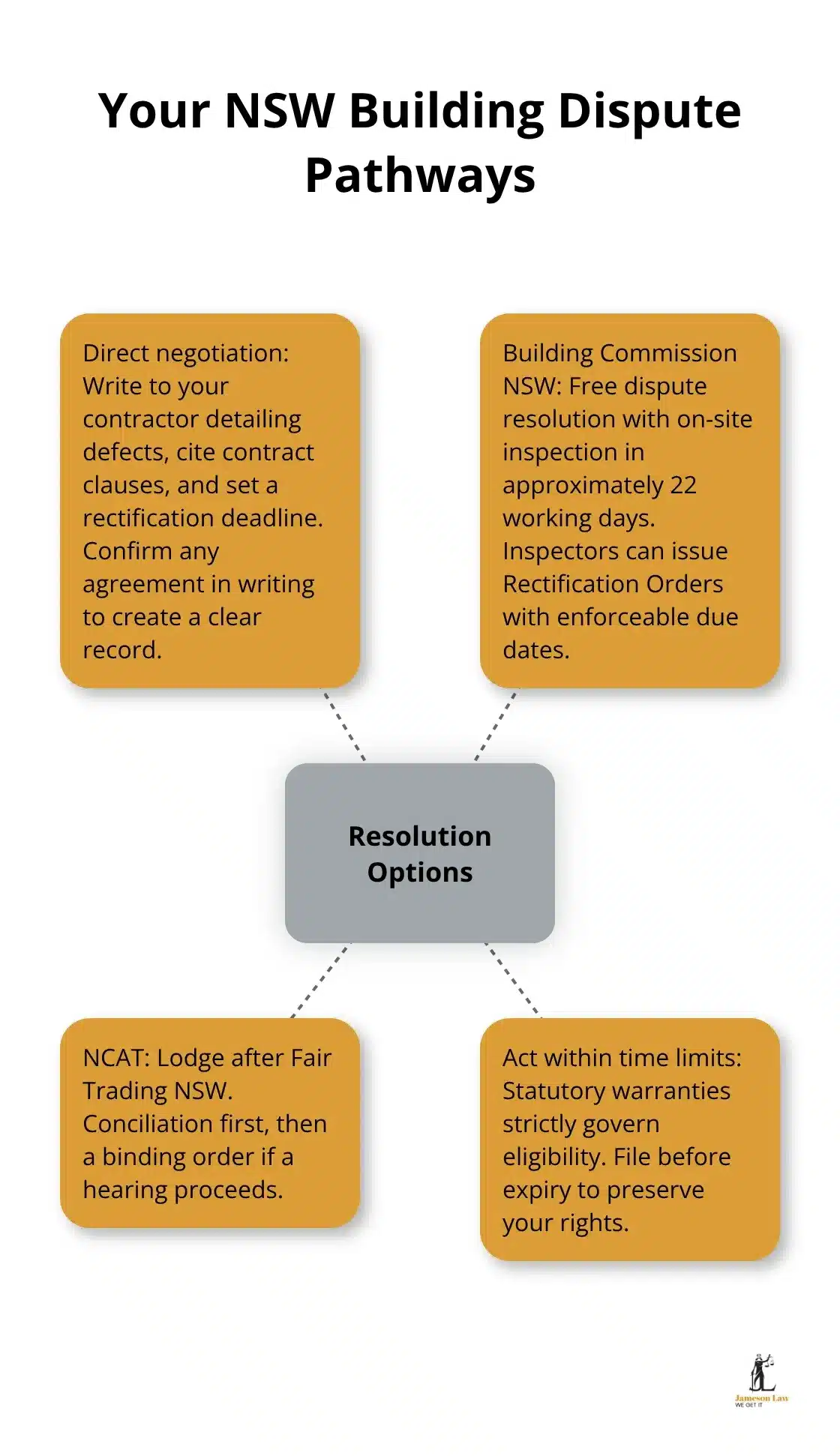
If direct negotiation fails, you must choose the appropriate statutory or judicial pathway based on the nature of the project and the contract.
1. NSW Fair Trading Dispute Resolution (Residential)
Under the Home Building Act 1989 (NSW), residential building disputes generally must be submitted to NSW Fair Trading for attempted dispute resolution before tribunal proceedings can commence. A Fair Trading building inspector may visit the site and, if appropriate, issue a Rectification Order requiring the builder to rectify defective work by a set date.
2. The NSW Civil and Administrative Tribunal (NCAT)
If Fair Trading intervention does not resolve the matter, the primary forum for residential building claims is the Consumer and Commercial Division of NCAT. NCAT typically lists matters for conciliation prior to a formal hearing. If a hearing is required, a Tribunal Member will evaluate expert evidence and issue binding orders for money, work, or contract termination.
3. Court Litigation
For complex commercial construction disputes, or matters that fall outside NCAT’s statutory remit, proceedings may be initiated in the NSW Local Court, District Court, or Supreme Court (including the specialised Technology and Construction List), depending on jurisdictional limits and contractual arbitration clauses.
4. The Security of Payment Act Regime (Commercial)
It is vital to distinguish general defect disputes from payment claims under the Building and Construction Industry Security of Payment Act 1999 (NSW) (SOPA). SOPA is a rapid, separate statutory process with strict statutory deadlines designed to ensure cash flow for contractors and subcontractors. Claimants and respondents must adhere strictly to statutory service timeframes for Payment Claims and Payment Schedules.
Frequently Asked Questions
What is the first step to resolve a construction dispute in NSW?
The first step is to review your contract and issue a formal written notice to the other party detailing the specific defects, incomplete work, or payment issues, supported by photographic evidence and contractual clauses.
When should I involve NSW Fair Trading in a building dispute?
For residential building disputes, you generally must lodge a complaint with NSW Fair Trading before escalating to the NSW Civil and Administrative Tribunal (NCAT). Fair Trading can facilitate dispute resolution and potentially issue a Rectification Order.
How does the Security of Payment Act differ from ordinary building disputes?
The Building and Construction Industry Security of Payment Act 1999 (NSW) is a specialised, fast-track statutory regime designed specifically for recovering progress payments in construction. It operates with strict statutory timeframes and is separate from general breach of contract or defect claims.
Final Thoughts
Knowing how to resolve construction disputes NSW requires an orderly escalation from evidence gathering and formal contractual notices to without-prejudice negotiation and statutory dispute mechanisms. Rushing into litigation without proper expert evidence or failing to follow mandatory preliminary steps can expose you to adverse cost orders or procedural delays.
Because construction contracts and NSW building statutes impose strict procedural rules, obtaining early legal guidance ensures your evidence is properly compiled, your notices are legally compliant, and your rights are fully protected throughout negotiations or tribunal hearings.
If you are facing an escalating building dispute or require representation before NSW Fair Trading or NCAT, contact the construction law team at Jameson Law for strategic advice.