

Buying property is one of the most significant financial commitments you will make. The NSW conveyancing steps ensure the legal transfer of property ownership is binding, secure, and compliant with state legislation.
At Jameson Law, our property team guides buyers through the intricacies of the Conveyancing Act 1919 (NSW). This guide explains the main stages from finance preparation to electronic settlement.
Phase 1: Pre-Exchange and Due Diligence
Before you sign anything or hand over a deposit, critical preparatory work must occur. NSW law requires a vendor to have a valid Contract for Sale of Land prepared before a residential property can be marketed.
Finance Pre-Approval
Ensure you have written pre-approval from your lender. This dictates your budget and prevents the severe financial consequences of exchanging contracts on a property you ultimately cannot fund.
Contract Review and Negotiation
Once your offer is accepted, the real estate agent will issue the contract to your conveyancer or solicitor. We meticulously review the title, zoning certificates, and any easements or restrictive covenants. At this stage, we can negotiate amendments to the contract, such as:
- Reducing the deposit amount (e.g., from 10% to 5%).
- Negotiating a settlement date that suits the transaction.
- Adding specific finance or inspection clauses (if the vendor agrees).
Inspections and Strata Reports
For freestanding homes, a building and pest inspection is vital to uncover structural defects or termite damage not visible to the naked eye. If you are buying a townhouse or apartment, obtaining a strata report is essential to review the Owners Corporation’s financial health, upcoming special levies, and building defect history.
Phase 2: Exchange of Contracts and Cooling-Off
The Exchange Process
Exchange occurs when the buyer and seller sign identical copies of the contract, the copies are swapped (exchanged), and the contract is dated. The amount and timing of the deposit are governed by the contract. A deposit is commonly paid through the selling agent’s trust account, but the percentage and payment stages can be negotiated.
The Cooling-Off Period
Under NSW legislation, residential private treaty sales generally include a mandatory 5-business-day cooling-off period (10 days for off-the-plan purchases), ending at 5:00 PM on the final day. During this window, you can pull out of the contract for any reason. If you do, you forfeit 0.25% of the purchase price to the vendor.
| Scenario | Cooling-Off Status |
|---|---|
| Standard Private Treaty | 5 business days (unless waived via a Section 66W certificate). |
| Off-The-Plan Purchase | 10 business days. |
| Buying at Auction | No cooling-off period. The contract is unconditional upon the fall of the hammer. |
In highly competitive markets, vendors often request that buyers waive the cooling-off period entirely by providing a Section 66W certificate signed by their conveyancer, making the contract immediately unconditional.
Phase 3: Preparing for Settlement
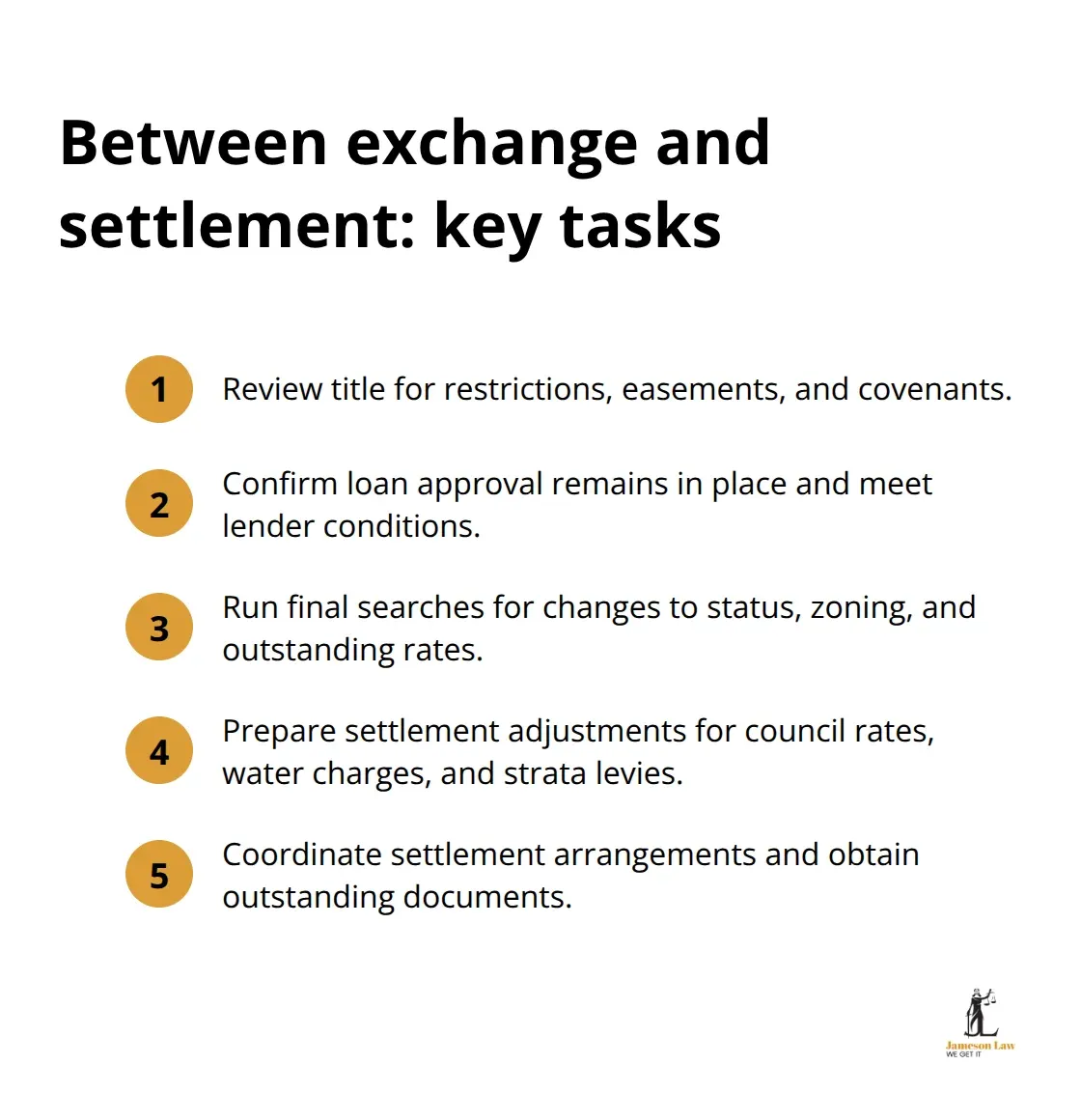
Once the contract is unconditional, your conveyancer manages the complex legal and administrative tasks required leading up to the settlement date.
Transfer Duty (Stamp Duty) and Revenue NSW
Transfer duty must be paid on the purchase of the property. Your conveyancer will assess your eligibility for any Revenue NSW concessions or exemptions (such as the First Home Buyers Assistance Scheme) and ensure the duty is stamped prior to settlement.
Searches and Settlement Adjustments
Your conveyancer will conduct statutory searches regarding council rates, water rates, and strata levies (if applicable). A “Statement of Adjustments” is prepared to ensure that the vendor pays for all rates up to the settlement date, and you only pay for the period you own the property.
The Final Pre-Settlement Inspection
You are entitled to conduct one final inspection of the property, usually within the few days leading up to settlement. This ensures the property is in the same condition as when you exchanged, and that the vendor has removed their possessions and left any inclusions listed in the contract.
Phase 4: Electronic Settlement (PEXA)
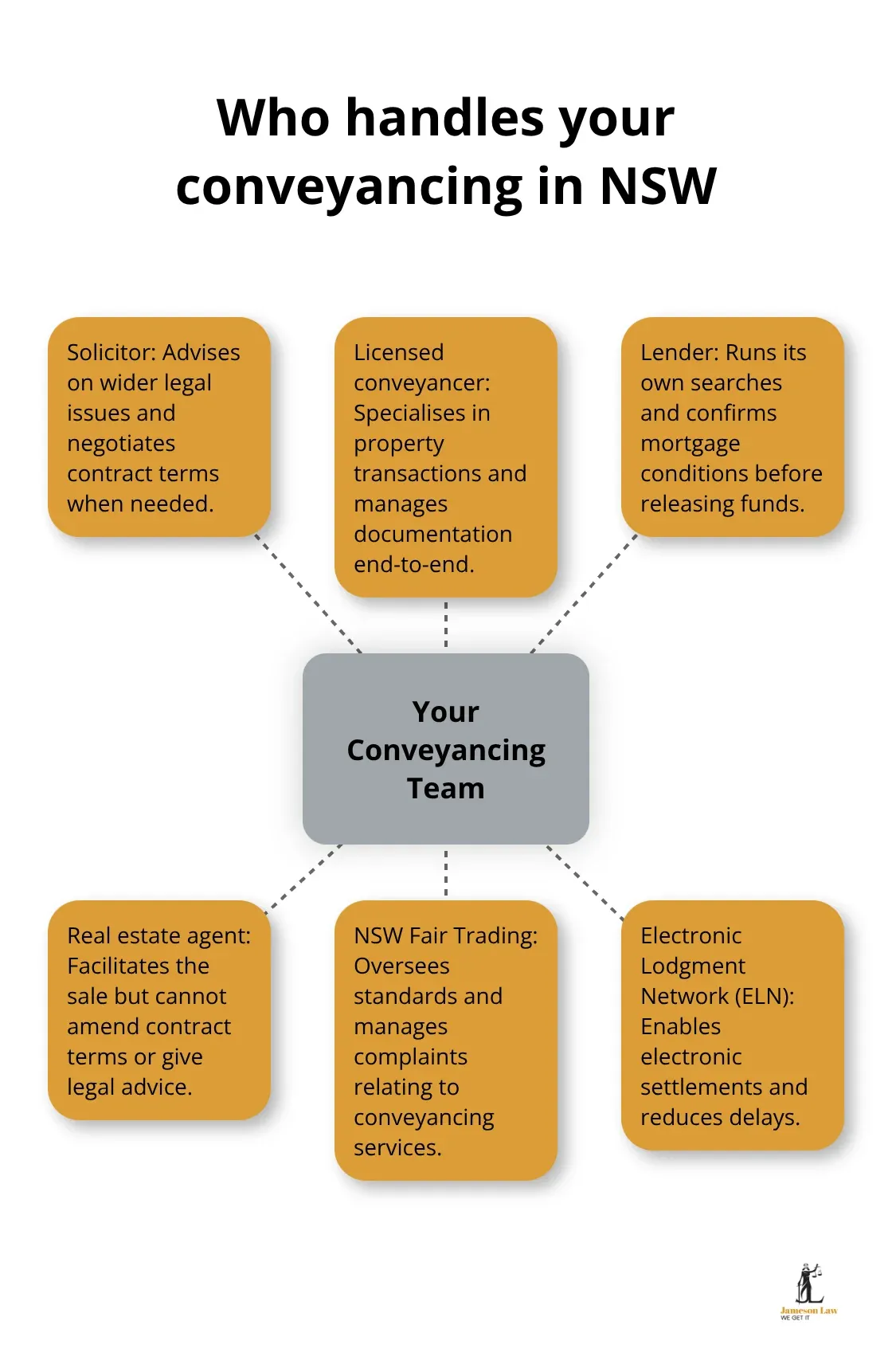
In NSW, physical property settlements are a thing of the past. All transactions must be completed electronically through an Electronic Lodgment Network (ELN), most commonly PEXA.
On the scheduled settlement day, your conveyancer, the vendor’s conveyancer, your incoming lender, and the vendor’s discharging lender collaborate in a secure digital workspace. The ELN automatically:
- Clears the vendor’s mortgage.
- Transfers the remaining purchase funds to the vendor.
- Pays outstanding council and water rates.
- Lodges the transfer documents instantly with NSW Land Registry Services, officially registering the title in your name.
Once the electronic workspace confirms completion, your conveyancer will call you to confirm settlement has occurred. You can then collect the keys from the real estate agent.
Frequently Asked Questions
What is the standard cooling-off period when buying a house in NSW?
For most residential private treaty sales in NSW, buyers have a statutory 5-business-day cooling-off period (10 days for off-the-plan properties) starting from the date of exchange. However, there is no cooling-off period if you buy at auction or if your lawyer/conveyancer provides a Section 66W certificate waiving the right.
When do I pay the deposit in a NSW property purchase?
The contract sets the deposit amount and when each part is payable, so buyers should not assume a fixed 10% or a universal payment schedule. If a buyer validly rescinds during the statutory cooling-off period, the legislation generally requires forfeiture of 0.25% of the purchase price.
How does electronic settlement work in NSW?
Most eligible NSW conveyancing transactions are completed electronically through an Electronic Lodgment Network such as PEXA, subject to limited exceptions. The parties’ representatives coordinate documents and funds, and the transfer is lodged with NSW Land Registry Services after settlement.
Final Thoughts
Navigating the NSW conveyancing steps requires meticulous attention to statutory deadlines, robust due diligence, and secure financial coordination. Understanding your rights during the cooling-off period and the finality of an unconditional exchange protects you from acquiring a property with hidden legal or physical defects.
Because the consequences of defaulting on a property contract are severe, securing experienced legal representation early in the process ensures your transaction progresses smoothly to electronic settlement.
If you have found a property and need a contract reviewed, or if you require guidance on your upcoming purchase, contact the conveyancing team at Jameson Law today.