

Permanent residency in Australia opens doors to stability, complete work rights, and a genuine pathway to citizenship. However, successfully arriving at this milestone requires a thorough understanding of multiple visa routes and meeting strict legal criteria.
At Jameson Law, our expert immigration law team helps individuals and families navigate these pathways every day. This comprehensive guide breaks down your available options, what you will need to qualify, and how to prepare your strategy in 2026.
What Permanent Residency Actually Gives You in Australia
The Core Rights of Permanent Residency
Securing permanent residency Australia means you hold a valid permanent visa that grants you indefinite stay, unrestricted work rights, and study rights without needing ongoing employer visa sponsorship. Unlike temporary visas, which expire and require continuous renewal, a permanent status allows you to remain in Australia for as long as you choose.
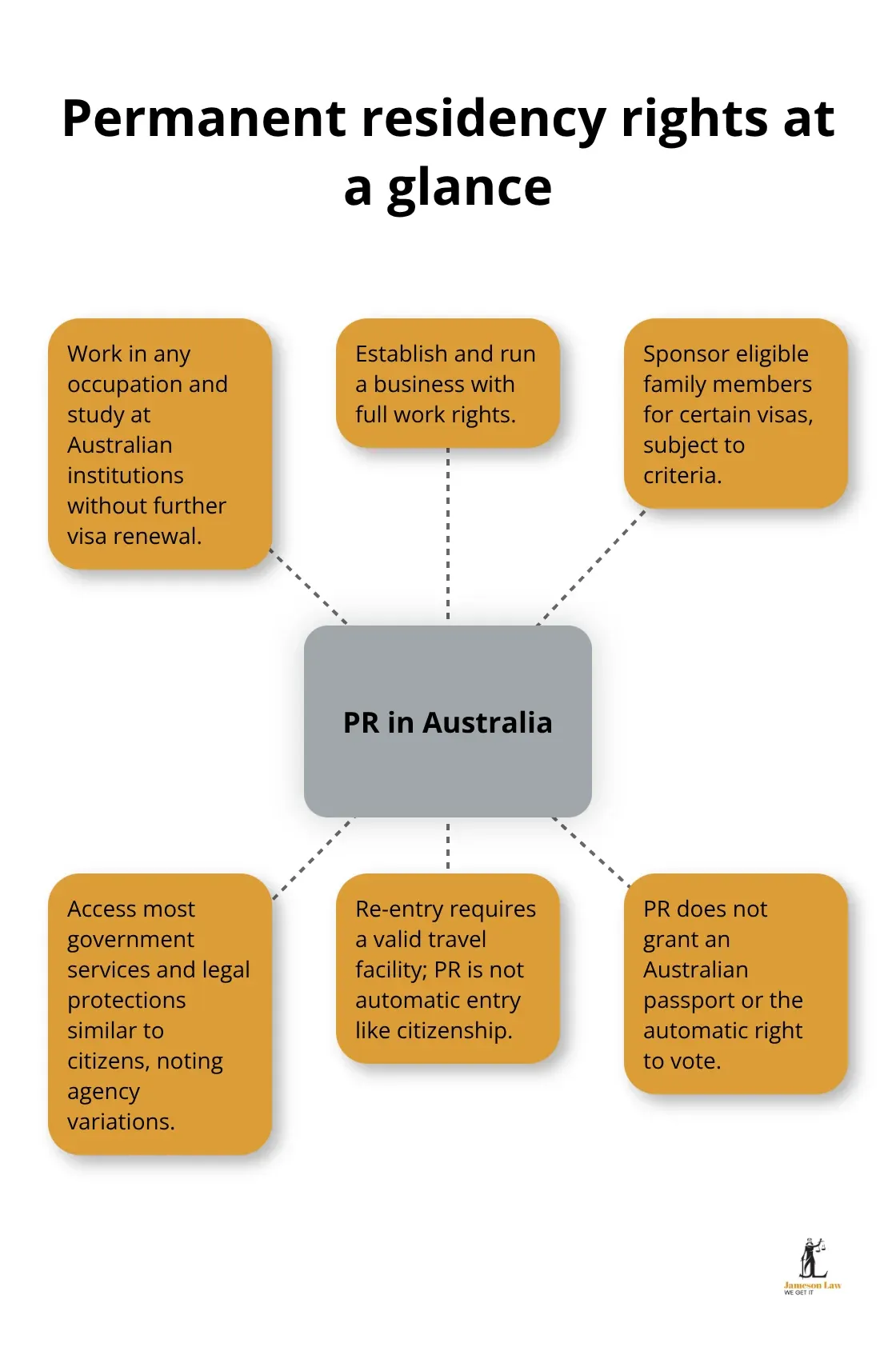
However, it is a critical distinction that permanent residency does not automatically mean you are an Australian citizen. You remain a visa holder with enhanced rights but without the full privileges of citizenship, such as the automatic right to vote in federal elections or hold an Australian passport.
What You Can and Cannot Do
According to the Department of Home Affairs guidelines, permanent residents are entitled to:
- Live, work, and establish commercial businesses anywhere in Australia.
- Access essential public services and government benefits on the same baseline as citizens.
- Sponsor eligible family members for their own respective visa applications.
- Receive full protection under Australian consumer, civil, and workplace laws.
Your ongoing responsibilities include maintaining absolute compliance with local laws, paying federal taxes, and upholding good character standards.
Travel and Re-Entry: A Critical Consideration
Permanent residents do not possess an automatic, unconditional right of entry to Australia like citizens do. Your ability to return after an international trip depends entirely on your visa’s travel facility. Many individuals discover too late that overseas travel can affect residency validity if they remain absent for extended periods or let their travel facility expire, making Resident Return Visas (RRV) a vital operational element.
Main Pathways to Australian Permanent Residency
Skilled Migration: The Points-Based Route
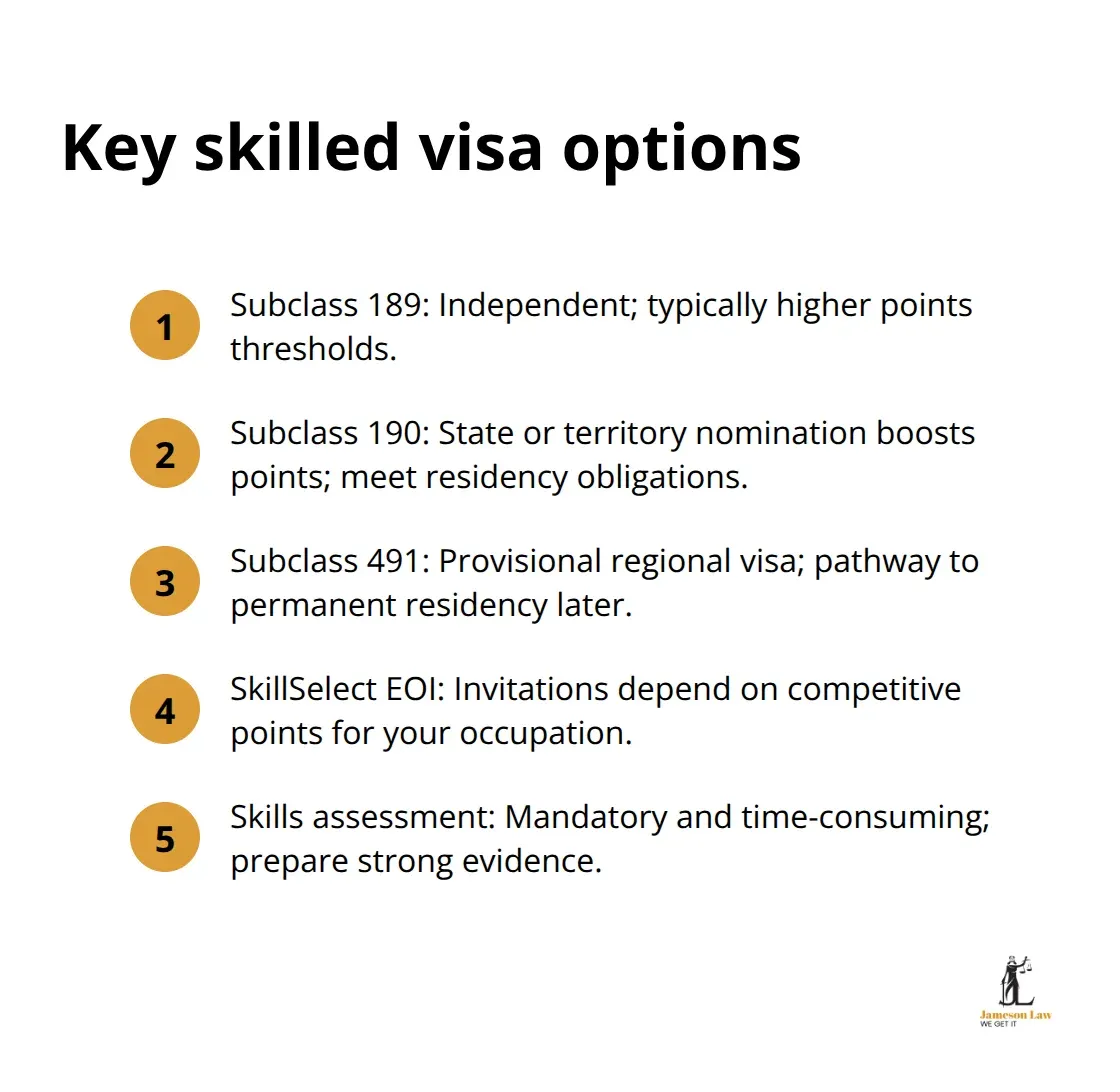
The skilled migration pathway remains the most popular route to permanent residency, accounting for the vast majority of PR grants annually. This route utilises the SkillSelect points-based system, evaluating parameters such as age brackets, English capabilities, professional work experience, and educational qualifications.
| Visa Subclass | Sponsorship Status | Key Advantage |
|---|---|---|
| Subclass 189 | Independent (No Sponsor Required) | Complete geographical freedom across Australia from day one. |
| Subclass 190 | State / Territory Nominated | Provides an extra 5 points to your overall SkillSelect score. |
| Subclass 491 | Regional Provisional (PR Pathway) | Provides 15 points; leads to a permanent Subclass 191 visa after 3 years. |
Before lodging an Expression of Interest (EOI), obtaining a formal skills assessment from an authorized Australian body is mandatory. Your skills assessment, English test results (IELTS or PTE), and certified employment references form the unassailable baseline of your application.
Regional Migration: A Strategic Alternative
Regional migration pathways offer an exceptional option that features broader occupation lists and lower points competition. Provisional regional visas (Subclass 491 or 494) permit individuals to reside and work in designated regional zones for up to five years, paving a direct path to permanent residency via the Subclass 191 visa once localized residence and income thresholds are satisfied.
Family Sponsorship: Relationship-Based Pathways
Family sponsorship provides a distinct option for those with close relatives who are citizens or permanent residents. Partner visas (Subclass 820/801 or 309/100) allow spouses and de facto partners to sponsor applications. The core challenge here is compiling comprehensive evidence detailing your financial interdependence, shared household arrangements, and social commitment to satisfy departmental scrutiny.
Business and Investment Visas
For entrepreneurs and investors with substantial capital reserves, pathways like the Subclass 188 lead to permanent status (Subclass 888). These streams demand significant financial investment in Australian state bonds or local ventures alongside verified business turnover compliance.
Requirements and Application Process for Permanent Residency
Health and Character Assessments
Health and character clearances form a non-negotiable prerequisite for all permanent visas. Assessments are executed by authorized panel doctors who verify that applicants do not pose an undue financial burden on the national healthcare system.
Character tests require police clearance certificates from every single nation where you have resided for 12 months or more over the past decade. Hiding any historical visa cancellations, overstays, or minor criminal records results in automatic refusal under strict integrity checks.
Documentation Standards That Determine Success
The Department assesses applications purely on what can be substantially proven through certified evidence. To prevent extensive processing delays, your documentation must meet precise professional standards:
- Employment Verification: Backed by certified employment contracts, official tax returns, payslips, and detailed employer reference letters on company letterhead.
- Academic Qualifications: Supported by official transcripts and degree certificates evaluated by relevant credential assessment authorities.
- Relationship Interdependence: Substantiated via joint asset ownership records, mutual banking histories, and formal statutory declarations from witnesses.
Processing Timelines and Cost Structures
While skilled independent streams routinely settle within four to eight months from the date of an official invitation, family and partner sponsorships can frequently exceed twelve months due to thorough relationship verification protocols.
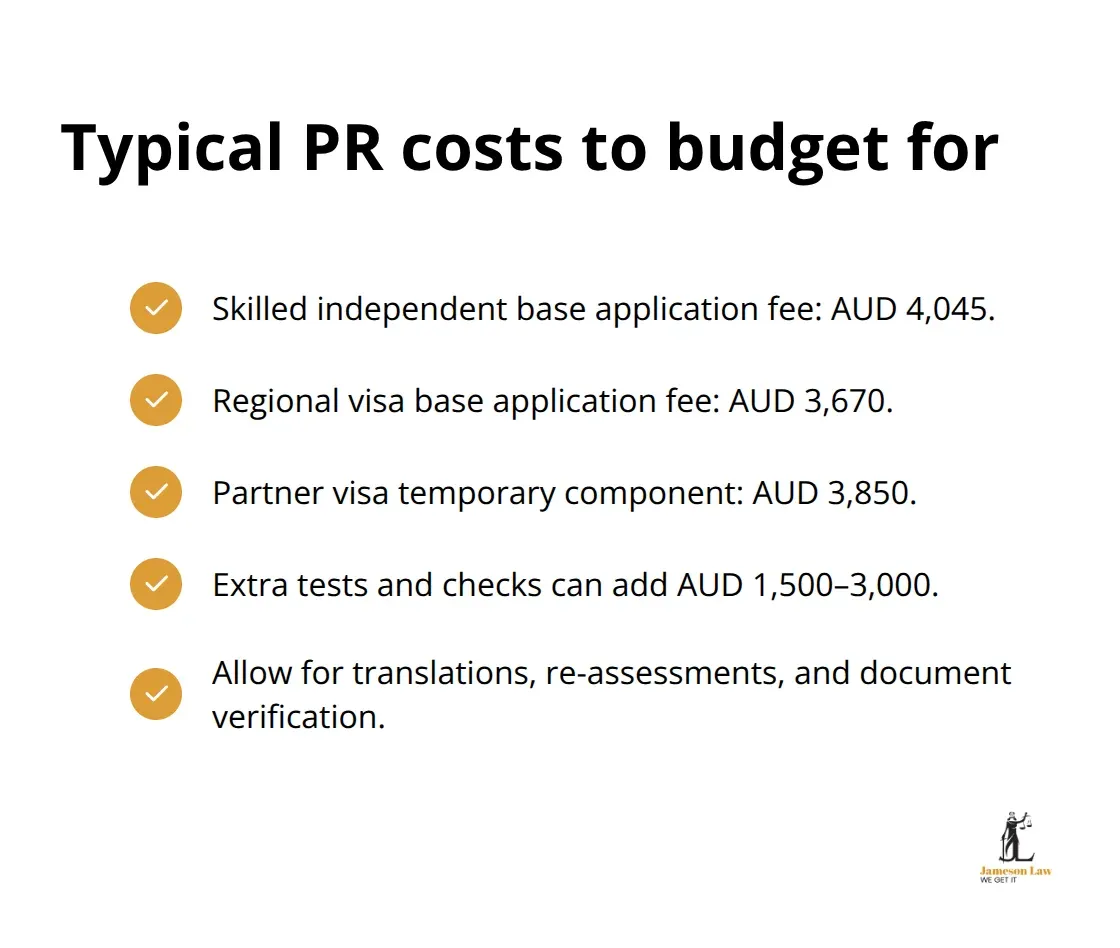
Government application fees range upwards from AUD $4,045 for skilled independent streams, excluding auxiliary costs such as skills assessments, translation services, and medical examinations, which can add an extra AUD $1,500 to $3,000 to your migration budget.
Final Thoughts
Securing permanent residency Australia requires a methodical match between your professional credentials, family ties, and current federal immigration policies. Because occupation lists and state allocation priorities shift dynamically throughout the financial year, submitting a flawless, decision-ready application is your single best defense against refusal.
Once permanent status is successfully locked in, it opens the ultimate gateway to Australian citizenship, provided local residence continuity benchmarks are maintained over a four-year window.
At Jameson Law, our highly experienced immigration law practitioners ensure your supporting documents strictly meet Department of Home Affairs guidelines, maximizing your prospects of a streamlined approval. Contact our expert team today to map out a clear, legally secure route to your future in Australia.