


A criminal conviction can affect your employment, housing, and reputation for years. Criminal record removal through expungement is a legal process that allows eligible people in NSW to have their conviction removed from official records.
At Jameson Law, we help clients understand whether expungement is available to them and what steps they need to take. This guide explains the eligibility requirements, application process, and what expungement actually means under NSW law.
What Expungement Actually Means in NSW
Definition of Expungement Under NSW Law
Expungement in NSW removes your conviction from public view, but it doesn’t erase it entirely. Under the Crimes (Sentencing Procedure) Act 1999, when the court orders expungement, your conviction is removed from the criminal record that employers and other organisations can access during background checks. The practical effect means you can answer no when asked by most employers whether you have a criminal record, though you must still disclose convictions when applying for certain roles like working with children or in law enforcement.
How Expungement Differs from Other Record Removal Options
Expungement differs fundamentally from a pardon, which is a formal forgiveness granted by the Governor. It also differs from section 10 dismissals, where a court dismisses charges without recording a conviction. If you received a section 10 dismissal when you were charged, you never had a conviction recorded in the first place, so expungement wouldn’t apply to your situation.
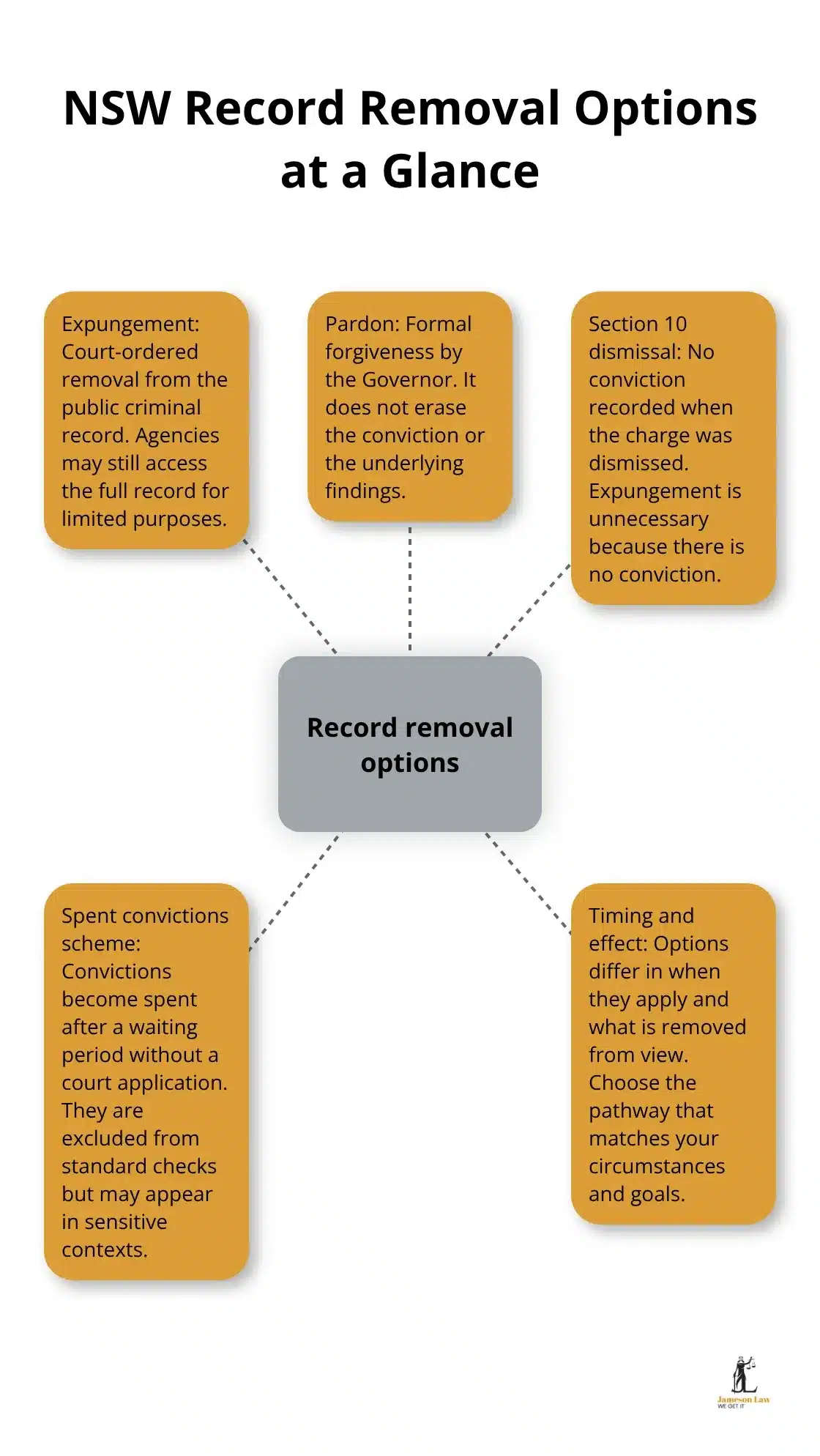
The Spent Convictions scheme under the Criminal Records Act 1991 offers another pathway. This scheme allows certain convictions to become spent after a waiting period without requiring a court application. Spent convictions don’t appear on standard background checks, but organisations can still access them in specific circumstances like court proceedings or applications for sensitive positions.
Timing and Court Requirements
The key difference between expungement and other record removal options comes down to timing and what actually gets removed. If you’re applying for expungement, the conviction is already recorded, and you’re asking the court to remove it retroactively. For minor offences in NSW, spent convictions are often the simpler path if you can wait out the period, but for more serious convictions or if you need the record removed sooner, expungement is worth pursuing.
Expungement requires you to convince a court that removal serves the interests of justice. NSW courts have become more willing to grant expungement applications in recent years, particularly for older convictions and minor offences where the applicant has demonstrated rehabilitation. This shift reflects a growing recognition that people deserve opportunities to move forward after they’ve paid their debt to society.
What Happens to Your Record After Expungement
When expungement is granted, your conviction no longer appears on the criminal record accessible to employers and most organisations. However, government agencies and certain authorised bodies retain access to the full record for specific purposes. This distinction matters significantly because many people confuse expungement with complete erasure, which affects how they approach their application and what they should realistically expect.
Understanding these distinctions helps you determine which pathway suits your circumstances. The eligibility criteria for each option vary considerably, and the requirements you’ll need to meet depend on which route you pursue.
Who Can Actually Get a Conviction Expunged in NSW
Time Requirements and Waiting Periods
Not every conviction qualifies for expungement, and NSW courts apply strict eligibility tests before granting applications. The Crimes (Sentencing Procedure) Act 1999 sets out the framework, but timing, offence type, and your circumstances since conviction all matter significantly. Courts in NSW examine whether removing the conviction serves the interests of justice, which means demonstrating genuine rehabilitation and that the conviction no longer reflects who you are.
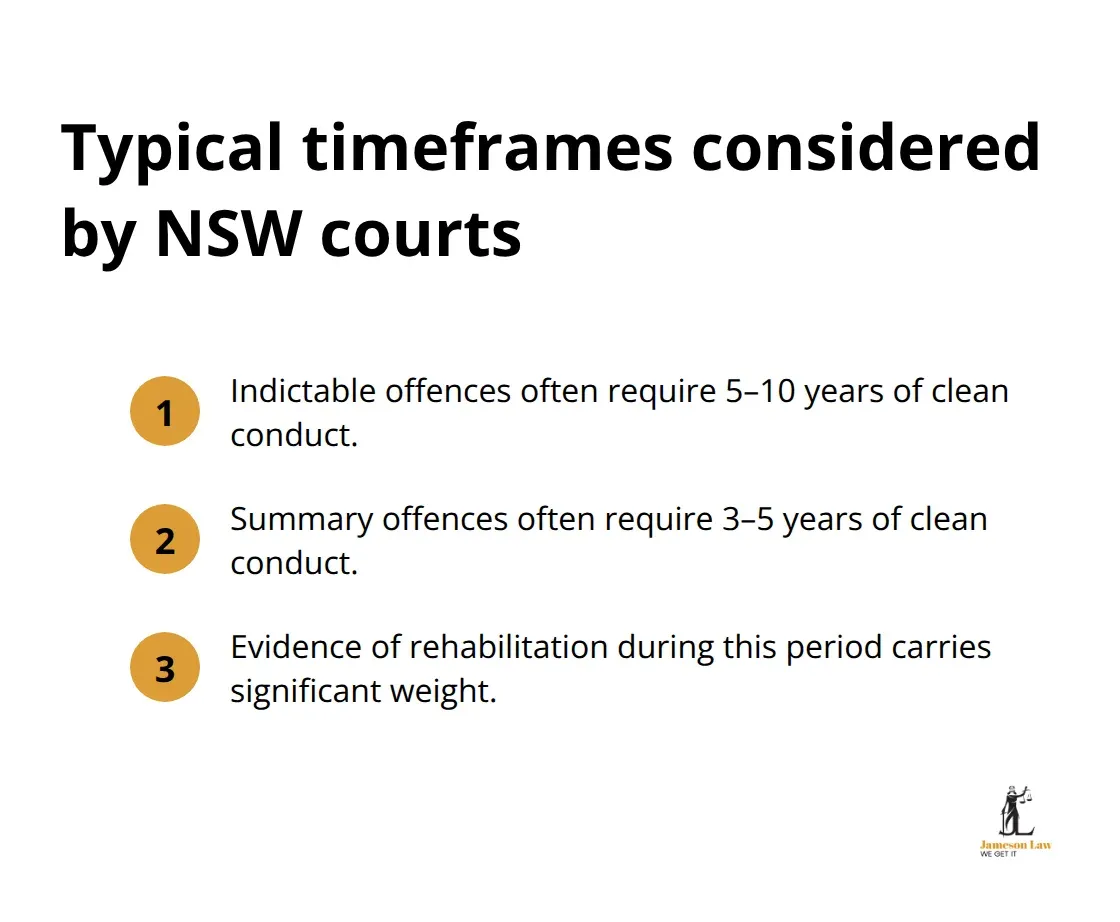
The years since conviction carry substantial weight in expungement decisions. For indictable offences, courts typically want to see at least five to ten years of clean conduct before they seriously consider expungement, though this isn’t a rigid rule. Summary offences have shorter timeframes, often three to five years, but courts still examine what you’ve done since the conviction to show you’ve turned things around.
Types of Offences That Can Be Expunged
The offence itself significantly affects your prospects. Violent crimes, sexual offences, and serious drug trafficking convictions are rarely expunged because courts view these as reflecting fundamental character concerns that don’t disappear with time. Minor property offences, regulatory breaches, and low-level drug possession charges have substantially better prospects for expungement.
Courts also assess whether you’ve completed your sentence, paid any fines, and whether you’ve stayed out of trouble since conviction. A single minor driving offence ten years ago with no subsequent convictions presents a completely different case to the court than multiple convictions across your record, even if some are older.
Circumstances That Disqualify You From Expungement
Certain circumstances actively prevent you from applying for expungement. If you’re still serving your sentence or subject to ongoing court orders, expungement isn’t available. Similarly, if the conviction involved dishonesty or violence, courts apply stricter scrutiny and often refuse applications outright.
Professional roles create additional barriers. If you were convicted of an offence that directly relates to work you want to do, judges question whether expungement truly serves justice. Someone convicted of theft applying for a role handling money will face real resistance from the court. Your employment context matters because courts consider whether removing the conviction would genuinely reflect rehabilitation or simply mask relevant history.
Alternative Pathways to Record Removal
The spent convictions scheme under the Criminal Records Act 1991 sometimes offers a simpler alternative if your conviction qualifies, particularly for older minor offences where you can wait out the period rather than convince a court. This pathway requires no application and no judicial discretion-the conviction simply becomes spent after the designated timeframe passes.
Understanding which pathway suits your circumstances requires examining your specific offence, the time elapsed, and what you’ve accomplished since conviction. The eligibility criteria for expungement versus spent convictions vary considerably, and the requirements you’ll meet depend on which route you pursue. Your next step involves assessing whether you meet the basic eligibility requirements and determining which application process makes sense for your situation.
How to Apply for Expungement in NSW
Filing Your Application with the Court
Applying for expungement in NSW requires you to file an application with the District Court or Supreme Court, depending on where your conviction was recorded. You must prepare a detailed application that addresses the interests of justice test, which is the central question judges ask when deciding whether to grant expungement. This test isn’t formulaic, and courts have significant discretion, but your application should demonstrate rehabilitation, the impact the conviction has had on your life, and why removing it serves justice rather than simply benefiting you personally.
Start by obtaining a copy of your criminal record from NSW Police through the Service NSW website. This official record forms the foundation of your application because it contains the exact details of your conviction that you’ll reference throughout the process.
Preparing Supporting Documentation
The documentation you submit shapes how the judge assesses your case significantly. Include character references from employers, community members, or professionals who can speak to your rehabilitation and current standing. Courts weight these references heavily, particularly when they come from people in positions of authority who’ve observed your conduct over several years.
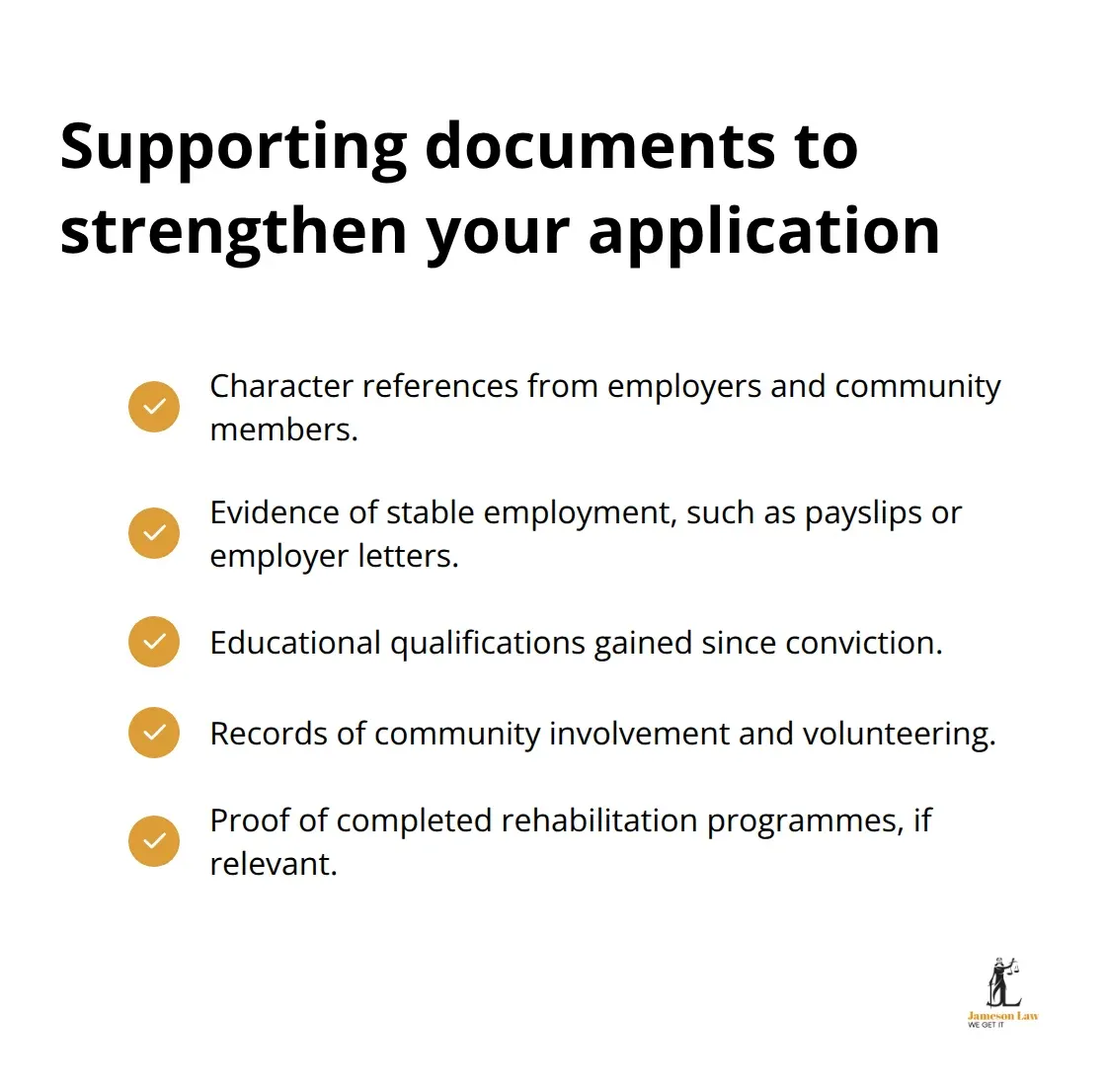
You’ll also need to provide evidence of employment history, educational qualifications gained since conviction, and community involvement. If your conviction involved substance abuse or violence, evidence of completed rehabilitation programmes carries particular weight. Include payslips or employment letters showing stable work, as financial stability demonstrates genuine rehabilitation.
Understanding Court Fees and Timeline
Court applications typically take three to six months from filing to hearing, though complex cases or those requiring additional evidence can extend this timeline. When you file, you’ll pay court fees currently set at around $350, though these amounts change periodically so confirm current fees with the court registry.
The judge will set a hearing date where you or your legal representative presents your case orally, and the prosecution may appear to oppose the application. Your prospects depend heavily on the specific facts of your case rather than broader trends.
Final Thoughts
Expungement offers a genuine pathway to criminal record removal in NSW, but it requires meeting specific eligibility criteria and convincing a court that removal serves the interests of justice. Your prospects depend on the type of offence, how much time has passed since conviction, and what you’ve accomplished since then. The spent convictions scheme provides an alternative for some people, particularly those with minor older offences willing to wait out the designated period.
Your next step involves obtaining your official criminal record from NSW Police through Service NSW, then determining whether expungement or spent convictions better fits your situation. If you decide to pursue criminal record removal through expungement, you’ll need to prepare a detailed application, gather character references and evidence of rehabilitation, and file with the appropriate court. The process typically takes three to six months and costs around $350 in court fees.
Contact Jameson Law if you’re uncertain whether you meet the eligibility requirements or want guidance on which pathway suits your situation. Getting legal advice early makes the process clearer and improves your prospects significantly. We can help you navigate your options and prepare an application tailored to your specific circumstances.