


Parenting arrangements in NSW can feel overwhelming when you’re navigating custody, decision-making, and your child’s best interests. Whether you’re separating, divorcing, or formalising existing arrangements, understanding your options matters.
At Jameson Law, we’ve guided countless parents through this process. This guide walks you through the types of arrangements available, how the legal process works, and what courts actually consider when making orders.
Your Parenting Arrangement Options in NSW
Sole Parental Responsibility
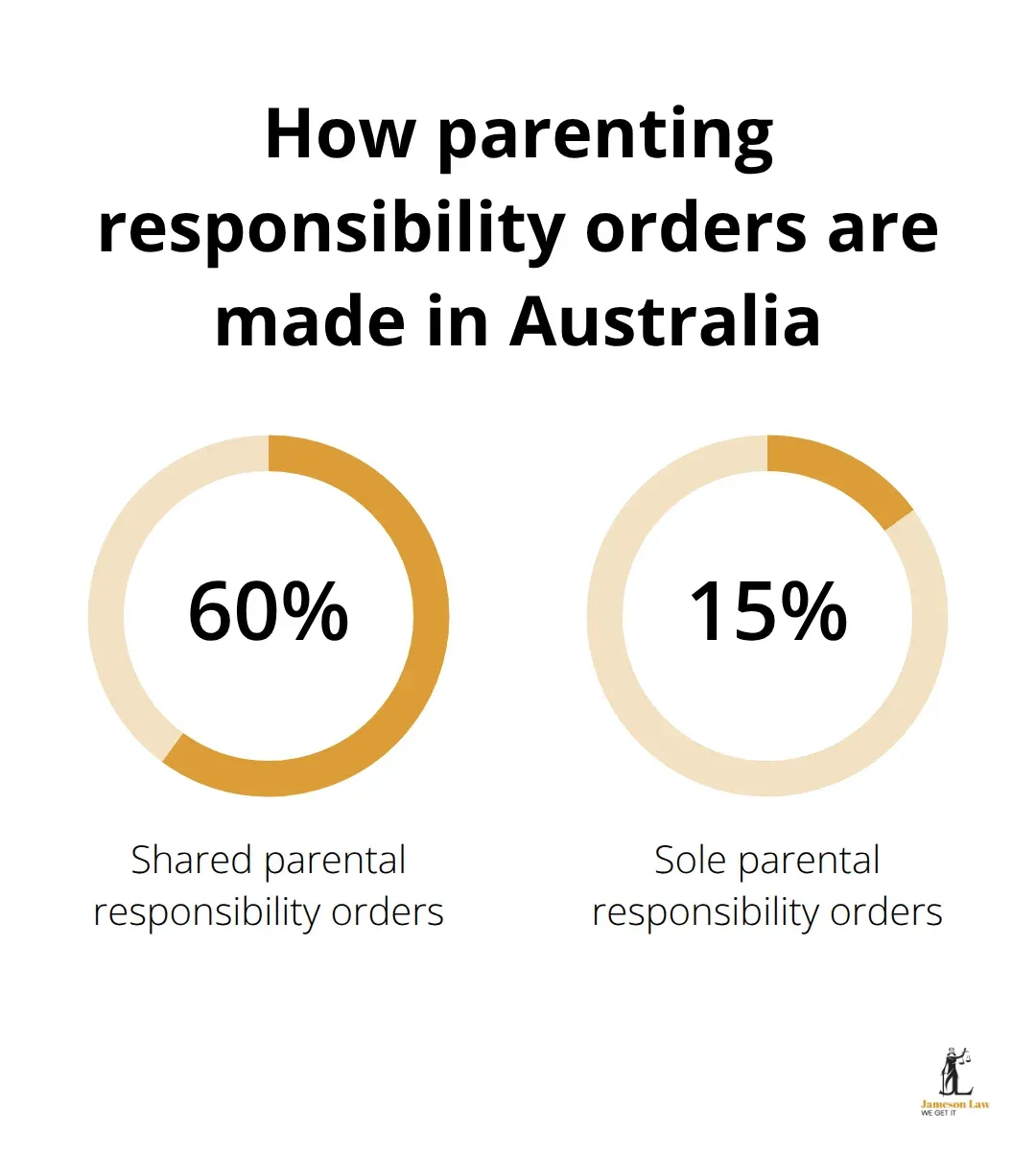
One parent makes all major decisions about the child’s education, healthcare, religion and general welfare under sole parental responsibility, while the other parent may still spend time with the child. This arrangement suits situations where one parent has been the primary decision-maker, where a significant power imbalance exists, or where parents cannot cooperate on major issues. The Family Court of Australia reports that sole responsibility orders account for roughly 15% of parenting orders made, though this varies by case complexity and parental conflict levels. The court will not grant sole responsibility simply because parents disagree-it requires evidence that shared decision-making genuinely won’t work or that one parent’s involvement poses a risk to the child’s wellbeing.
Shared Parental Responsibility
Both parents share the right to make major decisions about your child under shared parental responsibility, though one parent might have primary day-to-day care. The Family Court makes shared responsibility orders in approximately 60% of cases. Shared responsibility does not mean 50-50 time with your child; it means both parents have equal say on schooling choices, medical treatment, religious upbringing and similar significant matters. The practical benefit is that neither parent can unilaterally enrol your child in a new school or book major medical procedures without the other’s agreement.
Courts strongly favour shared responsibility because research consistently shows children benefit from meaningful involvement with both parents (provided the parents can communicate reasonably). If you and your former partner cannot agree on specific issues despite sharing parental responsibility, you will need to return to court or use mediation to resolve the dispute.
Specific Issues and Decision-Making Orders
Specific issues and decision-making orders sit alongside these main frameworks. The court can make targeted orders about particular decisions like which school your child attends, whether they have certain medical treatments, or how religious upbringing is handled (without necessarily restructuring the entire parenting arrangement). These targeted orders work well when parents agree on most things but deadlock on one or two specific issues. Understanding which framework fits your situation will help you navigate the legal process ahead.
Getting Your Parenting Arrangement Recognised by the Court
Once you’ve decided what type of parenting arrangement suits your situation, you need to formalise it through the Family Court of Australia. The court won’t recognise informal agreements between parents, no matter how sensible they seem. Without a court order, either parent can change the arrangement whenever they want, which creates instability for your child and leaves you with no legal protection.
Why Court Orders Matter
The Family Court handles roughly 15,000 parenting applications annually, so the system is well-established, but timing and strategy matter significantly. Most cases take between six months and two years to resolve, depending on whether parents can agree and how complex the circumstances are. Starting the process early matters because delays affect your child’s stability and can make conflict worse.
Two Paths Forward
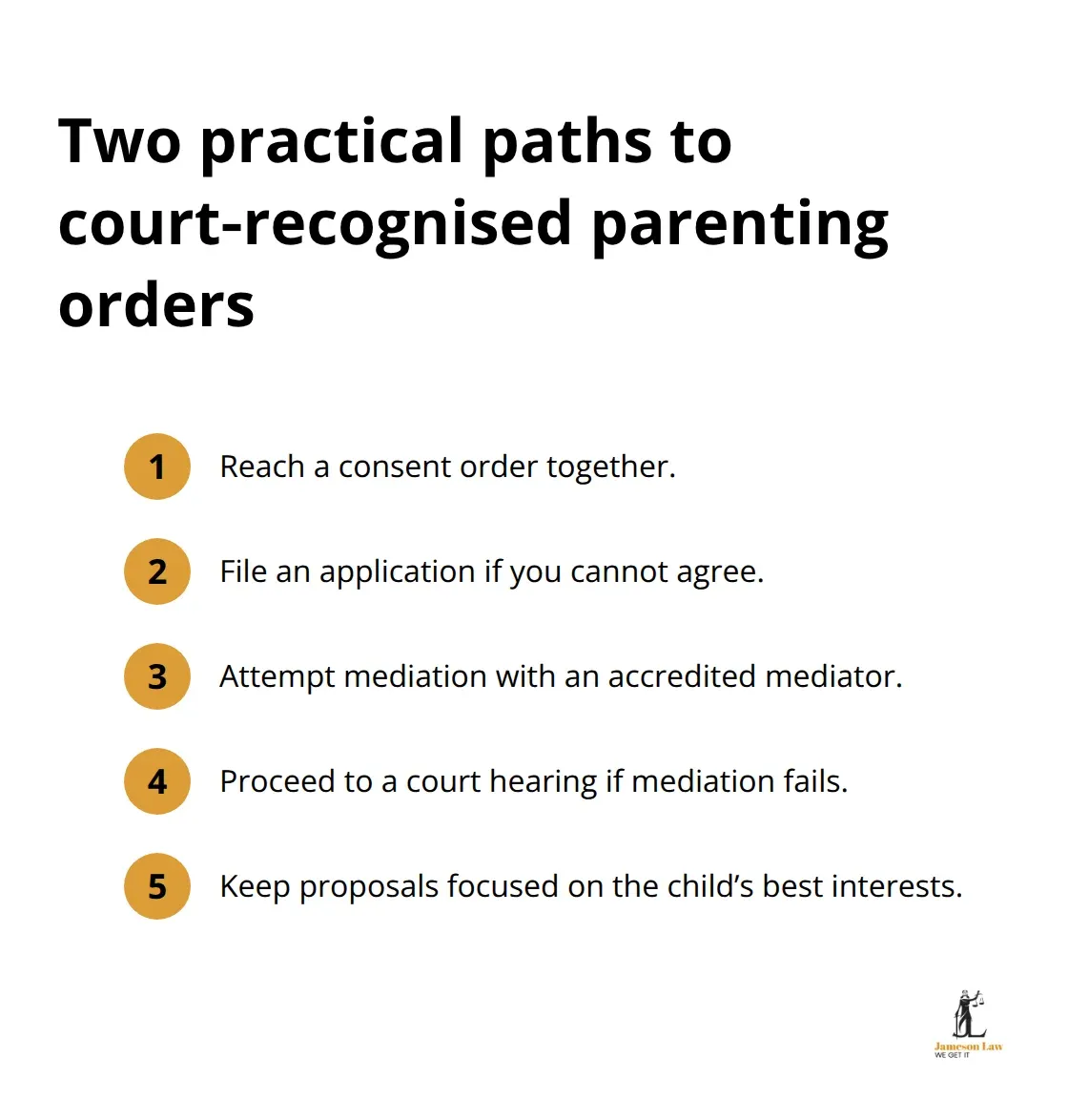
You have two realistic paths forward. The fastest and least expensive option involves reaching a consent order with your former partner, where you both agree on arrangements and present the agreement to the court for approval. The court will grant consent orders in most cases as long as the arrangement genuinely serves the child’s best interests, which means you skip the adversarial court process entirely.
When Agreement Isn’t Possible
If you and your former partner cannot agree, you must file an application with the Family Court, which triggers mediation before any court hearing. Mediation through a Family Court accredited mediator costs significantly less than court proceedings and succeeds in roughly 50 to 60 percent of cases, according to data from the Family Court. If mediation fails, your case proceeds to court where a judge hears evidence and makes orders. This path is substantially more expensive, takes longer, and exposes both parents’ parenting to judicial scrutiny, which many parents want to avoid.
Understanding the Costs
Filing an application costs around $500 in court fees, but legal representation typically costs $3,000 to $10,000 or more depending on case complexity and how contested the matter becomes. Professional legal advice at the outset helps you understand which path is realistic for your situation and what evidence you’ll need to gather. The court will then consider several specific factors when it assesses your application, which we’ll examine in detail next.
What the Court Actually Weighs in Parenting Decisions
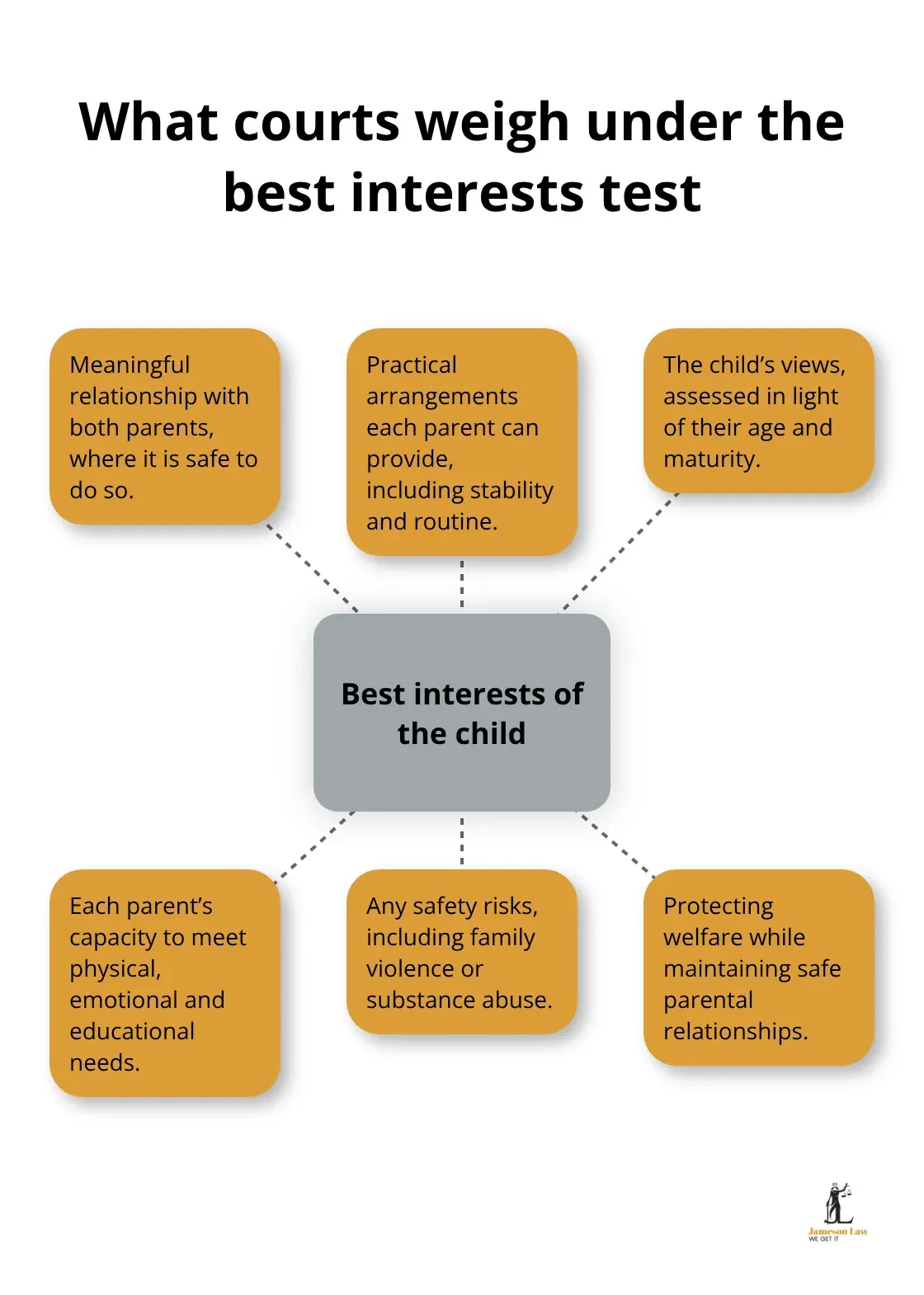
The Family Court does not make parenting orders based on what parents want or what seems fair between adults. Instead, judges apply a specific legal test centred entirely on your child’s best interests. The Family Law Act 1975 (Cth) sets out primary considerations that judges must assess, and knowing these factors helps you gather the right evidence and frame your circumstances realistically.
The Core Legal Test
The court prioritises the benefit to the child of having contact with both parents, the practical arrangements each parent can provide, your child’s own views depending on their age and maturity, and the capacity of each parent to meet your child’s physical, emotional and educational needs. Courts also consider whether either parent has a history of family violence, substance abuse, or other conduct that affects their ability to parent safely. This is not about which parent is more likeable or who earns more money; it is about demonstrating that your proposed arrangement protects your child’s welfare and maintains their relationship with both parents where it is safe to do so.
How Courts Weight Your Child’s Preferences
Your child’s wishes carry real weight, but how much depends on their age and the court’s assessment of whether they understand the implications of what they are asking for. Children aged 12 and over frequently provide their views to a family report writer or judge, and courts take these views seriously, though they will not simply accept a child’s preference if it conflicts with their best interests. A 16-year-old expressing strong preferences about where they live typically influences the outcome significantly, whereas a seven-year-old’s stated preference carries less weight because they may not grasp the long-term consequences.
The Family Report Writer’s Role
The court appoints an independent family report writer in many contested cases to interview both parents and your child, observe their interactions, and provide an objective assessment of each parent’s parenting capacity and the child’s needs. This report carries substantial influence in court because judges trust the report writer’s professional observation. If you head toward court, prepare your child appropriately for this conversation; coaching them on what to say backfires spectacularly because report writers are trained to identify pressure and manipulation, which damages your credibility with the judge.
Final Thoughts
Parenting arrangements in NSW require clear legal recognition and honest assessment of what works for your child. Courts prioritise your child’s best interests, both parents’ involvement matters unless safety concerns exist, and formalising arrangements through court orders protects everyone involved. Informal agreements between parents, no matter how well-intentioned, leave your child vulnerable to sudden changes.
A consent order costs far less than contested proceedings and gives you legal certainty. Mediation genuinely works in about half of all cases and costs significantly less than court. When court becomes necessary, judges apply consistent legal tests focused entirely on your child’s welfare, not on what seems fair between adults.
Seeking legal advice early makes a real difference-a lawyer can assess whether your situation suits a consent order, identify what evidence you’ll need if court becomes necessary, and explain realistic timelines and costs. We at Jameson Law help NSW parents navigate family law matters with practical, straightforward guidance. Contact Jameson Law to discuss your parenting arrangements NSW situation with someone who understands family law in this state.