


NSW criminal courts can feel overwhelming when you’re facing charges or navigating the system for the first time. The rules, procedures, and court structures differ significantly depending on where your case is heard and what you’re charged with.
A Sydney criminal lawyer who understands these distinctions can guide you through each stage, from police investigation through to sentencing. This guide breaks down how NSW courts work, what to expect at each step, and how we at Jameson Law help clients protect their rights.
Where Your Case Gets Heard in NSW
NSW has three main criminal courts, and understanding which one handles your case matters enormously because it affects your sentencing exposure, trial procedures, and legal strategy.
The three NSW criminal courts and their jurisdiction
The Local Court deals with the vast majority of criminal matters. This court handles less serious offences and can impose sentences up to two years imprisonment for a single offence. The District Court sits above the Local Court and handles more serious indictable offences.
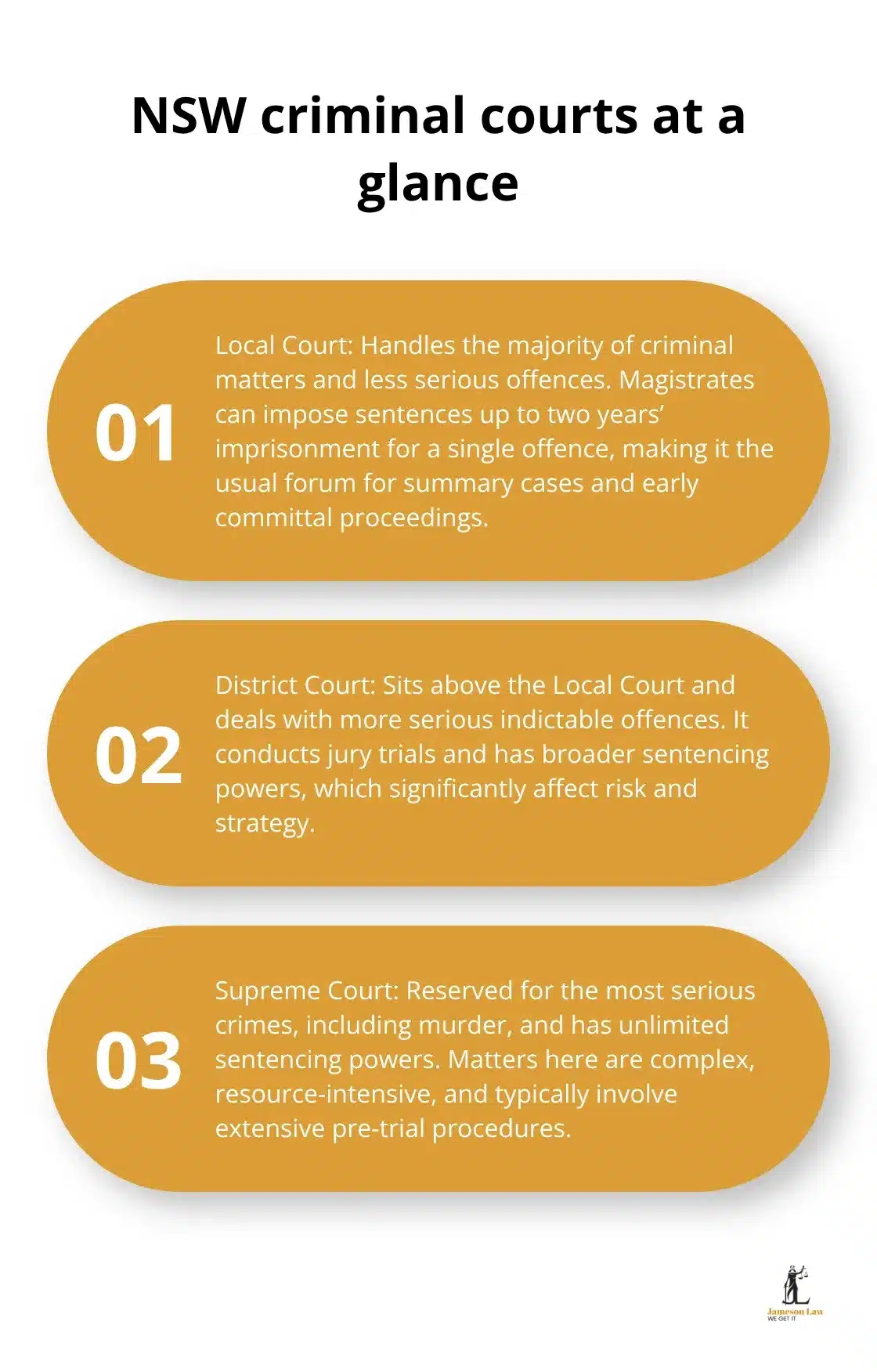
The Supreme Court handles the most serious crimes, including murder, and possesses unlimited sentencing powers. If you face charges for an indictable offence, your case typically starts in the Local Court for a committal hearing, where the magistrate assesses whether sufficient evidence exists to send you to the District Court for trial. A strong defence at the committal hearing can result in charges being dismissed entirely, which saves you months of court proceedings and legal costs.
How court jurisdiction shapes your sentencing exposure
The court that hears your case directly affects the maximum penalty you face. A charge like assault can be dealt with in the Local Court with a maximum of two years imprisonment, but if it becomes an indictable matter in the District Court, the sentencing range increases significantly. Drug possession charges illustrate this clearly: simple possession matters handled in the Local Court carry far lighter sentences than supply charges heard in the District Court. Understanding your charge category and which court has jurisdiction shapes your defence strategy from day one. Many defendants fail to realise they can elect to have certain matters heard in the District Court, which sometimes works in your favour despite higher sentencing exposure (because juries in District Court trials can respond more sympathetically than magistrates for particular offences).
Local Court timelines and procedures differ from higher courts
Local Court matters typically resolve within 6-12 months from first appearance to finalisation, whereas District Court cases often take 18-24 months or longer. This speed matters for your personal circumstances-whether you work, manage family responsibilities, or operate under bail conditions. The Local Court also offers more flexibility in how cases proceed, with magistrates holding discretion to adjourn matters, vary bail, and negotiate outcomes informally. Magistrates hear hundreds of cases and develop considerable expertise in specific offence categories. If your case involves straightforward facts and you obtain strong legal advice early, resolving it in the Local Court can prove far more efficient than fighting for a District Court trial you might lose anyway.
What happens next in the criminal process
Once you understand which court handles your matter, the next stage involves navigating police procedures, bail applications, and the decisions you face about how to plead. These early steps set the foundation for your entire case.
How Police Decisions and Your Early Choices Shape Your Case
Police charging decisions and your rights
From the moment police decide to charge you, every decision matters. NSW Police hold significant discretion in how they investigate and charge offences, and understanding this process helps you make informed decisions with your lawyer. Police must establish reasonable grounds to believe you committed an offence before laying charges, but what constitutes reasonable grounds varies considerably depending on the offence type. For assault matters, police often charge based on victim statements alone, whereas drug supply charges typically require evidence of quantity, scales, or financial records. The charging decision isn’t always final either. Criminal defence lawyers regularly challenge charges at the committal stage or negotiate with the prosecution to withdraw or downgrade charges before trial.
Police investigation files contain evidence the prosecution intends to use against you, and your lawyer needs access to these files early to identify weaknesses. Many defendants wait until their first court appearance to obtain legal advice, which costs them months of lost preparation time. Getting advice within days of being charged allows your lawyer to request disclosure immediately, gather defence evidence while memories remain fresh, and identify whether bail conditions imposed by police are reasonable or should be challenged.
Bail decisions that affect your freedom and defence preparation
Bail decisions determine whether you stay in custody or return home while your case proceeds, and this choice fundamentally affects your ability to work, care for dependents, and prepare your defence. NSW courts must consider whether you pose an unacceptable risk of not appearing in court, committing further offences, or endangering the community when deciding bail. If police oppose your bail application, the magistrate or judge must be satisfied that conditions adequately address their concerns.
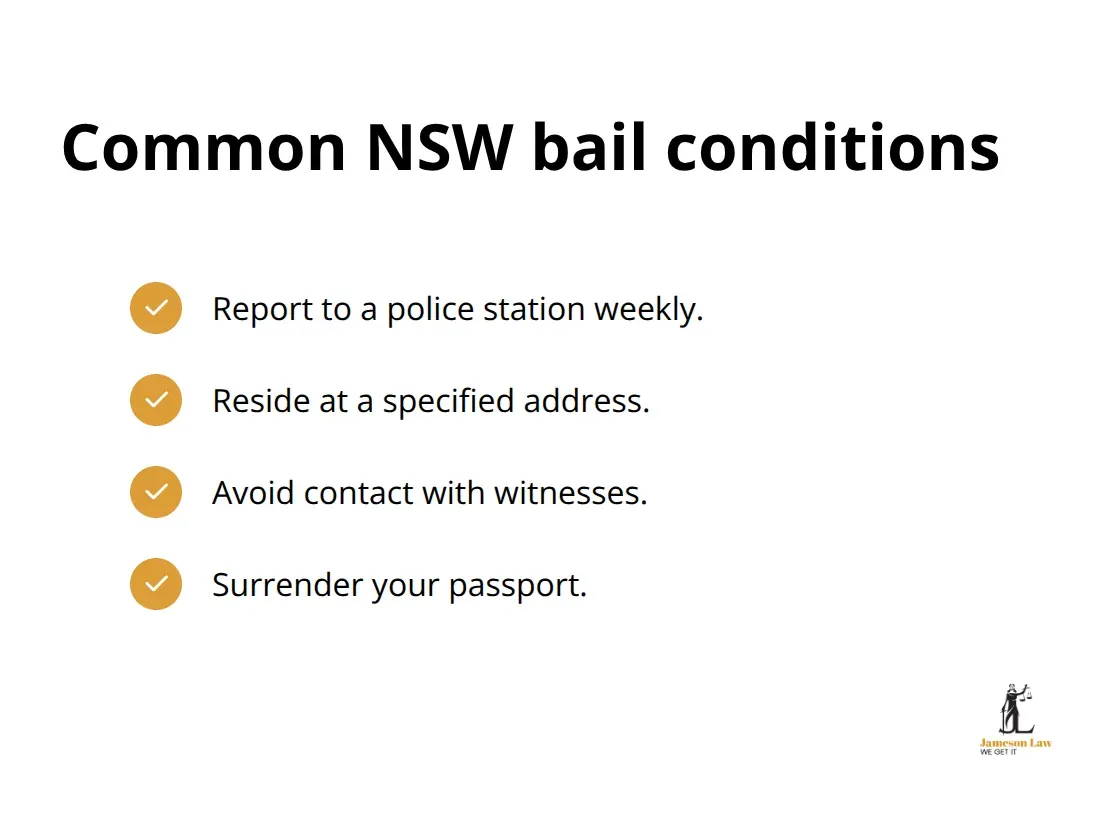
Common bail conditions include reporting to a police station weekly, residing at a specified address, avoiding contact with witnesses, and surrendering your passport. Strict conditions make everyday life difficult, but accepting reasonable conditions beats remaining in custody.
The bail decision also influences your plea strategy significantly. Defendants held in custody for extended periods often feel pressure to plead guilty to secure release, even when they might win at trial. Conversely, being on bail allows you to gather character references, maintain employment, and present yourself as a stable, law-abiding person if you proceed to trial. If bail is refused, you can apply again after your circumstances change or new evidence emerges.
Plea decisions and trial strategy
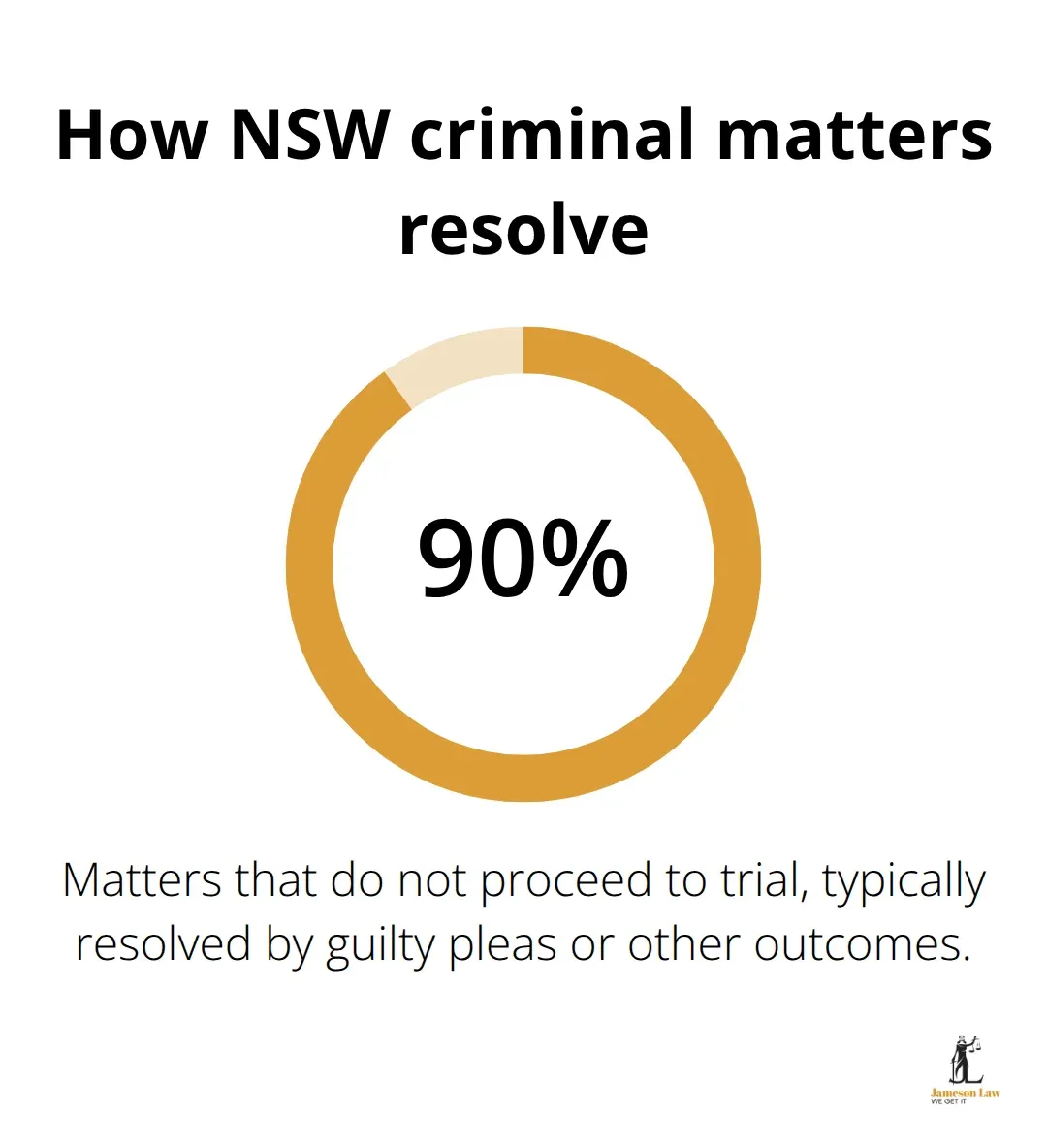
Your next critical decision involves how to plead and whether to pursue trial or negotiated resolution. Most criminal cases in NSW resolve through guilty pleas rather than trials, with approximately 90 percent of matters not proceeding to trial according to NSW Courts data. This doesn’t mean you should plead guilty; it means the prosecution often has weaknesses you can exploit through negotiation.
A guilty plea typically results in a sentence discount of 25 to 40 percent depending on how early you plead and your level of cooperation. However, pleading guilty to charges you didn’t commit or accepting responsibility for conduct you dispute wastes this discount and creates a permanent criminal record. Your lawyer should prepare a detailed case assessment showing the prosecution’s evidence gaps, your defence strengths, and realistic sentencing outcomes before you decide to plead. If trial is appropriate, preparation begins immediately with identifying witnesses, obtaining CCTV footage, gathering expert reports, and understanding the prosecution’s case thoroughly.
Sentencing outcomes and your offence type
Sentencing outcomes vary dramatically based on your offence type, your criminal history, your personal circumstances, and the specific facts. The Crimes (Sentencing Procedure) Act 1999 (NSW) establishes sentencing principles courts must follow, but individual judges exercise considerable discretion within legislative frameworks. An assault conviction might result in a conditional release order with no conviction recorded, a fine, or imprisonment depending on factors like weapon use, victim injury, and your prior record. Drug supply convictions carry much heavier sentences, with trafficking in large quantities attracting custodial terms of several years. Understanding sentencing ranges for your specific offence allows you and your lawyer to assess whether fighting at trial makes strategic sense or whether negotiating a guilty plea to lesser charges reduces your exposure significantly. The decisions you make during this phase-about disclosure, bail conditions, and plea strategy-set the trajectory for your entire case and determine what happens when you face sentencing or trial.
Common Criminal Charges in NSW
Assault and violence offences
Assault and violence offences dominate NSW criminal courts, with NSW Police recording over 60,000 assault incidents annually according to crime statistics. Assault charges range from common assault (maximum two years in Local Court) through to grievous bodily harm (District Court, up to ten years imprisonment). The distinction matters enormously because common assault often resolves with conditional release orders or fines, whereas assault causing actual bodily harm typically attracts custodial sentences or intensive corrections orders.
Police charging decisions in assault matters frequently depend on victim injury severity and whether weapons were involved, but magistrates assess proportionality carefully during sentencing. If you face charges after a single punch at a pub, your lawyer should obtain CCTV footage immediately and collect character references showing you’re not a violent person, as these factors dramatically influence sentencing outcomes. Self-defence claims succeed regularly in assault cases when you can demonstrate you used only necessary force to protect yourself, so collecting witness statements and photographs of injuries within days of the incident proves critical.
Domestic violence assault charges carry additional complexity because courts apply specific sentencing principles, and apprehended violence orders often accompany convictions, restricting your contact with family members for twelve months or longer.
Drug-related offences
Drug-related offences present vastly different sentencing exposure depending on whether you face simple possession or supply charges. Possession of cannabis for personal use in NSW typically results in fines or warnings rather than imprisonment, with NSW Police increasingly issuing cautions to first-time offenders instead of charging them. Possession of other drugs like methamphetamine or heroin attracts Local Court sentences ranging from fines through to two years imprisonment, but the quantity you possessed determines whether police charge you with possession or supply.
The District Court handles supply charges, and trafficking in large commercial quantities attracts sentences of five to ten years or more. Obtaining legal advice before your first court appearance allows your lawyer to request police disclosure showing the exact quantity seized and testing results, as microscopic differences in weight can mean the difference between possession and supply charges.
Theft and property crimes
Theft and property crimes including shoplifting, burglary, and vehicle theft vary significantly in sentencing severity depending on property value and whether you used force or threats. Shoplifting convictions rarely result in imprisonment unless you have extensive prior convictions, but burglary charges (even when no one was home) attract District Court sentences because courts treat home invasions as serious offences affecting community safety.
Driving offences with criminal penalties
Driving offences with criminal penalties including drink driving, dangerous driving causing injury, and driving while disqualified carry mandatory licence disqualifications and often custodial sentences depending on circumstances. A first drink-driving offence results in minimum six-month licence suspension and fines of $1,100 to $2,200 according to current NSW legislation, whereas dangerous driving causing death attracts sentences of up to fourteen years imprisonment.
Building your defence strategy
Early legal advice in any of these charge categories allows your lawyer to request police disclosure showing the exact quantity seized and testing results, identify whether the prosecution’s evidence meets the required standard, challenge police procedures, and develop sentencing strategies that minimise court penalties and long-term consequences. Your specific charge type, the facts surrounding your conduct, and your personal circumstances all shape how your lawyer approaches your case from the first court appearance onwards.
Final Thoughts
NSW criminal court procedures operate within strict legislative frameworks, but the outcomes you face depend heavily on decisions made during the earliest stages of your case. Understanding which court handles your matter, how bail decisions affect your freedom, and what sentencing ranges apply to your specific charges gives you the foundation to work effectively with your legal team. Early legal advice genuinely changes case outcomes because defendants who obtain a Sydney criminal lawyer within days of being charged benefit from immediate disclosure requests, bail application preparation, and realistic case assessments that inform every subsequent decision.
Waiting weeks or months before seeking advice costs you preparation time, witness availability, and negotiating leverage with the prosecution. The difference between pleading guilty to charges you might have defended and securing charge withdrawals often comes down to whether your lawyer accessed police files and identified weaknesses before your first court appearance. The police investigation phase, disclosure requests, and plea strategy discussions that follow determine whether you resolve your matter efficiently or proceed to trial.
If you’re facing criminal charges or investigating your options, contact Jameson Law for practical legal advice tailored to your situation.