

Not all migration agents in Australia are created equal. The difference between a qualified, registered professional and someone operating without proper credentials can determine whether your visa application succeeds or fails.
At Jameson Law, we’ve seen firsthand how migration agent requirements Australia protects clients and ensures they receive legitimate advice. This guide walks you through the qualifications, codes of conduct, and standards that separate authorised agents from those who shouldn’t be handling your case.
Who Can Become a Registered Migration Agent
Educational Qualifications and Registration Pathways
To act as a migration agent in Australia, you need far more than a passing interest in visa law. The Office of the Migration Agents’ Board of Australia (MABA) sets strict requirements that weed out unqualified operators and protect clients from poor advice. Most agents hold a qualification in migration law or a related legal field, though the specific requirements depend on when they registered. Agents who registered before 1 December 2011 followed different pathways, but anyone entering the profession now must meet current standards set by MABA.
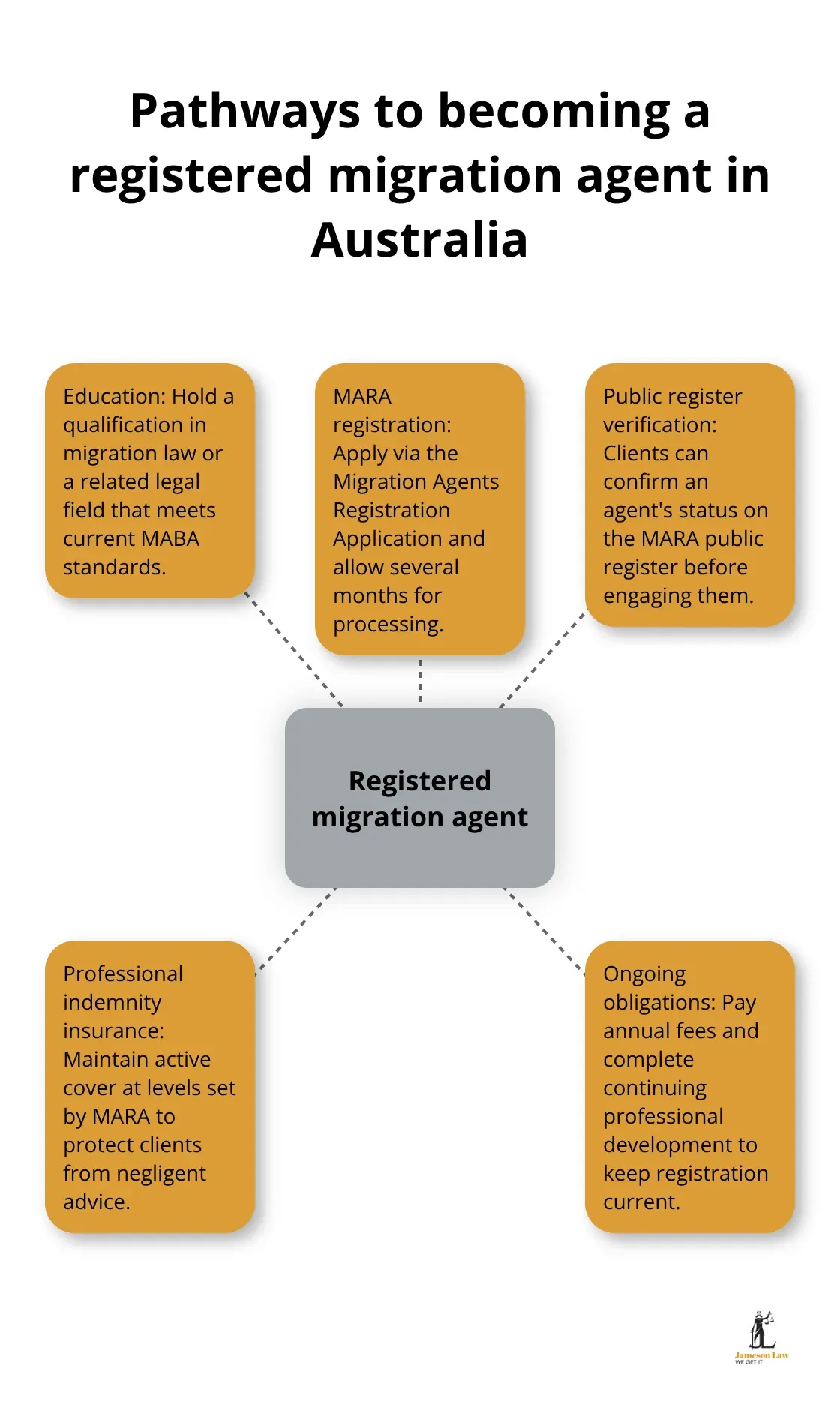
The Migration Agents Registration Application (MARA) handles all registrations, and the process takes several months to complete. You can verify whether someone holds actual registration on the MARA public register, which serves as your first line of defence when choosing an agent. Fake agents sometimes claim registration they do not have, so verification remains non-negotiable.
Professional Indemnity Insurance Requirements
MABA requires professional indemnity insurance before you can legally operate as a migration agent. This insurance protects clients if an agent provides negligent advice that costs them money. The minimum cover amount, set by MARA, changes periodically but remains substantial enough to cover real client losses. Agents must maintain active registration, which involves paying annual fees and meeting ongoing professional development requirements.
Checking Registration Status and Disciplinary History
When selecting an agent, check not just whether they hold registration, but whether their registration remains current and carries no disciplinary history. MABA publishes information about agents who have had complaints upheld against them, and this information is publicly available. If an agent claims registration but you cannot find them on the public register or their registration has lapsed, walk away immediately. The cost of discovering an unregistered agent has handled your case far exceeds the cost of finding a properly qualified one from the start.
The next section examines the codes of conduct and professional standards that govern how registered agents must operate, and what happens when they fail to meet these obligations.
Code of Conduct and Professional Standards
Confidentiality and Information Protection
Registered migration agents operate under a strict code of conduct enforced by the Office of the Migration Agents’ Board of Australia. This code exists because migration decisions affect people’s lives, livelihoods, and families. An agent who breaches the code faces serious consequences, including suspension or cancellation of their registration.
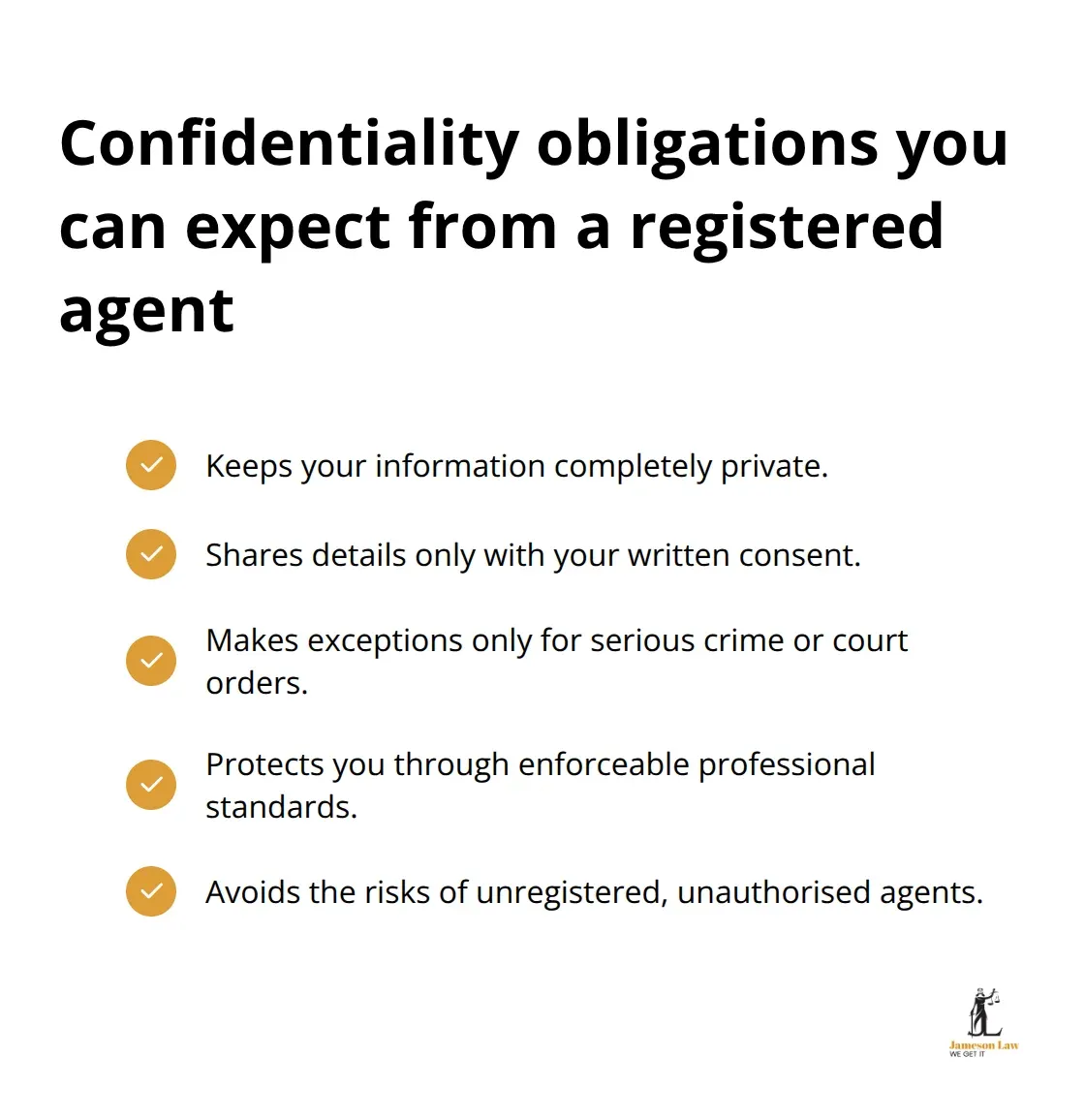
Your migration agent must keep all information you provide completely private, with limited exceptions only for serious criminal activity or court orders. This means your agent cannot discuss your case with family members, employers, or other agents without your written consent. Many clients don’t realise that sharing details about your financial situation, health issues, or personal circumstances with an unregistered person puts your case at risk. When you work with an unauthorised agent, you have no legal protection if they misuse this information.
Disclosure Requirements and Conflict of Interest
An agent must tell you about any conflicts of interest before representing you. If an agent represents multiple clients in related matters, they must disclose this openly. If an agent has a financial interest in recommending a particular visa pathway, they must tell you. This transparency requirement separates legitimate agents from those who prioritise their own fees over your actual prospects.
The Office of the Migration Agents’ Board of Australia enforces these disclosure rules strictly. Agents who fail to disclose conflicts face disciplinary action, and clients who discover undisclosed conflicts can lodge formal complaints that trigger investigations.
Record Keeping and Documentation Standards
Record keeping standards require agents to maintain detailed files on every client matter. These records must include your instructions, copies of documents submitted, correspondence with the Department of Home Affairs, and notes about advice given. MABA conducts random audits of agent files, and poor record keeping frequently triggers complaints and disciplinary action. Agents must keep these records for at least five years after a matter concludes.
If an agent cannot produce documentation of the advice they gave or the steps they took, they face serious allegations of negligence or misconduct. This documentation requirement protects you because it creates an audit trail of what your agent actually did on your behalf.
What Happens When Agents Breach the Code
The code covers three main areas that directly impact how an agent serves you: confidentiality obligations, conflict of interest disclosure, and documentation standards. When agents breach these standards, the consequences extend beyond professional discipline. Clients who suffer financial loss from an agent’s breach can pursue compensation claims, and the agent’s professional indemnity insurance may cover these losses. However, pursuing a claim takes time and money, which is why selecting a properly registered agent from the outset matters far more than trying to recover losses later.
The next section examines the mistakes that even registered agents sometimes make, and how these errors can derail your application.
Common Mistakes Migration Agents Make
Registration Lapses and Inactive Status
Registration status lapses more often than clients realise. An agent may maintain their professional indemnity insurance and pay their annual fees, but fail to complete mandatory professional development requirements. When this happens, their registration becomes inactive without warning, and they legally cannot represent clients. You might discover this only after submitting documents or months into your application process. The MARA public register shows registration status clearly, and you should check it again before your agent submits anything to Home Affairs.
Operating Outside Authorised Scope
Some agents operate outside their authorised scope by advising on matters they have not studied or trained in. Migration law covers visa categories ranging from skilled migration to family reunion to protection visas, and each requires specific knowledge. An agent authorised only for employer-sponsored visas should not advise you on protection visa strategy, yet some do anyway because the fee looks attractive. This scope creep creates real risk because your agent may miss critical requirements or deadlines specific to your visa type. When the application fails, you discover the agent lacked proper expertise too late to recover.
Communication Failures and Unresponsiveness
Communication failures destroy client trust and derail applications with surprising frequency. An agent might submit documents to Home Affairs but never tell you what was sent or when, leaving you unable to track progress or respond to requests quickly. Other agents disappear after the initial consultation, making themselves unreachable when you have questions or when Home Affairs requests additional information. The Migration Agents Registration Authority receives complaints about poor communication regularly, and these complaints often lead to disciplinary action.
Standards That Separate Quality Agents
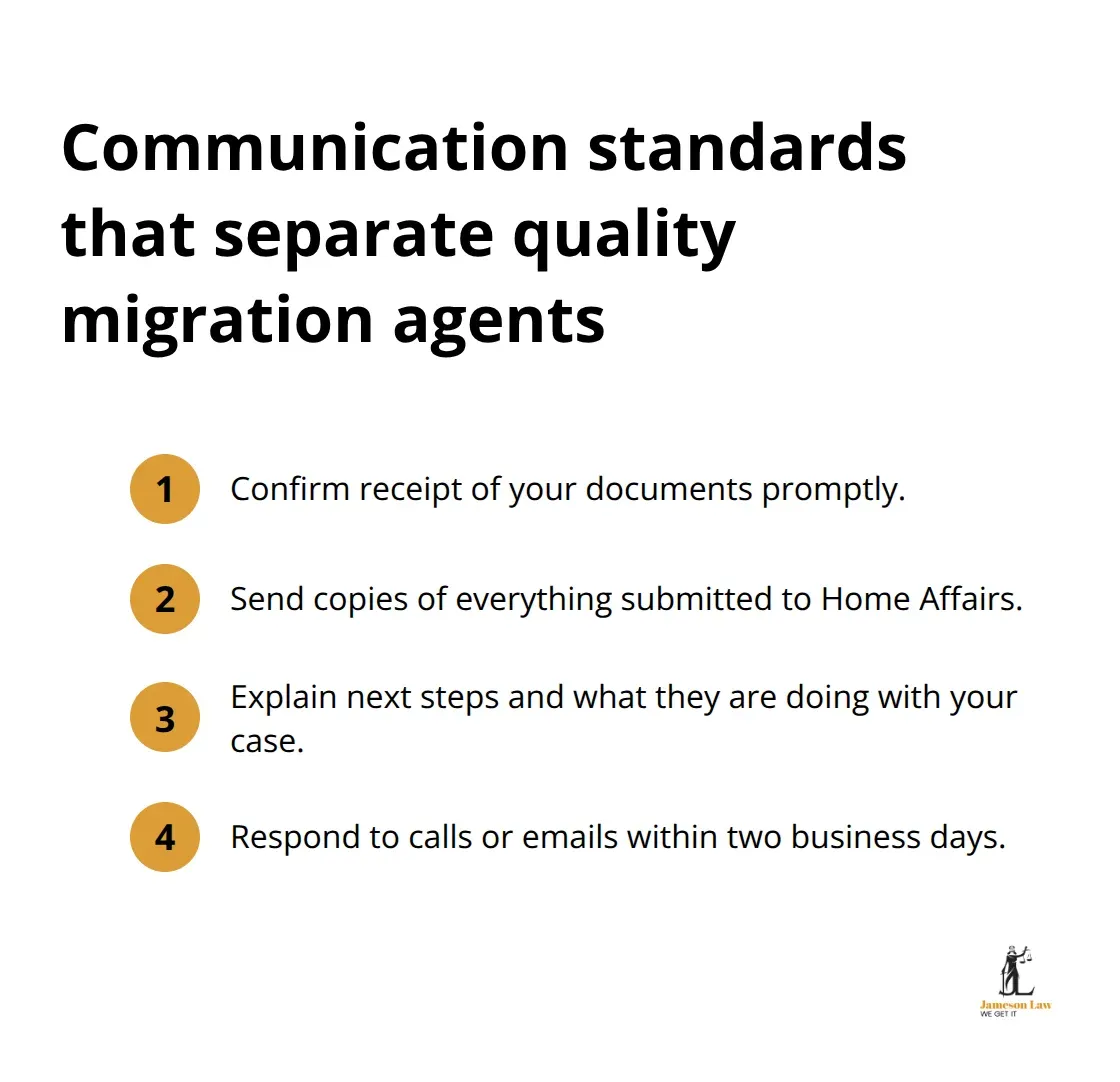
Agents who maintain detailed file notes and send you copies of everything they submit demonstrate professional standards worth paying for. You should expect your agent to confirm receipt of your documents, explain what they are doing with your case, and respond to your calls or emails within two business days. If an agent cannot manage this basic level of contact, they will not manage your application properly either. The agents who succeed maintain communication discipline as a core practice, not an afterthought (and this applies whether you work with a large firm or a sole practitioner).
Final Thoughts
Migration agent requirements Australia protect you from unqualified operators who could damage your application irreparably. When you verify registration on the MARA public register, check disciplinary history, and confirm professional indemnity insurance remains active, you eliminate the most common sources of application failure. These verification steps take minutes but protect months of effort and substantial application fees.
Quality agents maintain detailed records, communicate regularly, and operate within their authorised scope. They disclose conflicts of interest openly and keep your information confidential. They respond to your questions within two business days and explain what they are doing with your case at every stage.
If you need legal assistance with immigration matters, we at Jameson Law provide immigration law services across Australia with a primary focus on New South Wales. Contact Jameson Law to discuss your situation with qualified legal professionals who can guide you through the process properly.