

If you have an Australian parent or grandparent, you may have a direct path to Australian citizenship. Citizenship by descent is one of the most straightforward ways to claim citizenship, but it requires specific documentation and proof.
At Jameson Law, we’ve helped many people navigate this process successfully. This guide walks you through eligibility requirements, what documents you’ll need, and how to submit your application to the Department of Home Affairs.
Understanding Australian Citizenship by Descent
How Citizenship by Descent Works in Australia
Citizenship by descent allows you to claim Australian citizenship through a parent or grandparent who held Australian citizenship at the time of your birth. This isn’t about residency or migration-it’s a direct legal entitlement based on your family connection. The Australian Citizenship Act 1948 recognises descent claims, and this pathway exists specifically because Australian law acknowledges bloodline connections to citizenship.
Timing matters absolutely. Your parent must have held Australian citizenship at the moment you were born, not before or after. If your parent naturalised as an Australian citizen after you were born, that doesn’t qualify. Similarly, if they held citizenship but renounced it before your birth, you cannot claim through them. This is where most people face confusion-they assume any Australian ancestry works, but the law is precise about the exact date your parent held citizenship status.
Who Actually Qualifies
You can claim citizenship by descent if at least one parent held Australian citizenship when you were born. If that parent was born in Australia, they automatically held Australian citizenship. If they were born overseas, they would have needed to be naturalised or hold citizenship through their own parent.
The Department of Home Affairs receives thousands of descent applications annually, and eligibility hinges entirely on documentary proof of your parent’s citizenship status at your birth. Grandparent claims are possible but significantly more complex-you must prove your parent held Australian citizenship, and they must have passed it to you before you turned 18. The Citizenship Act has specific rules about this intergenerational transfer, and missing the age threshold means you lose the right to claim.
One practical advantage of descent claims over other pathways is they don’t require points testing, language proficiency, or residency periods like skilled migration does. You either qualify or you don’t, based purely on your family history and documentation.
Why Descent Differs from Other Routes
Descent citizenship is fundamentally different from skilled migration, family sponsorship, or humanitarian visas because it’s not discretionary. Home Affairs doesn’t assess your character, income, or contribution to Australia-they simply verify whether your parent held citizenship at your birth.
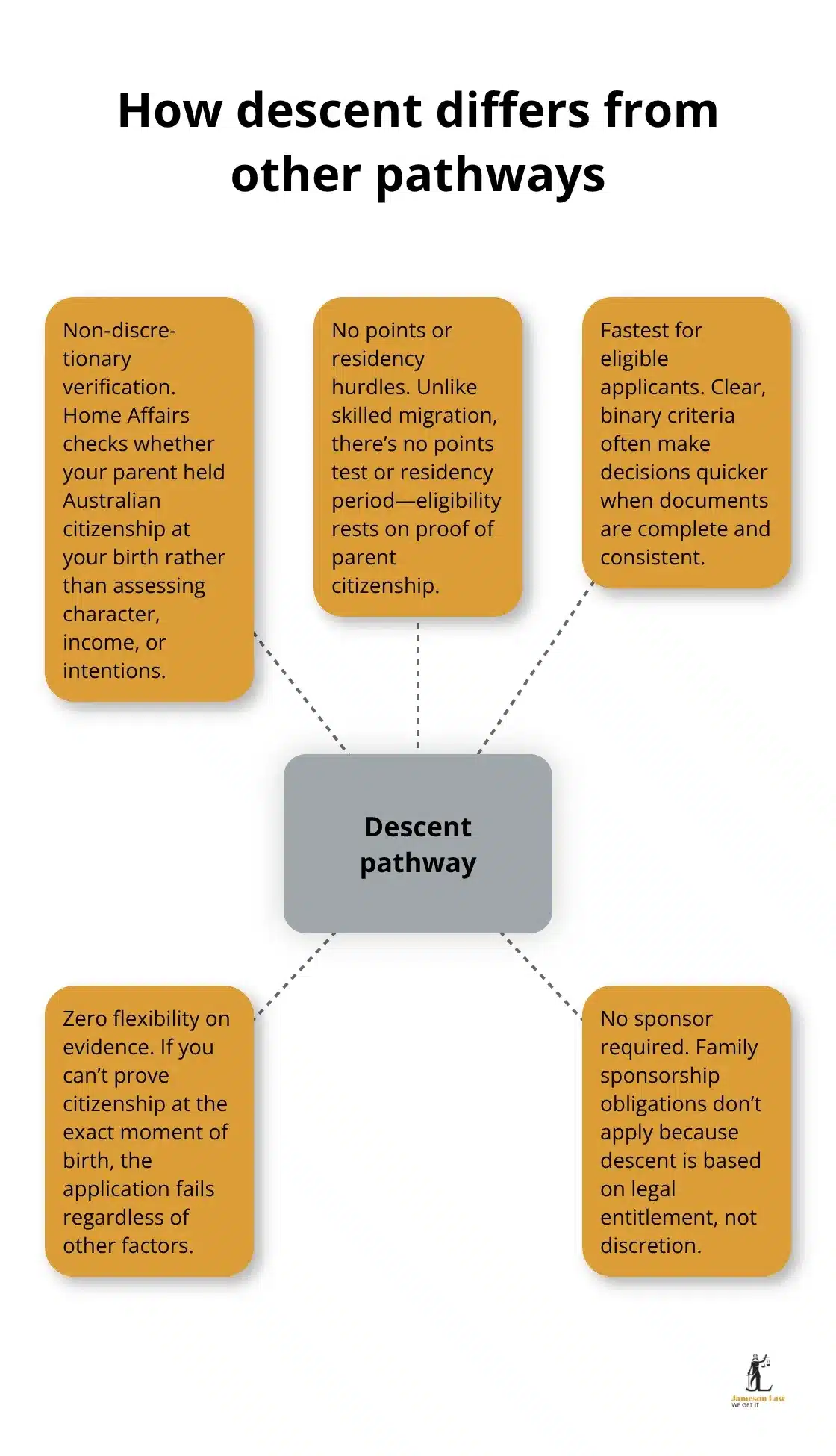
Skilled migration requires you to meet points criteria and wait for invitation. Family sponsorship requires a sponsor to lodge a separate application and meet financial commitments. Descent requires only proof. This makes descent the fastest and most certain route for eligible applicants, which is why it attracts so many people with Australian ancestry.
However, this directness also means there’s no flexibility. If your documents don’t prove citizenship at the exact moment you were born, the application fails. There’s no discretion to grant citizenship if the evidence is slightly incomplete. Unlike other visa pathways where you might appeal or reapply with additional information, descent claims have strict evidentiary requirements.
What Documentation Proves Your Parent’s Citizenship
The Department of Home Affairs needs concrete evidence that your parent held citizenship status at your birth. Birth certificates alone won’t establish this-you need documentation that specifically shows your parent’s citizenship status. If your parent was born in Australia, you’ll need their birth certificate plus evidence they never renounced citizenship. If your parent was naturalised, you’ll need their naturalisation certificate showing the date they became an Australian citizen.
The processing timeline typically runs 12 months, but this depends entirely on how quickly you provide complete documentation and how straightforward your family history is. Incomplete applications or missing documents cause significant delays, so gathering everything upfront saves time.
Understanding these distinctions helps you assess whether descent is your pathway and what documentation you’ll need to gather. The next section walks you through the specific documents the Department of Home Affairs requires and how to prepare your application.
What Documents You Actually Need to Prove Citizenship
Your Parent’s Citizenship Documentation
Home Affairs does not accept assumptions about your parent’s citizenship status. They require original or certified documents that specifically prove your parent held Australian citizenship on the exact date you were born. If your parent was born in Australia, start with their birth certificate and any naturalisation records if they were born overseas. A birth certificate alone proves someone was born in Australia, but you also need to show they never renounced citizenship after birth.
If your parent naturalised, their naturalisation certificate shows the precise date citizenship was granted, and this must predate your birth. Obtain certified copies from the Registry of Births, Deaths and Marriages in the state where your parent was born. Processing times for these requests typically range from two to four weeks, so order them immediately rather than waiting.
Why Certified Copies Matter
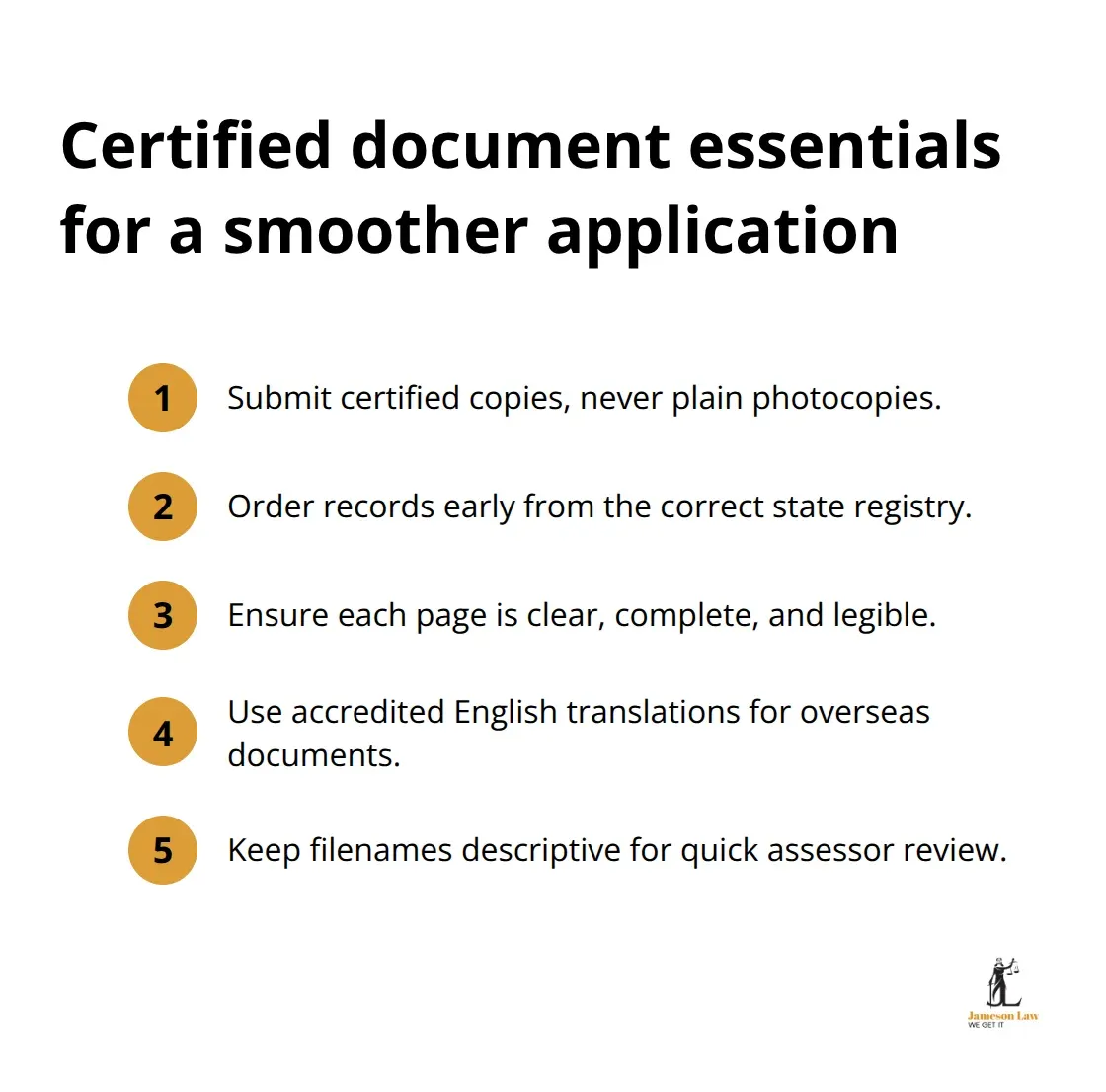
The Department of Home Affairs receives applications with incomplete or unclear documentation constantly, and these applications face rejection or indefinite delays. One critical mistake people make is submitting photocopies instead of certified copies. Home Affairs requires certified documents because they need to verify authenticity, and photocopies do not satisfy this requirement regardless of how clear they appear.
Certified copies cost per document depending on the state registry. This small investment prevents your application from stalling for months while Home Affairs requests proper documentation.
Handling Name Changes
Your birth certificate must show your parent’s name exactly as it appears on their citizenship documentation. Name changes complicate matters significantly. If your parent changed their name after your birth through marriage, divorce, or formal deed poll, you need both the original birth certificate and the change of name documentation. Marriage certificates and divorce decrees establish the legal name changes and the dates they occurred.
If your parent was born overseas and naturalised in Australia, their naturalisation certificate must predate your birth, and you will also need their overseas birth certificate translated into English by an accredited translator if it was not originally issued in English. The Department of Home Affairs requires certified English translations, not informal ones. These translations cost depending on document length and translator rates.
Your Own Documentation
If you have changed your own name since birth, include your change of name certificate as well. Gather all documents before lodging your application because Home Affairs will request missing documents in writing, extending your processing timeline by weeks or months. Creating a complete document checklist against Home Affairs requirements before you submit anything prevents delays, as incomplete applications represent the single largest cause of processing setbacks in descent citizenship cases.
The next section walks you through the actual application process and what happens after you submit your documents to Home Affairs.
Submitting Your Application and What Happens Next
Lodging Your Application Online
Once your documents are certified, you can lodge your application with the Department of Home Affairs through the ImmiAccount system. The online portal allows you to create an account, upload all certified documents directly, and track your application status in real time. Paper applications still work, but they add processing delays because Home Affairs staff must manually scan and verify documents. Most applicants lodge online, which eliminates postal delays and gives you immediate confirmation of receipt.
When you upload documents, ensure each file is clear and complete-blurry scans or partially photographed pages cause Home Affairs to request resubmission, which delays your timeline by weeks. Name your files clearly so the assessor can identify whether you’re submitting your parent’s birth certificate, naturalisation certificate, or your own documentation.
Preparing Your Cover Letter
Include a cover letter that outlines your family relationship to your Australian parent or grandparent, the dates involved, and references to which documents support each claim. This simple step helps the assessor understand your case immediately rather than piecing information together from scattered documents. A clear cover letter reduces the likelihood that Home Affairs will request clarification, which extends processing times unnecessarily.
Understanding Processing Timelines
Processing times for descent citizenship applications vary based on application completeness and whether your family history is straightforward or complex. Applications with missing documents, unclear relationships, or overseas birth certificates requiring translation consistently experience delays extending beyond 18 months.
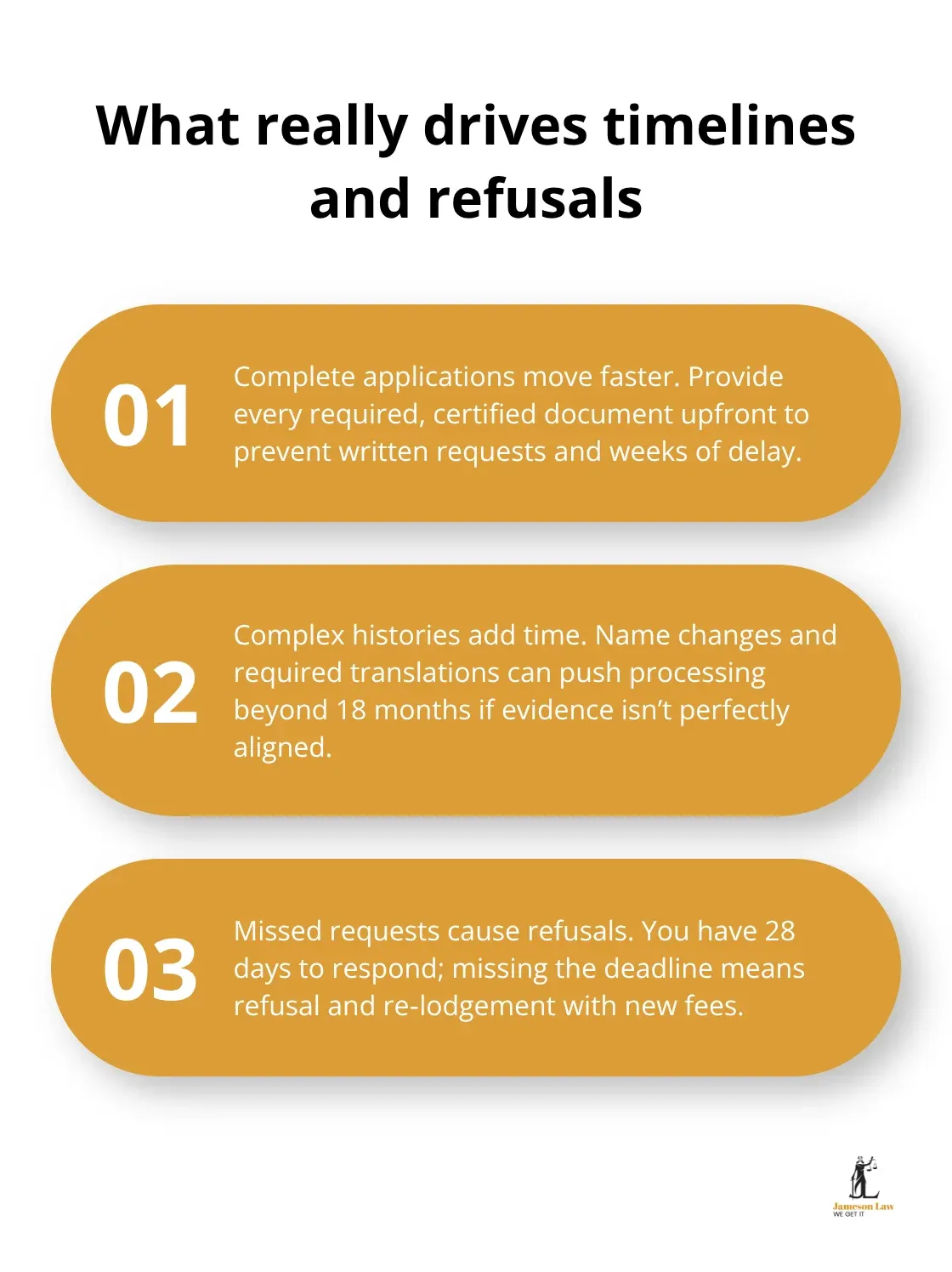
If Home Affairs identifies missing information, they issue a request in writing, giving you 28 days to respond. Missing that deadline results in application refusal, forcing you to lodge again from scratch and pay new application fees.
Common Reasons Applications Face Delays or Refusal
The single most common reason applications are delayed is incomplete documentation-applicants lodge without certified copies, missing marriage certificates, or without translation of overseas documents. Another frequent cause of refusal is applicants misunderstanding the exact date their parent held citizenship. If your parent naturalised two months after you were born, you don’t qualify-the law requires citizenship at the moment of birth, not sometime during your infancy.
Some applicants attempt to claim through grandparents without establishing that their parent held and maintained citizenship until they turned 18, which fails the intergenerational transfer requirement. Home Affairs also refuses applications where certified documents cannot establish an unbroken chain of citizenship or where name changes create gaps in the documentary evidence.
Submitting a Complete Application
Submit your application only when every document is certified, translated if necessary, and clearly labelled. Rushing to lodge an incomplete application costs you months in delays and creates genuine risk of refusal. Taking time to verify that your documentation meets Home Affairs requirements before you submit anything prevents setbacks that extend your timeline significantly.
Final Thoughts
Citizenship by descent offers a direct pathway to Australian citizenship if you have an Australian parent or grandparent who held citizenship at your birth. The eligibility requirements are straightforward, but the documentation demands are strict-your parent must have held citizenship on the exact date you were born, and you must provide certified documents proving this status. Grandparent claims require additional proof that your parent maintained citizenship until age 18.
The application process itself is manageable when you prepare thoroughly. You should gather all certified documents before you lodge your application, ensure overseas documents receive translation by accredited translators, and submit everything through ImmiAccount for faster processing. Most applications take around 12 months, but incomplete documentation extends this significantly, and missing the 28-day deadline to respond to Home Affairs requests results in automatic refusal.
If your family history is complex, documents are missing, or you’re uncertain whether you qualify, professional legal advice prevents costly mistakes. We at Jameson Law provide immigration law services to help you understand your eligibility and navigate the citizenship by descent application process.