


Securing an employer sponsorship visa in Australia opens doors to permanent residency and career growth. The process involves multiple visa pathways, each with distinct requirements and timelines.
At Jameson Law, we’ve guided countless professionals through this journey. This guide breaks down everything you need to know to navigate your application successfully.
Visa Options for Employer-Sponsored Work in Australia
Understanding Your Three Main Pathways
Australia offers three primary employer-sponsored visa pathways, each designed for different circumstances and employment durations. Your situation determines which pathway suits you best, and your employer must understand the sponsorship obligations before the process begins. The visa you select affects your timeline, location flexibility, and pathway to permanent residency.
Temporary Skill Shortage Visa Subclass 482
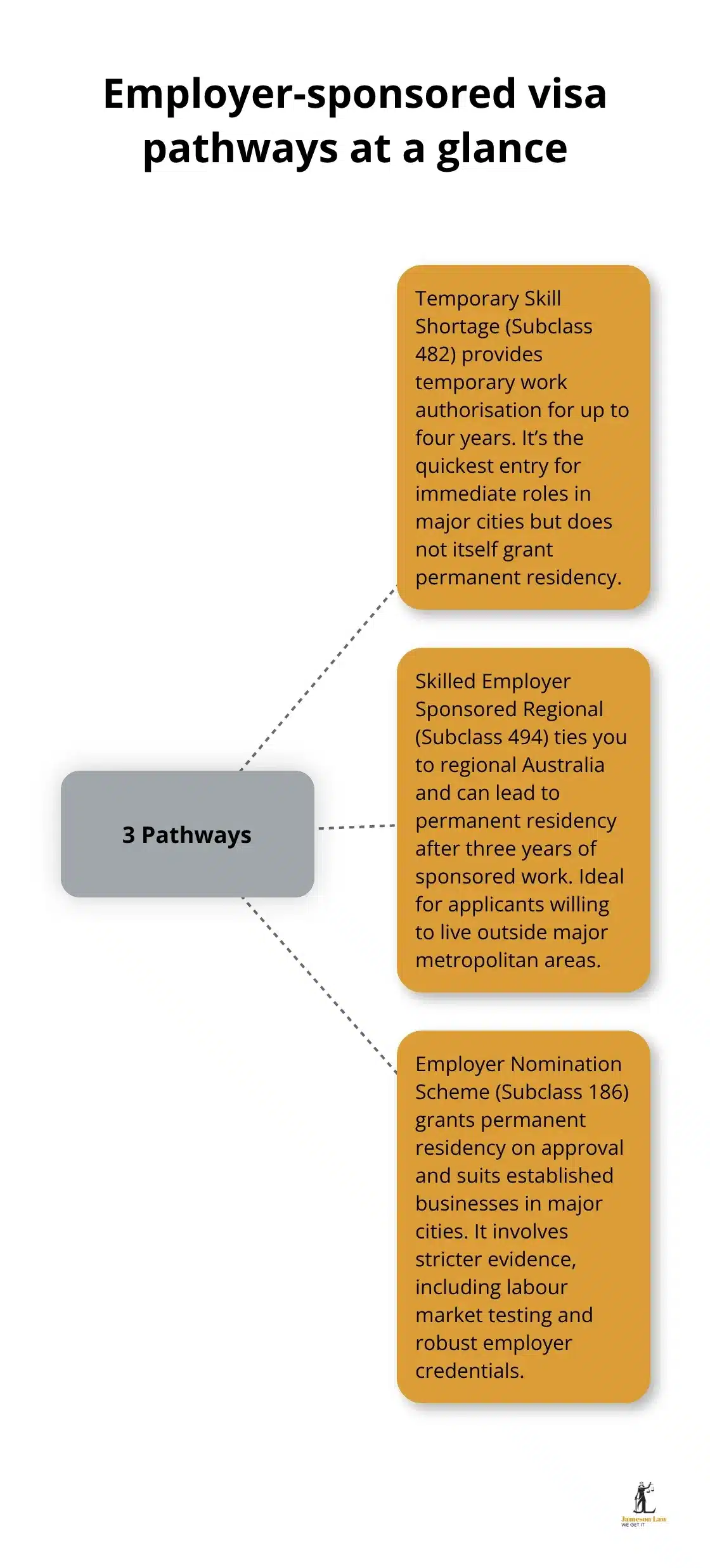
The Temporary Skill Shortage Visa Subclass 482 provides temporary work authorisation lasting up to four years. Employers use this visa to fill immediate skills gaps when Australian workers aren’t available. Home Affairs data shows this visa remains the most accessible entry point for overseas workers seeking immediate employment in Australia.
This visa applies to professionals in occupations listed on the Short-Term Skilled Occupation List. Processing typically takes two to six months, making it faster than permanent options. However, this visa doesn’t lead directly to permanent residency-you’ll need to transition to another visa category if you want to stay longer in Australia.
Skilled Employer Sponsored Regional Visa Subclass 494
The Skilled Employer Sponsored Regional Visa Subclass 494 targets workers willing to live and work in regional Australia outside major cities. This pathway offers genuine permanence since it leads to permanent residency after three years of sponsorship, provided you meet ongoing requirements. Visa conditions require you to remain in your designated region, which creates workforce stability for regional employers.
Home Affairs reports that regional sponsorships have increased significantly as state governments actively recruit skilled migrants to address labour shortages outside Sydney and Melbourne. Regional employers value this visa because it commits workers to their communities for an extended period. Your willingness to work outside major metropolitan areas opens this pathway to permanent residency.
Employer Nomination Scheme Visa Subclass 186
The Employer Nomination Scheme Visa Subclass 186 represents the permanent option for major cities and established businesses. This visa grants permanent residency immediately upon approval, eliminating the uncertainty of temporary arrangements. It stands as the most stringent pathway because Home Affairs requires employers to demonstrate they’ve genuinely tried to recruit Australian citizens first.
This visa involves detailed labour market testing and thorough assessments of employer credentials and market conditions. Processing times extend to twelve months or longer due to the comprehensive nature of these checks. Your employer’s capacity to meet sponsorship obligations and their track record significantly influence your application success.
Matching Your Circumstances to the Right Visa
Your choice between these three pathways depends on three key factors: your employment location, your desired permanence timeline, and your employer’s capacity to meet sponsorship obligations. Workers in regional areas who want permanent residency should consider the Subclass 494. Those seeking immediate employment in major cities with temporary arrangements should explore the Subclass 482. Established businesses in major cities with strong recruitment histories can pursue the Subclass 186 for permanent outcomes.
Before your employer begins the sponsorship process, both you and your employer must understand which visa aligns with your employment situation. Everyone working in Australia, including people on temporary visas, has work rights protected by law. Once you’ve identified the right visa, your employer’s sponsorship requirements and your own eligibility criteria become the next critical considerations.
Requirements and Eligibility Criteria
What Your Employer Must Prove to Sponsor You
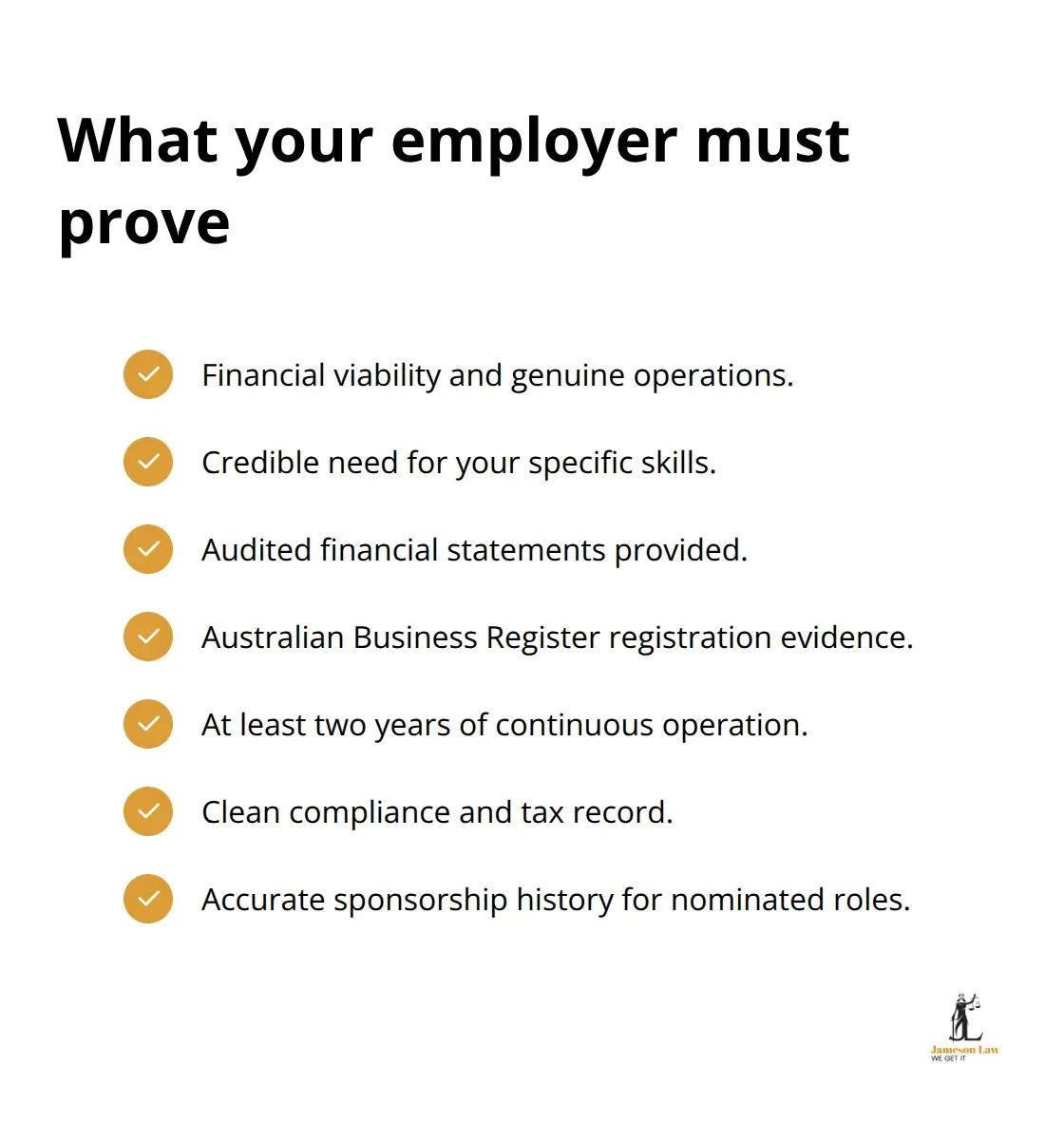
Your employer’s capacity to sponsor you determines whether your application succeeds or stalls. Home Affairs requires employers to demonstrate financial viability, genuine business operations, and a credible need for your specific skills. This isn’t bureaucratic theatre-Home Affairs conducts thorough checks on employer credentials, tax compliance, and employment history.
Employers must provide audited financial statements, proof of Australian Business Register registration, and evidence they’ve operated continuously for at least two years. If your employer has previous sponsorship history, Home Affairs examines whether past sponsored employees actually worked in the nominated positions. Employers with poor compliance records, unpaid tax obligations, or labour disputes face sponsorship refusals.
Labour Market Testing Requirements
The Employer Nomination Scheme Visa Subclass 186 demands the most rigorous employer scrutiny, including labour market testing that proves Australian workers cannot fill the role. Your employer must advertise the position locally for a minimum period, document applications received, and explain why local candidates were unsuitable. This process typically extends three to four months and costs employers between three and five thousand dollars in advertising and administrative expenses.
Regional sponsorships under Subclass 494 involve less stringent labour market testing but still require employers to demonstrate genuine workforce needs. Temporary Skill Shortage Visa Subclass 482 sponsorships demand the least employer verification, though Home Affairs still confirms business legitimacy and ongoing operations.
Your Qualifications and Professional Standing
Your own qualifications and professional standing directly impact sponsorship success. Home Affairs requires your skills and experience to match the nominated position exactly-inflated job titles or mismatched qualifications trigger application rejections. You’ll need formal qualifications verified through Trades Recognition Australia, professional bodies, or overseas qualification assessment services.
For skilled occupations, many roles require qualification recognition from bodies like the Australian Medical Council, Engineers Australia, or the Australian Computer Society. Your work experience must be documented with statutory declarations from previous employers confirming your role, responsibilities, and duration.
Character and Health Assessments
Character and health assessments form the final eligibility hurdle and cannot be overlooked. Home Affairs conducts police checks through Australian Federal Police and state police forces, examining any criminal history regardless of conviction timeframes. Traffic offences, drink-driving convictions, and assault charges all trigger detailed assessment.
You’ll undergo health screening including chest X-rays and blood tests, with costs typically ranging from four hundred to eight hundred dollars depending on your location and medical complexity. Certain health conditions may require additional assessments or impose visa conditions. The character assessment extends beyond criminal history to examine financial conduct, immigration compliance, and professional reputation. If you’ve overstayed previous visas, worked illegally, or provided false information to immigration authorities, your sponsorship application faces near-certain rejection.
Once Home Affairs confirms your employer’s legitimacy and verifies your qualifications and character, the formal application process begins. Understanding the nomination stage and the documentation you’ll need to submit becomes your next priority.
The Application Process and Timeline
Your Employer Lodges the Nomination
Your employer initiates the sponsorship process by lodging a nomination with Home Affairs, a step that separates serious candidates from those who won’t progress. Home Affairs processes the nomination within four to six weeks if the application is complete. Your employer must provide their Australian Business Register number, financial statements, and details of their business structure. Home Affairs verifies business registration through the Australian Securities and Investments Commission and checks tax compliance through the Australian Taxation Office. Once Home Affairs approves the employer nomination, you become eligible to apply for the visa itself, though the nomination approval doesn’t guarantee your visa approval.
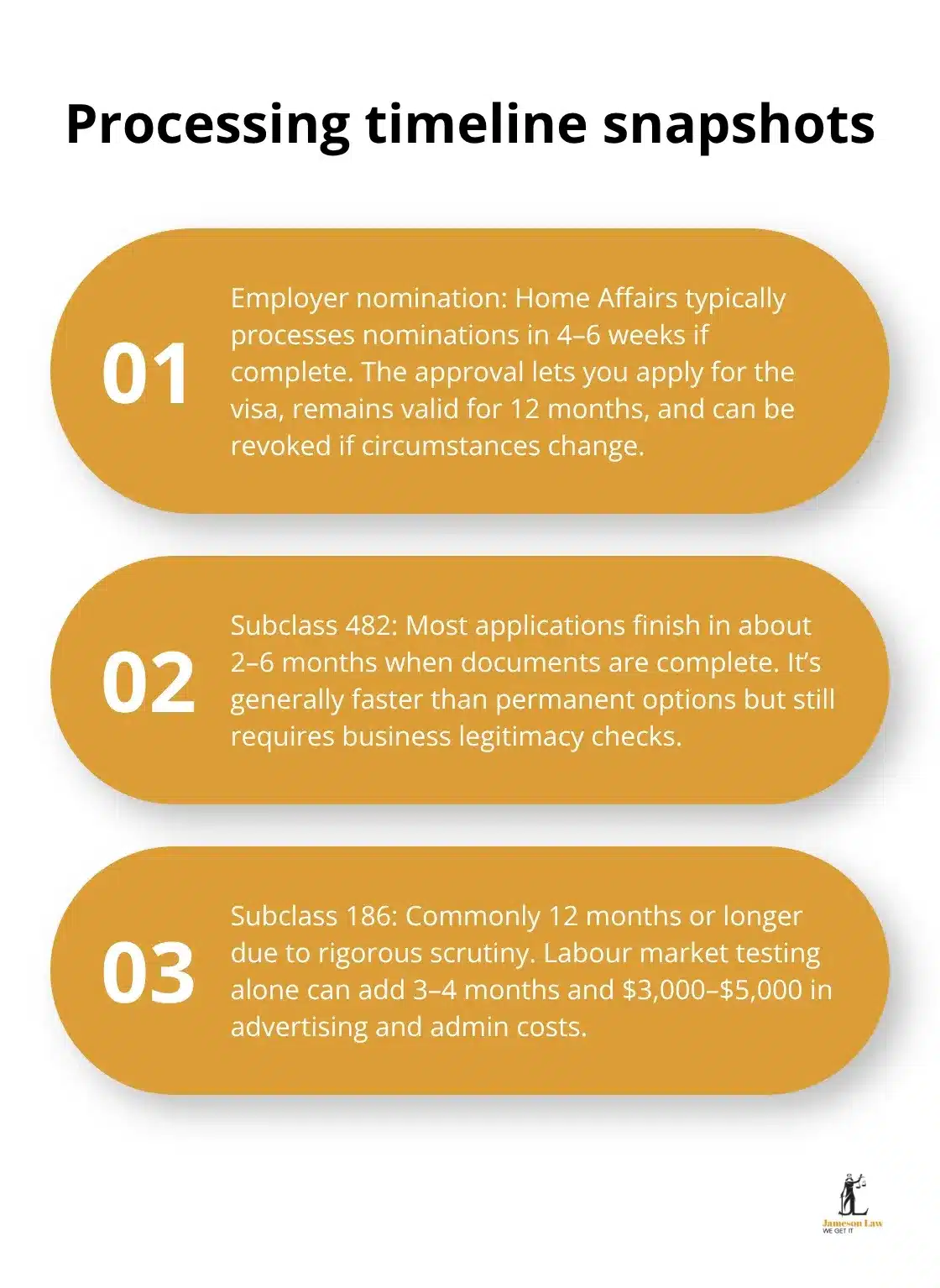
Your employer’s nomination remains valid for twelve months, giving you a reasonable window to submit your visa application. If your employer’s financial situation changes dramatically or they face enforcement action from regulators, Home Affairs can revoke the nomination and your application collapses.
Submitting Your Visa Application
Your visa application follows only after Home Affairs approves the employer nomination, and this is where your individual circumstances receive detailed scrutiny. You’ll need to compile comprehensive documentation including your passport, qualification certificates, employment references, and police clearances from every country you’ve lived in for more than twelve months. Medical reports from panel doctors approved by Home Affairs form another essential component. You submit the visa application through the online ImmiAccount system, and Home Affairs assigns you a case officer who communicates progress updates irregularly. Processing times vary dramatically depending on visa type-Subclass 482 applications typically conclude within two to six months, while Subclass 186 applications commonly extend to twelve months or longer.
Managing the Assessment Period
Home Affairs doesn’t provide regular updates, so applicants often experience uncertainty about their application status. You can request case updates through ImmiAccount, but expect generic responses that rarely provide concrete timelines. During assessment, Home Affairs may request additional documents, police certificates from specific countries, or clarification on employment history (you’ll typically have twenty-eight days to respond). Missing these deadlines results in application refusal, not extension requests. Once Home Affairs completes assessment and approves your visa, you receive a grant notice via email, and your visa becomes active immediately.
Final Thoughts
Securing an employer sponsorship visa Australia application requires attention to detail, realistic expectations about timelines, and a clear understanding of which visa pathway matches your circumstances. Your employer’s willingness to meet sponsorship obligations and their capacity to demonstrate genuine business need form the foundation of success. The documentation phase demands precision-missing character assessments, incomplete qualification verification, or poorly prepared employer financial statements create delays that extend processing times by months, and Home Affairs won’t contact you to fix errors.
Processing timelines vary dramatically depending on visa type, with Temporary Skill Shortage visas moving faster than permanent options, though even these require patience. Permanent visas under the Employer Nomination Scheme commonly take twelve months or longer, and Home Affairs provides minimal communication during assessment, leaving applicants uncertain about progress. Your character and health assessments cannot be rushed, as traffic offences, overstayed visas, or undeclared work history trigger detailed examination that may extend your timeline significantly.
At Jameson Law, our immigration law team helps individuals and employers navigate employer sponsorship visa applications with practical guidance tailored to your specific circumstances. If you’re facing character assessment concerns, qualification recognition issues, or need advice on which visa pathway suits your situation, contact us to discuss your application.