Facing criminal charges in NSW can feel overwhelming, especially when you’re unsure what happens next in court.
At Jameson Law, we’ve guided countless clients through the NSW criminal justice system, and we know the process inside out. A Sydney criminal lawyer can make the difference between understanding your rights and feeling lost in the courtroom. This guide walks you through each stage, from arrest to sentencing, so you know exactly what to expect.
Where Your Case Gets Heard
NSW criminal matters don’t all go to the same court, and which court handles your case changes everything about what happens next. The Local Court deals with the vast majority of criminal charges in NSW, handling roughly 90% of all criminal matters according to data from the NSW Courts. Most people face their first court appearance after arrest in Local Court, and the case often finishes there too. The Local Court has jurisdiction over summary offences (less serious charges) and can also hear indictable offences if both the prosecution and defence agree, or if the magistrate decides the case is suitable for summary treatment. For indictable offences that don’t go to summary hearing, the Local Court conducts committal proceedings, where the magistrate decides whether enough evidence exists to send the case to a higher court. Your first court date almost certainly happens in Local Court, regardless of how serious the charge is.
When Your Case Moves to District Court
The District Court takes over indictable offences that are too serious for Local Court but fall short of the most severe crimes. Assault causing actual bodily harm, robbery, sexual assault, and drug supply offences all fall into this category. If you face charges like these and plead not guilty, you’re entitled to a jury trial with 12 jurors who decide your guilt or innocence. The District Court operates differently from Local Court because the trial process is longer, more formal, and involves Crown Prosecutors from the Office of the Director of Public Prosecutions rather than police prosecutors. Your defence strategy changes significantly at this level-jury trials require different preparation than magistrate hearings. Even if you’re committed to District Court, you still start in Local Court first for committal proceedings, so understanding Local Court procedures remains essential. The timeline also stretches considerably (District Court trials typically take months to prepare, whereas Local Court matters might resolve within weeks).
Supreme Court and the Rarest Cases
The Supreme Court handles only the most serious criminal matters, including murder, manslaughter, armed robbery, and major drug trafficking. Cases at this level involve juries and the most complex legal arguments, with trials sometimes lasting weeks or months. The Supreme Court also hears appeals from District Court decisions, which means if you lose at District Court and believe a legal error occurred, the Supreme Court can review that decision. Unless you face genuinely serious charges, the Supreme Court won’t be part of your case, but understanding its role matters because it shows the hierarchy that exists in NSW courts. Crown Prosecutors handle all Supreme Court prosecutions, and the calibre of legal representation becomes even more critical at this level.
What Happens After Committal
Once the Local Court commits your case to a higher court, the process shifts significantly. You’ll attend a call-over or arraignment in the District or Supreme Court, where the court confirms the charges and your plea. If you plead guilty at this stage, sentencing follows after the facts and your record are considered. If you plead not guilty, the court sets a trial date when witnesses can attend (in some District Court appeals, transcripts of Local Court evidence replace witness testimony). The number of court dates and the overall timeline depend entirely on whether you plead guilty or not guilty and on witness availability. Understanding which court handles your case helps you prepare properly, but the real difference comes when you know what happens at each stage-and that’s where legal advice becomes invaluable.
What Happens From Your First Court Date to Sentencing
Your First Appearance in Court
Your arrest marks the beginning, but your first court appearance is where the NSW criminal process officially starts. Most people appear in Local Court within days of arrest. At this initial hearing, the magistrate addresses bail, confirms your understanding of the charges, and explains your options. The court reads the charges aloud and asks whether you plead guilty or not guilty. This moment matters enormously because your plea determines everything that follows.
If you plead guilty, sentencing typically happens the same day or is adjourned for reports. If you plead not guilty, the magistrate sets a reply date and orders police to serve a brief of evidence containing witness statements and documents they’ll rely on at trial. The entire process from arrest to sentencing can take anywhere from weeks in Local Court to months or years in higher courts, depending on case complexity and witness availability.
Getting Legal Advice Before Court
Getting legal advice before your first court date isn’t optional-it’s the difference between understanding your position and making decisions that harm your case. Call LawAccess NSW on 1300 888 529 to book an appointment with a lawyer, even if you’re unsure about representation. Many Local Courts have duty lawyers available on the day, though eligibility depends on your financial circumstances and case type. If your hearing is within 14 days, Legal Aid NSW typically won’t fund a lawyer, so you may need to act immediately to arrange private representation.
The Not Guilty Path: From Reply Date to Hearing
If you plead not guilty, police must serve the brief of evidence by a court-imposed deadline, and you confirm your plea on a reply date. If you still plead not guilty at that point, a hearing or trial date is scheduled. At the hearing in Local Court, police present their case first, calling witnesses who give evidence under oath. You or your lawyer then cross-examine those witnesses, questioning their evidence to test its reliability and accuracy.
The defence presents its own witnesses next, and police cross-examine them in return. Both sides make final submissions to the magistrate, who then decides guilty or not guilty based on the evidence. This structured approach (police case first, then defence case, then submissions) protects your right to respond to the prosecution’s evidence before the magistrate makes a decision.
Sentencing: What Happens After a Guilty Finding
If the magistrate finds you guilty, or if you plead guilty from the outset, sentencing follows. The prosecutor presents police facts, your criminal history, and any victim impact information. You have the opportunity to explain your circumstances, rehabilitation efforts, and any supporting documents like employment letters or counselling certificates. The magistrate considers these factors and imposes a penalty ranging from dismissal without conviction to fines, community orders, or imprisonment.
District and Supreme Court Trials
In District or Supreme Court, the process mirrors Local Court but involves juries in not guilty cases. You’re entitled to a jury trial for indictable offences, meaning 12 randomly selected members of the public decide your guilt or innocence. Jury trials require longer preparation, Crown Prosecutors conduct the prosecution, and trials often last weeks rather than days. The formal nature of higher courts means your defence strategy must adapt significantly from Local Court procedures. Understanding how juries assess evidence and respond to legal arguments becomes essential at this level, which is why the quality of your legal representation matters even more in higher courts.
Getting Legal Help When Facing Criminal Charges
You have the right to legal representation in NSW courts, and this right matters from the moment police question you through to sentencing. Early legal advice fundamentally changes your case outcome. Police don’t need your permission to question you, but you can request a lawyer before answering questions, and you should. Legal Aid NSW provides free or low-cost representation to eligible people, assessed on financial grounds and case type.
Checking Your Legal Aid Eligibility
If you earn less than approximately $3,500 per week (as of 2026), you’re likely eligible for assistance, though this varies depending on whether you face imprisonment. Call LawAccess NSW on 1300 888 529 to check eligibility and book an appointment, even if your hearing is weeks away. Many people wait until their court date to seek help, which means they miss critical opportunities to gather evidence, negotiate with prosecutors, or prepare a proper defence strategy.
If your hearing is within 14 days, Legal Aid NSW typically won’t fund representation, so acting immediately becomes essential. Duty lawyers work at many Local Courts and can advise you on the day at no cost if you qualify, but they can’t prepare your case in advance.
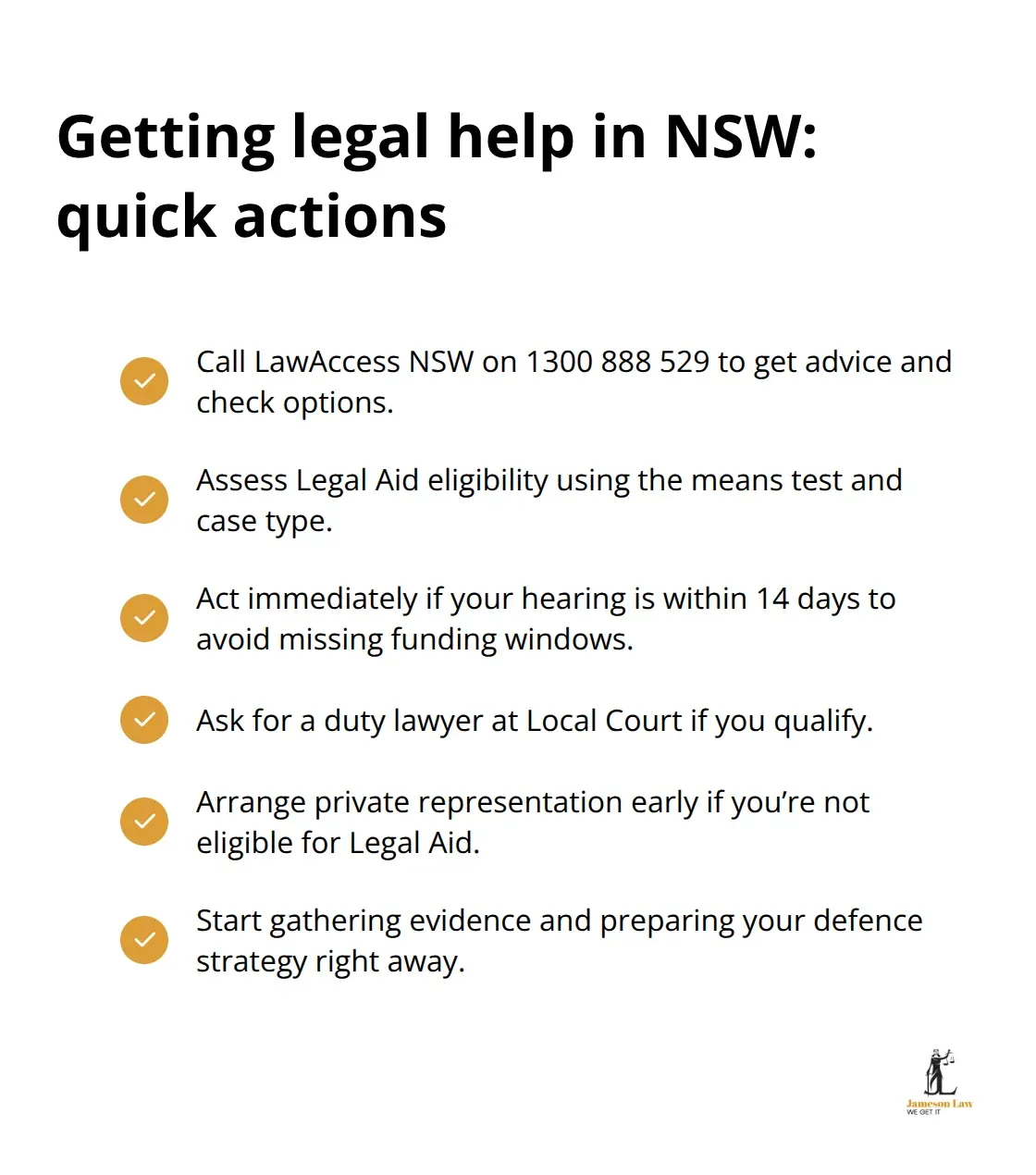
This means you either arrange private representation early or attend court without proper preparation.
What a Criminal Lawyer Actually Does
A criminal lawyer’s role extends far beyond appearing in court. We prepare your defence strategy by reviewing police evidence, identifying weaknesses in their case, and advising whether guilty or not guilty pleas suit your circumstances. We negotiate with prosecutors to potentially reduce charges or secure better sentencing outcomes before trial.
During police questioning, your lawyer ensures questioning stays within legal boundaries and stops if it becomes oppressive. In court, we cross-examine prosecution witnesses, present your evidence, and make submissions about law and facts. The quality of this preparation separates strong defence outcomes from poor ones.
Understanding Legal Costs and Fee Structures
Fee arrangements vary significantly depending on your case complexity and court level. Local Court matters typically cost between $2,000 and $5,000 if straightforward, while District Court trials can exceed $15,000 to $30,000 or more given the preparation required. Some lawyers offer fixed fees for specific services like first court appearance advice, while others charge hourly rates ranging from $250 to $500 per hour depending on experience.
When you engage a criminal lawyer, discuss fees transparently upfront so you understand costs before proceeding. If you can’t afford private representation, don’t assume you’re without options-Legal Aid eligibility is broader than many people realise, and community legal centres across NSW offer free advice for certain matters. The cost of proper legal representation is always less than the cost of a poor outcome.
Final Thoughts
NSW criminal proceedings follow a structured path from arrest through to sentencing, and understanding each stage removes much of the uncertainty that makes facing charges feel overwhelming. Your first court appearance in Local Court sets the tone for everything that follows, whether you plead guilty or not guilty. The process branches into different timelines and court levels depending on charge severity and your plea, with Local Court handling the vast majority of cases and often providing final outcomes.
The single most important decision you can make is seeking legal advice early. A Sydney criminal lawyer who reviews your case before your first court date identifies weaknesses in police evidence, advises whether negotiating with prosecutors makes sense, and prepares a defence strategy tailored to your circumstances. Early advice also means you understand your rights during police questioning and know what to expect in the courtroom, which often determines whether you secure a better outcome or face unnecessary penalties.
If you’re facing criminal charges, don’t wait until your court date to act. Contact LawAccess NSW on 1300 888 529 to check Legal Aid eligibility or arrange private representation, and if your hearing falls within 14 days, acting immediately becomes critical. At Jameson Law, we provide practical criminal law advice to clients across NSW, and we’re here to guide you through each stage of the process.