


Drug trafficking charges in Australia carry some of the harshest penalties in criminal law. Mandatory minimum sentences remove judicial discretion and lock offenders into prison terms regardless of individual circumstances.
At Jameson Law, we’ve seen how these rigid sentencing frameworks affect outcomes for our clients. Understanding how they work is the first step toward building an effective defence strategy.
How Drug Trafficking is Defined and Punished in NSW
What the Law Actually Considers Drug Trafficking
Drug trafficking under NSW law extends far beyond street-level sales. The Crimes (Drug Trafficking) Act 1985 captures manufacturing, cultivating, supplying, or possessing drugs with intent to supply. NSW courts interpret this definition broadly to catch a wide range of conduct. Possession of quantities above certain thresholds creates a legal presumption of intent to supply, which shifts the burden to you to prove otherwise. For example, possessing more than 3 grams of heroin or 3 grams of cocaine triggers this presumption under the Drug Misuse and Trafficking Act 1985. These thresholds remain deliberately low because NSW treats trafficking as a serious offence. The legislation distinguishes between different drug types through separate penalty frameworks. Cocaine and heroin attract harsher mandatory minimums than cannabis, reflecting their classification as more dangerous substances. NSW courts have consistently held that trafficking convictions warrant immediate custody, with the mandatory minimum serving as a floor, not a ceiling.
How Mandatory Minimums Remove Judicial Discretion
Mandatory minimum sentences under NSW law eliminate what courts call judicial discretion. Judges must impose prison time regardless of personal circumstances, health issues, or family obligations. A first-time offender with no prior criminal history faces the same minimum floor as a repeat trafficker. This creates a harsh reality: the judge’s hands are tied from the moment the guilty verdict is delivered. The Drug Misuse and Trafficking Act 1985 specifies these minimums vary by drug type and quantity. Large commercial quantities trigger significantly longer mandatory terms than smaller amounts. The legislation assumes that trafficking, by its nature, warrants immediate imprisonment. Courts cannot suspend sentences or impose community-based orders as an alternative. This rigidity has drawn criticism from judicial officers who argue it prevents proportionate sentencing in cases with genuine mitigating factors.
Aggravating Factors That Push Sentences Higher
While the mandatory minimum sets a floor, aggravating circumstances send sentences soaring higher. NSW courts consistently add substantial periods on top of the mandatory term when certain factors apply. Trafficking near schools, involving juveniles, or using violence to facilitate the offence results in significantly longer sentences. Operating a drug manufacturing operation rather than simple supply pushes sentences into the higher ranges. Commercial-scale trafficking regularly attracts sentences double or triple the minimum based on sentencing remarks from NSW courts.
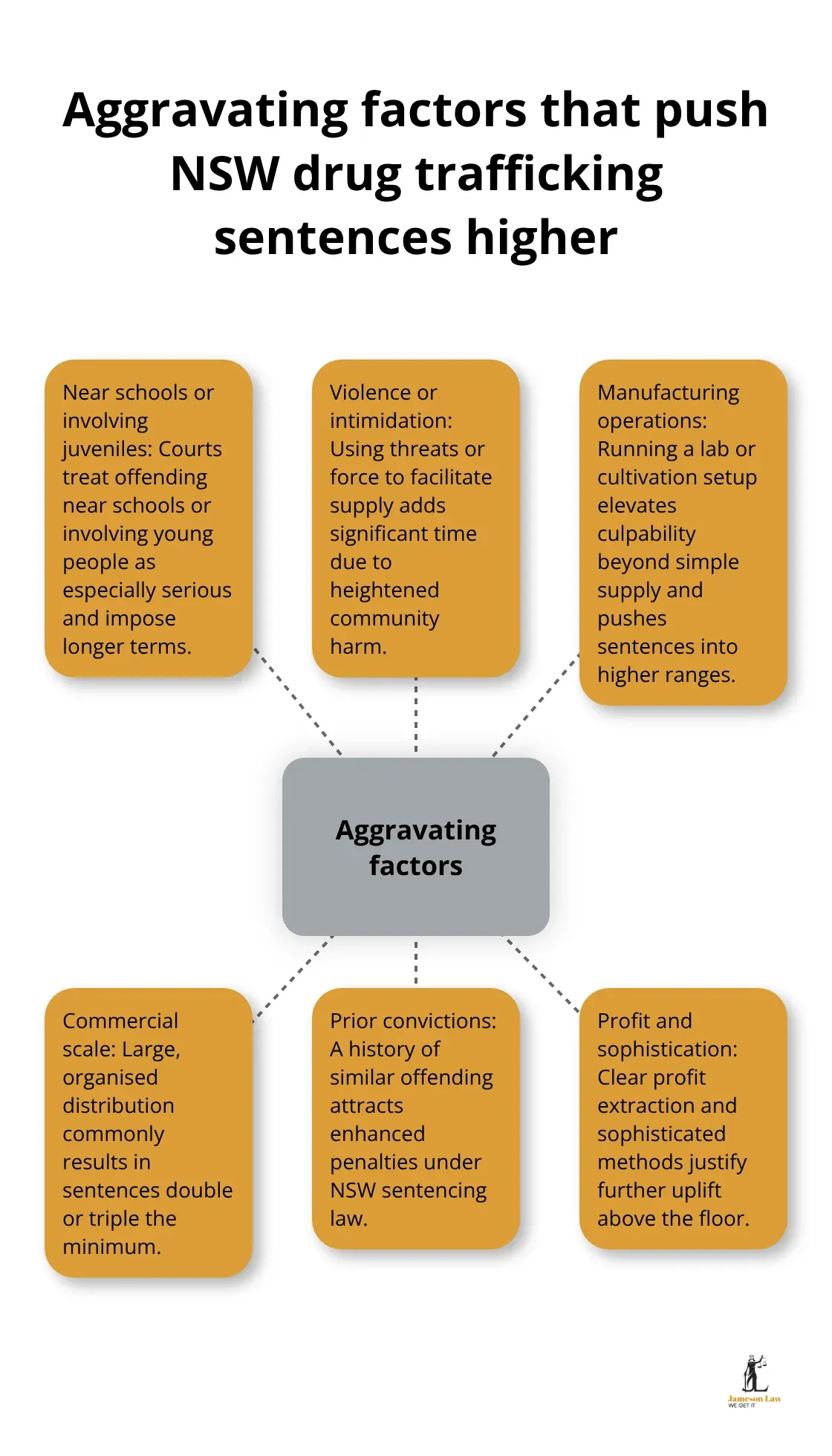
A trafficker with prior convictions faces enhanced penalties under the Crimes (Sentencing Procedure) Act 1999. The presence of profit motive or sophistication in the operation influences sentencing beyond the minimum. These aggravating factors mean the actual sentence handed down often bears little resemblance to the theoretical minimum. Understanding which factors apply to your circumstances shapes realistic sentencing expectations and informs your legal strategy moving forward.
How Judges Actually Sentence Drug Traffickers in NSW
The Mandatory Minimum as a Sentencing Floor
NSW District and Supreme Court judges face a peculiar constraint when sentencing drug trafficking offences. The mandatory minimum creates a sentencing floor, but judges retain considerable power to move upward based on the specifics of each case. What happens in practice is far more complex than the legislation suggests. A judge cannot sentence below the mandatory minimum regardless of circumstances, but the actual sentence imposed typically exceeds it substantially.
NSW sentencing data from the Judicial Commission reveals that trafficking sentences routinely fall between 150% and 300% of the mandatory minimum depending on aggravating factors present. For heroin trafficking, the mandatory minimum framework establishes a 10-year floor, yet actual sentences commonly reach 12 to 18 years based on quantity, sophistication and prior record.
How Judges Justify Sentences Above the Minimum
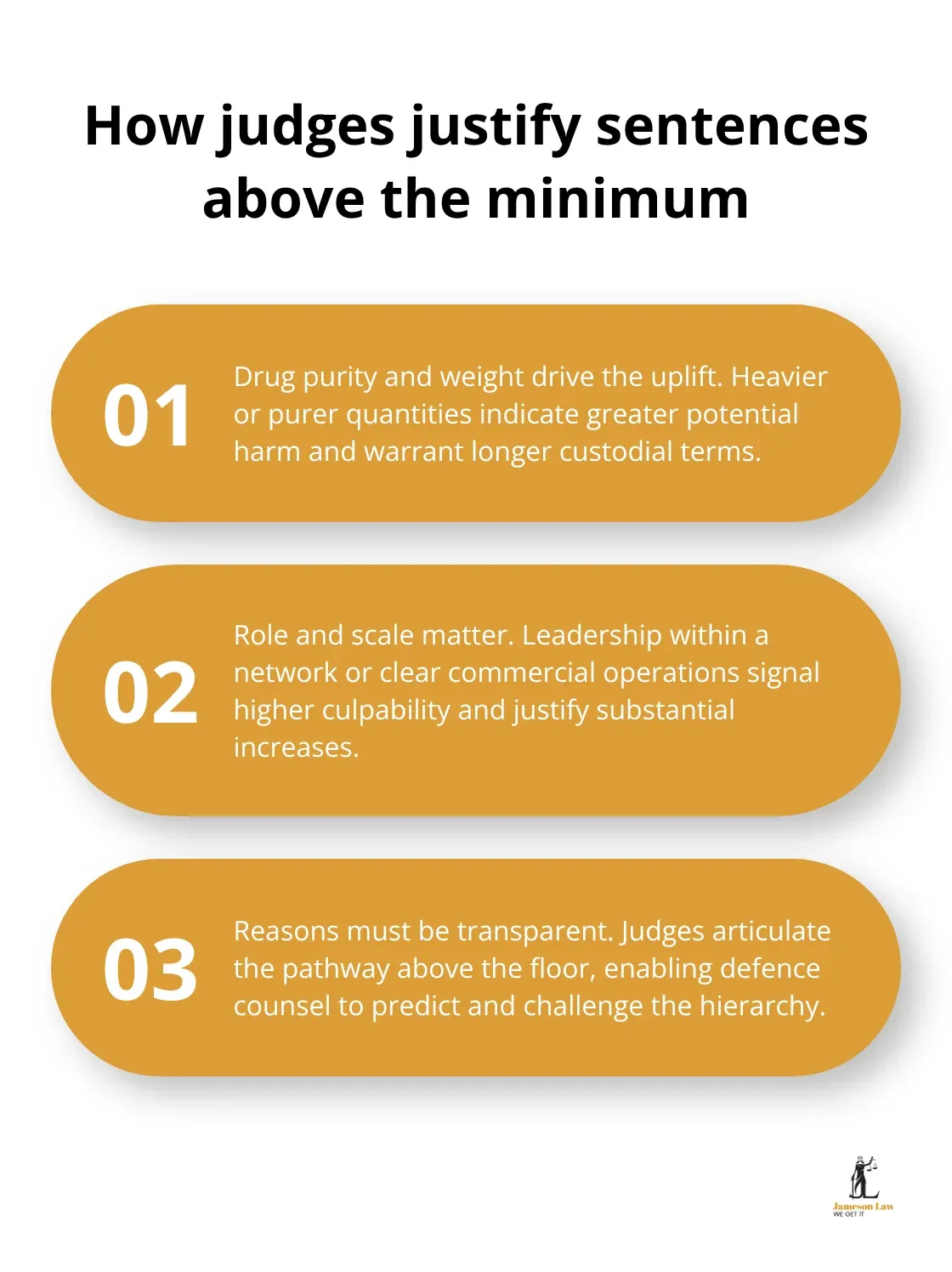
The judge must provide detailed reasons explaining how they moved beyond the minimum, which creates a transparent sentencing hierarchy that experienced defence counsel can predict and challenge. Courts consistently apply certain factors to justify the increase: the purity and weight of drugs seized, whether the operation was commercial in scale, the defendant’s role within any larger network, and evidence of profit extraction.
A person caught with 50 grams of heroin faces a vastly different outcome than someone with 5 kilograms, even though both trigger the same mandatory 10-year floor. The Crimes (Sentencing Procedure) Act 1999 requires judges to consider personal circumstances like age, health, employment history and family responsibilities, but these rarely reduce sentences below the minimum in trafficking cases. Instead, they might influence the quantum of the uplift above the mandatory term.
Street-Level Supply Versus Commercial Operations
The distinction between street-level supply and commercial trafficking operations produces the starkest sentencing variations in practice. A first-time offender supplying small quantities to fund personal addiction might receive a sentence closer to the mandatory minimum (perhaps 10 to 12 years for heroin), whereas an organised crime participant distributing kilograms across multiple suburbs faces sentences of 20 years or more.
Courts examine whether the accused held leadership roles, employed violence or intimidation, recruited younger participants, or utilised sophisticated distribution networks. The presence of weapon offences, money laundering evidence or connections to organised crime syndicates triggers substantial sentencing enhancements beyond the base mandatory minimum.
Real Sentencing Outcomes in NSW Courts
NSW sentencing outcomes demonstrate this pattern consistently. A 2023 NSW District Court decision involved a defendant convicted of supplying 2.8 kilograms of cocaine; the court imposed 16 years imprisonment despite the mandatory minimum sitting at 10 years, citing commercial scale and sophisticated distribution methods. Conversely, a different 2023 case involved a defendant with minimal prior record caught with 400 grams of heroin; the court imposed 11 years, marginally above the 10-year minimum, recognising limited sophistication and no leadership role.
These examples show how judicial discretion operates within the mandatory minimum framework-judges cannot go below, but they possess significant latitude moving upward based on objective case factors. Understanding your specific circumstances against these established sentencing patterns provides realistic expectations about likely outcomes.
Building Your Defence Strategy
Comparable sentencing decisions provide the foundation for constructing informed arguments about where your case should fall within the permissible range. Defence counsel challenge prosecution submissions that overstate aggravating factors or ignore mitigating elements the legislation permits judges to consider. The next section examines the legal defences and options available to those facing drug trafficking charges, including how to challenge evidence and explore plea alternatives before sentencing occurs.
How to Challenge Drug Trafficking Evidence and Explore Your Options
Identifying Procedural Errors in Police Investigations
Police investigations into drug trafficking often contain procedural errors that skilled defence counsel can exploit before trial. The NSW Police Prosecution Brief must comply with strict procedural requirements under the Criminal Procedure Act 1986, and failures to meet these standards can result in evidence being excluded entirely.
Warrantless searches conducted without proper consent or emergency justification frequently breach the Search Warrants Act 1985, rendering seized drugs inadmissible. Testing and analysis of drug samples must follow strict protocols, and laboratories failing to maintain proper documentation create reasonable doubt about substance identification.
Challenging Chain of Custody and Forensic Evidence
Forensic evidence loses its value when police cannot establish an unbroken chain of custody from seizure through to laboratory analysis. Document preservation failures, missing witness statements, and contradictory police accounts all provide grounds to challenge the strength of the prosecution case before entering any plea discussions.
Expert toxicology reports sometimes contradict prosecution claims about drug purity or weight, which directly impacts sentencing calculations since larger quantities trigger harsher mandatory minimums. Your defence should scrutinise every procedural step the prosecution took during investigation and seizure.
Understanding Guilty Pleas and Sentencing Discounts
Entering a guilty plea to drug trafficking charges requires understanding exactly what you admit and how it affects your sentencing position. Plea negotiations in NSW drug trafficking cases often involve discussions about agreed facts that shape sentencing submissions, meaning you should never accept a plea arrangement without detailed advice about how the court will interpret those facts at sentencing.
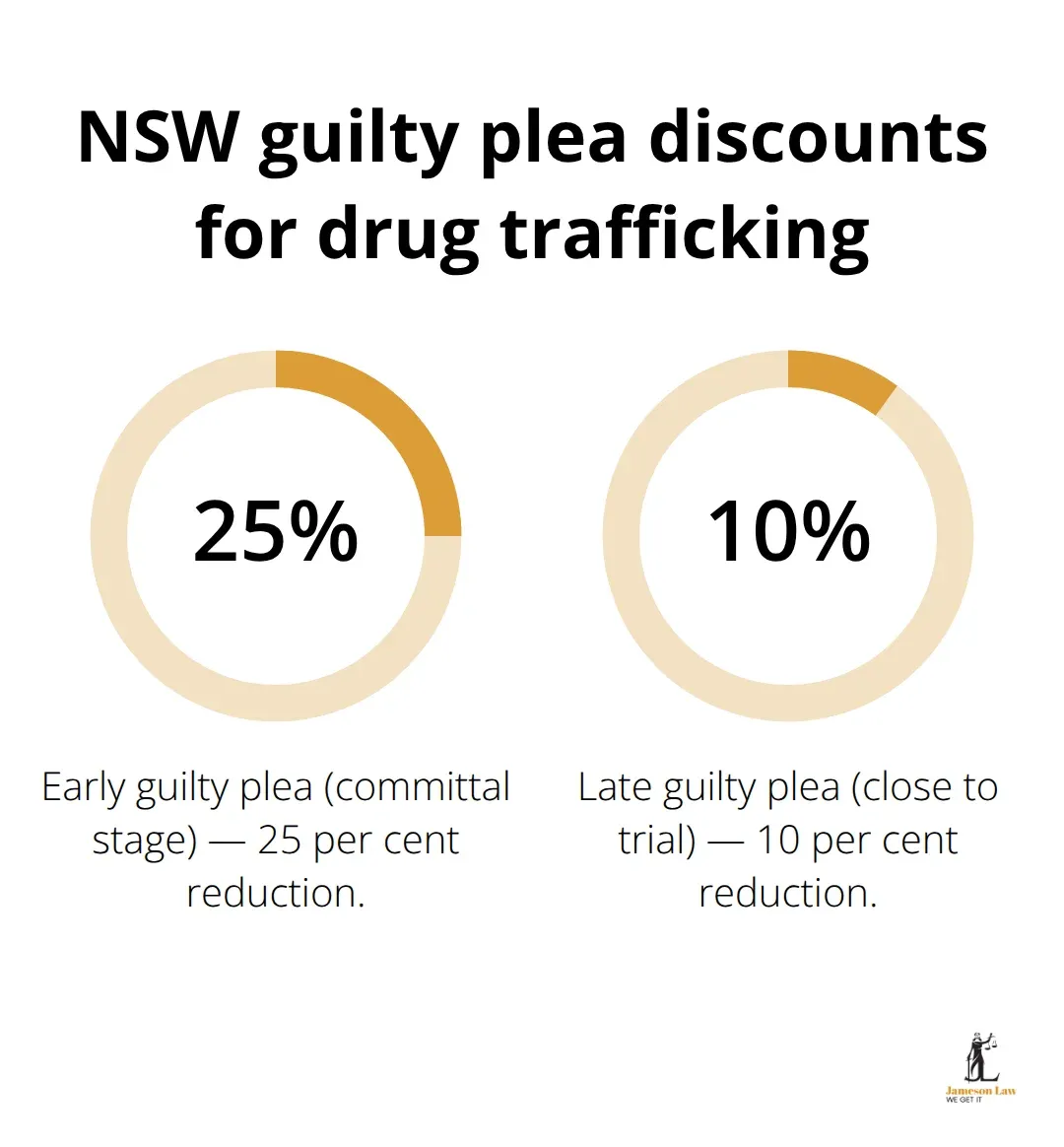
Courts allow guilty pleas as a mitigating factor, potentially reducing sentences by 10 to 25 per cent depending on timing and circumstances. A guilty plea entered on the morning of trial receives minimal discount, whereas early guilty pleas in the committal process attract substantially greater consideration.
Negotiating Alternative Charges and Reduced Quantities
Negotiating alternative charges with lower mandatory minimums-such as attempting to traffic rather than trafficking itself, or possession with intent to supply rather than commercial supply-can produce dramatically different sentencing outcomes. Some jurisdictions allow pleas to lesser drug quantities where evidence supports that interpretation, directly reducing the mandatory minimum floor.
You must understand the specific facts the prosecution will rely upon at sentencing before committing to a plea, because agreed facts become binding and courts accept them without requiring proof. Challenging unfavourable agreed facts proposed by the prosecution protects your sentencing position and demonstrates to the judge that you contest matters within your case rather than passively accepting prosecution characterisations.
Final Thoughts
Drug trafficking charges in NSW carry consequences that extend far beyond the courtroom, and mandatory minimum sentences remove judicial flexibility that courts cannot ignore regardless of your personal circumstances. Understanding how these frameworks operate in practice gives you realistic expectations about potential outcomes and helps you make informed decisions about your legal strategy. Skilled legal representation makes measurable differences in sentencing outcomes because the distinction between accepting unfavourable agreed facts and negotiating better terms can mean years of additional imprisonment.
Professional legal advice matters because drug trafficking law involves technical requirements, procedural complexities, and sentencing principles that require specialist knowledge. Identifying procedural errors in police investigations sometimes results in evidence being excluded entirely, which can collapse the prosecution case before trial. The difference between pleading guilty early versus late affects sentencing discounts substantially, and these timing decisions shape your entire legal position.
If you face drug trafficking charges, your immediate priority should be obtaining legal advice before speaking to police or making any admissions. We at Jameson Law have extensive experience defending clients facing serious drug offences in NSW courts, and our team understands how mandatory minimums operate in practice and knows how to challenge prosecution evidence and negotiate strategically with prosecutors. Contact Jameson Law to discuss your situation and explore your options.