Immigration matters in NSW can feel overwhelming, especially when visa applications, refusals, or employment sponsorships are involved. Getting the right immigration lawyer NSW on your side makes a real difference in how your case unfolds.
We at Jameson Law understand that choosing the right adviser requires knowing what to look for and where to find genuine expertise. This guide walks you through when you need legal help, what qualities matter most, and how to find a lawyer who fits your situation in 2026.
When You Need an Immigration Lawyer
Most visa decisions hinge on whether your application meets specific criteria set out in the Migration Act 1958 and the Migration Regulations 1994. Legal advice early—before you submit your application—significantly improves your chances of success. If you apply for a skilled migration visa, partner visa, or any visa requiring character or health assessments, a highly experienced immigration lawyer can identify potential issues that might otherwise lead to refusal.
According to cost data for Australian immigration lawyers, straightforward applications typically range from AUD 2,000 to AUD 5,000, while more complex cases can exceed AUD 10,000. Partner visas, for instance, typically cost between AUD 7,000 and AUD 10,000 because they involve relationship evidence, financial assessments, and sometimes family violence considerations. Work visas generally fall between AUD 3,000 and AUD 5,000.
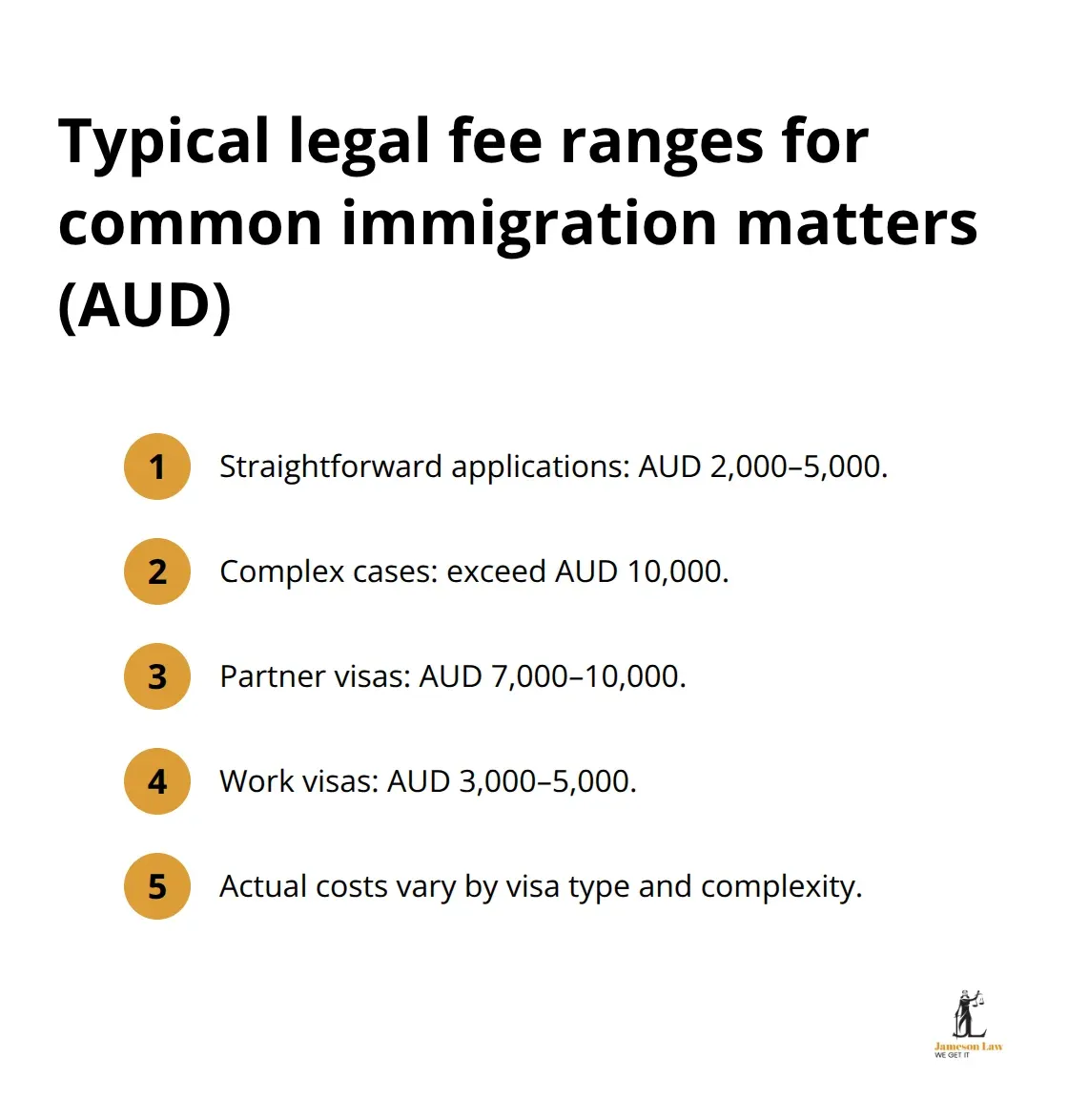
The cost varies based on your visa type, the complexity of your circumstances, and whether complications like previous visa cancellations or character concerns exist.
Visa Applications and Initial Assessments
The application phase is when legal guidance matters most. A lawyer reviews your circumstances against the visa criteria, identifies gaps in your evidence, and structures your application to address potential concerns before the Department of Home Affairs raises them. If you have a previous visa refusal, character issues, or family violence history, professional advice becomes essential. Many people assume their application is straightforward only to discover mid-process that they have missed critical requirements or submitted weak supporting evidence.
An expert immigration lawyer ensures your documents are complete, properly organised, and persuasive. When the Department requests additional information—called a Request for Further Information (RFI)—a lawyer can draft a compelling response that addresses concerns directly rather than providing generic explanations.
Visa Refusals and Appeals
A refusal letter is not the end of the road, though many people treat it that way. You generally have 28 days to request a merits review through the Administrative Review Tribunal (ART) if you hold a valid visa or are seeking protection. If your visa was cancelled, you may have grounds to challenge the decision in the Federal Court.
The difference between accepting a refusal and mounting a successful appeal often comes down to legal representation. A lawyer identifies whether the Department made an error in law, failed to properly consider your evidence, or reached an unreasonable decision. Refugee and asylum seeker visas are particularly complex—these cases typically cost between AUD 5,000 and AUD 15,000 because they involve detailed factual assessments, country information research, and often court representation. If you have been refused, waiting longer makes the process harder because evidence becomes stale and memories fade. Acting quickly with professional help puts you in the strongest position.
Employment and Sponsorship Matters
Employer-sponsored visas like the Skilled Nominated visa or Temporary Skill Shortage visa involve both you and your employer, creating dual compliance obligations. Your employer must meet sponsorship requirements, and you must satisfy visa criteria. If either party fails to comply, your visa can be cancelled. A lawyer ensures your employer understands their obligations and that your visa conditions are met throughout your employment.
Business visas, which typically cost between AUD 10,000 and AUD 15,000, require detailed business plans, financial evidence, and demonstration of genuine business capacity. These visas demand ongoing legal support because compliance extends beyond the initial grant. Understanding what qualities to look for in an immigration lawyer—experience with your visa type, knowledge of NSW and federal law, and a client-focused approach—helps you move forward with confidence.
What to Look For in an Immigration Lawyer
Expert Accreditation and Demonstrated Experience
Law Society accreditation matters far more than general legal qualifications. The NSW Law Society maintains a Register of Solicitors where you can search for practitioners with current accreditation in immigration law. Not every lawyer who handles immigration cases holds this recognition, and accreditation status directly reflects their demonstrated expertise and commitment to staying current with frequent legislative changes.
When you search the register, verify that their expertise matches your visa type, because immigration law splits into distinct areas of focus like family visas, employment visas, and protection claims.
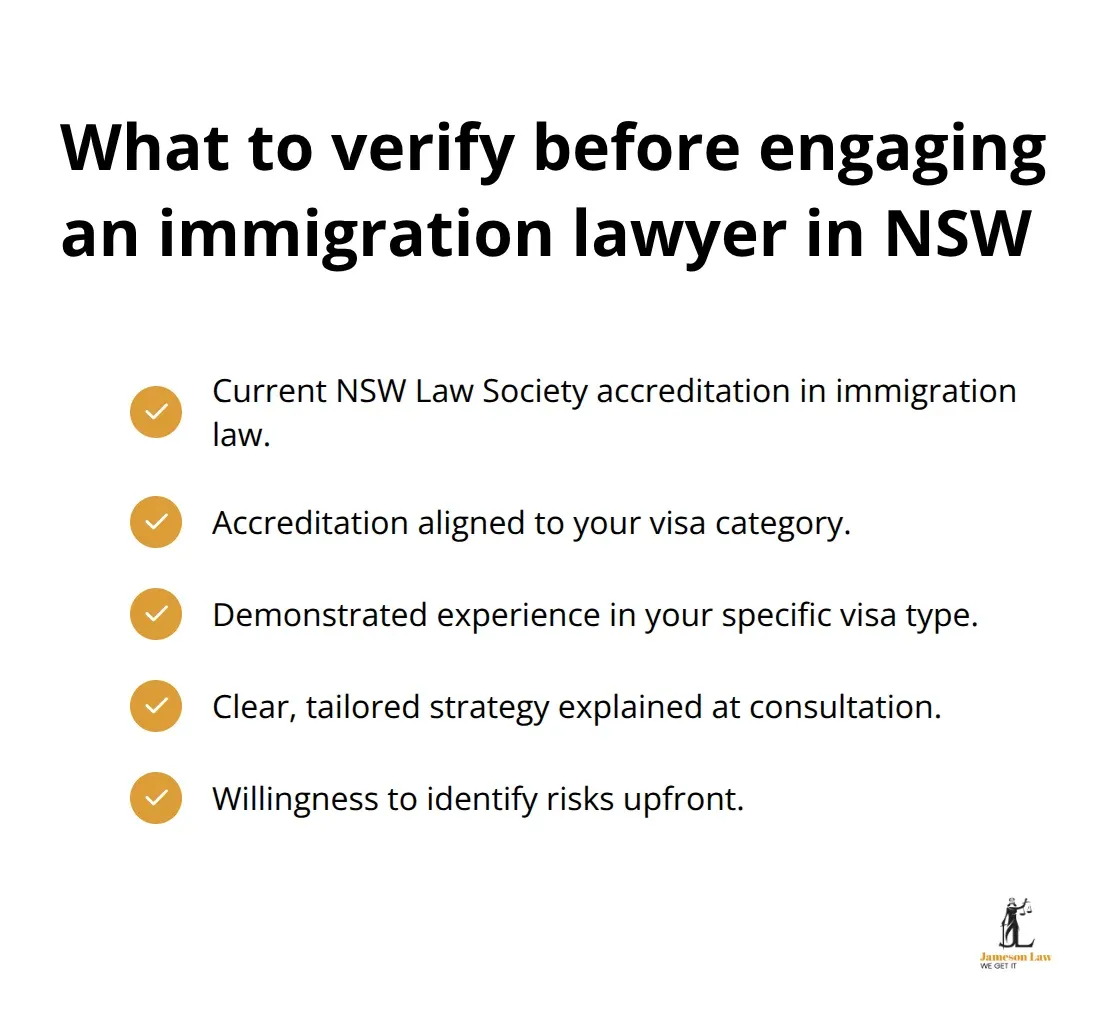
A lawyer accredited in partner visas may not have the expertise needed for a complex business visa application.
Ask how long the lawyer has worked specifically on your visa category. Someone with five years handling partner visas has navigated the relationship evidence requirements, character assessments, and family violence considerations that make these applications distinct. A lawyer who handles immigration generally but focuses heavily on property law brings less focused experience.
During your initial consultation, ask the lawyer to explain how they would approach your specific circumstances. If they give you generic answers or avoid discussing potential obstacles, that signals a problem. Strong immigration lawyers identify problems upfront, not after you have paid fees and submitted documents.
Federal and State Law Knowledge
Understanding federal migration law is non-negotiable, but NSW-specific knowledge matters equally. The Migration Act 1958 and Migration Regulations 1994 are federal legislation administered consistently across Australia, so your visa rules remain the same whether you apply in Sydney or Melbourne. However, state law intersects with immigration in ways that affect outcomes.
Character assessment considers state criminal convictions, traffic offences, and family violence orders. A lawyer familiar with NSW courts, sentencing patterns, and how the Department of Home Affairs views NSW-specific matters will better anticipate how your circumstances affect your application. Employment sponsorship visas require an understanding of both federal migration law and NSW workplace obligations. This intersection of state and federal law demands lawyers who understand both systems thoroughly.
Communication and Responsiveness
Communication style separates good lawyers from those who frustrate clients. You need a lawyer who explains decisions in plain language, responds to emails or calls within two business days, and keeps you informed of progress without requiring you to chase updates. Many immigration lawyers work on tight timelines because Department decisions cannot be delayed, so responsiveness is practical, not just courteous.
Ask potential lawyers how they handle client communication and whether they provide regular updates. If they seem dismissive of your questions during the consultation or use unexplained jargon, that approach will persist throughout your case. When you contact a law firm, notice how quickly they respond and whether staff members answer your questions directly. These early interactions reveal whether the firm prioritises client service or treats you as a transaction.
Finding the Right Fit for Your Needs
The lawyer you choose must match both your visa type and your communication preferences. Some people prefer detailed written updates; others want quick phone calls. Identify your own preferences before you start searching, then ask potential lawyers whether they can accommodate your style. This alignment prevents frustration later and ensures you feel supported throughout your application or appeal process.
How to Find and Engage an Immigration Lawyer
Search the NSW Law Society Register
The NSW Law Society Register of Solicitors provides immediate access to verified practitioners. You can filter results by practice area and location to narrow your search. If the register doesn’t return results matching your needs, the Law Society’s Solicitor Referral Service provides qualified recommendations from their verified network.
Understand the Cost Structure
Cost varies significantly based on visa complexity. Tourist visas typically cost AUD 500 to AUD 1,000, while student visas range from AUD 1,500 to AUD 3,500. Partner visas sit between AUD 7,000 and AUD 10,000 because they involve relationship evidence and financial assessments.
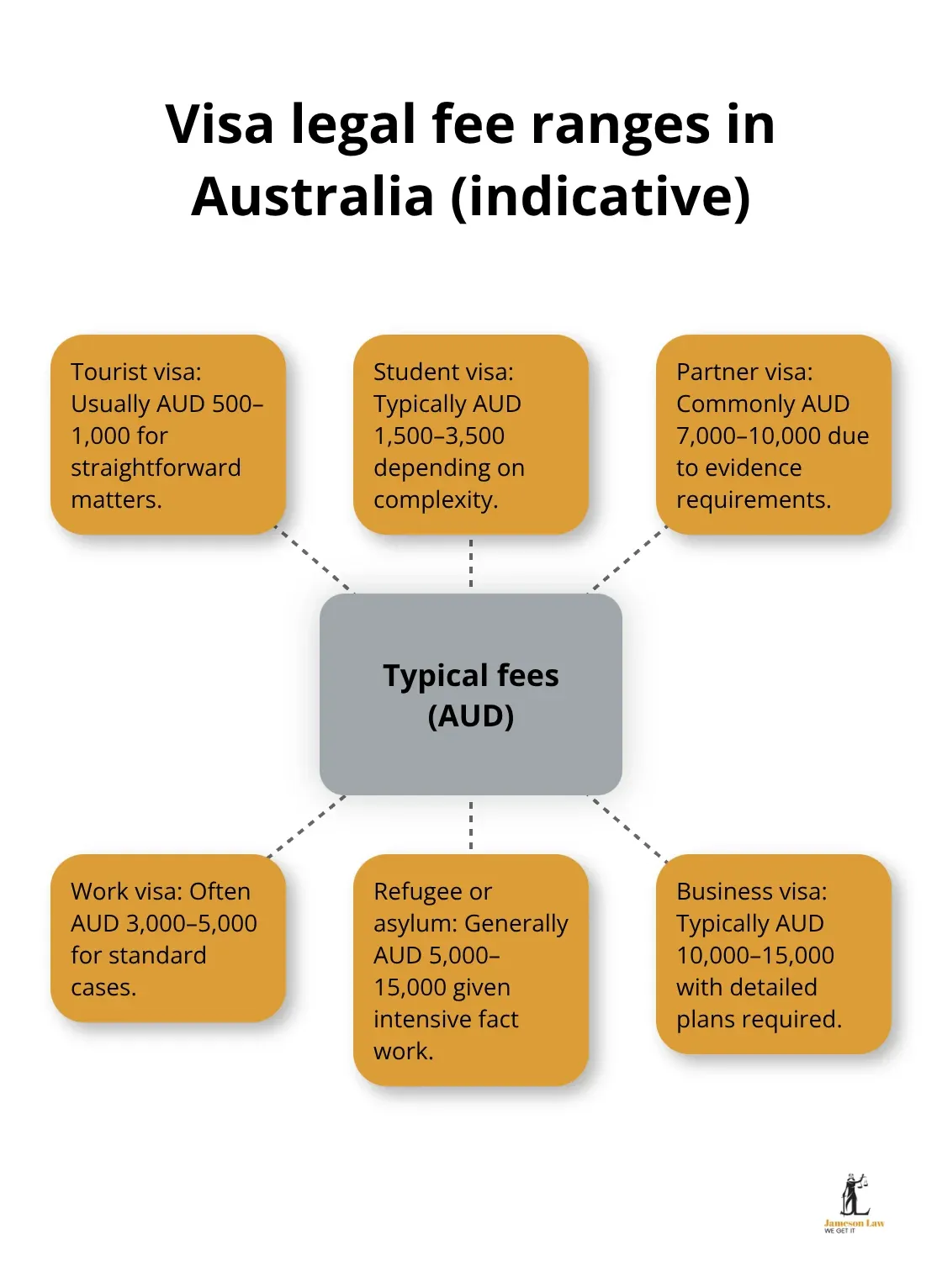
Work visas cost AUD 3,000 to AUD 5,000, refugee or asylum seeker cases range from AUD 5,000 to AUD 15,000, and business visas typically reach AUD 10,000 to AUD 15,000. Location matters significantly—Sydney and Melbourne firms charge higher fees due to greater overheads than regional practices.
Request Transparent Fee Information
During your initial consultation, ask for transparent fee structures and whether the firm offers fixed-rate options for straightforward tasks. Ask how they charge for ongoing matters, whether they bill hourly or by task, and what additional costs might arise if the Department requests further information or your case proceeds to the Administrative Review Tribunal (ART). Obtain fee quotes in writing before committing to any engagement.
Compare Multiple Lawyers
Research multiple options and compare fees alongside services and client reviews rather than selecting the cheapest option available. Ask trusted friends or family for referrals to reliable advisers. A lawyer who identifies potential obstacles upfront and explains your realistic chances honestly deserves serious consideration, even if their fees sit higher than competitors offering vague guarantees.
Final Thoughts
Choosing an immigration lawyer NSW requires you to balance expert experience with your visa type, knowledge of both federal migration law and NSW-specific considerations, and genuine responsiveness to your needs. A lawyer who identifies obstacles upfront, explains your realistic prospects honestly, and communicates clearly throughout your matter will serve you far better than one offering vague guarantees.
Your next step depends on where you stand in your immigration journey. If you plan a visa application, contact a highly experienced expert now rather than after submission, because early advice prevents costly mistakes. If you have received a refusal, act within 28 days to explore your appeal options through the Administrative Review Tribunal or Federal Court.
We at Jameson Law provide expert immigration law assistance alongside our broader legal services across criminal law, family law, property, and commercial matters. If you need guidance on your visa application, refusal, or employment sponsorship matter, contact us today to discuss how we can assist you through your immigration journey.