An Apprehended Violence Order (AVO) can protect you from harassment, threats, or physical harm. Whether you’re facing domestic violence or another threatening situation, understanding your legal options matters.
We at Jameson Law help NSW residents navigate AVO applications with clarity and confidence. This guide walks you through the process, from initial steps to court outcomes in 2026.
What an AVO Actually Does and When You Need One
An Apprehended Violence Order is a Local Court order that stops someone from assaulting, stalking, harassing, intimidating, or damaging your property. It’s not a criminal conviction for the person it’s made against, but breaching one is a criminal offence.
NSW Police can apply on your behalf, or if you’re 16 or older and have experienced physical assault, threats, stalking, harassment, or intimidation, you can apply for yourself.
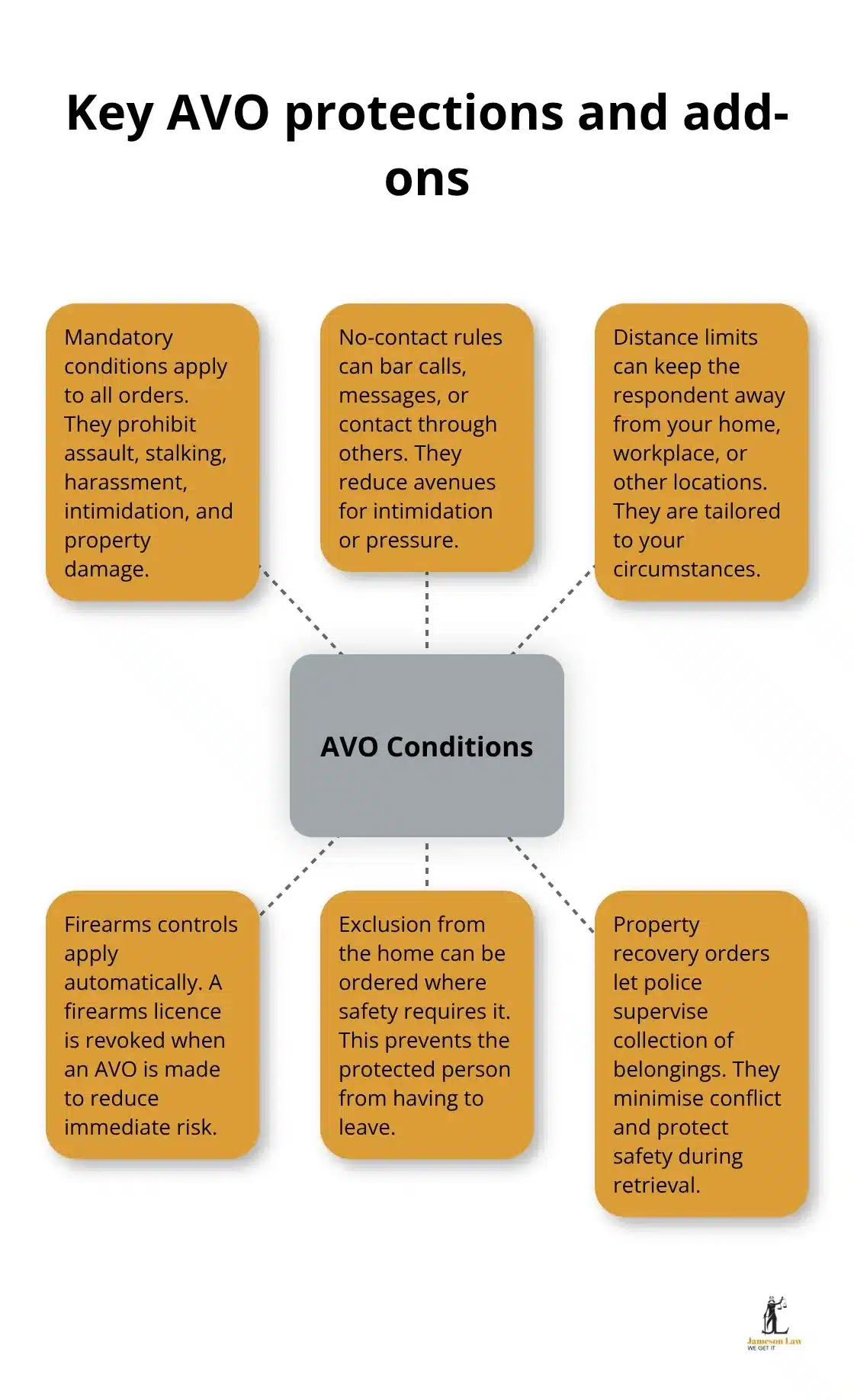
The order works by setting mandatory conditions that apply to everyone: no assault, no stalking or harassment, and no property damage. The court can add extra conditions tailored to your situation, such as preventing contact, restricting how close the person can come to your home or workplace, or limiting their presence at specific locations. You might need an AVO if someone is threatening your safety in ways that police involvement alone won’t resolve, or if you want a court order as evidence of the danger you’re facing.
Two Different Types of Orders for Different Situations
NSW has two AVO types, and the distinction matters for how the order operates under the Crimes (Domestic and Personal Violence) Act 2007:
- Apprehended Domestic Violence Order (ADVO): Applies when the person threatening you is or was your partner, family member, or someone you live with.
- Apprehended Personal Violence Order (APVO): Covers everyone else—acquaintances, neighbours, strangers, or workplace conflicts.
The main practical difference is portability: if you move to another Australian state, you can register an APVO there to keep your protection active across borders. An ADVO doesn’t automatically transfer, so you’d need to apply in your new state. Duration also differs slightly. ADVOs typically last two years for adults and one year for respondents under 18. APVOs follow the same pattern. If your circumstances change and the threat reduces, you can apply to vary or revoke either order, and so can the respondent. The police can apply to change or cancel an ADVO if children are named on it and circumstances shift.
How the Court Decides What Conditions to Include
The court won’t rubber-stamp a generic order. The Magistrate assesses your specific fears and the respondent’s behaviour to decide which extra conditions are necessary or desirable to protect you. Standard mandatory conditions apply to all AVOs regardless of circumstances.
Beyond those three, the court considers extra protections. If the person holds a firearms licence, it’s automatically revoked once an AVO is made, which NSW Police handle directly. If you share property or children, the court might impose an exclusion order removing the respondent from your home instead of requiring you to leave.
If you fear the person will damage belongings you left at their place, you can ask for a property recovery order issued at the same time as the AVO, with police assistance for collection if safety is a concern. The court balances your safety against the respondent’s hardship—if excluding them from the family home creates a genuine housing crisis, the Magistrate might impose stricter contact restrictions instead. Bringing specific examples of threatening behaviour, dates, and witness accounts helps the court understand exactly what conditions matter for your protection.
What Happens When You Prepare Your Evidence
The strength of your application depends on the evidence you present to the court. Written statements from you and any witnesses form the foundation of your case. Photographs, messages, or other documents that show the threatening behaviour support your claims. If police apply on your behalf, they gather statements and evidence. If you apply privately, you must prepare your own statements and collect witness evidence.
The respondent receives copies of all your intended evidence before the hearing, so they know what you’ll present. This exchange happens well in advance, giving both sides time to prepare their responses. When you attend court, you’ll present your case first, and the respondent has the right to question your evidence and present their own account.
Getting Your AVO Application Ready and Into Court
Prepare Your Evidence and Documentation
The strength of your application depends on the evidence you present to the court. Written statements from you and any witnesses form the foundation of your case. Photographs, messages, or other documents that show the threatening behaviour support your claims. If NSW Police apply on your behalf, they collect statements and evidence. If you apply privately, you must prepare your own statements and collect witness evidence.
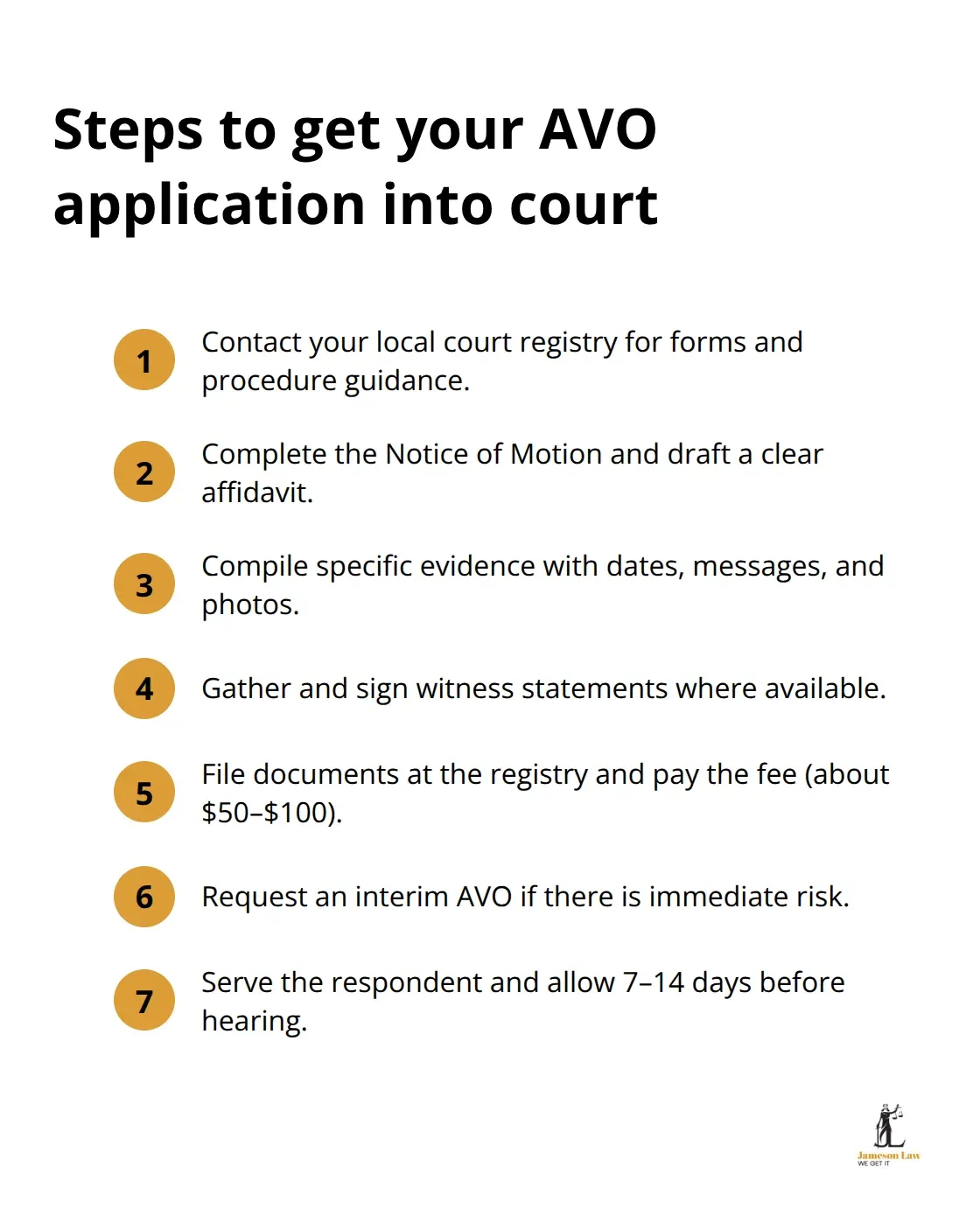
Contact your local court registry to begin the process; they provide the application forms and explain local procedures, though the forms themselves are standardised across NSW. You need to complete the Notice of Motion and prepare an affidavit—a sworn statement describing why you fear the respondent and what protection you need.
When preparing your written statements and other evidence, it is important to keep in mind what the applicant must prove for the Court to make an AVO. Include specific incidents rather than vague claims; the court will not accept general statements like “they’re aggressive” without examples.
Write down dates, what happened, what was said, who witnessed it, and how it made you feel unsafe. Collect supporting evidence: screenshots of threatening messages, photos of injuries or property damage, emails, letters, or any documents showing the pattern of behaviour.
Gather Witness Statements
If witnesses exist—family members, friends, neighbours, colleagues—ask them to provide written statements describing what they saw or heard. These statements must be signed and dated, and witnesses should understand they may need to attend court to answer questions about their account. The respondent receives copies of all your intended evidence before the hearing, so they know what you will present. This exchange happens well in advance, giving both sides time to prepare their responses.
File Your Application at Court
Filing at your local court registry is straightforward but demands attention to detail. Bring the completed application form, your affidavit, any witness statements, and supporting documents. The registry staff will check that everything is filled out correctly and accept your filing fee—costs vary by location but typically range from $50 to $100 for private applications.
Ask about interim orders at this stage if you believe the respondent poses an immediate threat before the hearing date. An interim AVO can be granted on the day you file if the court considers it necessary, providing temporary protection while the full hearing is scheduled. Once you have prepared your materials, serve copies on the respondent at least a reasonable time before the hearing; the court will specify the timeframe, usually 7–14 days. This advance notice is a legal requirement and ensures fairness in the process.
Understand What Happens at the Mention and Hearing
The court will list your matter for mention—the first court date where the Magistrate decides whether to proceed to a full hearing or if the respondent agrees to the order. This mention might happen within days or weeks depending on local court lists. If the respondent consents to the AVO on the mention date, the order is usually granted immediately without a full hearing, and you are done.
If they dispute it, the Magistrate will set a timetable for both sides to file additional evidence and set a hearing date weeks or sometimes months ahead. At the hearing itself, arrive early and bring a copy of every document you have filed. The applicant presents first, which means you or the police prosecutor outlines your case and calls witnesses.
You will give evidence-in-chief, describing the threatening behaviour in detail, then the respondent’s lawyer can cross-examine you—asking challenging questions designed to test your account. Witnesses follow the same process. After your evidence closes, the respondent presents their version and any witnesses they have brought. Both sides then make submissions to the Magistrate, explaining why the order should or should not be granted. The whole hearing typically takes between one and three hours, though complex cases run longer.
Prepare for Court and Understand the Outcome
If you feel anxious about courtroom procedures, Legal Aid NSW offers duty services at many courts, providing free advice on the day, and the Women’s Domestic Violence Court Advocacy Services (WDVCAS) operates at 136 NSW court locations to help women prepare and navigate the process. Bring a support person if allowed—rules vary by court—and carry a copy of your AVO application to reference during evidence.
The Magistrate will deliver a judgment with reasons, either granting a final AVO or dismissing your application. If granted, you will receive a certified copy; understand your conditions clearly because breaching an AVO is a criminal offence with a penalty of up to $11,000 fine and/or imprisonment for up to three years. Once the court makes its decision, you need to know what happens next—whether the order takes effect immediately, what obligations fall on you as the protected person, and what steps you take if the respondent breaches the conditions.
How the Court Assesses Your Application and What Happens Next
The Magistrate evaluates your application based on one straightforward question: have you proven that you fear assault, harassment, stalking, intimidation, or property damage from the respondent? The court does not require you to prove the respondent actually committed a crime, only that fear is genuine and reasonable given the evidence. This distinction matters because it means the threshold is lower than a criminal conviction standard.
The Magistrate considers the pattern of behaviour you have described, the specificity of your examples, and whether witnesses corroborate your account. Vague claims fail; dated incidents with supporting evidence succeed. If you have filed a private application, the burden sits entirely on you to present credible evidence. Police applications carry more weight because NSW Police gather statements and documentation as part of their investigation, but either way, the court wants concrete examples.
The respondent has the right to cross-examine you and present their own version of events, so your evidence must withstand scrutiny. If the respondent does not attend the hearing, the Magistrate can still grant the order based on your evidence alone, though courts generally prefer to hear both sides. Bring every document you filed with the court to your hearing and know your evidence inside out so you can answer questions confidently without referring to notes excessively.
What the Court Actually Decides
The Magistrate has three possible outcomes: grant a final AVO, dismiss your application entirely, or in some cases issue an interim order while the matter is adjourned. If granted, the order typically lasts two years for adult respondents and one year for those under 18, though you can apply to extend it if your fear continues.
The court imposes mandatory conditions, then decides which extra conditions protect you effectively. This is where specificity in your evidence pays off because the Magistrate tailors restrictions to your actual risk. If you mentioned the respondent knows your work address, the court restricts them from being within a certain distance of your workplace. If they have contacted you through a specific person, the order prohibits contact through that intermediary.
If firearms are a concern, the respondent’s licence is revoked automatically for 10 years once the AVO is made. If you share children or property, the court can exclude the respondent from your home rather than forcing you to leave, weighing the respondent’s housing needs against your safety. A property recovery order can be issued simultaneously, allowing police to collect belongings you have left at the respondent’s place if safety concerns prevent you from retrieving them yourself. Dismissal means no order is made and you lose the legal protection you sought, though you can reapply if circumstances change significantly. The Magistrate will explain their reasons for the decision, and you have 28 days to appeal to the District Court if you believe the decision was wrong.
Your Obligations Once the Order Takes Effect
Once an AVO is made, you must comply with every condition listed on your certified copy. Breaching an AVO is a criminal offence carrying a maximum penalty of $11,000 fine and up to three years imprisonment according to the Crimes Act 1900, so the consequences are serious. Carry a copy of your order at all times and understand exactly what you are prohibited from doing.
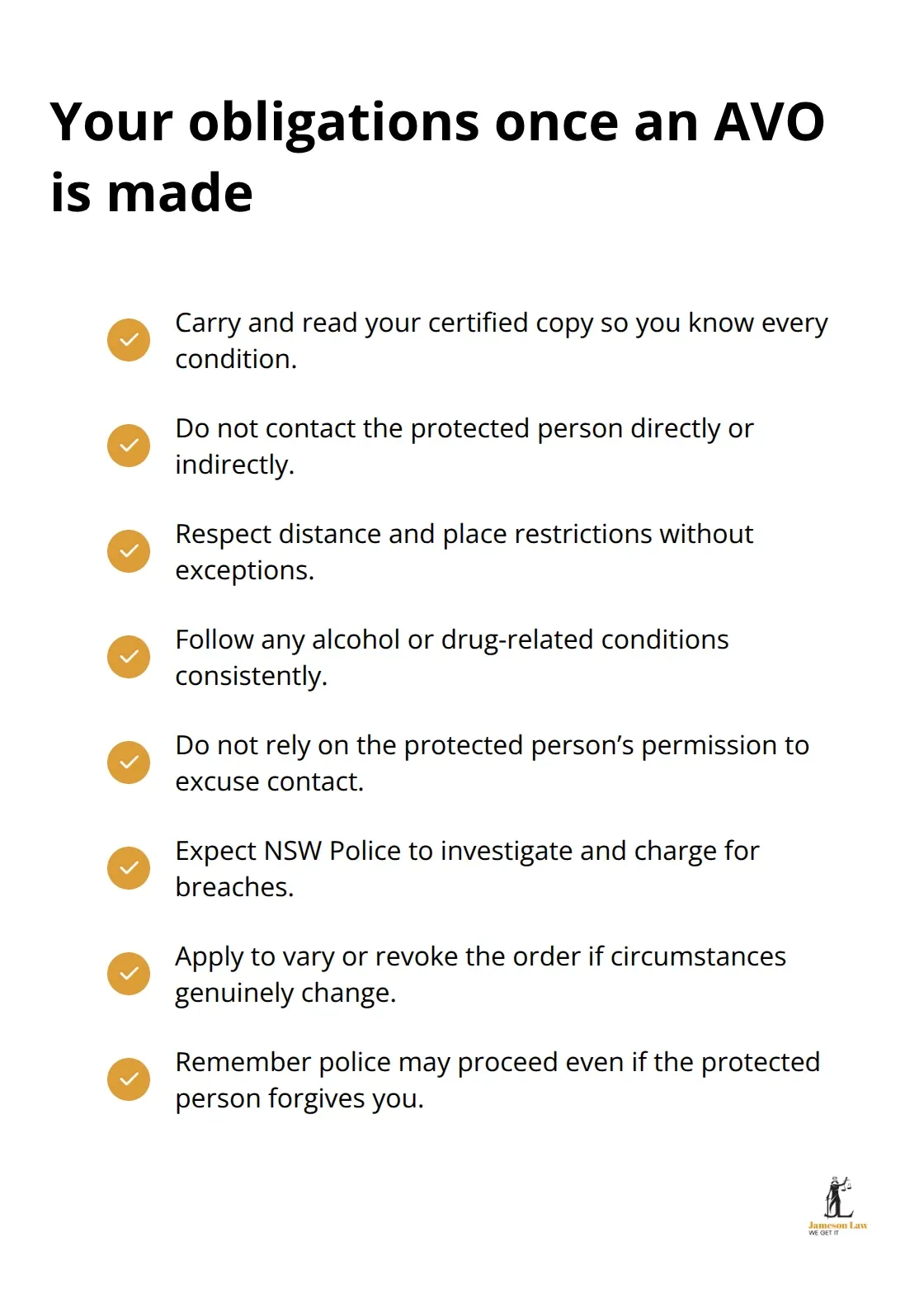
If the order says you cannot contact the protected person, that means no phone calls, messages, emails, or indirect contact through friends or family. If it restricts your proximity to their workplace, do not go within that distance even if you have a legitimate reason. If it prohibits alcohol or drug use around the protected person, that applies consistently.
The protected person can contact you if they choose, but you cannot initiate contact unless the order specifically permits it. Breaches are reported to NSW Police, who investigate and can lay charges. Even minor breaches escalate consequences, so strict compliance is non-negotiable. If circumstances genuinely change and you believe a condition is no longer necessary, you can apply to vary or revoke the order, but this requires going back to court with new evidence showing your situation has altered.
The respondent can also apply to change or revoke the order if they believe it is no longer needed. If you breach the order and the protected person does not want charges laid, the police still have discretion to pursue the matter, so assuming forgiveness will protect you is a dangerous gamble.
Final Thoughts
An AVO application NSW provides a legal pathway to protect yourself from violence, harassment, or threats. The steps are straightforward: you gather evidence, file at your local court, present your case, and comply with the order if granted. The Magistrate assesses whether your fear is genuine and reasonable based on the evidence you present, so specific examples, dates, and witness accounts matter far more than general claims.
Legal Aid NSW offers free legal advice and representation for AVO matters, and the Women’s Domestic Violence Court Advocacy Services operates at 136 court locations across NSW to support you through the process. If police apply on your behalf, a Police Prosecutor handles the case, though you can still hire a lawyer for additional support. If you apply privately, legal guidance from the start strengthens your application significantly.
At Jameson Law, we understand that AVO applications involve both legal complexity and personal safety concerns. Our highly experienced experts provide practical, accessible advice to help you understand your options and prepare for court. Whether you need guidance on gathering evidence, preparing statements, or understanding what to expect at your hearing, contact us today to take the next step toward securing the protection you need.