


Navigating the NSW Criminal Court Process: A Step-by-Step Guide
Facing criminal charges in NSW can feel overwhelming, especially when you don’t understand what comes next. The NSW criminal court process involves multiple stages, different court levels, and specific procedures that significantly affect your case outcome.
At Jameson Law, we have guided countless clients through these proceedings. This guide breaks down each step so you know exactly what to expect when navigating the justice system in 2026.
How the NSW Criminal Court System is Structured
NSW operates a three-tier criminal court system, and understanding which court handles your case directly affects procedure, sentencing powers, and trial format. This structure means your case will be heard in different venues depending on offence severity, and each venue carries different procedural requirements.
| Court Level | Types of Matters Handled | Presiding Officer | Sentencing Power |
|---|---|---|---|
| Local Court | Summary offences, minor indictable offences, and committal hearings. | Magistrate (No Jury) | Up to 2 years imprisonment for a single offence. |
| District Court | Mid-level indictable offences (e.g., serious assault, robbery). | Judge & Jury | Broad powers, often unlimited for certain serious crimes. |
| Supreme Court | Most serious indictable offences (e.g., murder, major trafficking). | Judge & Jury | Unlimited (up to life imprisonment). |
Where Your Case Will Be Heard
The type of offence determines court jurisdiction, not the seriousness you personally perceive. Summary offences such as common assault, minor theft, and traffic violations are heard exclusively in the Local Court and cannot proceed to higher courts. Indictable offences can be heard in the District or Supreme Court, though many are heard in the Local Court with the accused’s consent or the prosecution’s agreement.
NSW Courts statistics show approximately 85 per cent of indictable matters are finalised in the District Court rather than the Supreme Court, meaning most serious cases never reach the highest court. When you face charges, your lawyer will advise whether your matter is summary or indictable—information that fundamentally affects both timeline and strategy.
Who You’ll Encounter in Court
Understanding the roles in the courtroom helps you recognise that the judge is not your opponent but rather an impartial umpire ensuring both sides follow the rules:
- The Crown Prosecutor: Represents the state and bears the absolute burden of proving guilt beyond a reasonable doubt.
- The Magistrate or Judge: Presides impartially and ensures fair procedure. They do not decide guilt in jury trials, but they dictate sentencing.
- The Jury: In higher courts, a panel of 12 community members decides guilt or innocence based purely on the evidence presented.
- Your Defence Lawyer: A highly experienced legal advocate who protects your rights, cross-examines witnesses, and challenges the Crown’s case.
From Arrest to Trial
Arrest marks the beginning of your criminal case, but it is not the beginning of your trial. What happens in the hours and days following an arrest directly shapes whether you face trial at all. When NSW Police arrest you, they must inform you of the reason for the arrest and your rights, including the right to contact a lawyer.
During the police custody period, officers will interview you, take statements, and gather evidence. This is precisely when you need authoritative legal advice most. Many defendants harm their case by speaking to police without legal representation, making statements that contradict their later trial evidence.
Bail Decisions Shape Your Case Preparation
Bail is not automatic. The court considers three primary factors under the Bail Act 2013 (NSW): your risk of not appearing at trial, risk to public safety, and the likelihood of interfering with witnesses or evidence. If you have strong community ties, stable employment, and no history of bail breaches, your prospects improve substantially.
Courts often impose strict conditions on bail, such as reporting to police weekly, surrendering your passport, or avoiding contact with alleged victims. These are not minor inconveniences—breaching a single condition can result in immediate arrest, forfeiture of bail money, and fresh criminal charges. Your lawyer should negotiate these conditions carefully, pushing back on restrictions that are genuinely unworkable.
Committal Proceedings Filter Cases Upward
If you face indictable charges in the Local Court, a committal proceeding occurs before your case moves to a higher court. This is not a trial; it does not determine guilt or innocence. Instead, the magistrate examines whether sufficient evidence exists for a reasonable prospect of conviction.
Many defendants underestimate the committal’s importance. In reality, it is your primary opportunity to test the Crown’s evidence, identify structural weaknesses, and gather information about the prosecution’s strategy before a formal trial begins.
Strategic Decisions at Committal
The committal transcript becomes part of the formal trial record. Any inconsistencies between a witness’s committal evidence and trial evidence can be highlighted later to undermine their credibility. Prosecutors sometimes rely on written statements at committal rather than calling witnesses in person, which limits your ability to cross-examine. The strategic decisions made at this stage directly influence how your trial unfolds and what evidence the jury ultimately hears.
Protecting Your Rights When Facing Criminal Charges
Your right to legal representation is foundational to a fair trial. The difference between defending yourself and securing an expert legal team is immense. Countless defendants attempt to self-represent only to realise too late that procedural mistakes and poor cross-examination strategies have severely damaged their case.
Accessing Legal Representation and Early Advice
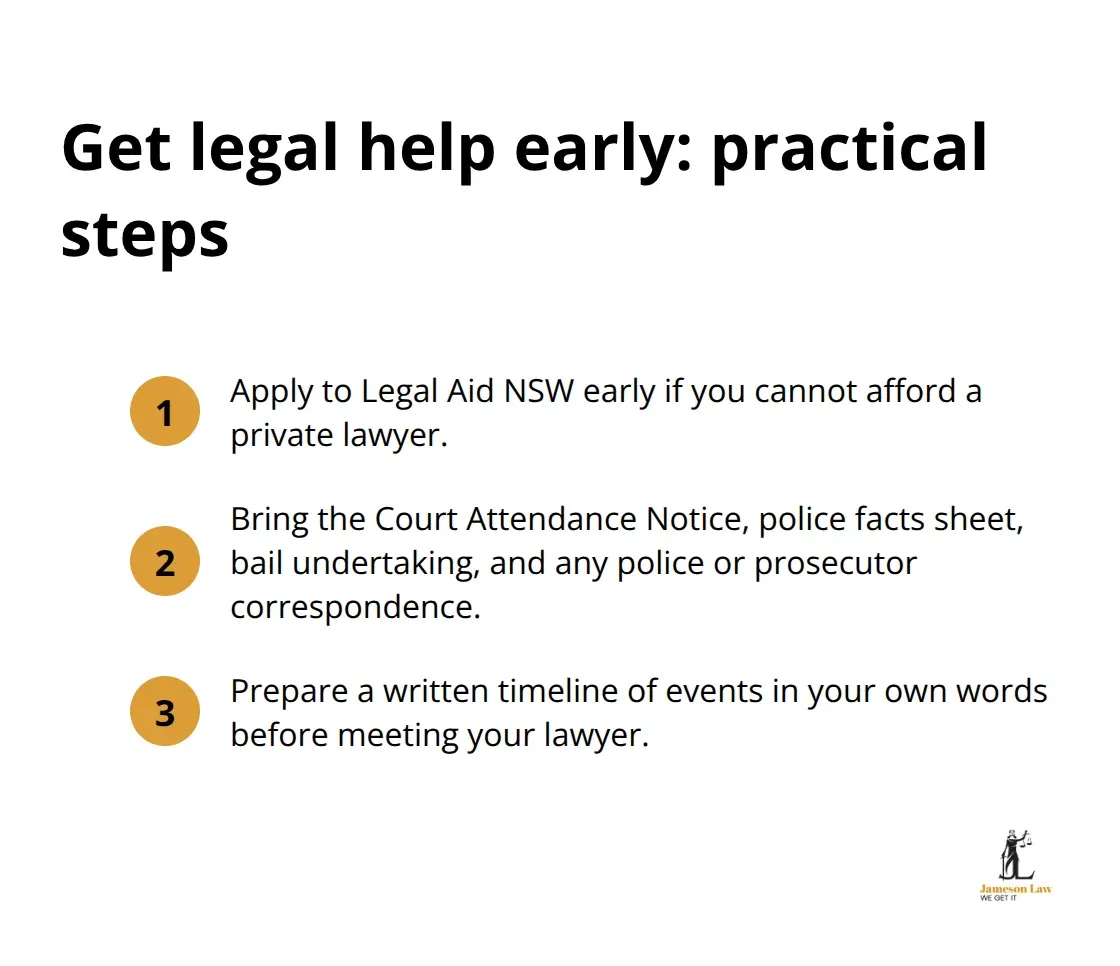
If you cannot afford a private lawyer, Legal Aid NSW may fund representation, though their financial eligibility means test is strictly applied. When you meet with your lawyer, bring every document related to your arrest: the Court Attendance Notice (CAN), police facts sheet, bail undertaking, and any correspondence from prosecutors.
Evaluating Your Case and Plea Strategy
Your lawyer will advise whether your case is strong enough to contest at trial or whether negotiating a guilty plea to lesser charges offers a more pragmatic outcome. Research published by the NSW Bureau of Crime Statistics and Research (BOCSAR) notes that early appropriate guilty pleas can result in statutory sentencing discounts, meaning your decision to accept or reject a plea agreement directly affects your potential penalties.
Diversion Programs and Alternative Pathways
If mental health issues, cognitive impairment, or substance abuse contributed to your offending, your lawyer may pursue a section 14 order under the Mental Health and Cognitive Impairment Forensic Provisions Act 2020, which diverts you toward treatment rather than criminal conviction. The NSW Department of Communities and Justice also administers diversion programs, including MERIT (Magistrate Early Referral into Treatment) and dedicated courts like the Drug Court, which focus on rehabilitation.
Final Thoughts
The NSW criminal court process follows rigorously established procedures at each stage, from initial arrest through bail decisions, committal proceedings, and trial. Understanding which court handles your matter and what happens at each step removes uncertainty and helps you prepare robust, realistic strategies.
Early legal advice makes the difference between outcomes that protect your future and those that damage it permanently. We at Jameson Law have guided countless clients through every stage of this complex system. Our highly experienced team understands the local courts, the prosecutors you will face, and the procedural nuances required to protect your rights.
If you or a loved one are facing charges, your next step is straightforward: secure expert legal guidance before your first police interview or court appearance. Contact Jameson Law today for a confidential discussion about your charges and your options.