Getting a work visa NSW can feel overwhelming with so many pathways and requirements to navigate. At Jameson Law, we have helped countless professionals understand their options and move forward with confidence.
This guide breaks down the main visa types available, what you’ll need to prepare, and the mistakes that could derail your application. Whether you’re pursuing a skilled independent visa or employer sponsorship, you’ll find practical steps to strengthen your case.
NSW Work Visa Pathways and How They Differ
NSW offers several distinct work visa pathways, each designed for different circumstances and skill levels. The most common option is the Skilled Nominated visa subclass 190, which provides permanent residency for points-tested skilled workers.
According to the Australian Government Department of Home Affairs, this visa requires you to meet Home Affairs eligibility criteria, hold a valid skills assessment, and satisfy NSW-specific requirements. Your occupation must appear on the NSW Skills List at the ANZSCO unit group level, and you must either work in NSW in your nominated occupation, maintain continuous NSW residence for at least six months, or hold offshore residence with six months offshore.
NSW nominations operate through SkillSelect, an invitation-based system where you cannot directly apply. Instead, you submit an Expression of Interest and await an invitation. The reality here is stark: NSW nomination is highly competitive. Investment NSW reserves the right to refuse nominations if criteria aren’t met, if the allocation is fully committed, or if it’s not in NSW’s best interests.
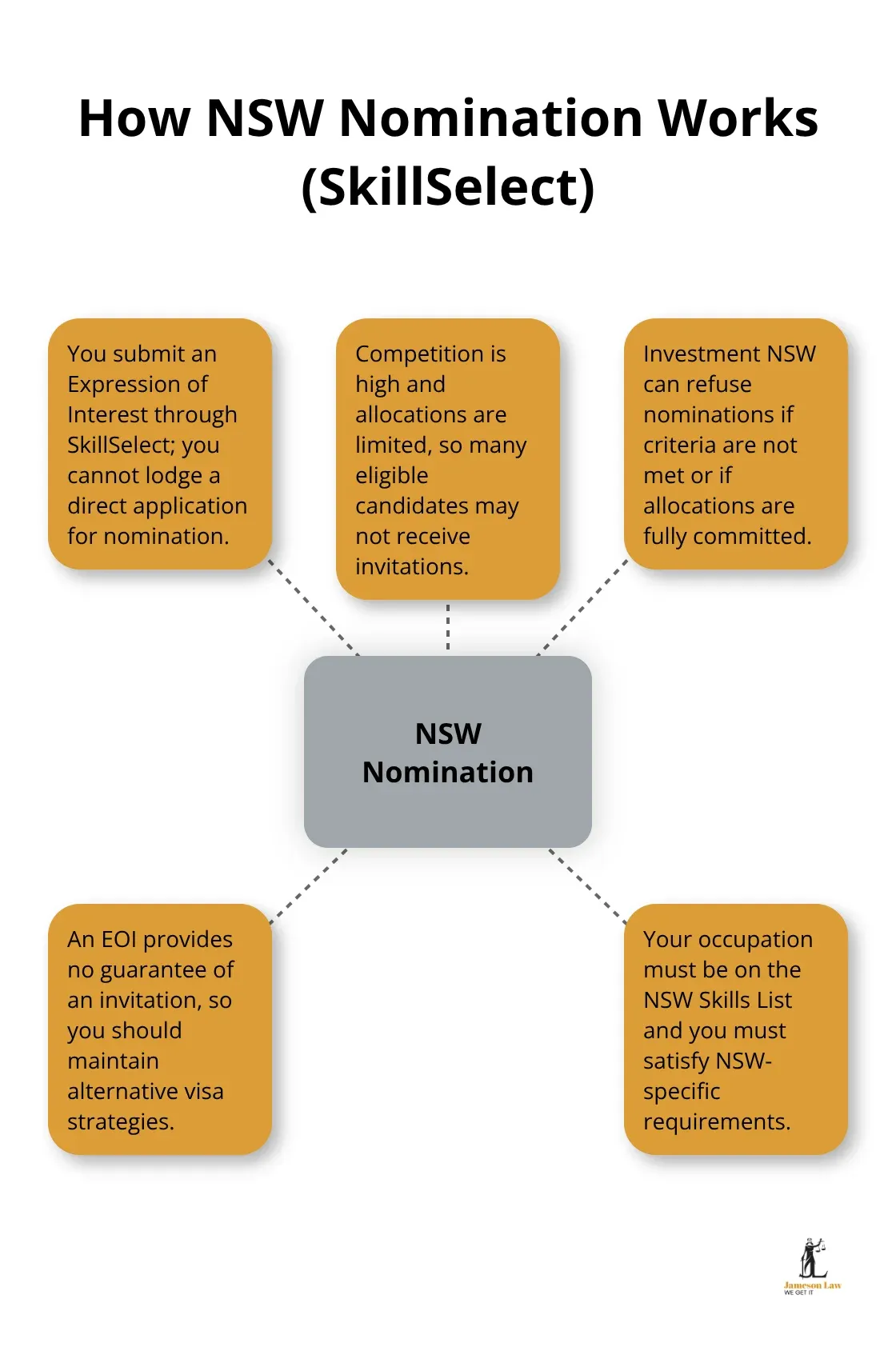
This means submitting an EOI provides no guarantee of invitation, and you should never rely solely on NSW nomination as your migration pathway.
Regional Work Visas for NSW
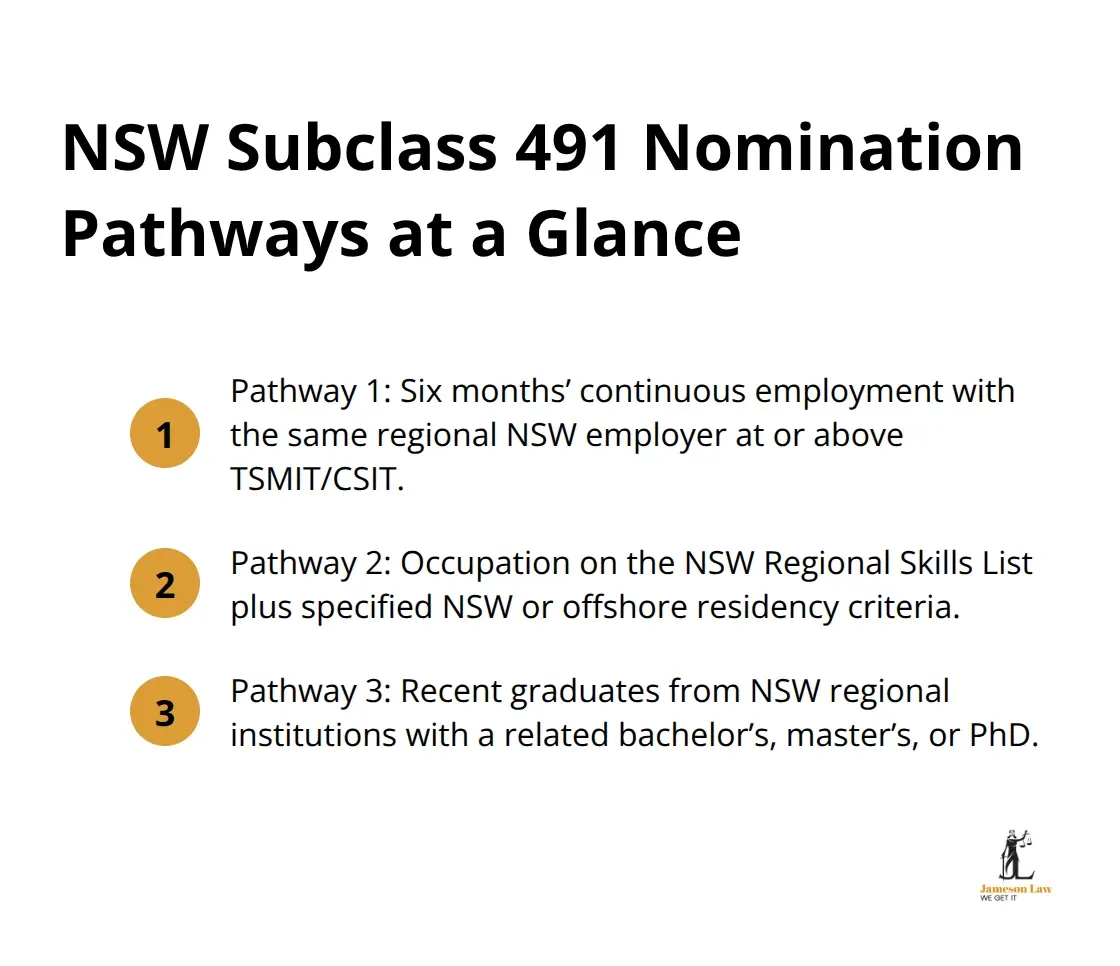
The subclass 491 provisional visa offers an alternative pathway for regional NSW, allowing you to live and work in designated regional areas for five years. According to the Australian Government Department of Home Affairs, NSW provides three nomination pathways:
- Pathway 1: Requires six months of continuous employment with the same regional NSW employer in a nominated occupation, paid at or above the TSMIT or CSIT rate.
- Pathway 2: Requires your occupation to be on the NSW Regional Skills List and involves meeting residency criteria of either working in NSW in that occupation, residing in NSW for at least three months, or residing offshore for at least three months.
- Pathway 3: Targets recent graduates from NSW regional institutions who completed a bachelor’s, master’s, or PhD within the last two years in a field related to the nominated occupation.
However, Pathways 1 and 3 closed to new applications from 1 July 2025 due to high demand and limited allocation, though existing submissions will be finalised. Pathway 2 remains open, with invitation rounds occurring throughout the financial year with no predetermined public dates.
Employer Sponsored and Independent Options
Employer-sponsored visas like the subclass 186 Employer Nomination Scheme and subclass 494 Skilled Employer Sponsored Regional offer direct pathways when an Australian employer nominates you. These options bypass the competitive SkillSelect process entirely and provide certainty once nomination receives approval.
The subclass 189 Skilled Independent visa represents another route, allowing skilled workers to apply without state sponsorship, though it operates on a points system where competition is intense. The Department of Home Affairs maintains a comprehensive visa finder listing all available options.
Avoid Tunnel Vision in Your Visa Strategy
Don’t narrow your focus to a single pathway. Many applicants fixate on NSW nomination because it appears straightforward, only to face repeated rejections. Try exploring employer sponsorship opportunities, consider regional pathways while Pathway 2 remains available, and evaluate whether the independent route suits your circumstances. If your situation involves complex eligibility questions, expert professional guidance becomes valuable to assess which pathway offers the strongest chance of success.
Documentation and Assessment Requirements for NSW Work Visas
Skills Assessment and Occupational Eligibility
The Department of Home Affairs requires you to provide valid evidence for every claim you make in your SkillSelect Expression of Interest. Applications with missing or expired documents face immediate rejection, and no second chance exists to submit them later. Start by obtaining your skills assessment from a recognised assessing authority in your occupation. The assessment forms the foundation of your entire application—without it, you cannot proceed to any visa pathway.
Employment and Income Documentation
Compile documentation that proves your work experience, including employment contracts, payslips covering the entire employment period, tax records, and letters from employers confirming your role, dates, and duties. For the subclass 491 Pathway 1, you need six months of continuous employment records with the same regional NSW employer, with payslips demonstrating payment at or above the TSMIT or CSIT rate.
Investment NSW publishes the specific occupations eligible for TSMIT or CSIT concession rates, including roles such as Medical Laboratory Scientist, Motor Mechanic, Pharmacy Technician, and Cook. If you claim the TSMIT or CSIT concession, your employer must provide documentation showing earnings meet the 90 per cent threshold, with Type 1 concessions requiring alignment with applicable awards and Type 2 allowing non-monetary earnings up to 10 per cent.
Character, Health, and Residency Evidence
Education credentials require official transcripts and degree certificates from your institution. Character requirements demand police clearances from every country where you lived for more than three months in the past ten years, and you must obtain these after your SkillSelect EOI submission. Health assessments through panel doctors approved by the Department of Home Affairs are mandatory—you cannot choose your own doctor.
Residency evidence matters significantly. If claiming NSW residence, gather utility bills, lease agreements, or council rates notices spanning the required period. For offshore residence claims under the subclass 190 pathway, you need proof of continuous offshore residence for at least six months.
Points System and Ranking Factors
The points system operates across several factors that determine your ranking within invitation rounds. Age, English language proficiency, education level, and work experience each contribute points, with the Department of Home Affairs’ SkillSelect system ranking EOIs by accumulated points within each ANZSCO unit group. Investment NSW invitation rounds throughout the financial year target the highest-ranked EOIs, though no predetermined dates are published.
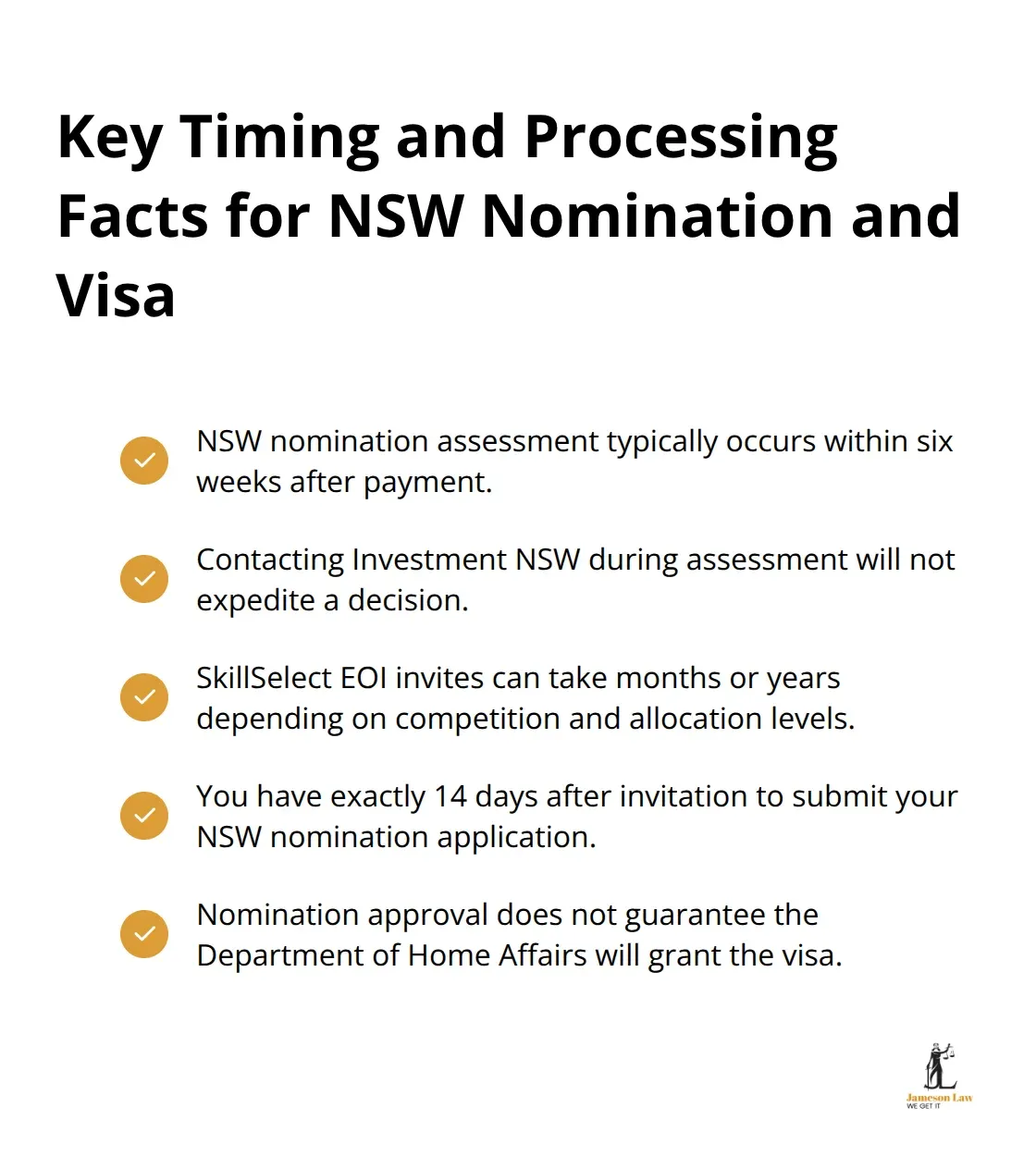
Once invited to apply for NSW nomination, you have exactly 14 days to submit your nomination application with no extensions granted—missing this deadline means forfeiting your invitation entirely.
Timeline and Processing Expectations
After you receive NSW nomination approval, you still must apply to the Australian Government for the actual visa grant, and nomination does not guarantee visa approval. The assessment period for NSW nomination typically occurs within six weeks after payment, and Investment NSW advises not contacting the office during this period as it does not expedite decisions.
Application Mistakes That Cost You an Invitation
The difference between a successful NSW work visa application and rejection often comes down to execution rather than eligibility. Most mistakes are preventable with attention to detail. Your SkillSelect Expression of Interest and subsequent nomination application demand accuracy because the Department of Home Affairs and Investment NSW assess every claim you make.
Documentation Gaps That Trigger Rejection
One critical error applicants make involves submitting incomplete documentation. If you claim six months of employment in a regional NSW role under Pathway 1, you need payslips covering the entire period, employment contracts, and employer verification letters. Partial payslip records or missing months create gaps that assessors interpret as unsubstantiated claims.
Another frequent mistake involves obtaining police clearances before you submit your SkillSelect EOI. The Department of Home Affairs requires these clearances to be obtained after your EOI submission, not before, so timing matters significantly. Similarly, health assessments through unapproved doctors become invalid and waste your money.
Character and Health Requirements
Character and health requirements carry weight that applicants often underestimate. Investment NSW will refuse nominations if you fail to meet character standards, and the Department of Home Affairs will refuse visa grants on the same grounds. This means any criminal history, traffic offences, or financial dishonesty flags your application for detailed scrutiny. Applicants sometimes fail to disclose prior convictions or traffic matters, believing they were minor or resolved, only to have applications rejected when background checks reveal undisclosed information.
Visa Conditions and Restrictions
Understanding your visa conditions and restrictions represents the final critical area where applicants stumble. The subclass 491 is a provisional visa for skilled workers who want to live and work in regional Australia, but many applicants misunderstand which areas qualify as regional and attempt to relocate to Sydney or other metropolitan centres, breaching their visa conditions. The subclass 190 permanent visa carries no regional work requirement, but applicants sometimes assume they can work anywhere immediately, when in fact they must satisfy residency criteria at the time of nomination.
Final Thoughts
NSW work visa pathways offer multiple routes to permanent or provisional residency, each suited to different professional circumstances and career stages. The subclass 190 provides permanent residency for skilled workers meeting points-based criteria, while the subclass 491 offers a five-year provisional pathway for regional employment. Employer-sponsored options bypass competitive invitation systems entirely when an Australian employer nominates you.
Professional guidance becomes invaluable when you navigate work visa NSW requirements because the stakes are high and mistakes prove costly. Documentation gaps, timing errors, or misunderstandings about visa conditions result in refusal with limited opportunity for correction. At Jameson Law, we help professionals assess their eligibility across multiple pathways, gather compliant documentation, and understand the specific conditions attached to each visa type.
After your visa receives approval, your obligations continue and visa conditions remain binding. Breaching them through unauthorised work locations or failing to meet residency requirements can result in cancellation and damage your future migration prospects. Contact us to discuss your situation and determine the pathway offering the strongest chance of success.