Becoming an Australian citizen is a significant milestone, and the Australian citizenship test NSW is a key step in that journey. We at Jameson Law understand that preparing for this test can feel overwhelming without clear guidance.
This guide walks you through exactly what to expect, what to study, and how the process works in NSW in 2026. You’ll have everything you need to approach the test with confidence.
Overview of the Australian Citizenship Test
What the Test Assesses
The Australian citizenship test measures your understanding of Australia’s government, values, and civic responsibilities. The Department of Home Affairs administers this test across NSW and all other states as a mandatory part of your citizenship application, unless you qualify for an exemption.
The test itself is conducted entirely in English and takes 45 minutes to complete. You answer 20 multiple-choice questions drawn exclusively from the official resource booklet, which the Department provides. This means there’s no guesswork involved—everything tested comes directly from that official material. Your study strategy should focus entirely on mastering that booklet’s content rather than chasing random trivia about Australian history.
Who Must Take the Test
You must take the test if you’re aged 18 to 59 and applying for citizenship. Applicants outside this age range or those with certain disabilities may qualify for an exemption, so check your individual circumstances with the Department. The test requirement applies consistently across all states and territories, making it a uniform assessment for citizenship applicants nationwide.
Test Format and Duration
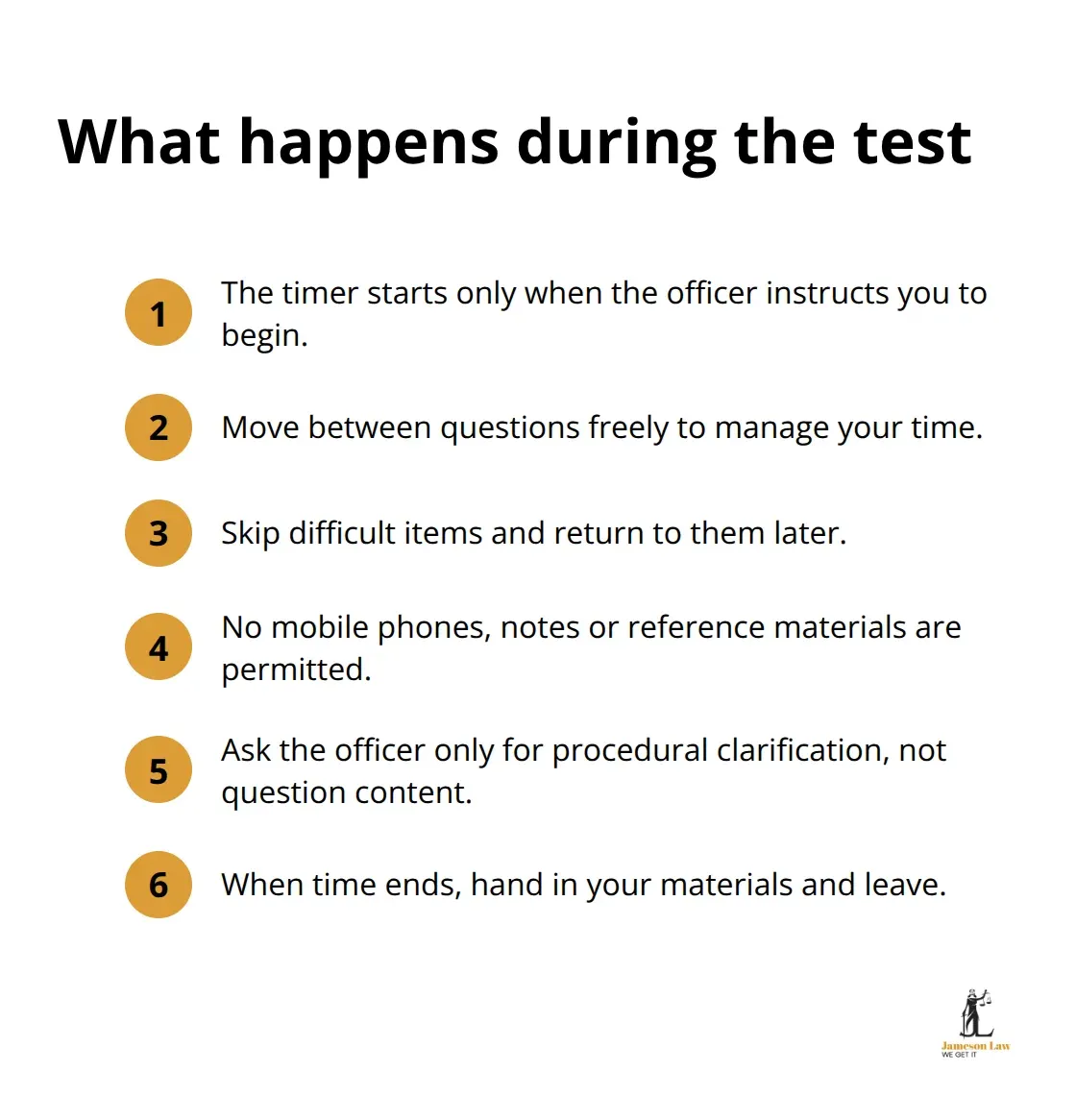
The 45-minute timeframe gives you flexibility in how you manage your time. You can answer questions in any order and skip items to revisit later if you’re unsure. You cannot bring any written materials, books, notes, or electronic devices into the testing room—this includes mobile phones. This strict structure allows you to tackle questions strategically while maintaining a controlled testing environment.
Passing Score Requirements
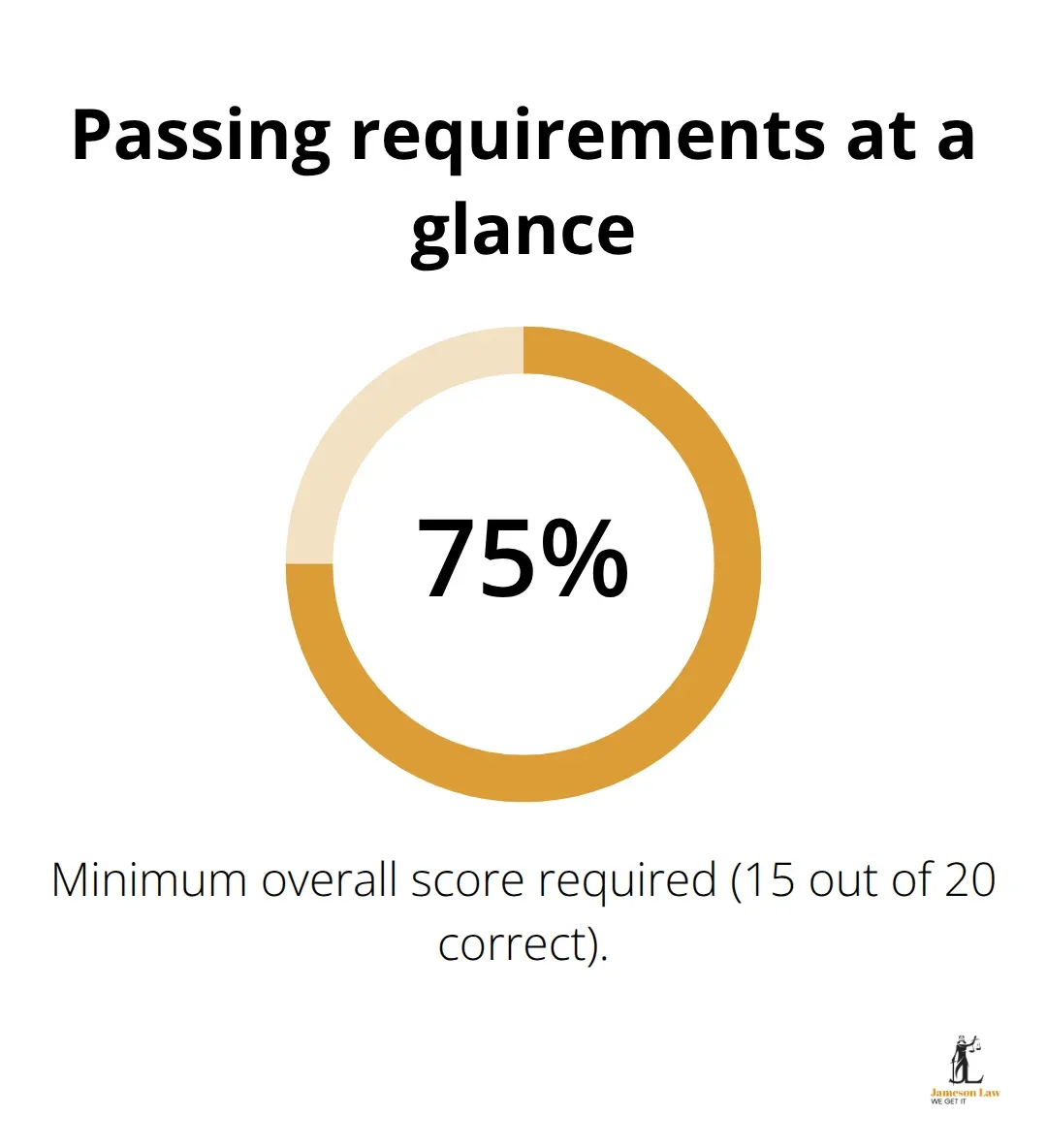
The passing requirements are specific and non-negotiable. You must score at least 15 out of 20 questions correctly to achieve the 75 per cent overall threshold. However, here’s the critical part: you must answer all five Australian values questions correctly without exception. This dual requirement means you cannot pass the test by scoring 15 correct if even one values question is wrong.
Understanding these mechanics upfront helps you approach your preparation strategically rather than wasting effort on content that won’t appear on the exam. Now that you understand the test structure, the next section covers exactly what content you should study.
What You Actually Need to Study
Start with the Official Resource Booklet
The Australian Citizenship: Our Common Bond resource booklet contains everything the Department of Home Affairs will test you on, and nothing else. This is your starting point and your ending point. Stop looking for supplementary materials or external study guides—they waste your time. The booklet is available in English and multiple community languages, so if English isn’t your first language, you can read it in your own language first to understand the concepts, then study the English version for the actual test.
The Four Core Domains
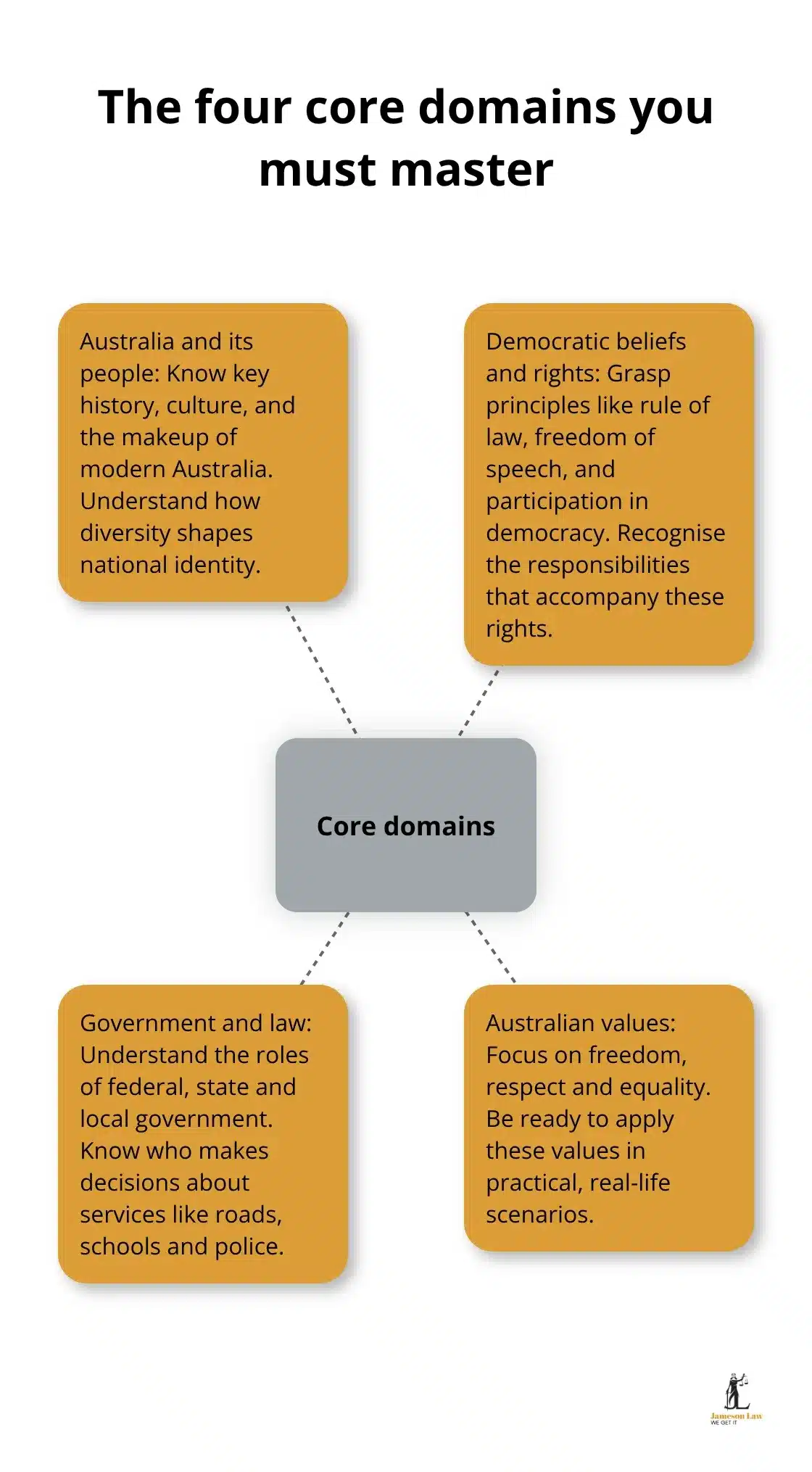
The test covers four core domains. Rather than memorising random facts, focus on understanding how these topics connect to your daily life as an Australian citizen:
- Australia and its people: Understanding the nation’s diverse heritage.
- Democratic beliefs and rights: Your liberties and fundamental rights.
- Government and law: How the parliamentary democracy operates.
- Australian values: The unifying principles of the country.
When studying government and law, don’t just memorise the names of government levels—understand which level makes decisions about roads, schools, and police in your area. Contextual learning sticks far better than rote memorisation and helps you answer application-style questions correctly.
Master the Australian Values Section
The Australian values section demands special attention because you must pass all five values questions correctly. Australian values centre on freedom, respect, and equality. These aren’t abstract concepts—they translate into real responsibilities like obeying the law, respecting others regardless of background, and participating in your community.
Use Multiple Learning Methods
The Our Common Bond podcast, available on iTunes, Spotify, and Google Podcasts, reinforces this content through episodes covering the test process. Episode transcripts are available if you prefer reading to listening. This dual-input approach—reading the booklet plus hearing the content explained—helps different learning styles retain information more effectively.
You have 45 minutes and can answer questions in any order, so during your preparation, practise answering mixed questions rather than studying one topic at a time. This mirrors the actual test experience and trains your brain to switch between topics quickly.
How the Test Works in NSW
Getting Your Test Appointment
After you submit your citizenship application, the Department will contact you with a test appointment date, time, and location. This appointment typically arrives within several months of your application. You cannot choose your test date or location—the Department assigns these based on their scheduling system. Once you receive your appointment notice, mark the date clearly and plan your travel well in advance. Arriving late disqualifies you from sitting the test that day, and rescheduling creates delays.
Where You’ll Test
The test centre location is usually at a Service NSW office or designated Department facility in your local area. On test day, arrive at least 15 minutes early with your appointment letter and a form of photo identification (such as a passport or an Australian driver’s licence). The testing officer will verify your identity, explain the testing process, and confirm you understand the ground rules before you enter the testing room.
What Happens During the Test
You’ll use a computer or tablet device, and the 45-minute timer begins once the officer instructs you to start. The testing room is strictly controlled—no mobile phones, no notes, no reference materials, and no assistance from anyone. If you have questions about how the system works or need clarification on test procedures, raise your hand and ask the testing officer, but they cannot help with question content.
Test Results and Next Steps
Once your 45 minutes concludes, your results are usually displayed immediately. If you pass, achieving 15 correct answers overall and all five Australian values questions correct, you progress to the citizenship ceremony and oath-taking stage. If you fail, you can typically resit the test (subject to Department rules and wait times). Most people pass on their first attempt when they’ve studied the Our Common Bond booklet thoroughly and used practice tests.
Final Thoughts
Passing the Australian citizenship test NSW requires focused preparation on one official resource: the Australian Citizenship: Our Common Bond booklet. Everything tested comes directly from this material, so your study time should concentrate entirely on mastering its content.
Your preparation toolkit includes the booklet, the official podcast episodes, and practice tests to familiarise yourself with the question format. On test day, arrive early with your photo identification, manage your 45 minutes strategically, and remember that securing 100% on the values section is mandatory.
If you face legal questions during your citizenship journey or need guidance on complex eligibility matters, our highly experienced team at Jameson Law can provide practical advice tailored to your circumstances. Contact us today to ensure your path to Australian citizenship is smooth and successful.