Becoming an Australian citizen is a significant milestone that requires meeting specific eligibility criteria and navigating a structured application process. Your citizenship application in Australia involves several key stages, from initial eligibility checks through to your final appointment.
At Jameson Law, we’ve guided many people through this journey and understand the questions that arise at each step. This guide walks you through what you need to know to move forward with confidence.
Eligibility Requirements for Australian Citizenship
Residency Duration and Visa Status
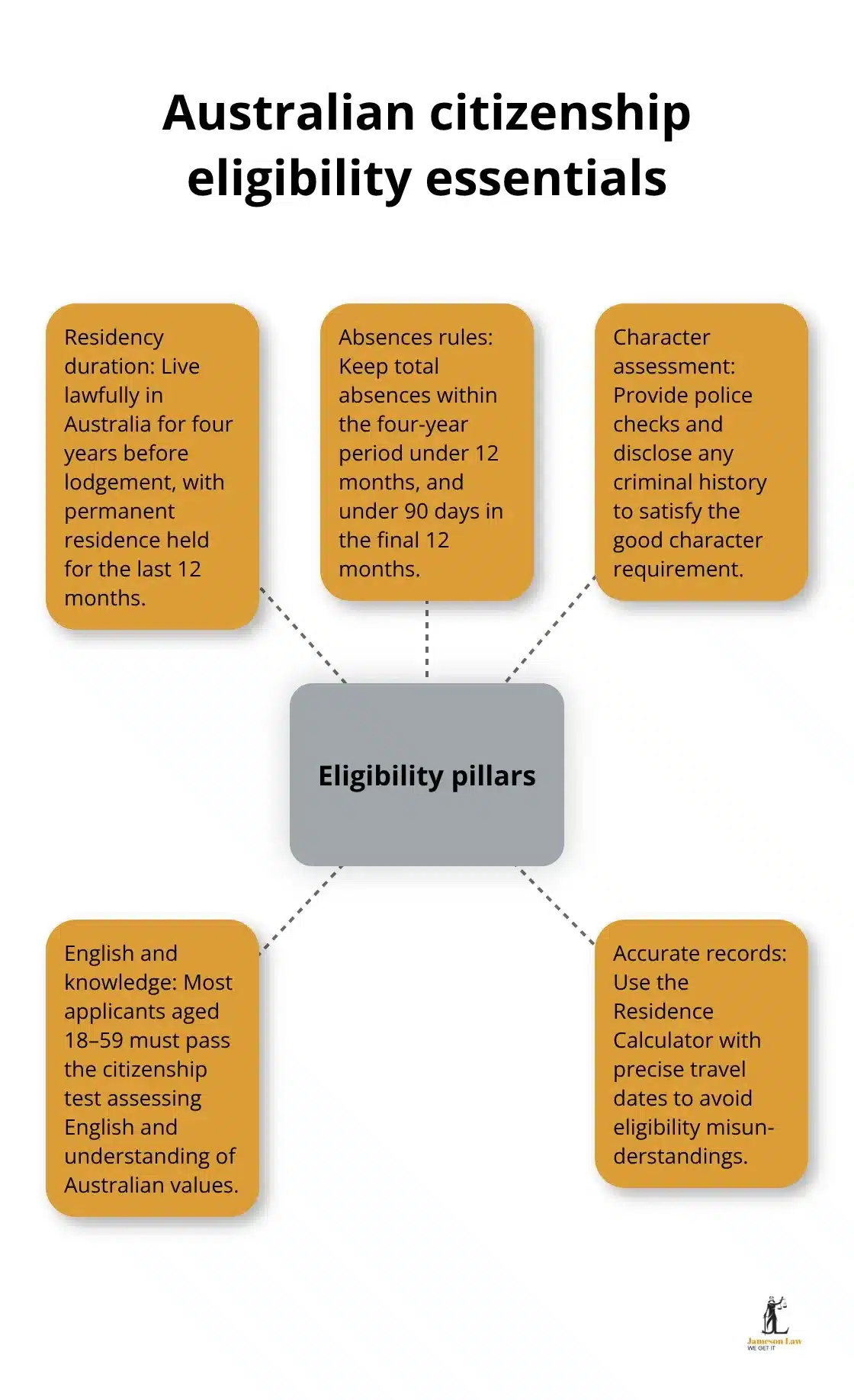
To apply for Australian citizenship, you must meet strict residency requirements set by the Department of Home Affairs. You need to have lived in Australia on a valid visa for the four years immediately before you apply. During this period, you must hold a permanent visa or Special Category visa for the last 12 months before lodging your application. These timeframes are not flexible, and the Department assesses them carefully against your travel records.
Your absences from Australia directly affect your eligibility. You cannot have been absent for more than 12 months across the entire four-year period, and no more than 90 days in the 12 months immediately before applying. If you hold a New Zealand Special Category visa, check your eligibility carefully as recent changes may affect your permanent residency commencement date.
Using the Residence Calculator
The Department of Home Affairs provides a Residence Calculator that estimates your eligibility based on dates and absences you enter. This tool helps you understand where you stand early in your planning, though it only provides a guide and not a formal assessment. To use it accurately, you need your permanent residence date, lawful residence date, intended lodgement date, and all travel periods from the last four years.
If you lack precise travel dates, request your international movement records from the Department for free. Permanent residence typically dates from when you were first granted a permanent visa or first entered Australia on one, while lawful residence begins when you first arrived on any valid visa. Entering accurate information into the calculator prevents misunderstandings later in the process.
Character Assessment and Police Checks
The Department requires a character assessment, which involves police checks to ensure you meet the good character test. You must provide evidence that you have not been convicted of serious crimes, and any criminal history will be examined carefully. This assessment protects the integrity of Australian citizenship and applies to all applicants without exception.
English Language Proficiency and the Citizenship Test
Most applicants aged 18 to 59 must sit the citizenship test, which assesses your English skills and knowledge of Australia. The test consists of 20 multiple-choice questions, and you need to answer all 5 of the Australian values questions correctly to pass. You have 45 minutes to complete it. Some applicants may have an interview only and will not sit the test, depending on their circumstances.
The official study resource is the Australian Citizenship: Our Common Bond guide, available as a booklet in English and community languages plus a podcast series from the Department. Do not spend money on third-party apps or paid courses claiming to prepare you for the test-the Department does not endorse these, and the official resources are sufficient. Test venues operate in major cities, and accommodations are available if you have special needs. If you fail, you can retake the test after a waiting period.
Moving Toward Your Appointment
Passing the citizenship test leads to an invitation to a citizenship ceremony, which is the final step where you take the oath to become an Australian citizen. The Department invites approved applicants about four weeks before their ceremony, with invitations sent by your local council or the Department itself. Wait times for ceremonies vary by local government area and depend on demand in your region-you cannot choose the location or time, as these are determined by your current residential address.
Submitting Your Citizenship Application
Lodge Your Application Online
You lodge your citizenship application through ImmiAccount, the Department of Home Affairs online portal. This pathway provides immediate confirmation of submission and allows you to track your application status in real time. Online submission gives you a clear record and faster processing than postal submission. The Department also accepts applications by post, but we recommend the online option for its transparency and speed.
Prepare Your Documentation
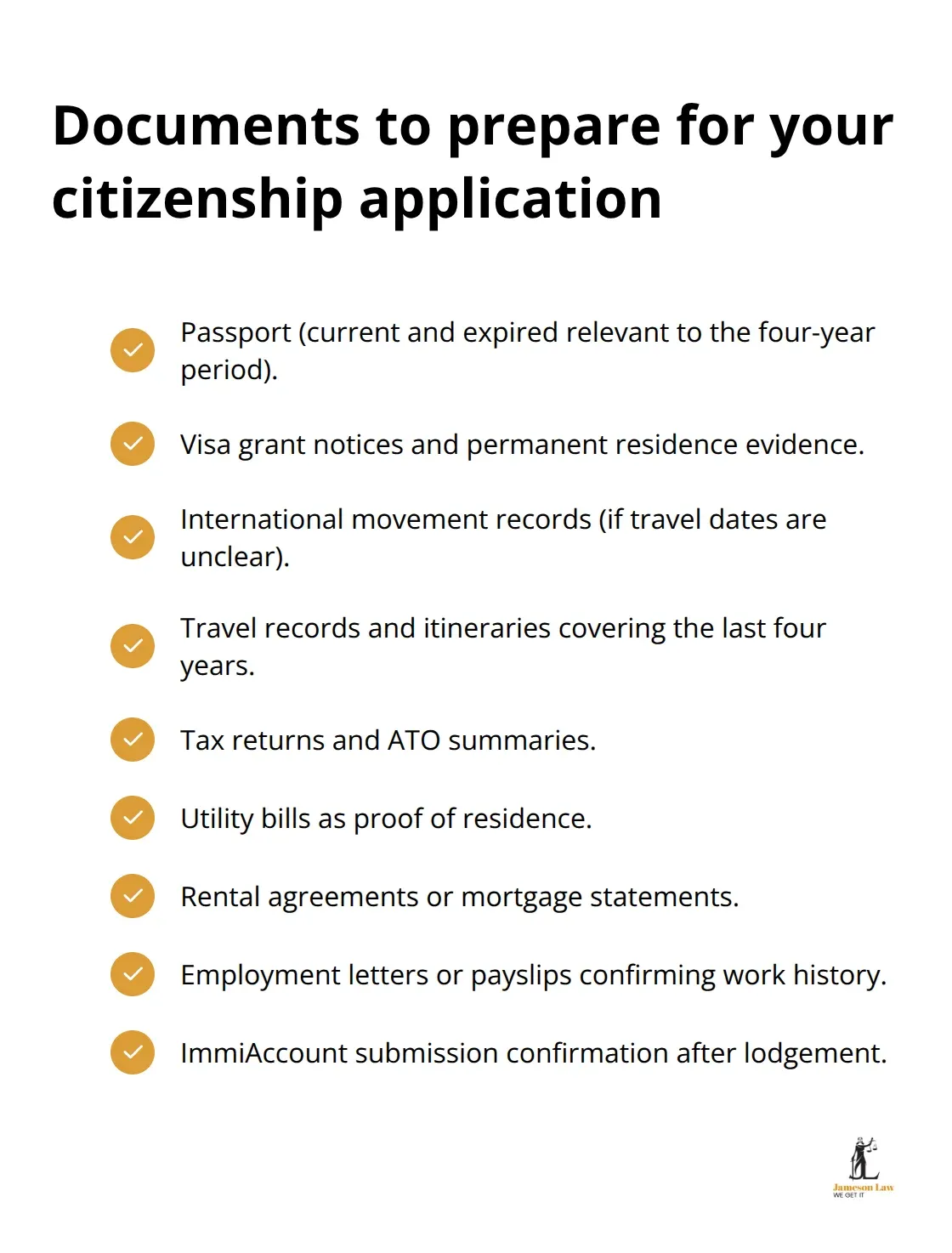
Before you submit, you must gather evidence of continuous residence and lawful status for the relevant four-year period. Your passport, visa documents, travel records, tax returns, utility bills, rental agreements, and employment letters all form part of your submission package. The Department will cross-reference your submitted dates against their international movement records, so inconsistencies will delay your application significantly. Permanent residence dates must be exact-check your visa grant letter rather than estimating.

If you lack documents, request your international movement records from the Department for free; this typically takes two to three weeks but prevents rejection later.
Understand Processing Timelines
Processing timelines vary significantly depending on demand and your individual circumstances. The Department does not publish fixed timeframes, but applications generally take between three to six months from lodgement to invitation for your citizenship test or interview. Character assessment processing accounts for much of this variation-if police checks reveal any issues, the Department will investigate further, extending your timeline considerably. Once you pass your test or complete your interview, you move into the ceremony queue, where wait times depend entirely on your local council area.
Check Your Local Wait Times
The Department publishes wait-time data by local government area showing approved applicant numbers and current delays. You can use the council search tool on the Home Affairs website to find your specific wait times. Some councils hold ceremonies monthly while others only quarterly, creating wait periods ranging from immediate to twelve months or more. Family members linked to your application may also affect your ceremony wait time. Plan for the entire process to take nine to fifteen months from lodgement to citizenship ceremony, though this varies considerably by location.
Act Without Delay
Do not postpone submitting your application based on assumptions about processing speed. The sooner you lodge, the sooner you progress through each stage. Your next critical milestone arrives once you receive your test or interview invitation, which marks the beginning of your final preparation phase before you take the oath of citizenship.
How to Prepare for Your Citizenship Test and Interview
The citizenship test and interview represent your final hurdle before the oath ceremony, yet many applicants underestimate the preparation required. You face 20 multiple-choice questions covering English language skills and knowledge of Australian values, rights, and responsibilities. Critically, you must answer all five Australian values questions correctly to pass, meaning you cannot afford careless mistakes on these core questions.
Study Resources and Test Format
The Department of Home Affairs study guide Australian Citizenship: Our Common Bond is your only reliable resource. Third-party apps and paid courses waste money because the Department explicitly does not endorse them, and the official materials contain everything you need. The test runs for 45 minutes, which gives you roughly two minutes per question. This timeframe sounds generous until you encounter unfamiliar vocabulary or complex scenarios.
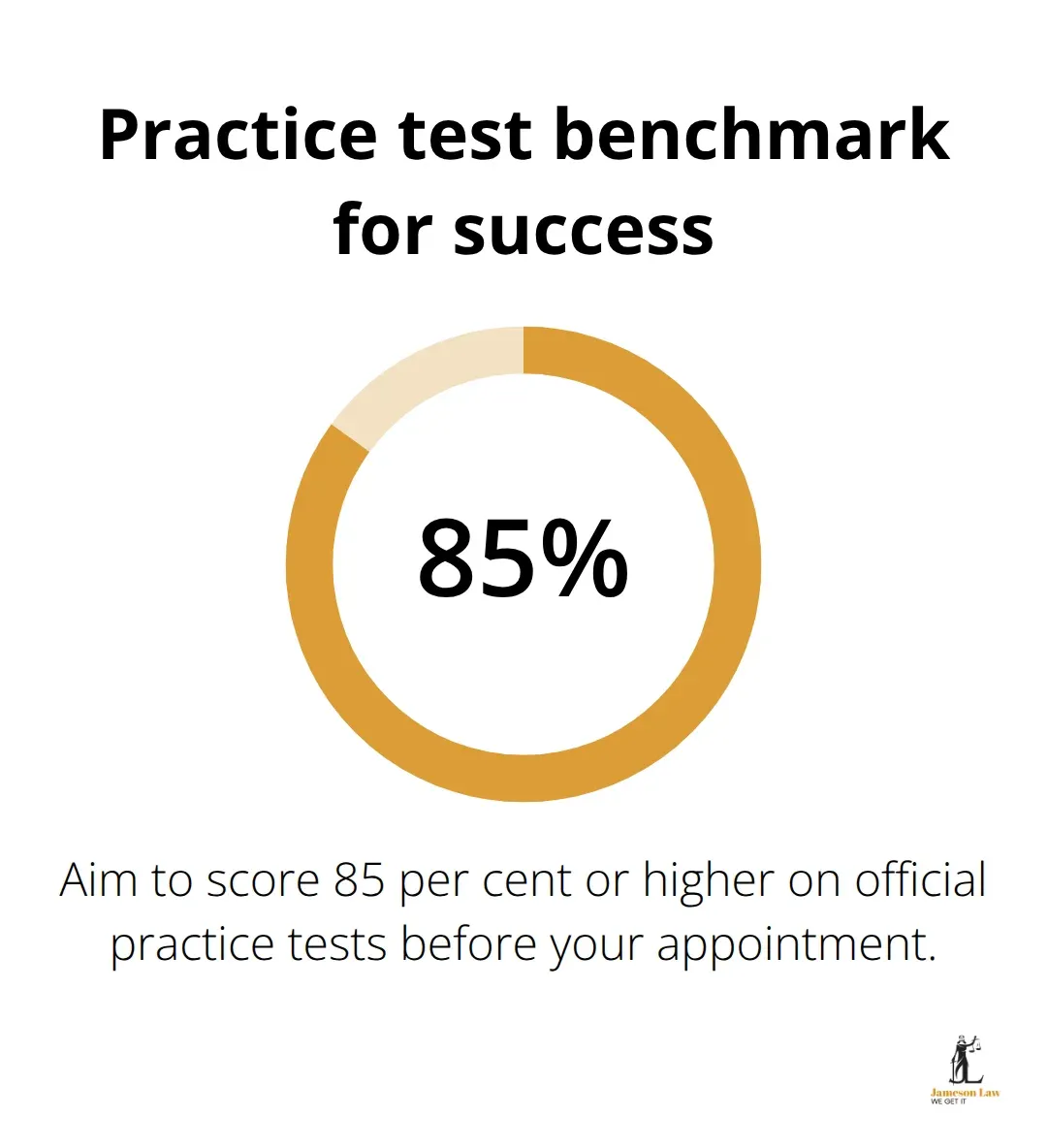
The podcast series version of Our Common Bond helps if you learn better through audio, and the guide is available in community languages if English is not your first language. Start your preparation at least four weeks before your scheduled test date. Work through the official practice tests repeatedly until you score consistently above 85 per cent.

Test Eligibility and Exemptions
Some applicants avoid the test entirely if they hold certain visa types or meet specific criteria, instead attending an interview only where an officer assesses your knowledge conversationally. Do not assume you fall into this category without confirmation from your invitation letter. The Department will specify whether you must sit the test or attend an interview only.
Interview Preparation and Assessment
Your interview, whether standalone or following a failed test, will probe your understanding of Australian civic values and your commitment to the nation. The Department’s officers ask questions drawn directly from Our Common Bond, testing whether you genuinely understand concepts like rule of law, parliamentary democracy, and mutual respect rather than simply memorising answers. Prepare by understanding not just what Australia’s values are, but why they matter and how they function in practice.
Officers may ask about your employment history, community involvement, or reasons for seeking citizenship, so reflect on your personal story and how it connects to Australian values. Accommodation for disability or language support is available, but you must request this before your appointment date.
What to Bring and Logistics
Bring your original invitation letter, a valid form of identification such as your passport, and any documents requested in your invitation. Arrive at least 15 minutes early to account for security screening and parking delays. The test venues operate in major cities only, which may require travel if you live regionally (so factor in transport time when planning your appointment day).
Final Thoughts
Your citizenship application Australia journey concludes when you take the oath at your local citizenship ceremony and officially become an Australian citizen. The Department of Home Affairs invites approved applicants approximately four weeks before their ceremony, and you receive your citizenship certificate once you complete this formal step. After the ceremony, you can apply for an Australian passport through the Department of Foreign Affairs and Trade, which enables you to travel internationally and serves as your primary identity document.
Throughout your application, the Department of Home Affairs remains your primary resource for official study materials, practice tests, the Residence Calculator, and council-specific wait-time data. You can request your international movement records for free if you need precise travel dates, and you can search for your local council’s ceremony wait times using their online tool. The Department also provides accommodations for applicants with disability or language support needs if you request these before your appointment.
If complications arise during your citizenship application-such as character assessment delays, residence eligibility questions, or documentation issues-professional legal guidance can clarify your position and strengthen your submission. We at Jameson Law assist people navigating immigration matters and can help you understand your specific circumstances. Contact us for advice on your citizenship application if you need support moving forward.