

Sponsoring skilled workers from overseas is a significant commitment for Australian employers. The visa sponsorship requirements are strict, and non-compliance can result in substantial penalties and reputational damage.
At Jameson Law, we’ve guided hundreds of employers through this process. This guide covers everything you need to know about your obligations, costs, and the steps involved in bringing skilled migrants to your team.
What You Must Do Before Sponsoring a Work Visa
Australian employers who sponsor overseas workers face strict regulatory requirements that go far beyond simply offering someone a job. The Department of Home Affairs enforces these obligations rigorously, and breaches can result in penalties up to AUD 63,000 for individuals and AUD 315,000 for corporations, according to the Migration Act 1958.
Confirm Your Eligibility to Sponsor
Before you lodge any sponsorship application, you need to understand exactly what the government expects from you as an employer. The first step is confirming your business is actually eligible to sponsor. You must be registered with the Australian Business Register, hold an active Australian Business Number, and have no outstanding tax debts with the Australian Taxation Office.
If you operate through a trust or partnership, additional rules apply that many employers overlook. You also cannot sponsor workers if you have breached visa sponsorship laws in the past five years or if Home Affairs is currently investigating you. Many employers assume they can sponsor anyone they want as long as they pay the visa fees, but this fundamentally misunderstands how the system works. The government views sponsorship as a privilege that comes with serious compliance obligations.
Set the Right Salary and Employment Conditions
Once you are eligible to sponsor, you enter into a binding agreement with the Australian government. You must offer the worker a salary that matches the market rate for their role and location, not just the minimum wage. For example, if you sponsor a software engineer in Sydney, you cannot undercut local market rates simply because they are willing to accept less.
You are also required to provide employment conditions no less favourable than those offered to Australian employees doing equivalent work. This includes leave entitlements, superannuation contributions, and any other benefits. The Department of Home Affairs regularly audits employer records to verify these obligations are met.
Maintain Detailed Records and Documentation
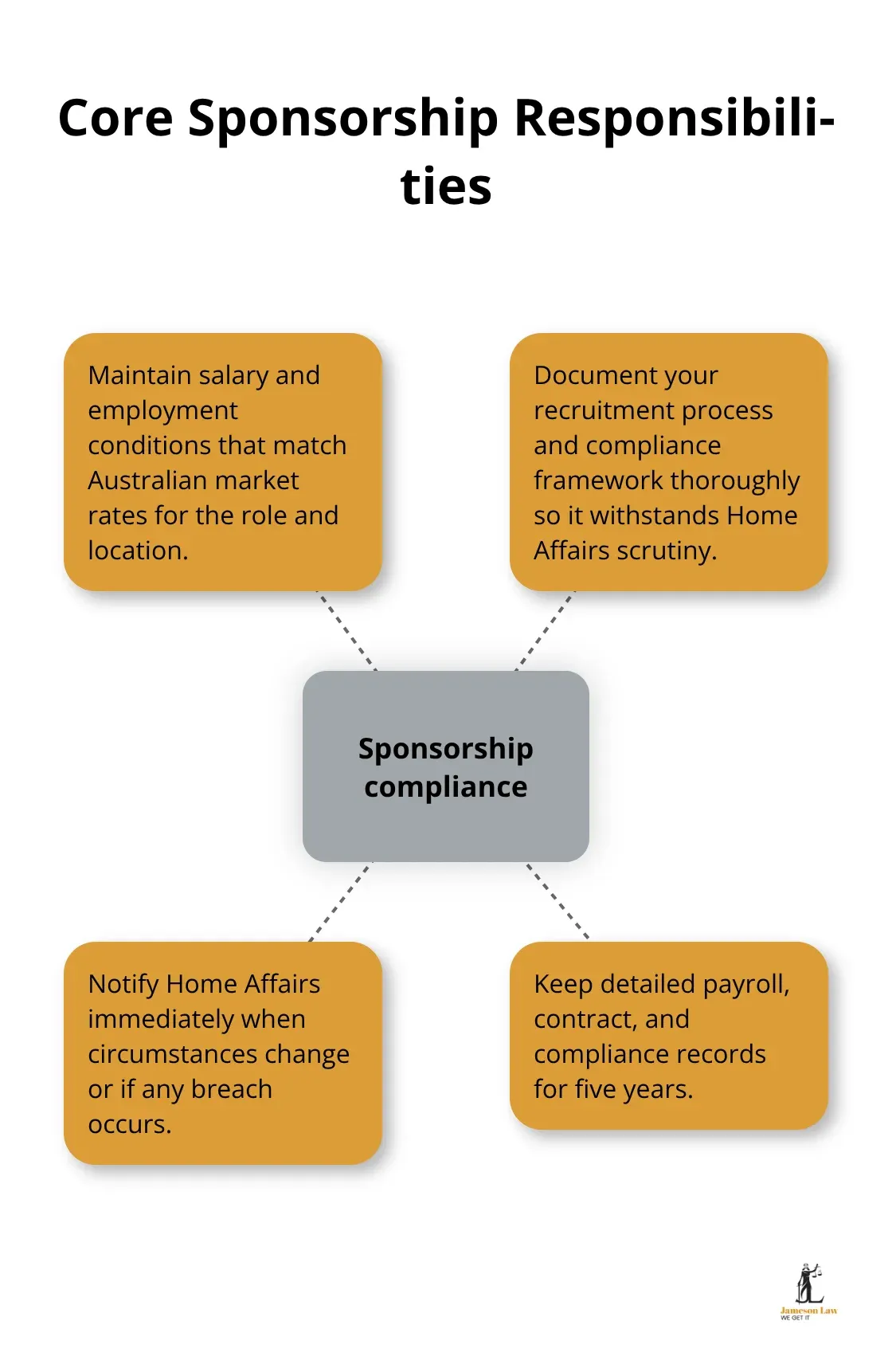
You must keep detailed payroll records, employment contracts, and evidence of compliance for five years. Many employers fail audits because they have not documented these requirements properly. You also cannot use visa sponsorship to undercut wages or exploit overseas workers.
If Home Affairs discovers you have breached these conditions, you will lose your sponsorship approval and face substantial financial penalties. The compliance burden is real and ongoing, not a one-time administrative task. Understanding these obligations now means you can structure your sponsorship arrangement correctly from the start, which brings us to the specific steps you need to follow when you actually lodge your application.
How the Visa Sponsorship Application Actually Works
Conduct a Genuine Skills Assessment
Getting your sponsorship application approved requires careful planning and understanding exactly what Home Affairs expects at each stage. The process is not linear, and mistakes at the early stages will cause delays or rejection later.
Start by conducting a genuine skills assessment to confirm the position genuinely cannot be filled by Australian workers. You need evidence of your recruitment efforts, including job advertisements placed through mainstream Australian job boards, the number of applications received, and why each Australian applicant was unsuitable. Home Affairs scrutinises this documentation rigorously, and vague claims about skill shortages will not pass inspection.
Many employers underestimate this step and lodge applications with weak recruitment evidence, resulting in requests for additional information that delay processing by months. Your nomination must specify the exact role, salary, and employment conditions you are offering.
Meet the Salary Threshold Requirements
The salary you offer must meet the Temporary Skilled Migration Income Threshold, which adjusts annually. If you sponsor through the Skilled Independent visa stream, the salary requirements become even stricter.
You cannot simply match the minimum wage or undercut local market rates. For example, if you sponsor a software engineer in Sydney, you must offer a salary that reflects the market rate for that role and location. Home Affairs regularly audits employer records to verify these obligations are met.
Document Your Recruitment and Compliance Framework
Document everything during the planning phase because Home Affairs will request proof of your recruitment process, payroll systems, and compliance framework before approving your sponsorship. You must keep detailed payroll records, employment contracts, and evidence of compliance for five years.
This documentation becomes critical if Home Affairs investigates your sponsorship later. Vague or incomplete records will result in failed audits and potential penalties.
Navigate the Nomination and Visa Application Stages
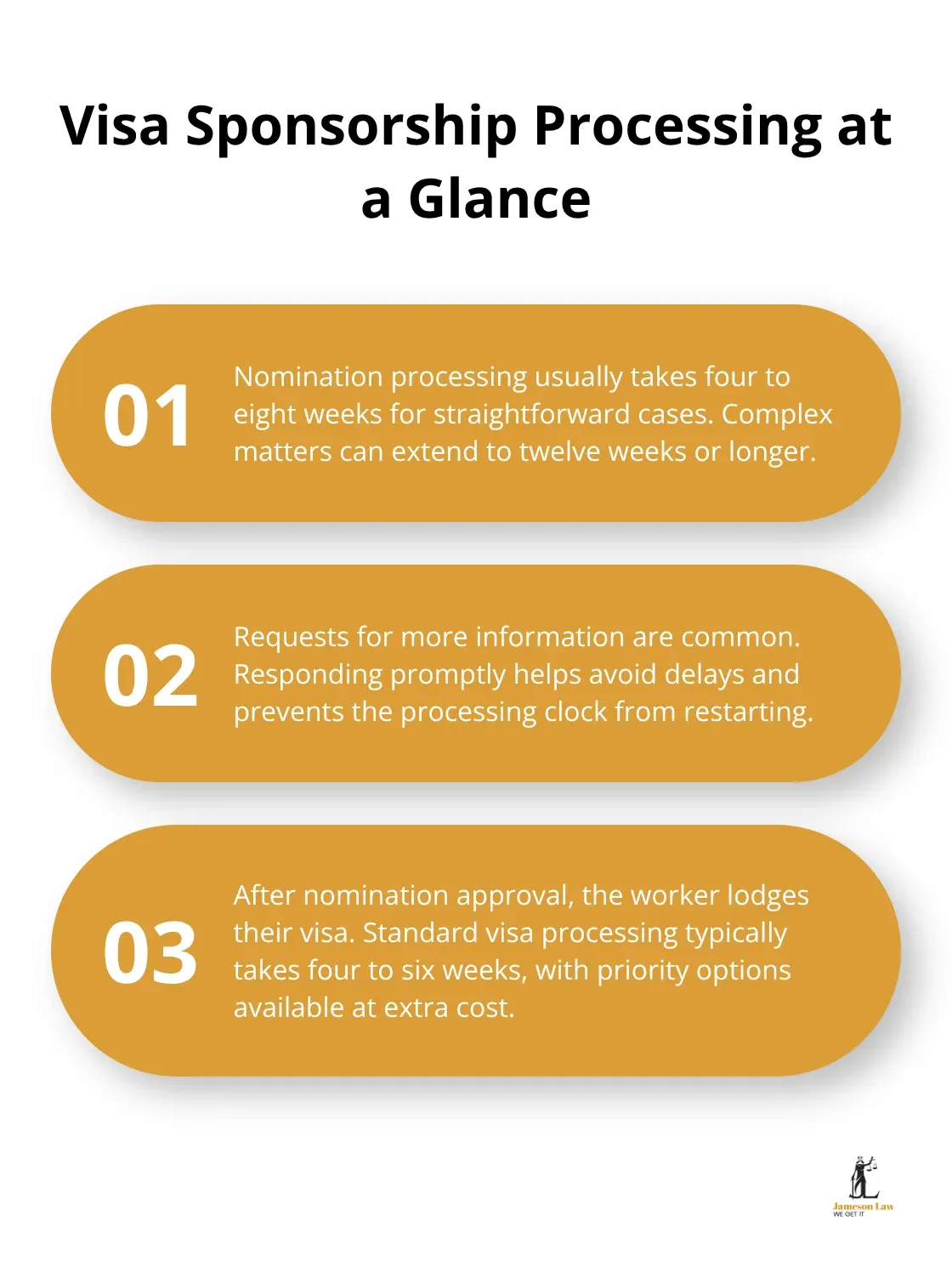
Once your nomination is submitted, expect processing to take between four to eight weeks for straightforward applications, though complex cases can extend to twelve weeks or longer. Home Affairs will contact you if additional documentation is required, and your response timeframe directly impacts how quickly your application progresses.
Many employers miss these requests or respond with incomplete information, which restarts the processing clock. After nomination approval comes the visa application stage, where the individual worker lodges their own application with Home Affairs. This stage typically takes four to six weeks for standard processing, though priority processing options exist for additional cost.
Throughout this entire process, maintain regular contact with Home Affairs through your online account portal rather than attempting phone contact, as the department prioritises written communication. Keep detailed records of every communication, document submission, and approval milestone.
Manage Your Ongoing Sponsorship Obligations
When your sponsorship receives approval, your obligations do not end but intensify. You must notify Home Affairs if the worker’s circumstances change, if they cease employment, or if any breach of sponsorship conditions occurs (these notification requirements are non-negotiable, and failures to comply can result in the penalties mentioned earlier).
The sponsorship approval lasts for the duration of the visa, typically two to four years depending on the visa stream selected. This ongoing compliance responsibility means you cannot treat sponsorship as a one-time administrative task. Understanding these notification requirements and maintaining your compliance framework throughout the sponsorship period protects both your business and the worker. Beyond managing these day-to-day obligations, you also need to understand the financial commitment involved in sponsoring overseas workers.
What Sponsorship Actually Costs Australian Employers
Sponsorship involves far more than visa application fees. The true financial commitment extends across multiple years and includes hidden costs that catch many employers off guard.
Initial Application and Processing Fees
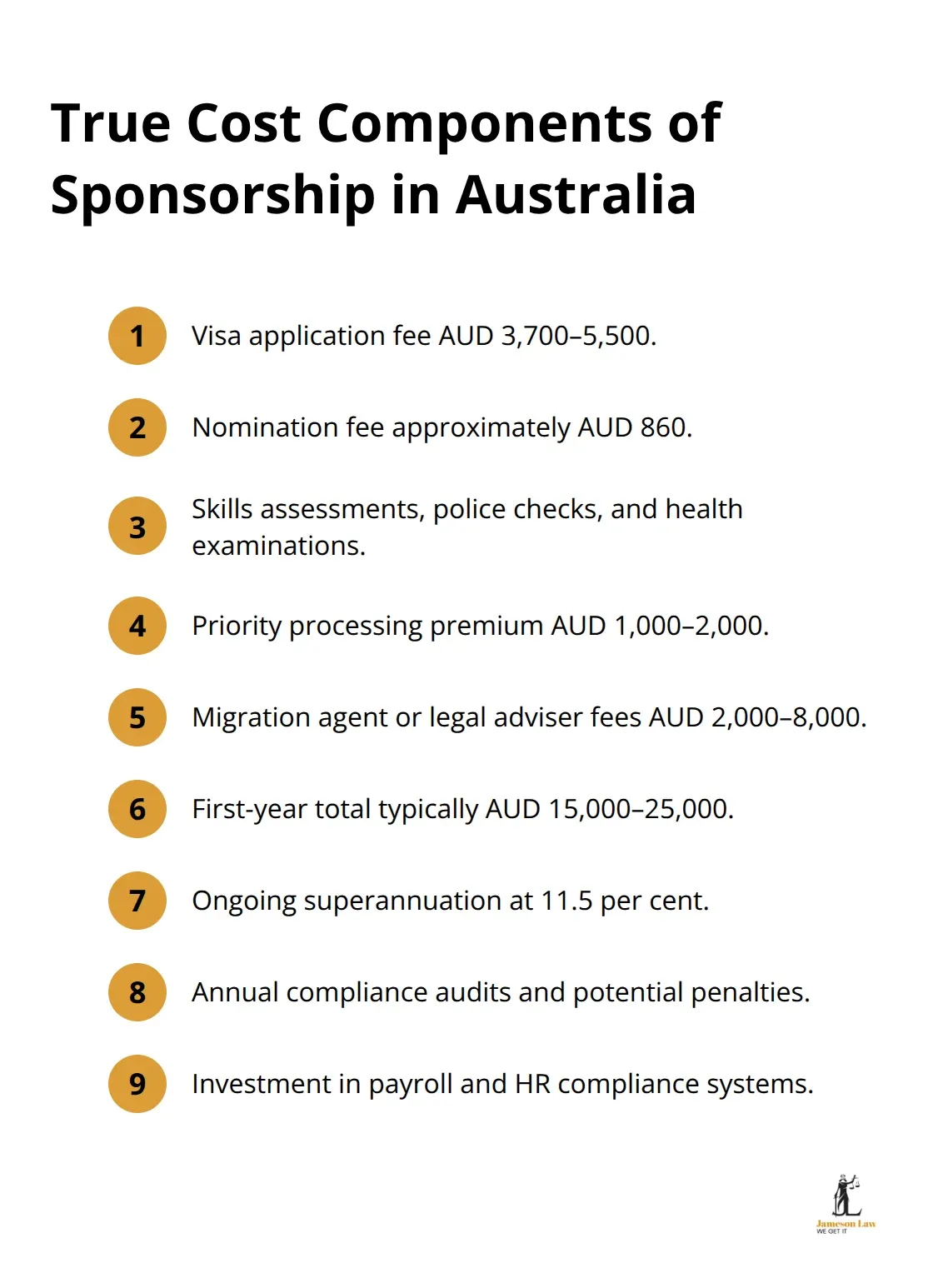
The visa application fee itself ranges from around AUD 3,700 to AUD 5,500 depending on the visa stream and processing option selected, but this represents only a fraction of your total outlay. You will also pay nomination fees of approximately AUD 860, plus costs for skills assessments, police checks, and health examinations that the sponsored worker must complete before visa grant. If you choose priority processing to accelerate applications, you pay an additional premium of AUD 1,000 to AUD 2,000 on top of standard fees.
Many employers also engage migration agents or legal advisers to navigate the application process, adding between AUD 2,000 and AUD 8,000 depending on complexity. Your first-year cost easily reaches AUD 15,000 to AUD 25,000 for a single sponsored worker when you account for these various fees and professional services.
Ongoing Superannuation and Payroll Obligations
You are required to maintain superannuation contributions at the current rate of 11.5 per cent of ordinary time earnings, which applies regardless of whether the worker is temporary or permanent. You must also invest in payroll systems, HR compliance frameworks, and record-keeping infrastructure that meet audit standards. These systems capture detailed records of hours worked, leave taken, and superannuation contributions for the entire sponsorship period.
Your payroll infrastructure must support compliance verification throughout the visa validity period. You cannot simply hire and forget; Home Affairs expects active management of your sponsorship obligations.
Annual Compliance and Audit Costs
Beyond year one, your obligations intensify without proportional cost reductions. You must conduct annual compliance audits to verify you are meeting all sponsorship conditions, including salary benchmarking against current market rates and documentation of any changes to employment circumstances. Home Affairs conducts random audits of employer records, and if you fail to demonstrate compliance, you face financial penalties ranging from AUD 5,000 to AUD 63,000 per breach, with corporate penalties reaching AUD 315,000.
Some employers operate under labour agreements, which require additional regulatory compliance and ongoing reporting obligations to the Department of Employment and Workplace Relations. These agreements typically involve formal negotiations with government and impose stricter wage and conditions requirements than standard sponsorship streams.
Structural Complexity and Enhanced Scrutiny
If your business structure involves trusts or partnerships, you face elevated compliance complexity and heightened scrutiny during audits. The practical reality is that sponsorship demands sustained investment in compliance infrastructure, not merely a one-time administrative process. Your compliance obligations continue throughout the sponsorship period, requiring ongoing attention to regulatory changes and Home Affairs expectations.
Final Thoughts
Visa sponsorship requirements demand sustained commitment across multiple years, not a single administrative task. Your core responsibilities centre on three areas: maintaining salary and employment conditions that match Australian market rates, documenting your recruitment process and compliance framework thoroughly, and notifying Home Affairs immediately when circumstances change. Breaches in any of these areas trigger penalties up to AUD 315,000 for corporations, making compliance non-negotiable.
The most common pitfall we see is employers underestimating the documentation burden. Home Affairs conducts random audits, and vague records result in failed compliance checks. Another frequent mistake is treating visa sponsorship as a one-time process rather than an ongoing obligation lasting the full visa term. Employers also miscalculate total costs by focusing only on initial application fees while ignoring superannuation contributions, compliance audits, and payroll infrastructure investments across multiple years.
If you are considering visa sponsorship, start by confirming your business eligibility with the Australian Business Register and assess whether your budget accommodates the full financial commitment. Engage professional guidance early to structure your sponsorship correctly from the outset. Contact Jameson Law to discuss your sponsorship obligations and ensure your compliance framework meets Home Affairs expectations.