Legal costs shouldn’t stop you from pursuing a claim you deserve to win. A no win fee NSW arrangement lets you take action without paying your lawyer upfront, shifting the financial risk to us instead.
At Jameson Law, we’ve helped countless clients understand how these agreements actually work and whether they’re the right fit for your situation. This guide breaks down everything you need to know about contingency arrangements under NSW law.
Understanding No Win No Fee Arrangements in NSW
What a No Win No Fee Agreement Actually Means
A no win no fee agreement is a conditional fee arrangement where your lawyer only receives payment if your case succeeds. Under the Legal Profession Uniform Law (NSW), Chapter 3 of the Professional Conduct and Practice Rules governs these arrangements. The structure works like this: you pay nothing upfront, nothing during the case, and nothing if you lose. If you win, your lawyer takes a success fee from the money recovered, typically between 20% and 50% depending on the case complexity and risk involved.
This differs fundamentally from traditional hourly billing where you pay regardless of outcome. Your lawyer absorbs the financial risk, which means they carefully assess whether to take your case before committing resources. Cases with weak prospects rarely get accepted under no win no fee arrangements because lawyers won’t invest time and money into claims unlikely to succeed.
How NSW Law Regulates These Arrangements
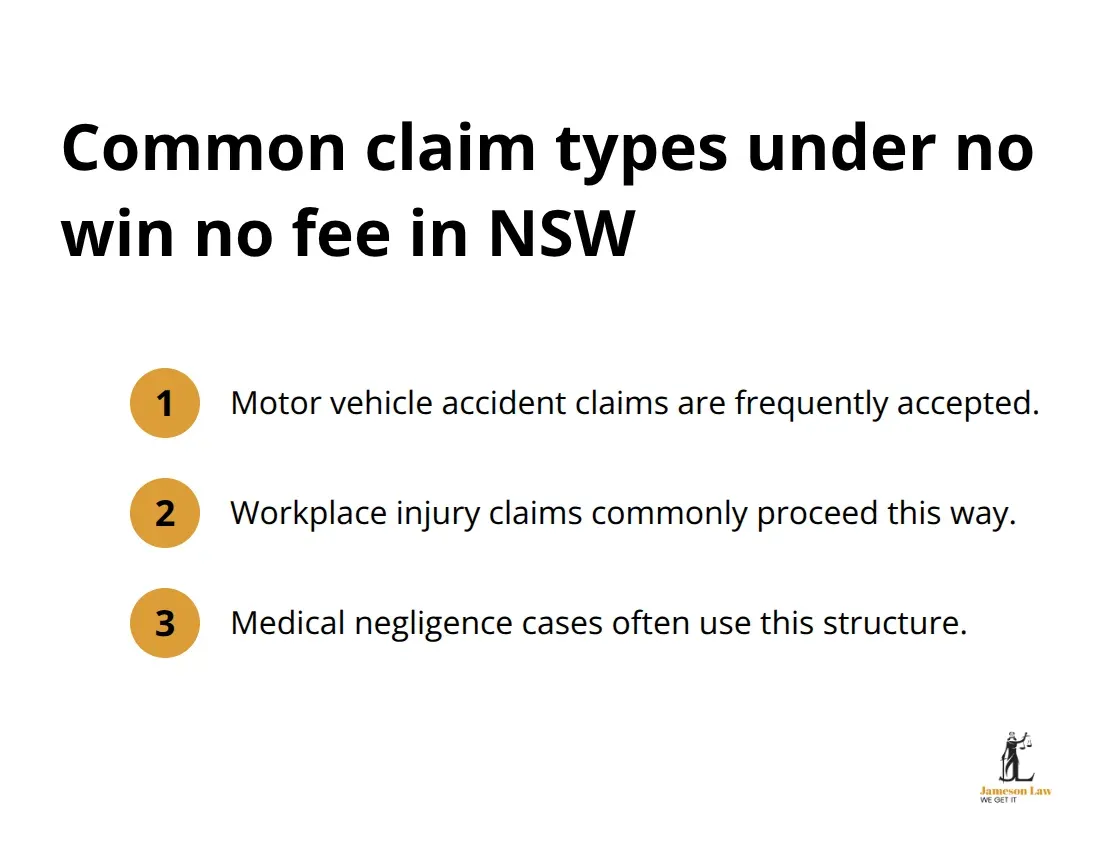
NSW law permits no win no fee arrangements for most civil claims, with personal injury cases being the most common. Motor vehicle accident claims, workplace injury claims, and medical negligence cases regularly proceed under these arrangements. However, family law matters and criminal defence cases cannot operate under no win no fee structures-these require traditional fee arrangements.
The Legal Services Commissioner in NSW has established clear guidelines about what success fees are reasonable. They must be proportionate to the work involved and risk undertaken. This regulatory framework protects you from excessive fees while allowing lawyers to charge fairly for the risk they accept.
Disbursements and Costs You May Still Owe
Disbursements and out-of-pocket expenses like court filing fees, expert reports, and investigation costs operate separately from success fees. You may be liable for these even if your case is unsuccessful, though many firms offer protection through legal expense insurance or staged cost arrangements.
Understanding this distinction matters because a successful outcome doesn’t automatically mean you owe nothing. Your lawyer’s success fee comes from your recovery, but disbursements represent actual expenses paid to third parties (court registries, medical experts, investigators). These costs exist regardless of whether you win or lose.
Why Lawyers Accept These Arrangements
Your lawyer’s willingness to accept a no win no fee arrangement signals genuine confidence in your claim. They stake their time, resources, and money on the outcome. This professional judgement on the line means they’ve assessed your case seriously and believe it has real prospects of success. A lawyer who declines to take your case under this arrangement is sending an important message about its viability.
This alignment of interests creates accountability. Your lawyer’s financial incentive matches yours-both parties benefit only when you recover compensation. The arrangement filters out weak claims naturally because no rational lawyer invests in cases unlikely to succeed.
Evaluating Whether This Arrangement Suits Your Situation
Before proceeding with a no win no fee arrangement, consider what it reveals about your claim’s strength. The fact that a lawyer accepts these terms suggests your case has genuine prospects. However, you should still ask detailed questions about success fee percentages, what costs you might owe, and how your lawyer calculates the final fee.
Different cases carry different risks, which is why success fees vary. A straightforward motor vehicle accident claim with clear liability might attract a lower fee (20–30%), while a complex medical negligence case with multiple defendants could reach 40–50%. These variations reflect the actual work and uncertainty involved. Understanding this helps you evaluate whether the arrangement is fair for your specific situation and whether you want to explore how disbursements and cost protection work in your particular case.
Why No Win No Fee Actually Works in Your Favour
Financial Risk Shifts to Your Lawyer
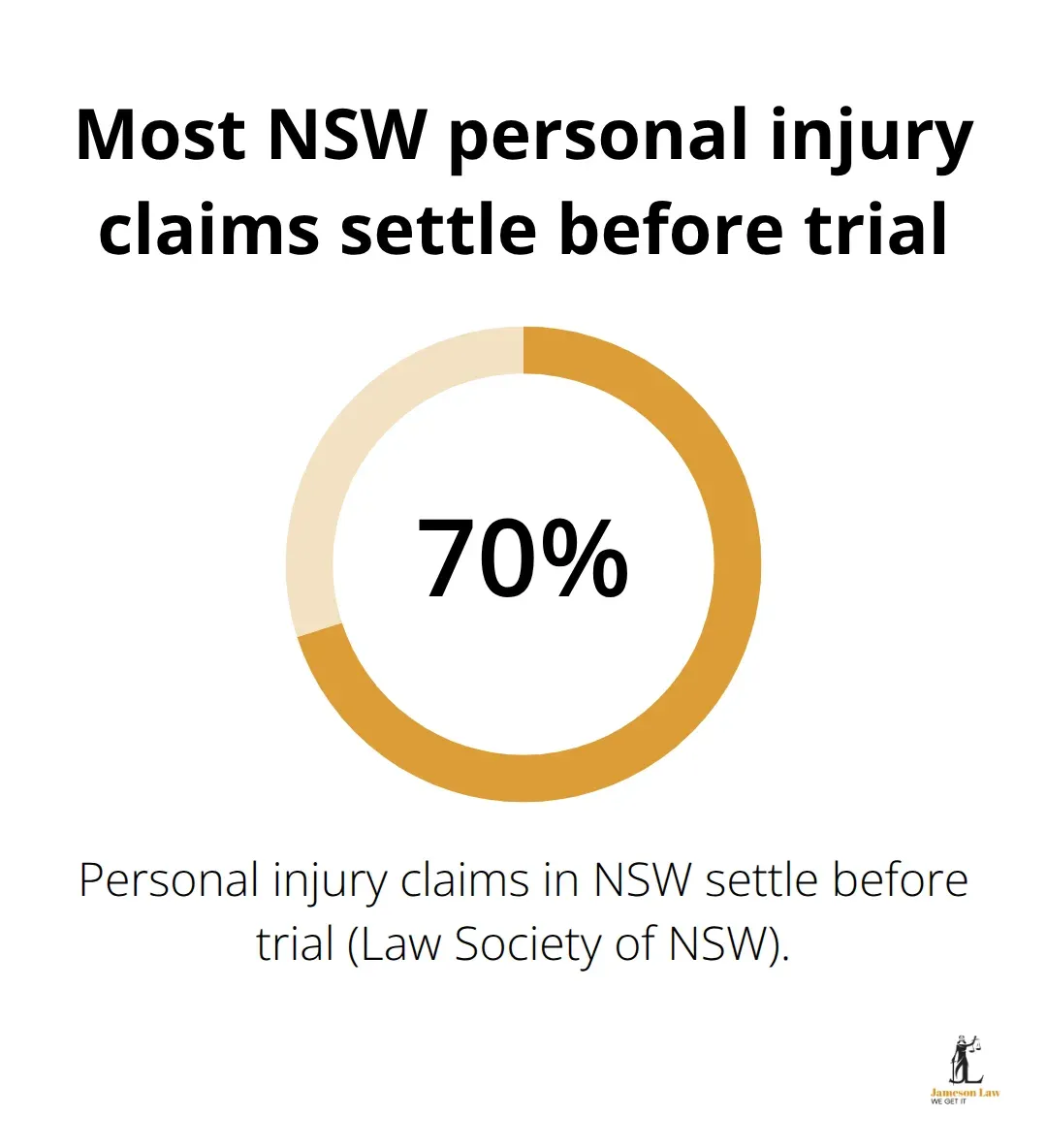
The no win no fee arrangement fundamentally shifts financial risk from you to your lawyer, which means you can pursue a legitimate claim without gambling your savings on legal fees. This structure removes the biggest barrier preventing people from accessing justice: the fear of accumulating legal costs regardless of outcome. In NSW, around 70% of personal injury claims settle before trial according to data from the Law Society of NSW, which means most cases resolve without expensive court proceedings.
Your lawyer absorbs the upfront costs for investigation, expert reports, and case preparation knowing they only recoup these expenses if your claim succeeds.
How Alignment of Interests Protects You
This alignment matters because it forces your lawyer to make a genuine assessment of your case’s viability before accepting it. A lawyer who agrees to take your case on no win no fee terms has already decided your claim has real prospects of success-they won’t bet on a weak case because the financial consequence falls entirely on them if they lose. The risk allocation also protects you from being pressured into accepting inadequate settlements. Since your lawyer only gets paid from your recovery, they have every incentive to maximise your compensation rather than rush through a quick settlement.
Unlike hourly billing arrangements where lawyers might encourage prolonged disputes to accumulate billable hours, your lawyer under a no win no fee arrangement wants to resolve your case efficiently at the best possible outcome. This creates genuine accountability between you and your legal team.
Understanding What You Still Owe
If your case is unsuccessful, you owe nothing to your lawyer for their work, though you remain responsible for disbursements like court fees and expert reports depending on the specific terms of your agreement. This distinction matters because losing your case doesn’t create a double loss of both compensation and legal fees, which is precisely what makes this arrangement accessible for ordinary Australians pursuing legitimate claims.
Understanding what disbursements you might owe before signing your agreement protects you from unexpected costs. Some firms offer staged cost arrangements or legal expense insurance to protect you against these expenses. The key advantage remains that your lawyer’s financial interests align with yours-both parties benefit only when you recover compensation.
What Happens With Your Recovery
When your case succeeds, your lawyer takes a success fee from the money recovered. This percentage reflects the actual work undertaken and uncertainty involved in your particular claim. A straightforward motor vehicle accident claim with clear liability might attract a lower fee, while a complex medical negligence case with multiple defendants could reach a higher percentage. These variations ensure the arrangement remains fair for your specific situation.
Before you sign any agreement, ask detailed questions about success fee percentages, what costs you might owe, and how your lawyer calculates the final fee. This conversation reveals whether the arrangement suits your circumstances and prepares you for understanding how disbursements and cost protection work in your particular case-details that become important as you move forward with your claim.
What You’ll Actually Pay Beyond the Success Fee
Disbursements: The Costs That Sit Separate From Legal Fees
Disbursements represent real money spent on your case that sits entirely separate from your lawyer’s success fee. Court filing fees, expert medical reports, investigation costs, and serving documents on the other party all fall into this category. These expenses exist whether you win or lose, and here’s where many people get caught off guard: you may remain liable for them even if your case fails. The Law Society of NSW distinguishes clearly between legal fees (what your lawyer charges for their work) and disbursements (third-party costs), and this distinction fundamentally changes what you owe at the end.
A medical negligence claim typically requires expert reports from specialists. Court filing fees in the District Court range from $500 to $1,500 depending on the claim value. If your case involves multiple defendants or complex liability issues, you might need investigation reports costing $1,000 to $3,000. These numbers add up quickly, and they represent actual money paid to external providers, not your lawyer’s pocket.
How Cost Protection Works in Practice
Some firms offer legal expense insurance that covers these costs if your case is unsuccessful, while others use staged cost arrangements where you pay disbursements as they’re incurred. Ask specifically whether your firm protects you against these expenses before signing your agreement, because this protection matters more than the success fee percentage in determining your true financial exposure. This conversation takes 15 minutes and eliminates confusion when your case concludes.
Success Fees: Why They Vary So Much
Success fees vary dramatically based on case complexity and risk, and understanding how your lawyer calculates this matters because it directly impacts your final recovery. A straightforward motor vehicle accident with clear liability and cooperative insurance company might attract a 20 to 30 percent success fee because the lawyer faces minimal risk and the case resolves relatively quickly. A contested medical negligence claim with multiple defendants, complex causation issues, and trial risk could reach 40 to 50 percent because your lawyer invests substantially more time and faces genuine uncertainty about outcome.
The Professional Conduct and Practice Rules under the Legal Profession Uniform Law require success fees to be reasonable and proportionate to the work involved, which means your lawyer must justify their percentage based on actual risk and effort. Before you commit to any arrangement, ask your lawyer to explain specifically why they’ve quoted their particular percentage and what factors drove that number. A lawyer quoting 50 percent on a straightforward car accident claim is signalling they either don’t understand your case’s simplicity or they’re overcharging, and you should seek a second opinion. The percentage should reflect genuine complexity and risk, not arbitrary pricing.
When You Remain Liable for Costs
Circumstances where you still owe costs despite having a no win no fee agreement typically centre on whether you breach the agreement terms or whether the case settles unfavourably. If you withdraw from your case without reasonable cause, you may become liable for disbursements already incurred because your lawyer has already paid these third parties. Some agreements include provisions where you remain liable for costs if you reject a reasonable settlement offer, though this varies considerably between firms.
More importantly, your lawyer’s success fee comes from your recovery, which means if you win $50,000 but owe $10,000 in disbursements, your lawyer’s 30 percent success fee applies to the full $50,000, not the net amount after expenses. Understanding this distinction prevents surprises when your settlement arrives. Ask your lawyer to provide a written breakdown of what disbursements you’re responsible for, under what circumstances you might owe them, and whether any insurance or cost protection applies.
Final Thoughts
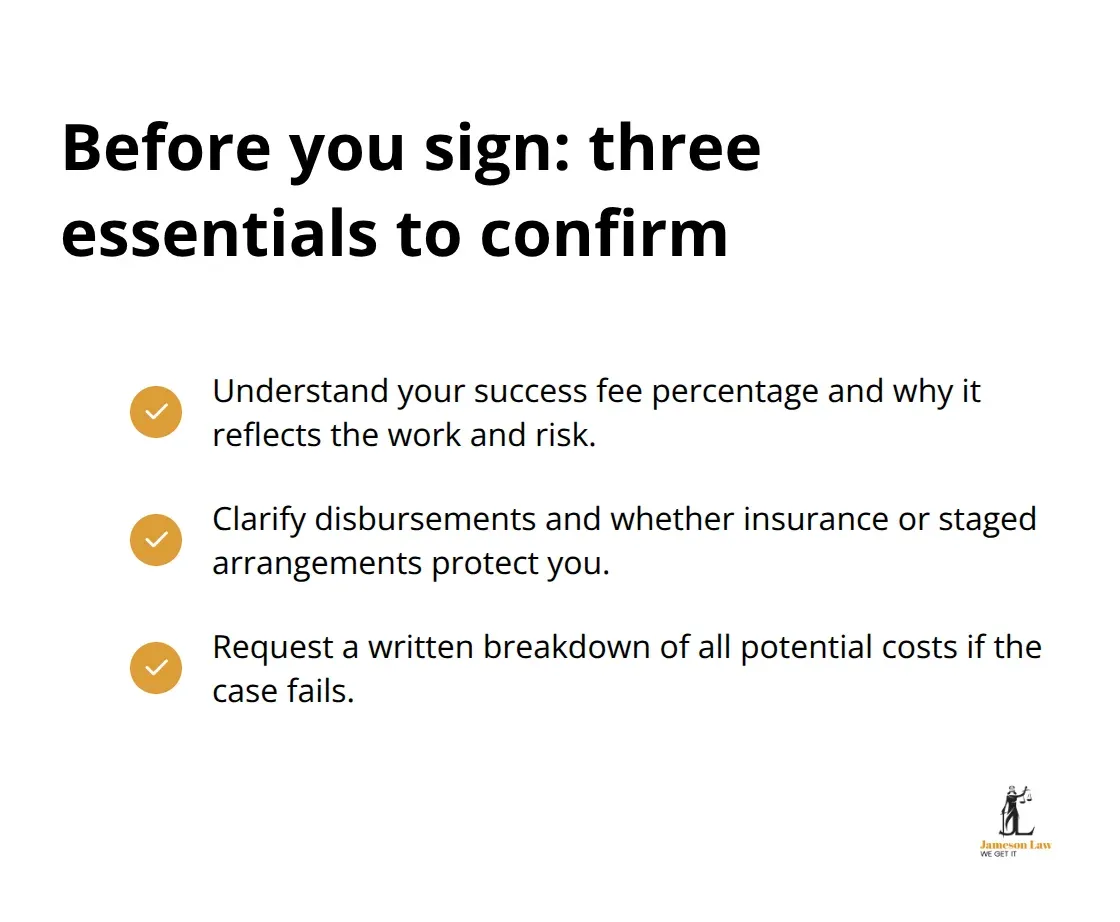
A no win fee NSW arrangement removes the financial barrier that stops most people from pursuing legitimate claims. Your lawyer’s willingness to accept these terms signals real confidence in your claim, and the alignment of financial interests protects you from pressure to accept inadequate settlements. Before committing to any arrangement, confirm three things: understand exactly what success fee percentage applies to your case and why that specific number reflects the actual work and risk involved, clarify what disbursements you might owe and whether cost protection through insurance or staged arrangements applies, and ask for a written breakdown of all potential costs so you know precisely what you’re responsible for if your case fails.
The no win no fee structure works best for personal injury claims with clear liability and quantifiable damages (motor vehicle accidents, workplace injuries, and medical negligence cases typically proceed smoothly under these arrangements because the legal issues are relatively straightforward and settlement prospects are strong). If your situation involves complex liability questions or multiple defendants, expect higher success fees that reflect the genuine additional risk your lawyer undertakes. Contact Jameson Law to discuss your specific situation and get clear answers about costs, fees, and what to expect as your claim progresses.