


Parenting arrangements after separation can feel overwhelming, but understanding your options under NSW family law makes the process clearer. Courts prioritise what’s best for your child, and there are several pathways to establish formal arrangements that work for your family.
We at Jameson Law help parents navigate these decisions every day. This guide walks you through the types of arrangements available, how the Family Court process works, and what factors judges consider when making orders.
What Parenting Arrangements Can You Choose in NSW
Sole Parenting and Primary Care
Sole parenting gives one parent primary decision-making authority and day-to-day care, though the other parent typically retains contact rights unless the court determines otherwise. This arrangement works when one parent has been the primary carer, when safety concerns exist, or when parents cannot cooperate on major decisions. The Family Court takes sole arrangements seriously and will not grant them simply because one parent requests it. Courts require evidence that shared parenting would harm the child’s wellbeing.
Shared Parenting and Equal Time
Shared parenting means both parents have equal or substantially equal time with the child and make major decisions together. Research shows children in shared parenting arrangements report positive outcomes when both parents cooperate effectively. However, shared parenting demands genuine cooperation on schooling, health, and discipline. Many parents underestimate how much coordination this requires, leading to ongoing conflict that affects children more than an unequal arrangement would.
Flexible Arrangements That Fit Real Life
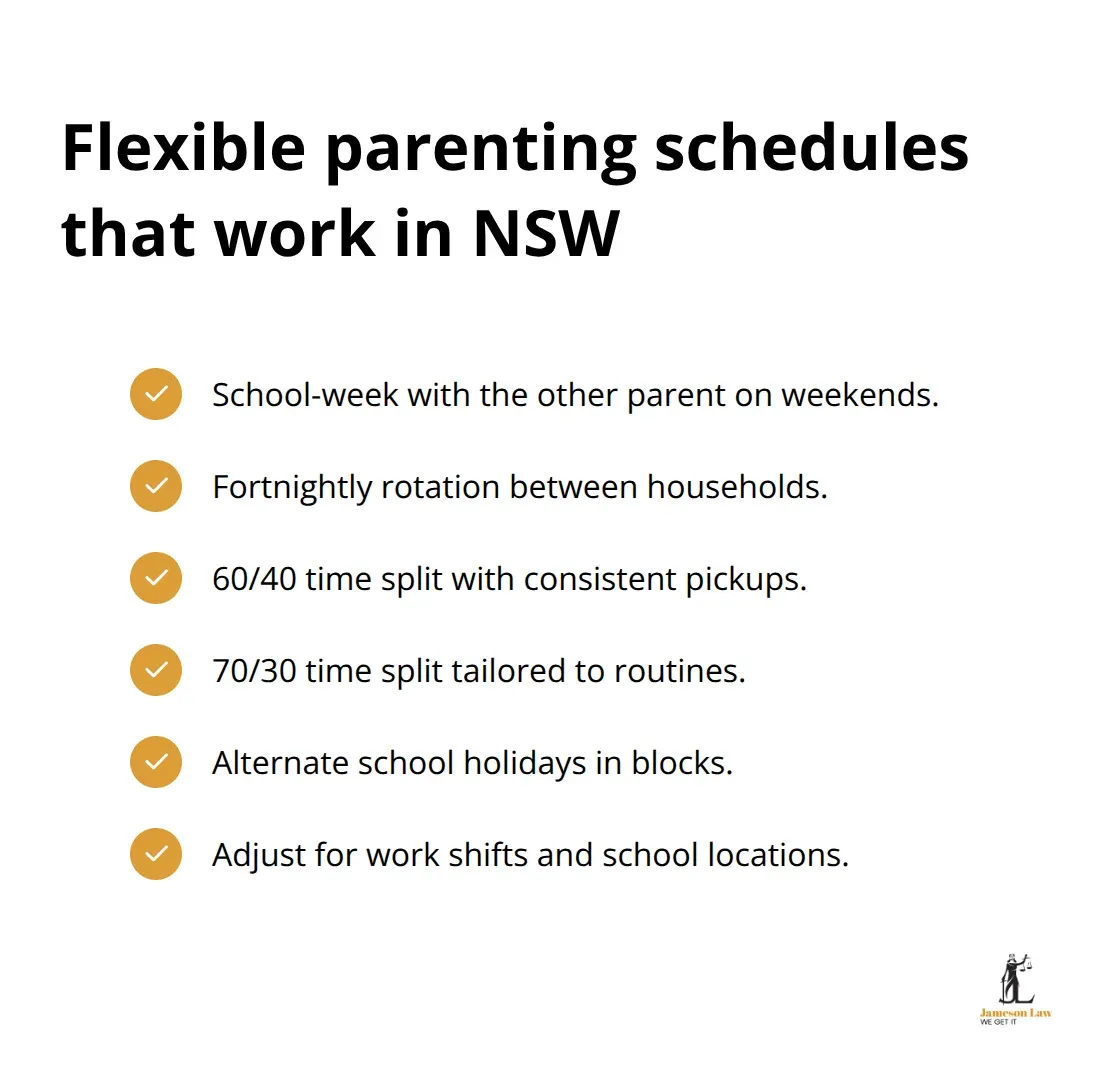
Flexible arrangements sit between these extremes and represent what most NSW families actually use in practice. One parent might have the child during the school week while the other has weekends and school holidays, or arrangements might alternate between parents on a fortnightly basis. Some families use a 60-40 split, others 70-30, depending on work commitments, school locations, and each parent’s capacity to provide care.
The critical point is that courts will not impose an arrangement simply because it sounds fair on paper. Your child’s age matters significantly. Infants and very young children need consistency and frequent contact with both parents, which can make rigid schedules problematic. Primary school-aged children generally manage regular transitions between households better. Teenagers often have stronger preferences about arrangements, though courts do not automatically follow their wishes.
Practical Factors That Courts Assess
Geographic distance affects what works too. If parents live close together, more frequent transitions become practical. If one parent lives hours away, weekly swaps become impossible. A parent working shift work cannot maintain a fixed schedule. A parent relying on public transport struggles with inflexible pickup times. The strongest arrangements match your actual life, not an idealised version of it.
Courts expect you to demonstrate that your proposed arrangement is genuinely workable, not just theoretically sound. The Family Court process requires you to show how your arrangement will function in practice, which is why understanding what happens next in the court system matters for your case.
Getting Your Parenting Order Through the Family Court
Start with Family Dispute Resolution, Not Court
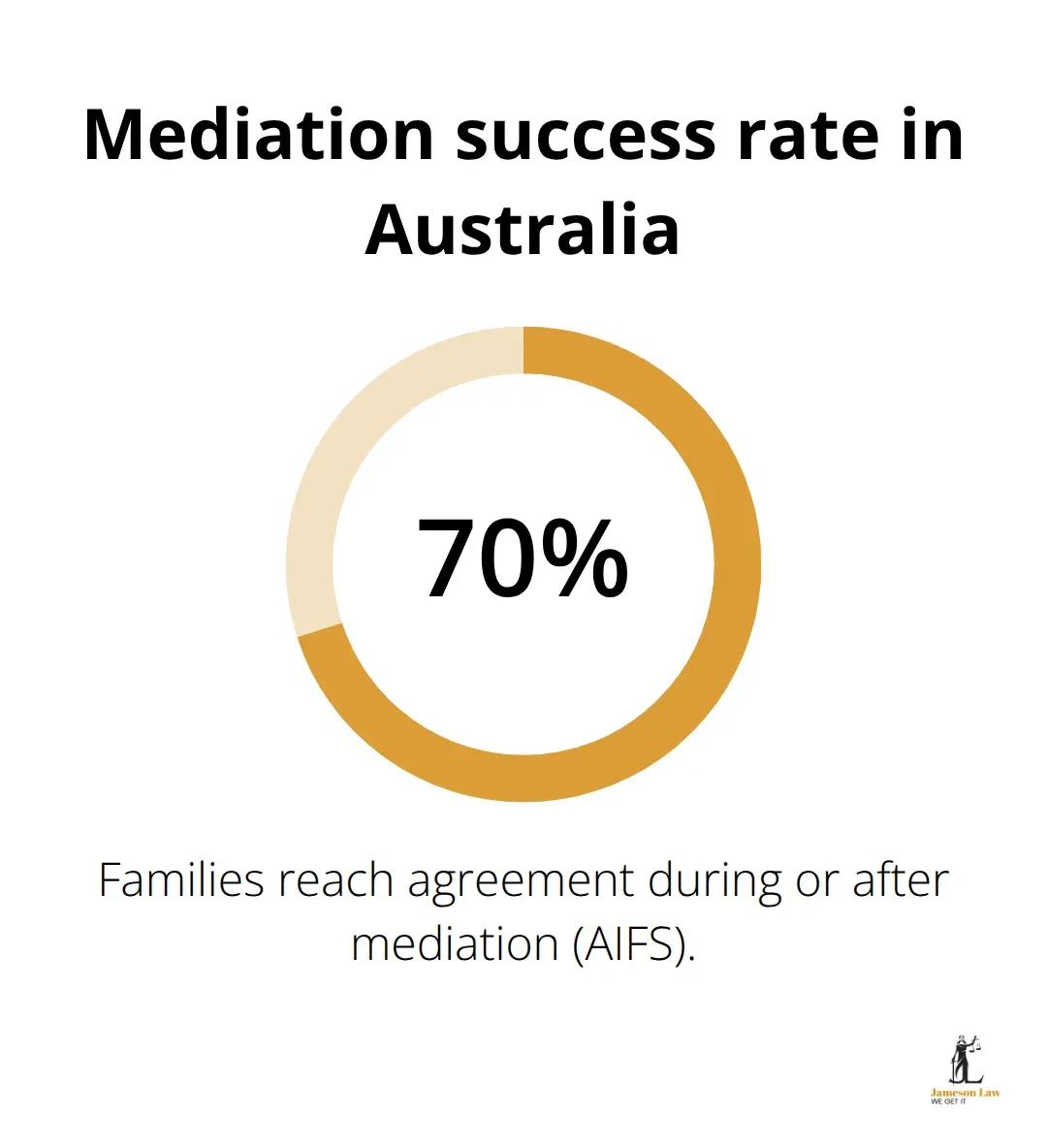
Starting court proceedings is not something parents should rush into, and the Family Court system in NSW recognises this. Before you file anything, you must attempt to resolve parenting disputes through family dispute resolution, which is a legal requirement under the Family Law Act 1975. This step filters out cases that can be resolved without court involvement. According to the Australian Institute of Family Studies, approximately 70% of families reach agreement during or after mediation, which means court hearings become unnecessary.
If you proceed to court without attempting genuine resolution first, judges view this negatively and it affects how they perceive your willingness to cooperate as a parent. The court filing itself costs around $500 to $700 in court fees alone, and legal representation typically runs $3,000 to $10,000 or more depending on case complexity. Uncontested matters are far cheaper than contested ones.
Understanding the Court Timeline and Costs
The actual court process takes between 6 to 12 months from filing to final orders in most NSW cases, though complex disputes involving safety concerns or interstate complications extend this timeline significantly. You need to file an Application for Parenting Orders at your local Family Court or Federal Circuit Court, which requires detailed information about your proposed arrangements, the child’s needs, and why you believe your arrangement serves the child’s best interests.
How Mediation Works in Practice
Mediation and alternative dispute resolution exist specifically to prevent families from spending six figures on court battles. A Family Dispute Resolution Practitioner, accredited under the Family Law Act, guides both parents toward workable solutions outside court. These sessions typically cost $200 to $500 per hour depending on the practitioner’s experience, which is substantially cheaper than court.
The Family Court expects you to participate genuinely in mediation. If you attend sessions but refuse to negotiate meaningfully, the court interprets this as unreasonable behaviour. Bring specific, workable proposals to mediation rather than broad positions. Instead of saying you want the child 50% of the time, explain exactly which days, pickup times, and school holiday arrangements work with your job and location. Mediators help translate emotional positions into functional schedules.
If mediation succeeds, you can consent to parenting orders without a court hearing, which saves time and money. If mediation fails, the court has evidence of your attempt, and the judge understands which issues remain genuinely contested.
Enforcing Parenting Orders
Once the court makes final parenting orders, enforcement becomes critical. If a parent breaches the orders, you can apply to the court for enforcement action. The court can impose penalties, modify the orders, or in serious cases, refer the matter to child protection authorities. Most breaches occur when one parent refuses to return the child after scheduled time or fails to facilitate the other parent’s contact.
The Family Court takes these breaches seriously because they directly harm the child’s relationship with both parents. Understanding what factors judges actually weigh when making these orders helps you present your case more effectively and anticipate what the court will scrutinise most closely.
What Judges Actually Look at When Making Parenting Decisions
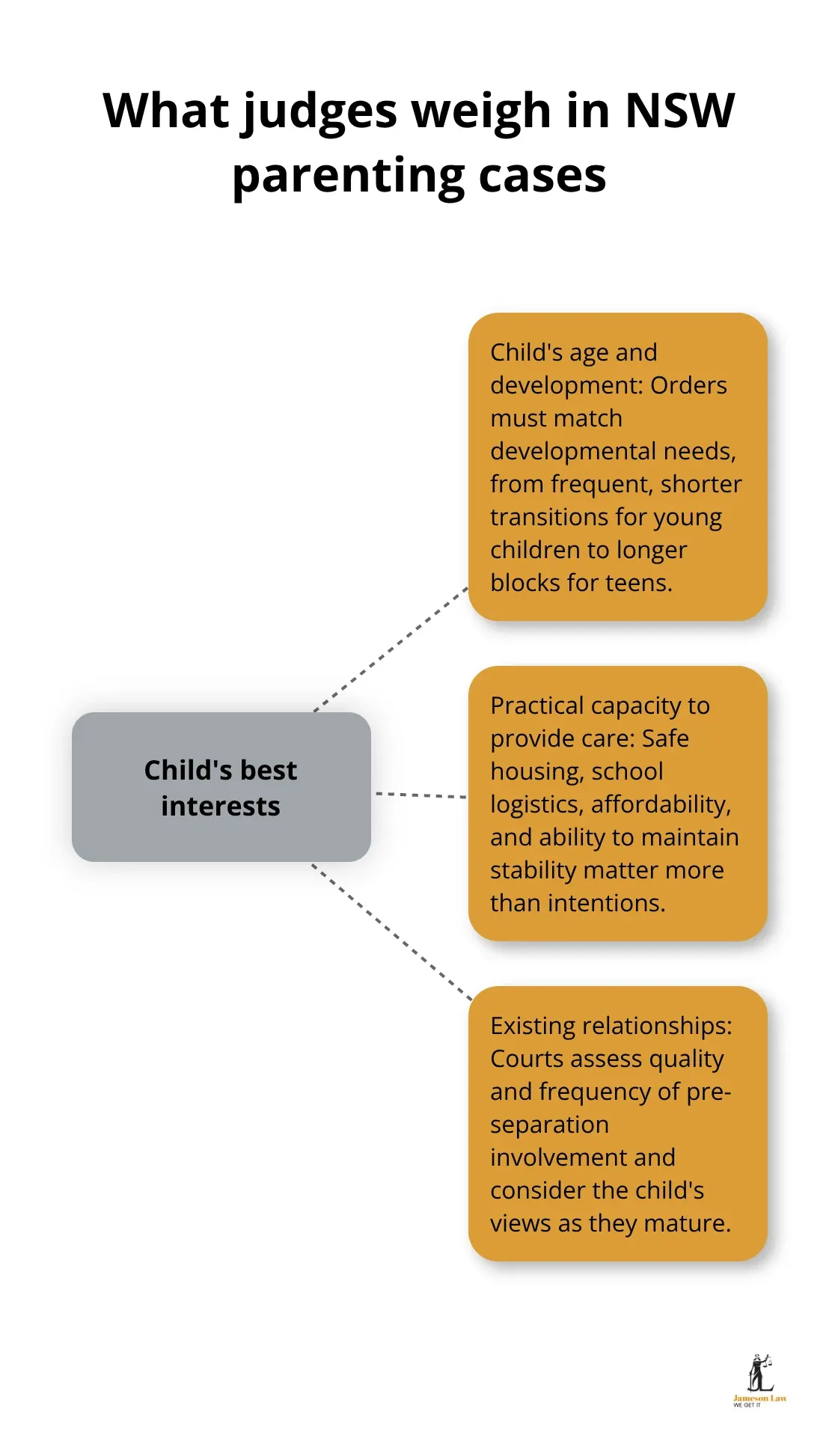
NSW courts apply the Family Law Act 1975 consistently, but what this means in practice differs significantly from what many parents assume. Judges do not split time down the middle just because both parents want equal access. Courts do not automatically favour mothers or penalise fathers. Instead, judges assess three interconnected factors that determine whether your proposed arrangement serves your child’s genuine interests rather than your preferences as a parent.
Understanding exactly what courts scrutinise helps you build a stronger case and avoid wasting time on arrangements that will not survive judicial scrutiny.
Your Child’s Age and Developmental Needs
The Family Court’s primary test centres on what serves your child’s best interests, a phrase that sounds straightforward but operates as a complex assessment framework. Courts examine your child’s age, health needs, educational requirements, and emotional stability first. A five-year-old needs consistency and frequent contact with both parents, which typically means shorter transition periods and predictable schedules. A fifteen-year-old often manages extended time away from one parent and may spend weeks at a time in one household.
Courts look at whether your proposed arrangement matches your child’s developmental stage, not whether it feels fair to you. If you want your child 50% of the time but your child is two years old and has never spent overnight away from the primary carer, courts will reject this proposal regardless of your legal entitlements. They will instead order arrangements that gradually build your relationship while maintaining stability.
Your Practical Capacity to Provide Care
Each parent’s practical capacity to meet the child’s needs matters far more than your intentions. Courts examine whether you can actually provide safe housing, manage school pickups and drop-offs, afford necessary expenses, and maintain your child’s existing friendships and activities. A parent working night shifts cannot maintain a standard school-week schedule. A parent with untreated mental health conditions affecting their capacity to supervise safely will not receive unsupervised overnight care. A parent with a criminal history involving violence will face court scrutiny around safety.
Courts obtain detailed information through affidavits, witness statements, and sometimes independent assessments. If your proposed arrangement requires childcare you cannot afford or school pickups you cannot manage due to work commitments, the court will modify your proposal. Courts also consider whether each parent has demonstrated commitment to the child’s relationship with the other parent. A parent who withholds contact, speaks negatively about the other parent, or moves interstate without consulting the other parent signals unwillingness to facilitate the child’s relationship with both parents. This significantly damages their case.
Your Child’s Existing Relationships with Each Parent
Your child’s relationship with each parent forms the final assessment pillar. Courts examine the quality and frequency of contact before separation, how each parent has engaged with the child’s schooling and activities, and whether the child has formed strong attachments to each parent. A parent who attended every school event, knew the child’s friends, and spent regular time on homework and activities has stronger grounds for substantial contact than a parent who saw the child primarily on weekends.
Courts do not penalise working parents who were the secondary carer before separation, but they do expect that parent to demonstrate genuine engagement and commitment. If you propose a dramatic increase in contact after years of minimal involvement, courts require evidence of why the change serves the child’s interests rather than your interests. A child’s own preferences gain weight as they age, though courts do not automatically follow a teenager’s wishes if doing so would harm their wellbeing or remove necessary structure.
Final Thoughts
NSW family law parenting arrangements centre on one principle: your child’s wellbeing comes before your preferences. Courts reject arrangements that sound fair in theory but fail in practice, and judges examine three interconnected factors when evaluating your case-your child’s age and developmental stage, each parent’s practical capacity to meet the child’s needs, and the quality of your child’s existing relationships with both parents. Your intentions matter far less than your demonstrated actions, and a parent who has been minimally involved cannot suddenly claim equal time without evidence of genuine commitment.
Child-centred decision making is not a slogan courts use-it is the framework that determines outcomes. Your child’s stability, safety, and relationships with both parents drive every order the court makes, and successful arrangements emerge from honest assessment of your work schedule, your child’s age, geographic distance between households, and your genuine commitment to your child’s relationship with the other parent. Mediation and family dispute resolution filter out cases that do not require court involvement, saving families thousands of dollars and months of conflict.
If you are navigating family law parenting arrangements after separation, Jameson Law can guide you through your options and help you present your case effectively. Our experienced family law practitioners understand NSW courts and what judges actually prioritise. Contact us to discuss your situation with a team that knows how to build stronger cases and create arrangements that work for your family.