


Facing a bail application can feel overwhelming, especially if you’re unsure of your legal protections. At Jameson Law, we’ve helped countless clients navigate bail proceedings in NSW, and we know that understanding your bail rights is the first step toward protecting your interests.
This bail rights NSW guide walks you through what happens during bail applications, what you’re entitled to, and how bail conditions work in practice.
How Bail Works in NSW
Bail in NSW is fundamentally about release from custody while awaiting trial or court proceedings. When you’re arrested, police have limited time to hold you. Under NSW law, they must either charge you and bring you before a court, or release you. If charged, the court decides whether you’ll be released on bail or remain in custody. The bail system isn’t about punishment-it’s about managing risk while protecting community safety. Courts consider whether you’re likely to appear in court, commit further offences, or interfere with witnesses. Since 2018, NSW courts have also assessed whether bail conditions can adequately protect the community. This shift means bail decisions now involve more detailed risk assessment than they previously did.
Types of Bail Available
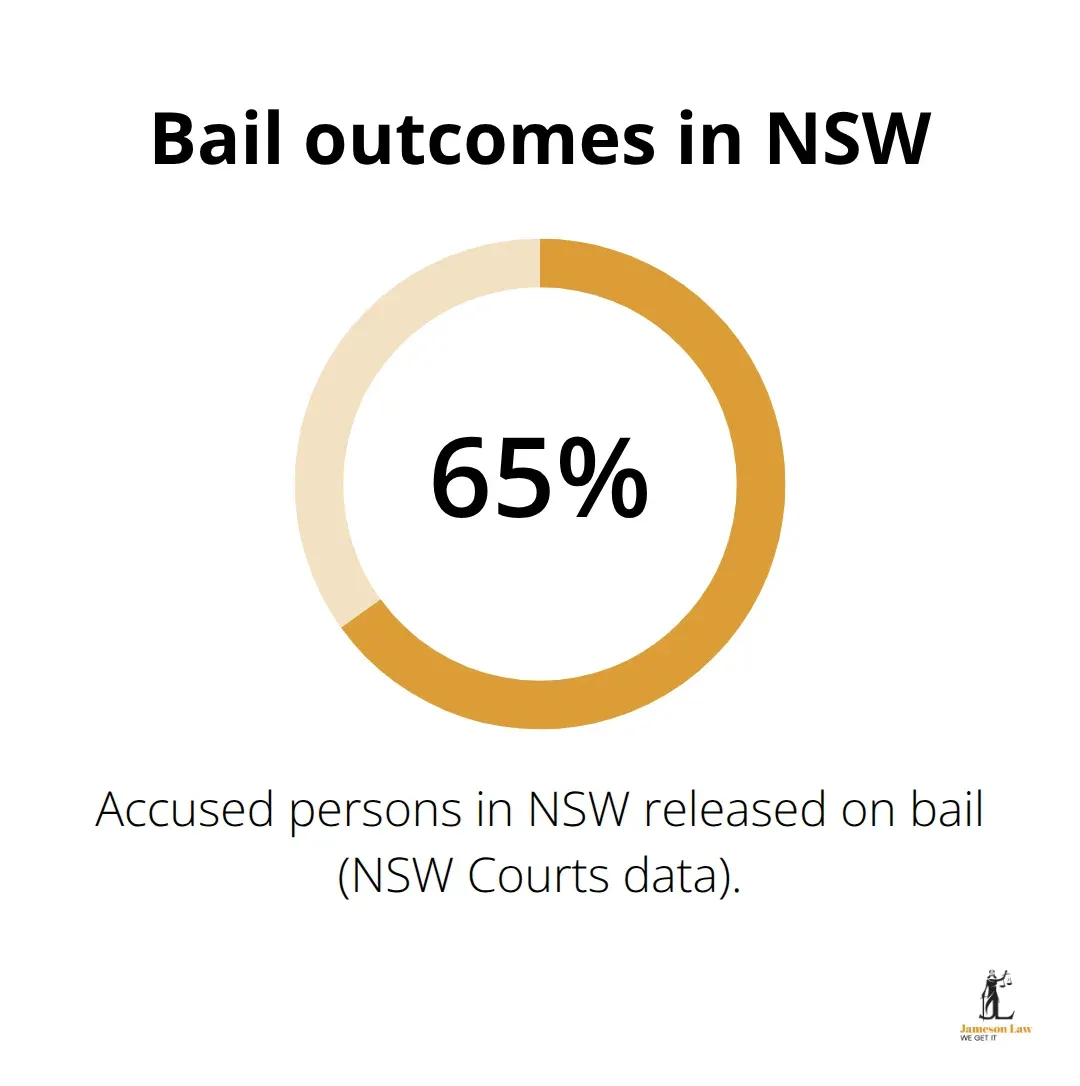
NSW courts have several bail options at their disposal. Unconditional bail means you’re released without restrictions-you simply must appear in court on your scheduled date. This is relatively rare and typically granted when courts see minimal risk. Conditional bail is far more common and comes with specific requirements you must follow, such as reporting to police, residing at a particular address, or avoiding contact with certain people. Bail with a surety involves another person guaranteeing your release by pledging money, which they lose if you breach bail conditions or fail to appear. Refused bail means you remain in custody, and this decision can only be made if the court is satisfied that refusing bail is necessary to protect community safety, ensure you appear in court, or prevent further offences. The Bail Act 2013 sets strict criteria courts must apply, making bail refusal relatively difficult to justify. In practice, around 65 per cent of accused persons in NSW are released on bail according to NSW Courts data, though this varies significantly by offence type and individual circumstances.
Who Makes the Decision
Bail decisions flow through specific channels depending on where you are in the process. Local courts handle initial bail applications for most offences and make the vast majority of bail decisions in NSW. If you’re charged with a serious crime, you may appear in District or Supreme Court, where bail decisions follow similar legal principles but involve more complex considerations. Police have limited authority-they can release you on police bail immediately after arrest, but this is typically only for minor matters. If police refuse to release you, a court must bring you before it within specific timeframes. For serious offences, this occurs within 24 hours; for less serious matters, it may be longer. Importantly, bail decisions aren’t final. You can apply to have bail conditions modified or to challenge a bail refusal, and prosecutors can also apply to have bail revoked if circumstances change. This flexibility means bail remains subject to adjustment throughout proceedings rather than being a one-time determination.
What Happens Next in Your Application
The court process moves quickly once you appear before a magistrate or judge. The prosecution presents information about the charges and your background, while you (or your legal representative) have the opportunity to respond. The court then applies the legal test under the Bail Act 2013 to decide whether to grant bail and, if so, what conditions to impose. Understanding your specific rights during this application stage is essential, as the decisions made at this point directly affect your freedom and the conditions you’ll live under while awaiting trial.
Your Rights During a Bail Application
Right to Legal Representation
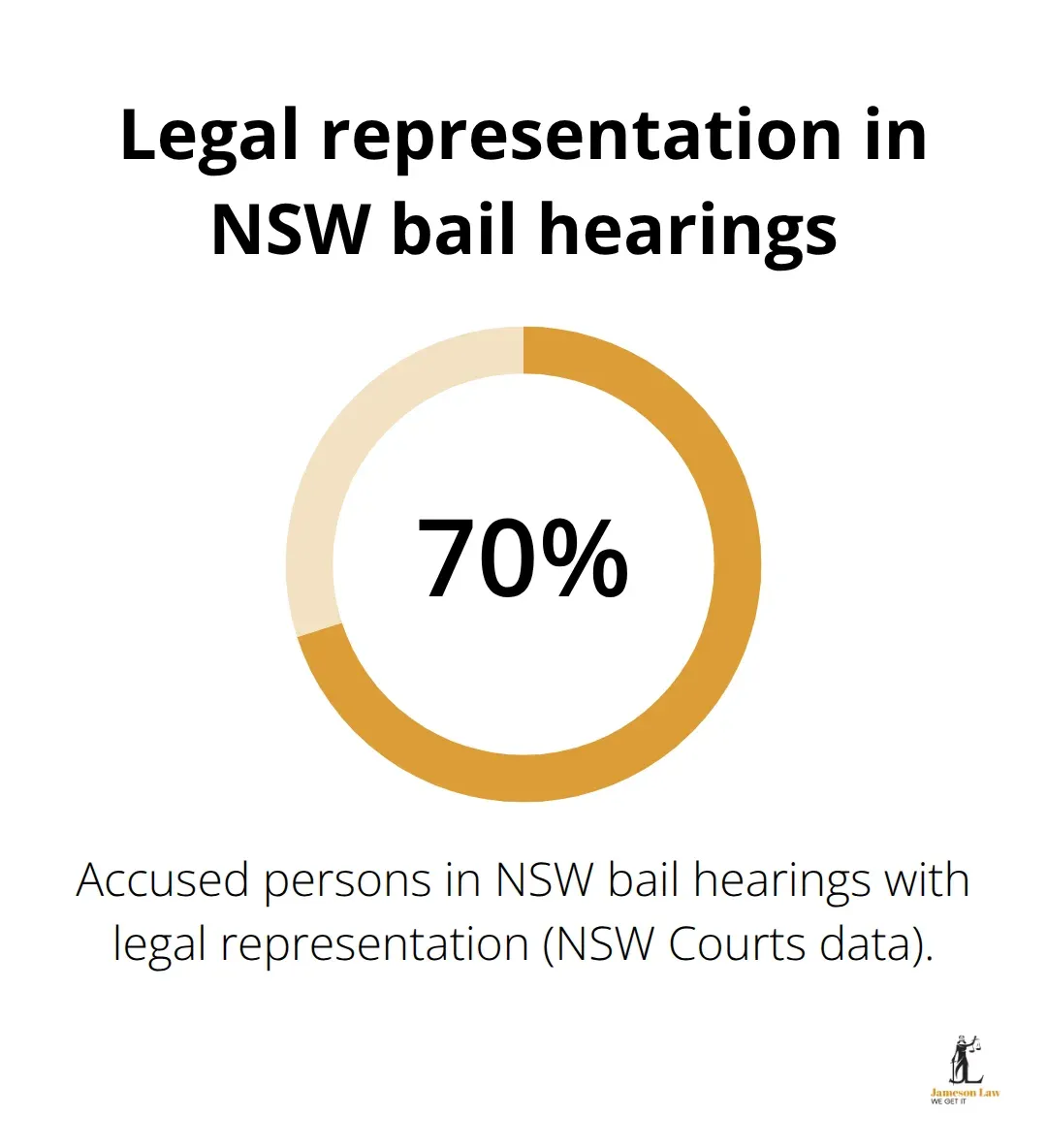
Access to legal representation stands as your most important protection during a bail application. While you can represent yourself, courts strongly discourage this approach in bail hearings. A lawyer significantly improves your chances of securing bail or obtaining more lenient conditions. According to NSW Courts data, approximately 70 per cent of accused persons in bail hearings have legal representation, and those with lawyers are more likely to receive conditional bail rather than custody.
Your lawyer challenges the prosecution’s arguments, presents evidence of your ties to the community, highlights your employment or family responsibilities, and negotiates bail conditions on your behalf. If you cannot afford a lawyer, you can apply for legal aid through Service NSW, which provides funding for eligible applicants facing serious charges or complex bail proceedings. The application process for legal aid takes several days, so if you’re in custody, inform the court immediately that you’re applying for legal aid. Many courts will adjourn your bail hearing to allow time for the application to be processed.
Right to Know the Charges Against You
You have a fundamental right to know exactly what charges you face before any bail hearing. The prosecution must provide you with particulars of the offence, which outlines the specific allegations against you. This information allows you and your lawyer to prepare a proper response and understand the strength of the case against you.
If the prosecution hasn’t provided this information, your lawyer can request it or the court may adjourn proceedings until it’s available. You also have the right to know what the prosecution will argue during your bail hearing (they must disclose their case against you). This transparency means you’re not walking into court blind, and you can prepare evidence and arguments that directly address the allegations.
Right to Present Evidence and Arguments
You have a fundamental right to present evidence and arguments in your favour during your bail hearing. This might include character references from employers or community members, proof of stable employment, documentation of family ties to the area, or medical records if relevant. The court must consider all material you present before making a decision.
If the prosecution argues you’re a flight risk, you might present evidence showing you own property in NSW, have dependent children in local schools, or have remained in Australia for many years. These practical details matter far more than general promises to comply with conditions. Your lawyer can structure this evidence strategically, presenting the strongest material first and connecting each piece of evidence to the legal test the court must apply under the Bail Act 2013.
How Courts Apply Your Rights
The court process moves quickly once you appear before a magistrate or judge. The prosecution presents information about the charges and your background, while you (or your legal representative) respond to their arguments. The court then applies the legal test under the Bail Act 2013 to decide whether to grant bail and, if so, what conditions to impose. Your rights during this stage directly affect your freedom and the conditions you’ll live under while awaiting trial, which is why understanding bail conditions themselves becomes your next priority.
Bail Conditions and What They Mean for You
When a court grants bail, it rarely comes without strings attached. Conditional bail is the standard in NSW, and understanding what you’re agreeing to matters enormously because breaching these conditions can land you back in custody faster than you might expect.
Common Bail Conditions in NSW
The most common conditions imposed by NSW courts include residence requirements, which specify where you must live during proceedings, often with a requirement to not change address without court permission. Reporting conditions require you to present yourself to a police station on set days, typically weekly or fortnightly, though frequency depends on the court’s assessment of your risk level. Non-association orders prohibit contact with specific people, usually alleged victims or witnesses, and courts take these seriously because any contact-even through a third party-constitutes a breach.
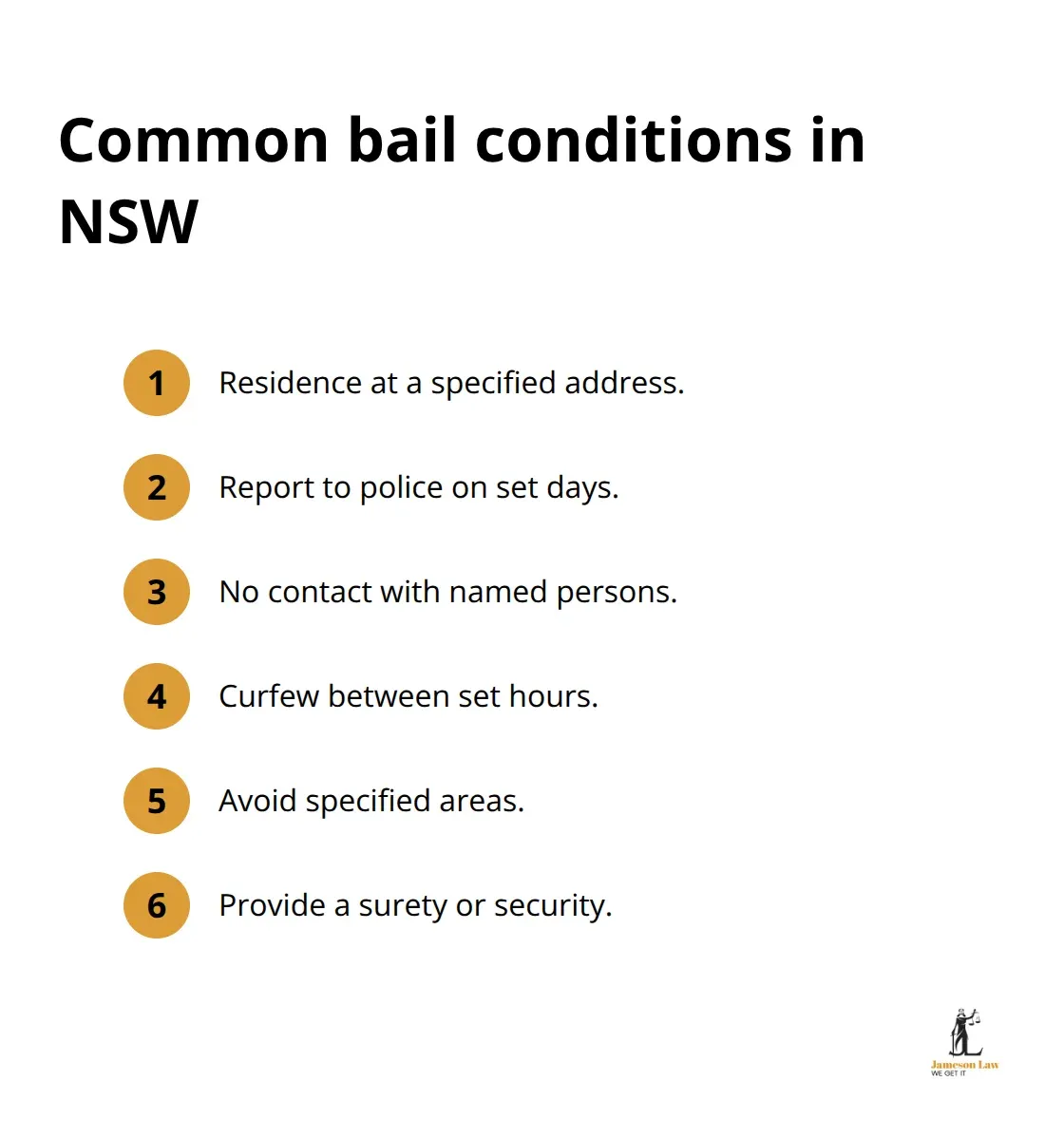
Curfew conditions restrict your movement to specific hours, commonly 9pm to 6am, though stricter curfews apply to serious charges. Geographical restrictions prevent you from entering certain areas, particularly if they’re associated with the alleged offence or alleged victims. Financial conditions may require you to provide a surety or deposit money as security. Most people receiving bail face multiple overlapping restrictions.
How Bail Conditions Affect Your Daily Life
The practical reality is that bail conditions profoundly affect your daily life while appearing minor on paper. A weekly reporting condition might seem straightforward until you’re working shifts that clash with police station hours, or you’re struggling to afford transport costs. Courts do modify conditions, and this is where being proactive matters-if a condition genuinely prevents you from working, maintaining family relationships, or accessing medical care, you can apply to have it changed. You don’t need to breach the condition first and then face consequences; instead, apply to the court before the conflict arises. The process involves filing an application with supporting evidence explaining why the condition is unworkable and proposing an alternative. Many courts grant these modifications because they recognise that conditions which destroy your employment or family stability often increase reoffending risk rather than reduce it.
Consequences of Breaching Bail Conditions
Breaching conditions carries serious consequences that most people underestimate. A breach doesn’t automatically send you to prison, but it gives prosecutors grounds to apply for your bail to be revoked, meaning you return to custody to await trial. A minor breach-arriving ten minutes late to a reporting appointment-is treated differently from deliberately associating with a prohibited person or failing to appear at court. The court assesses whether the breach was intentional, whether it undermines the purpose of bail, and whether you pose an increased risk to the community. Even without revocation, a breach can result in additional conditions being imposed, making your life more restrictive. If you’re facing bail conditions that feel unworkable, contacting a criminal lawyer before you breach them is far smarter than managing the consequences afterward.
Final Thoughts
Understanding your bail rights in NSW fundamentally changes how you approach a bail application. The protections outlined in this bail rights NSW guide-your right to legal representation, access to information about charges, and the ability to present evidence-exist specifically to give you a fair hearing. Courts must follow the Bail Act 2013 when making decisions, and knowing what they’re legally required to consider puts you in a stronger position to advocate for yourself or work effectively with your lawyer.
Bail applications move quickly, and preparation matters enormously. Your immediate priority should be securing legal representation before your first court appearance, and legal aid is available if you can’t afford a lawyer. Concrete details like employment letters, character references, or proof of community ties carry far more weight than general promises to comply with conditions, so start gathering this evidence immediately.
If a bail condition prevents you from working or maintaining family relationships, apply to modify it rather than hoping you can manage around it. Courts recognise that unworkable conditions often backfire, and many will adjust them if you present a solid case. Contact Jameson Law for practical legal advice tailored to your circumstances if you’re facing a bail application and need guidance on your rights or how to prepare your case.