


Family violence can happen to anyone, and it often escalates without intervention. An Apprehended Violence Order (AVO) is a legal tool that provides court-backed protection when you need it most.
At Jameson Law, we help people in NSW understand their options and navigate the process of obtaining a family violence AVO. This guide walks you through what an AVO is, how to apply for one, and what happens after it’s granted.
What an AVO Actually Does
Understanding the Legal Protection an AVO Provides
An Apprehended Violence Order is a court-issued protection order under NSW law that legally prohibits someone from engaging in violent or threatening behaviour toward you. When a magistrate grants an AVO, it becomes a binding legal document with real consequences for breach. The order typically restricts the other person from assaulting, threatening, harassing, or intimidating you, and often includes conditions like staying away from your home, workplace, or children’s school.
NSW Police can also issue provisional AVOs in emergency situations, which remain valid for up to 28 days while you prepare a formal application to the court. The key point is that an AVO is not a suggestion or informal agreement-it is enforceable law. If the person named in the order breaks its conditions, they face legal consequences of criminal charges, potential jail time, and a criminal record. This legal weight makes an AVO fundamentally different from simply asking someone to leave you alone.
The Three Categories of AVOs
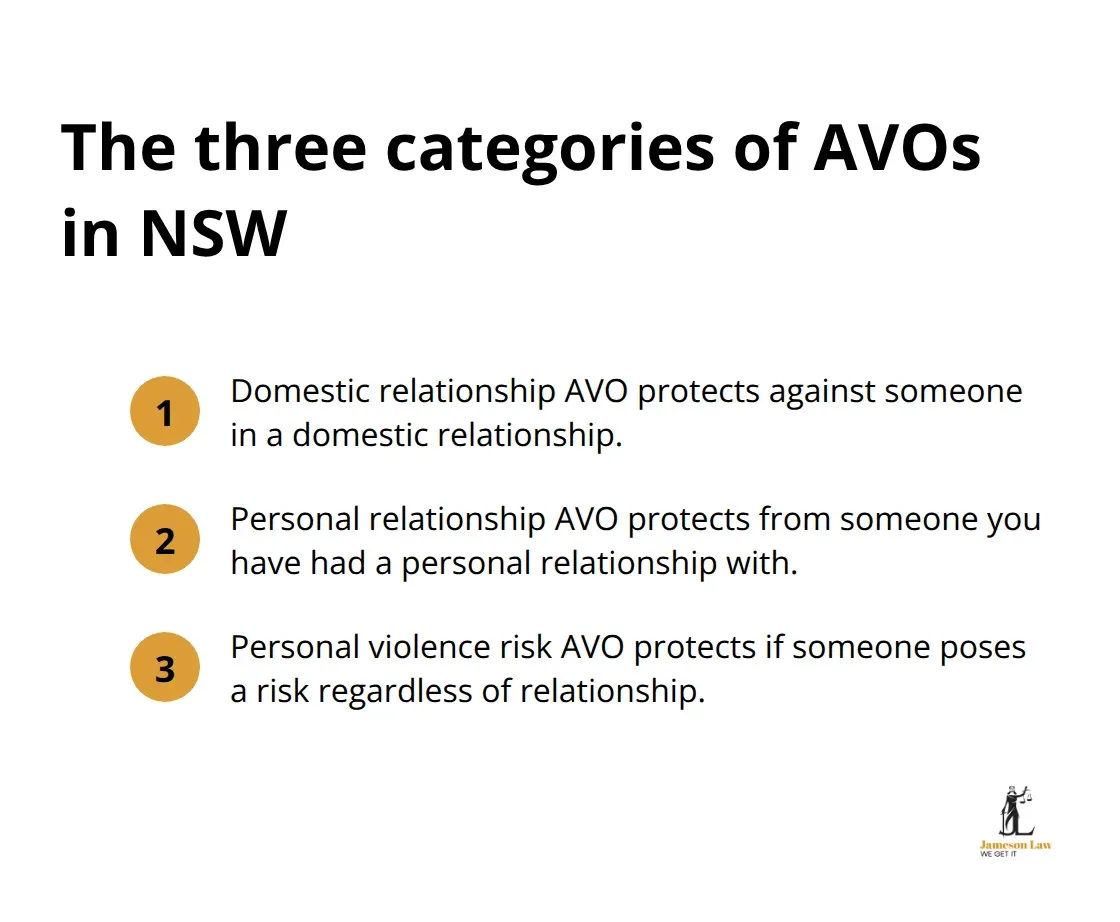
Three categories of AVOs exist under NSW law, each serving different circumstances. A standard AVO protects you from a person you have a domestic relationship with (current or former spouses, partners, family members, or people you have lived with). An AVO can also protect you from someone you have had a personal relationship with, which covers situations beyond domestic partnerships. Finally, an AVO can protect you from someone who poses a risk of personal violence, regardless of any relationship.
Who Can Apply for an AVO
The person applying for the AVO can be the victim, a police officer on your behalf, a parent or guardian if you are under 16, or another suitable person if you lack capacity. In practice, many people apply through NSW Police because officers understand the evidence needed and can present cases more effectively than self-represented applicants.
The Threshold You Need to Meet
If you are experiencing family violence, you do not need to prove you are in immediate danger to obtain an AVO-you only need to satisfy the court that you reasonably fear the other person will commit an act of violence against you. This distinction matters because it means you can act before a situation becomes critical. Understanding what the court requires sets the foundation for the next stage: preparing your application and gathering the documentation that supports your case.
Getting Your AVO Application Approved
Gathering Evidence That Courts Will Accept
Starting an AVO application requires you to provide the court with specific evidence that demonstrates why you reasonably fear violence from the other person. Many applications fail because applicants either don’t gather enough documentation or present their evidence poorly. The court needs concrete details, not vague statements about feeling unsafe.
You should document every incident of violence, threats, or harassment with dates, times, locations, and what happened. Text messages, emails, or social media messages where the person threatened or abused you carry significant weight. Photographs of injuries or property damage strengthen your case considerably.
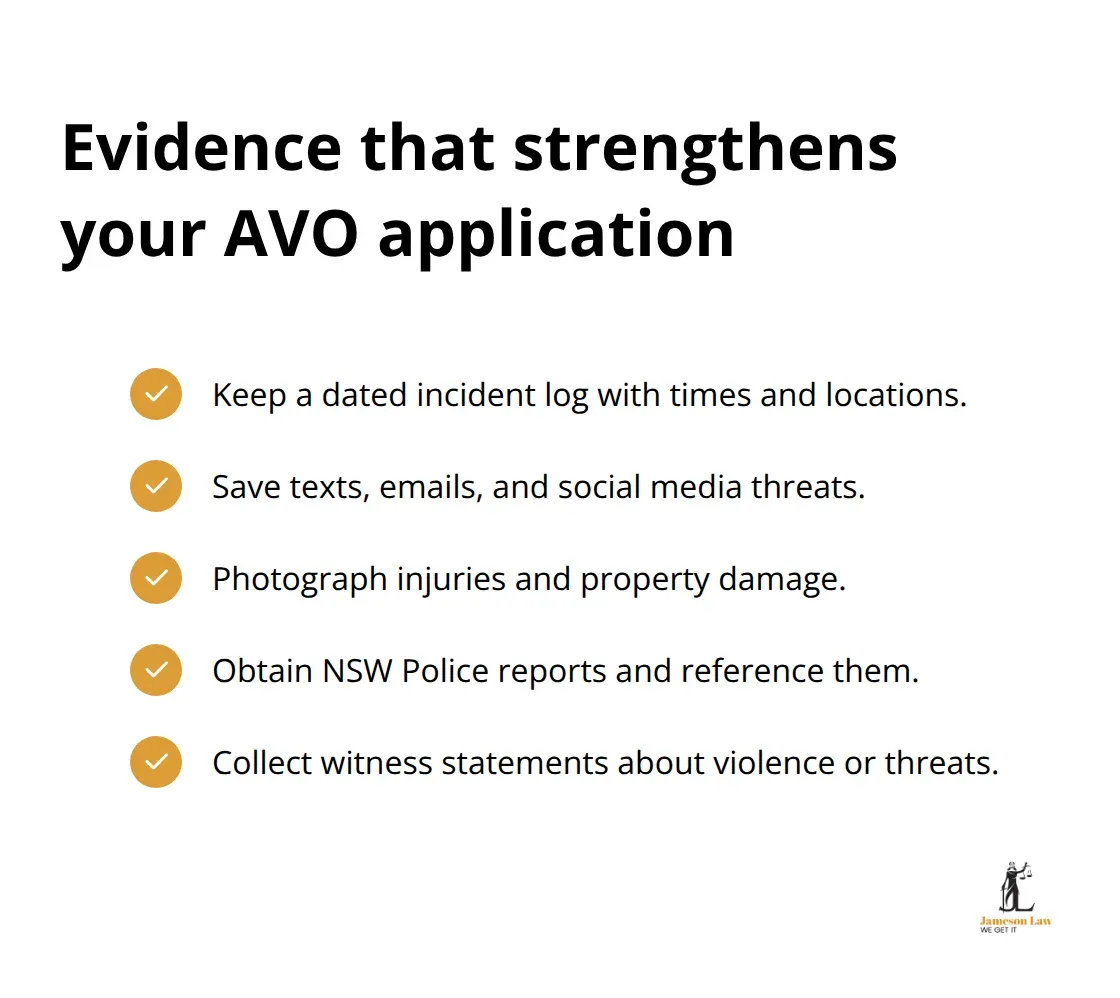
Police reports are valuable evidence-if you have reported incidents to NSW Police, obtain copies of those reports and reference them in your application. Witness statements from people who saw the violence or heard threats matter greatly to magistrates.
Building a Strong Application Before Court
The Local Court’s practice notes indicate that applications supported by detailed incident logs and corroborating evidence succeed at substantially higher rates than those without documentation. Preparation before you walk into court matters far more than hoping the magistrate will understand your situation without evidence.
When you lodge your application at your local Local Court, you can apply for an interim AVO immediately, which gives you temporary protection while waiting for the full hearing. NSW Police can also issue a provisional AVO on the spot if you’re in immediate danger. Most applicants don’t realise that provisional AVO issued by police can remain in force until you go to court, giving you breathing room to prepare your court case properly.
What Happens at Your Court Hearing
The actual hearing typically occurs within weeks of your application. At the hearing, you’ll present your evidence to a magistrate, and the other person has the right to respond. Many people fear this confrontation, but you can request that screens be placed between you and the respondent, or in some cases, give evidence from another room.
The magistrate will decide whether to grant a final AVO based on whether they’re satisfied you reasonably fear violence. If granted, the AVO typically lasts for up to two years, though you can apply to extend it if circumstances warrant. Understanding what happens after the court makes its decision helps you prepare for the next phase of your protection.
Protecting Your AVO and Handling Changes
What Happens After the Court Grants Your AVO
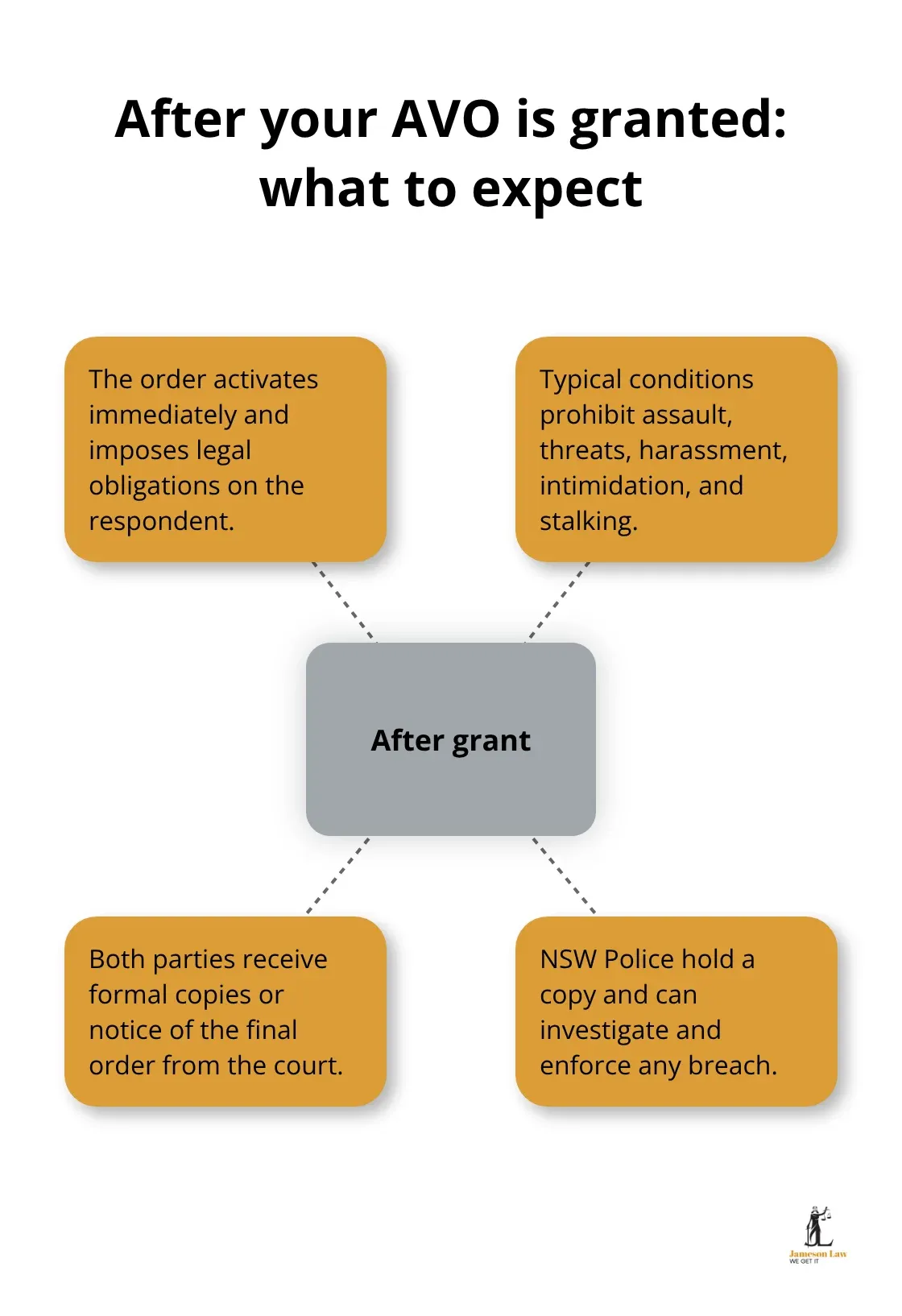
Once a magistrate grants your AVO, the order becomes active immediately and the respondent faces legal obligations to comply with its conditions. The conditions typically prohibit assault, threats, harassment, intimidation, and stalking, with additional restrictions like staying away from your home, workplace, or your children’s school. You will receive a copy of the final order, and the respondent receives formal notice from the court. NSW Police hold a copy and can enforce it, which means if the respondent breaches the order, you can contact police and they will investigate.
Keep your copy of the AVO accessible at all times. Inform your employer, school, or workplace security about the order so they understand why restrictions exist around your location. This step protects you by ensuring staff can identify and report any violations.
Recognising and Reporting Breaches
Breaches of an AVO carry serious consequences that many people underestimate. A breach is itself a criminal offence, and the respondent can face charges under the Crimes (Domestic and Personal Violence) Act 2007 even if they did not physically harm you. Common breaches include contacting you through phone calls, texts, social media, or third parties; attending your home, workplace, or children’s school; or coming within a specified distance of these locations.
NSW Police prosecute breach charges regularly, and courts take violations seriously because the order exists to protect you. If you witness or experience a breach, report it to police immediately and provide them with evidence such as screenshots of messages, records of unwanted contact, or witness accounts. Document every breach carefully with dates and times, as this evidence supports police action and strengthens any future court proceedings.
Modifying or Revoking Your AVO
Modifying or revoking an AVO happens through formal court applications, and the process differs depending on whether you or the respondent seeks the change. If your circumstances improve and you genuinely no longer need protection, you can apply to vary or revoke the order, though courts scrutinise these applications carefully because protection orders exist for good reason.
The respondent can also apply to vary or revoke the order, and they often do this by arguing circumstances have changed or the order was too restrictive. When the respondent applies to change the order, the court will hear both sides, and you have the right to oppose the application and present evidence about why the order remains necessary.
Strengthening Your AVO When Circumstances Worsen
If your situation worsens or new incidents occur, you can apply to strengthen the AVO by adding stricter conditions or extending its duration. These applications require updated evidence showing why the additional protection is needed. The Local Court handles all variation and revocation applications, and the same magistrate who issued the original order often hears these matters, giving them context about your case.
Final Thoughts
Obtaining a family violence AVO requires clear documentation, understanding the court process, and knowing your rights at each stage. The steps are straightforward: you gather evidence of incidents, lodge your application at your local Local Court, attend the hearing, and work with police to enforce the order once granted. Many people delay applying because they underestimate how seriously courts treat these matters or worry about the process itself, yet magistrates see family violence cases regularly and understand the fear and harm involved.
After the court grants your family violence AVO, your responsibility shifts to maintaining the protection and reporting any breaches immediately. You keep copies of your order accessible, inform relevant people in your life about its existence, and document every violation. If circumstances change significantly, you can modify the order through the court, though this requires updated evidence supporting your request.
Your safety matters, and an AVO is not a last resort or an overreaction-it is a practical legal tool designed to protect you when someone’s behaviour threatens your wellbeing. If you are experiencing family violence, taking action now prevents situations from escalating further. Contact Jameson Law to discuss your options with a legal advisor, or reach out to support services like Legal Aid NSW or 1800RESPECT to take your next steps.