

A visa refusal can feel like a dead end, but it’s not. You have legitimate options to challenge the decision and move forward with your immigration plans.
At Jameson Law, we help clients navigate visa refusal reconsideration every week. This guide walks you through your available options, what evidence matters most, and how to build a stronger case.
Why Your Visa Was Refused
The Refusal Letter Is Your Roadmap
When the Department of Home Affairs refuses your visa application, the decision rests on specific reasons tied to visa requirements you didn’t meet, evidence the department found insufficient, or information that raised concerns about your eligibility. Understanding exactly why your application failed forms the foundation for any reconsideration strategy.
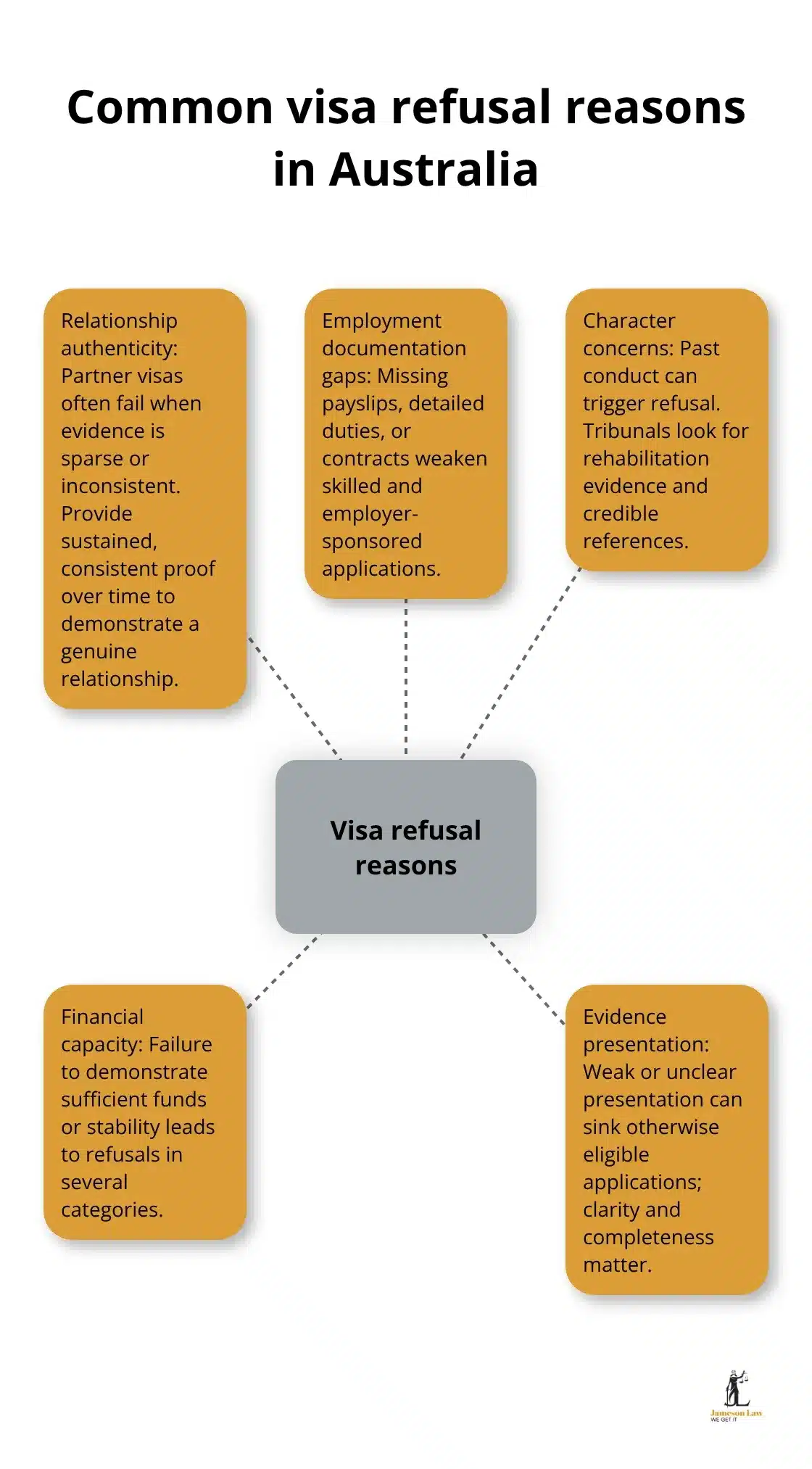
Most visa refusals fall into predictable categories: insufficient evidence of relationship authenticity for partner visas, gaps in employment documentation for skilled migration, unaddressed character concerns, or failure to demonstrate financial capacity. The refusal letter identifies which requirements you didn’t satisfy and which evidence the department considered weak or missing.
Read your refusal letter carefully, line by line. The department explains what they needed to see and what they didn’t find. This isn’t bureaucratic language designed to confuse you-it tells you exactly what to fix.
When Reconsideration Works
If your refusal hinged on how evidence was presented rather than a fundamental ineligibility, reconsideration through the Administrative Review Tribunal becomes genuinely viable. Partner visa refusals often succeed on appeal when the relationship is genuine but under-documented; clearer, stronger evidence transforms your case. Employer-sponsored and skilled visa appeals succeed when genuine, ongoing employer-employee relationships and clear sponsorship commitment are demonstrated.
The critical distinction matters: appeals work when they solve a real problem in your original application, not when they attempt to change the category itself or force eligibility where none exists.
Your 28-Day Window Cannot Extend
You have 28 days to lodge an appeal if you’re not in immigration detention, or 14 days if you are detained. The Administrative Review Tribunal cannot extend these timeframes. This deadline is immovable. Waiting longer than 28 days means your right to appeal expires entirely.
Contact a migration lawyer immediately after receiving your refusal-not next week, not after you’ve gathered more documents, but within days. Early professional advice maps personalised pathways, timelines, and realistic outcomes specific to your circumstances.
Character Grounds Demand Faster Action
If your visa is refused or cancelled on character grounds while you’re in Australia, you have only nine days to lodge an appeal. This compressed timeline makes immediate legal advice non-negotiable. Leaving Australia while an appeal is active terminates the case and forfeits potential benefits, so mobility decisions require careful planning with professional guidance beforehand.
Before appealing, consider whether you’re genuinely solving a problem or simply avoiding leaving Australia. The mindset matters. Sometimes leaving to address issues offshore leads to faster re-entry later than fighting a losing appeal for years.
Your next step involves understanding what evidence strengthens your case and how to present it effectively to the tribunal.
Your Three Paths Forward
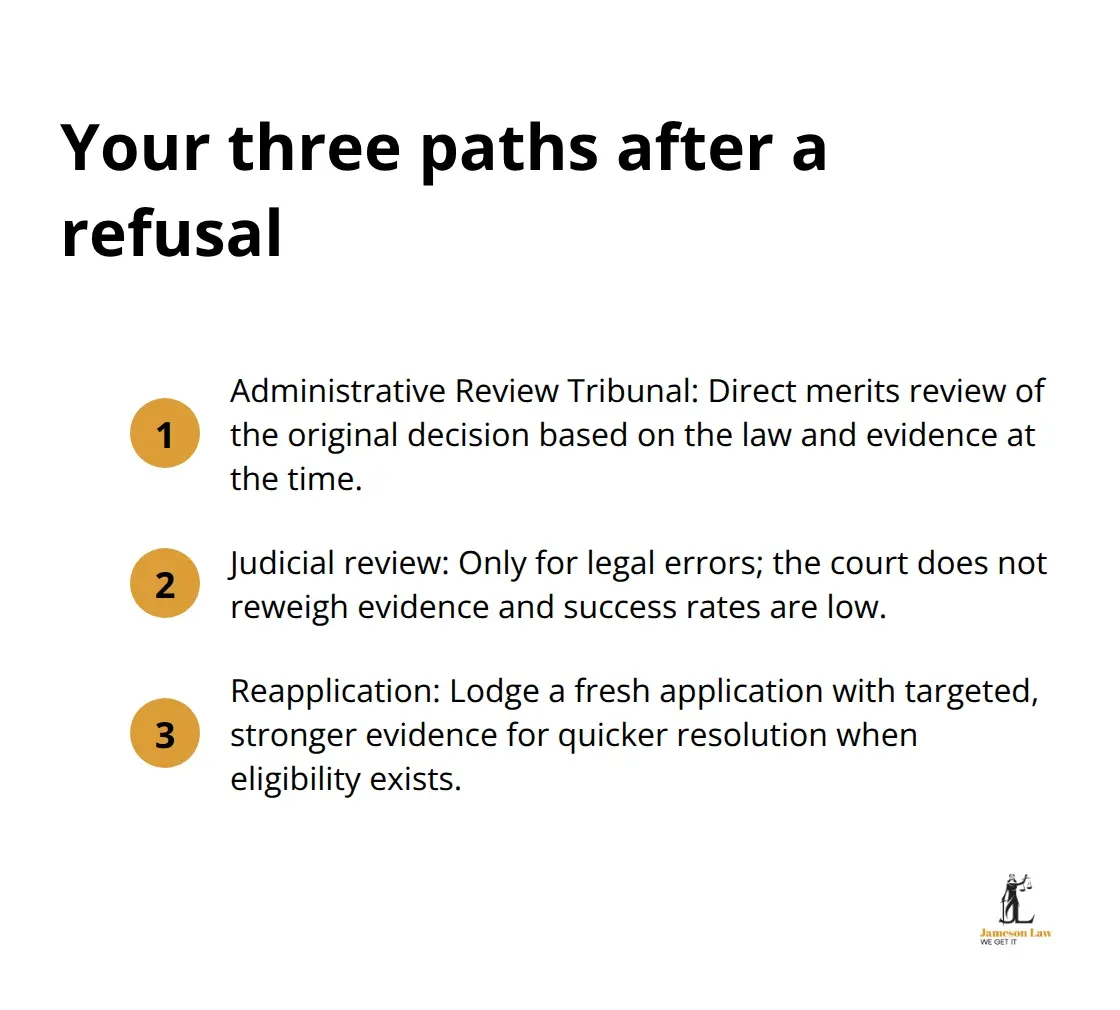
After a visa refusal, you face three distinct options, each with different timelines, costs, and realistic outcomes.
The Administrative Review Tribunal: The Direct Path
The Administrative Review Tribunal offers the most direct route for most applicants. This formal review process examines whether the Department of Home Affairs made the right decision based on the evidence and law at the time of your original application. The ART replaced the Administrative Appeals Tribunal and Immigration Assessment Authority on 14 October 2024, with applications transferred automatically to the new tribunal.
For general visa decisions, you pay a standard application fee of $3,496, though a 50% concession applies if you face severe financial hardship. If you succeed, you receive a 50% refund of the full fee; if the tribunal finds your application invalid, you receive a full refund. Protection visa appeals carry no upfront fee, but you pay $2,151 if unsuccessful.
The tribunal can take several years to resolve your case-some run five to seven years or longer-meaning you remain in limbo during this period, often on a bridging visa with restricted work and travel rights. This pathway works best when the refusal stemmed from how you presented evidence, how the department interpreted your information, or missing documentation you can now supply. If your refusal hinged on a fundamental mismatch between the visa category and your actual situation, tribunal review becomes an expensive exercise in futility.
Judicial Review: A Narrower Option
Judicial review in the Federal Court represents a narrower option available only if the department made a legal error, not simply a wrong factual decision. The court does not rehear your case or weigh evidence differently; it examines whether the decision-maker followed proper legal procedures and acted within their authority. This route demands significant legal costs and succeeds rarely, making it viable only when procedural defects are substantial and documented.
Reapplication: Speed Over Appeals
Reapplication sidesteps the tribunal entirely and offers speed that appeals cannot match. You can lodge a fresh visa application immediately after refusal, incorporating the missing evidence, clearer documentation, or addressed concerns that sank your first attempt. This approach works particularly well for partner visas where relationship documentation was sparse, skilled visas where employment evidence gaps existed, or any category where genuine circumstances have improved since your original application.
The honest assessment: if you solve the problem that caused your refusal, reapplication often reaches resolution faster than waiting years for tribunal review. Conversely, if you attempt to paper over fundamental ineligibility, no path forward exists-not through tribunal, not through court, not through reapplication.
Which Path Fits Your Situation?
The right choice depends on what caused your refusal. If the department misinterpreted your evidence or you can now supply missing documentation, tribunal review makes sense despite the years involved. If you can strengthen your application with new evidence or improved circumstances, reapplication offers faster resolution. If procedural errors shaped the decision, judicial review may apply-though this remains the exception rather than the rule.
Your next step involves understanding what evidence strengthens your case and how to present it effectively, regardless of which path you select.
Building Your Evidence Strategy
What the Department Actually Needs to See
The gap between a refused visa and an approved one often comes down to evidence quality and presentation, not eligibility itself. Your refusal letter identified what the Department of Home Affairs found insufficient or unconvincing. Now you need to understand precisely what they wanted to see and deliver it with absolute clarity.
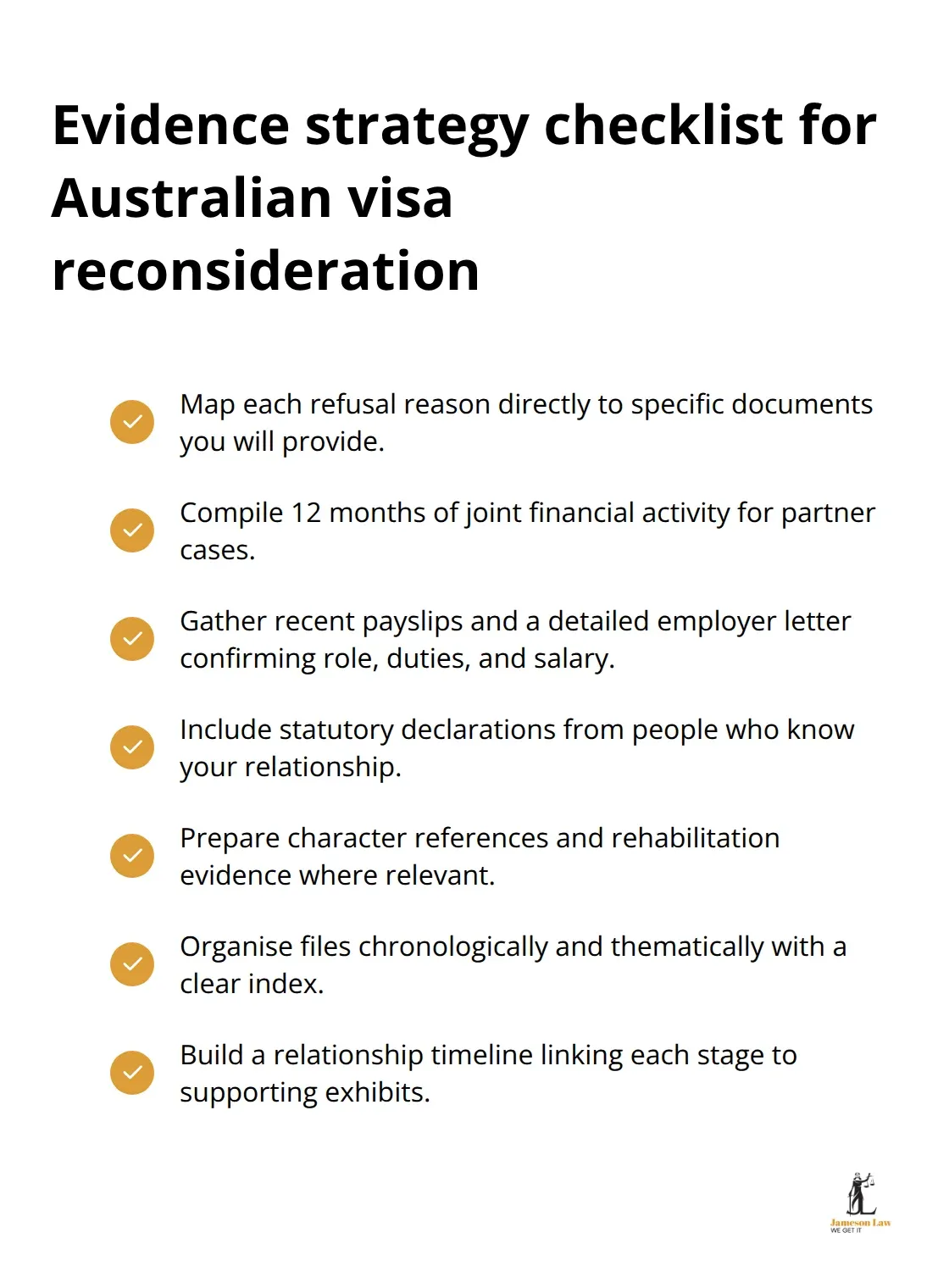
For partner visas, the department scrutinises relationship continuity through bank statements showing joint accounts, utility bills in both names, photos spanning months or years, and statutory declarations from people who know you as a couple. A single bank statement proves nothing; twelve months of consistent joint financial activity tells a story. For skilled migration visas, employment gaps matter enormously. If your refusal mentioned insufficient evidence of your ongoing role, you need payslips from the last three months, a formal letter from your current employer confirming your position and salary, and documentation showing your employer genuinely intends to sponsor you. Vague employer support letters fail at tribunal; specific, detailed letters succeed.
Character Concerns Require Active Remediation
Character concerns demand a different approach entirely. If the refusal hinged on character grounds, you cannot simply ignore the issue and hope tribunal review ignores it too. Instead, you must gather evidence of rehabilitation, community involvement, character references from respected figures, and professional assessments if applicable. The tribunal will examine whether you have genuinely addressed the concern, not whether you have forgotten about it.
Identify Your Actual Evidentiary Gaps
Your migration lawyer must review your refusal letter alongside your original application to identify the exact evidentiary gaps. This is not guesswork. Some applicants spend months gathering documents that do not address the actual reason for refusal, wasting time and money. A qualified migration practitioner immediately spots whether your refusal stemmed from missing evidence, weak presentation, or fundamental ineligibility that no amount of documentation will fix.
A focused approach saves money and significantly improves your prospects. Your refusal notification letter will tell you if you have the right to seek review of the department’s decision with the Administrative Review Tribunal, giving you one genuine opportunity to present your full story and clarify aspects that may have been misunderstood the first time.
Organise Your Evidence for Maximum Impact
Weak evidence presented clearly beats strong evidence presented poorly. You should organise your documents chronologically and thematically rather than dumping everything into a folder. If you are appealing a partner visa refusal, create a timeline showing your relationship development with corresponding evidence at each stage. If you are appealing an employment visa, demonstrate continuous employment and ongoing sponsorship commitment through structured documentation.
The tribunal reads hundreds of cases; yours needs to stand out through organisation and clarity, not volume. Specific, detailed employer letters succeed where vague support fails. Relationship evidence spanning twelve months of joint financial activity tells a compelling story that isolated documents cannot match.
Final Thoughts
A visa refusal does not lock you out permanently. You have concrete options to move forward, but timing and strategy determine whether you succeed or waste years on a path that cannot work. Read your refusal letter carefully and identify whether the department rejected you because of missing evidence, weak presentation, or fundamental ineligibility-this distinction shapes everything that follows. If the problem is fixable through better documentation or clearer evidence, visa refusal reconsideration through the Administrative Review Tribunal becomes viable.
Your timeline is immovable: 28 days to lodge an appeal if you are not in detention, 14 days if you are detained, or nine days for character-based refusals. These deadlines cannot be extended, so contact a migration lawyer within days of receiving your refusal. Three paths exist after refusal-tribunal review through the Administrative Review Tribunal, judicial review in the Federal Court, or reapplication with strengthened evidence-and early professional advice identifies which path fits your circumstances and whether your case has genuine prospects.
Your evidence strategy determines your outcome. Gather documentation that directly addresses the reasons stated in your refusal letter, organise everything chronologically and thematically, and present your story with absolute clarity to the tribunal. We at Jameson Law help clients navigate visa refusal reconsideration and build stronger cases for tribunal review-contact us to discuss your specific circumstances and determine whether reconsideration is realistic for your situation.