

Moving to Australia requires navigating a complex system with multiple visa options, strict requirements, and specific timelines. We at Jameson Law have guided hundreds of clients through the migration to Australia process, and we know what works.
This guide breaks down each stage so you understand exactly what to expect and how to prepare properly.
Migration Visa Categories and How to Choose Your Path
Understanding Australia’s Visa Landscape
Australia’s migration system operates through distinct visa categories, each designed for different circumstances and skill levels. The Department of Home Affairs administers these pathways, and your first critical decision involves identifying which one applies to your situation. Skilled migration visas dominate the system, with the Skilled Independent visa, Skilled Nominated visa, and Skilled Regional visa forming the backbone of Australia’s points-based approach. These visas target workers in occupations listed on the relevant skilled occupation lists maintained by the Department of Home Affairs.
How the Points System Works
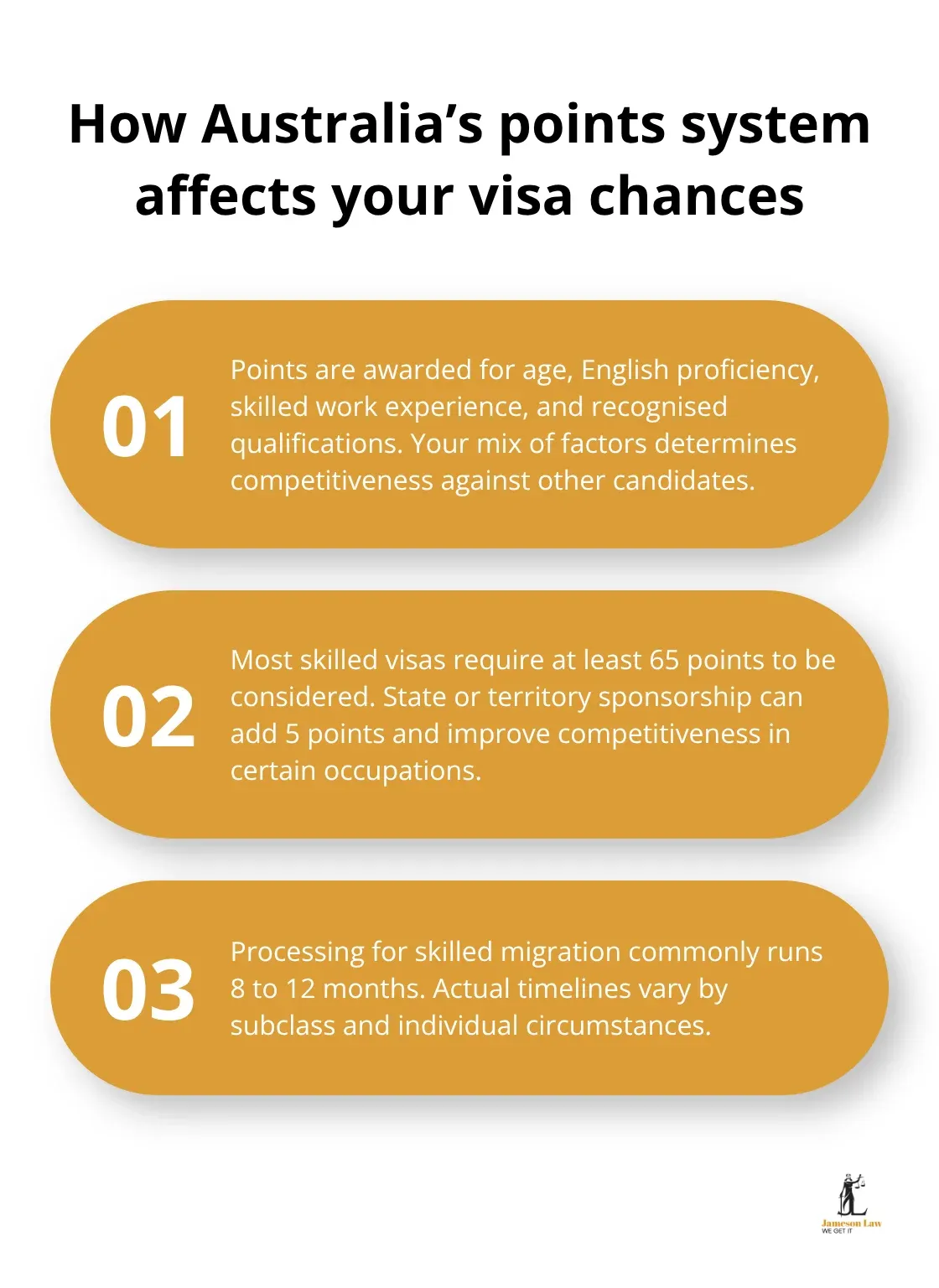
The points system allocates scores based on age, English language proficiency, work experience, and qualifications. Most applications require a minimum of 65 points to be competitive. State sponsorship significantly improves your chances, adding 5 points to your total and sometimes reducing the points threshold required. Processing times for skilled migration visas typically range from 8 to 12 months, though this varies significantly depending on visa subclass and individual circumstances.
Alternative Pathways Beyond Points
Employer-sponsored visas offer a different route, where an Australian employer nominates you for a Temporary Skill Shortage or Employer Nomination Scheme visa. These visas bypass the points system entirely but require a genuine job offer and employer sponsorship. Family visas, partner visas, and parent visas exist for those with Australian relatives willing to sponsor them, though these pathways involve longer processing times and higher costs.
The Skills Assessment Requirement
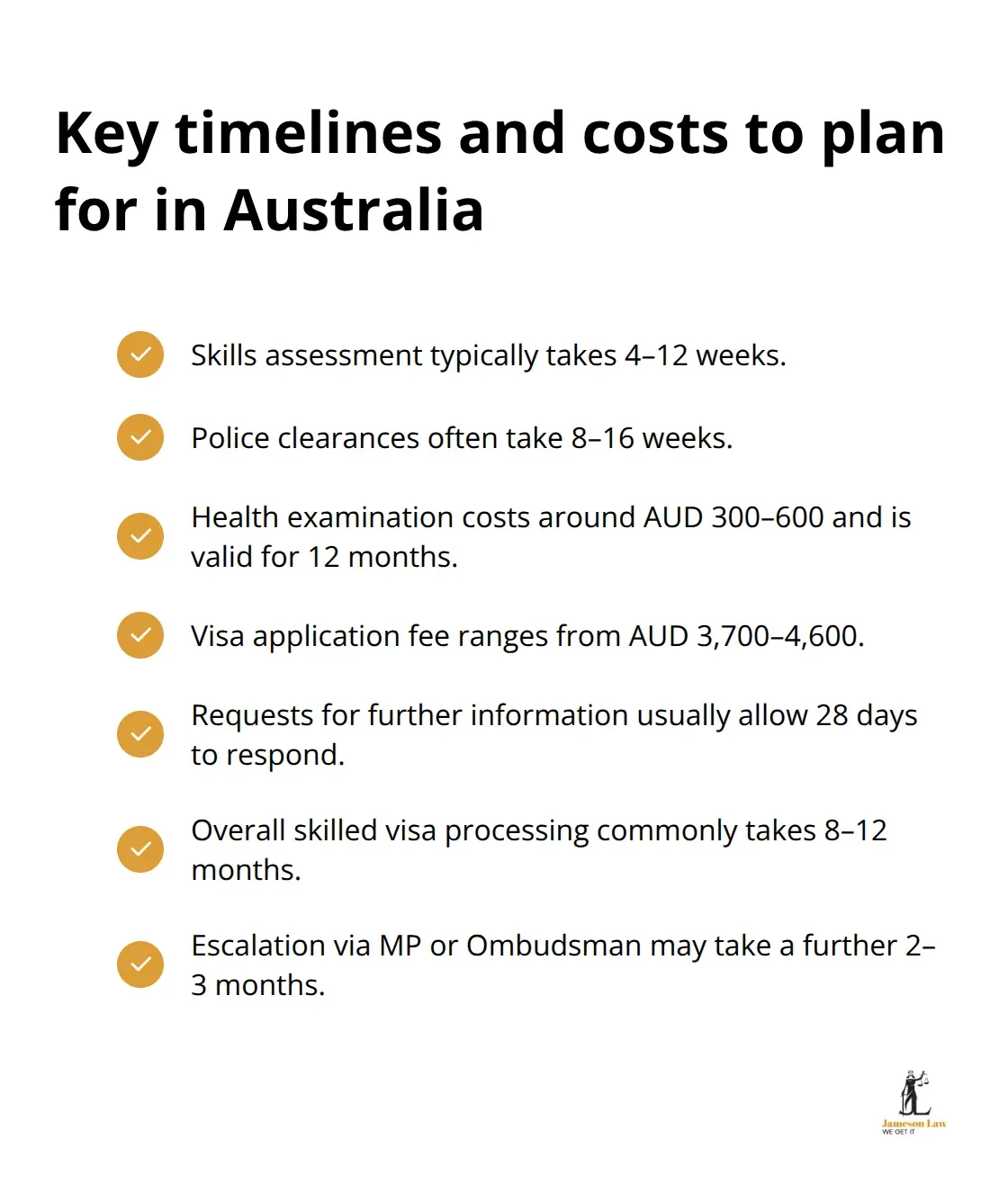
The skills assessment acts as a gatekeeping mechanism you cannot avoid. Each occupation requires assessment by a designated authority-engineers need Engineers Australia, accountants need CPA Australia or IPA, and IT professionals need ACS-and these bodies verify your qualifications against Australian standards. This assessment takes between 4 to 12 weeks depending on the assessing authority and your specific occupation. Work experience points only count if your skills assessment recognises the work as relevant to your nominated occupation, making the assessment outcome directly influence your visa prospects.
Health, Character, and Application Costs
Health requirements mandate a health examination by an approved panel doctor, costing between AUD 300 and 600, with results valid for 12 months. Character requirements demand police clearance certificates from every country where you have lived for more than 12 months in the past 10 years, and delays in obtaining these documents frequently extend overall processing times. The visa application itself costs between AUD 3,700 and 4,600 depending on the subclass, plus additional costs for dependents. Legal assistance early in the process helps you avoid costly mistakes in occupation selection or points calculation, as reapplying after rejection consumes both time and money.
With your visa pathway identified and the key requirements understood, the next stage involves preparing the specific documentation and evidence that will support your application.
Building Your Application Foundation
Preparing a migration application means treating documentation as your primary evidence. The Department of Home Affairs receives thousands of applications monthly, and incomplete or poorly organised submissions face delays or requests for further information that can push processing times from 8-12 months to well over a year. Start by creating a master checklist specific to your visa subclass, as requirements differ significantly between Skilled Independent, Skilled Nominated, and Skilled Regional visas.
Prioritise Your Skills Assessment
Your skills assessment application must be lodged immediately, as this 4-12 week process becomes your bottleneck-you cannot submit your main visa application until you hold the result. Contact your assessing authority now to understand their specific documentation requirements; Engineers Australia, CPA Australia, IPA, and ACS each demand different evidence of work experience, educational qualifications, and professional memberships. Request official certified copies of your qualifications from your educational institutions rather than relying on personal documents, as the Department of Home Affairs verifies these independently and uncertified copies frequently trigger additional requests.
Obtain Police Clearances Early
Gather police clearance certificates from every country where you have lived for more than 12 months in the past 10 years before you need them-these documents often take 8-16 weeks to obtain, and some countries impose strict application procedures that create unexpected delays. Character requirements extend beyond police clearances; you must disclose any traffic offences, civil disputes, or professional complaints, as the Department of Home Affairs conducts thorough background checks and undisclosed information provides grounds for refusal or cancellation.
Schedule Your Health Examination
Book your health examination with an approved panel doctor listed on the Department of Home Affairs website only after your skills assessment is finalised, as your health results remain valid for 12 months and you want them current when your visa is processed. Health requirements mandate a health examination by an approved panel doctor, costing between AUD 300 and 600.
Organise and Structure Your Documentation
Organise documents chronologically with clear labelling, as case officers processing hundreds of files appreciate logical structure and locate required evidence quickly. The visa application fee itself costs between AUD 3,700 and 4,600, but the real expense lies in reapplication after rejection-incorrect documentation strategies waste both this fee and the months of processing time already invested.
Legal assistance at the documentation stage rather than after submission identifies gaps, corrects occupation selection errors, and prevents costly reapplication fees.
With your documentation strategy in place and your evidence organised, you now move toward the formal submission phase where timing and accuracy determine your application’s success.
Submitting Your Application and What Happens Next
Lodging Your Visa Application Correctly
Submitting your visa application through the Department of Home Affairs online portal marks the transition from preparation to active processing, and this step demands precision because errors trigger requests for further information that extend timelines significantly. The online system requires you to attach every document as a PDF file, and your submission enters a substantial processing queue. Upload documents in the exact order specified by the checklist for your visa subclass, as case officers work through files systematically and logical organisation reduces the likelihood of requests for clarification.
Include a cover letter that summarises your application, highlights how you meet the points threshold, and references the location of key documents within your submission-this single page dramatically improves how efficiently your file moves through assessment. After submission, you receive an acknowledgement email with your transaction reference number; save this immediately as it becomes your only identifier for the next 8 to 12 months of processing.
Monitoring Your ImmiAccount Portal
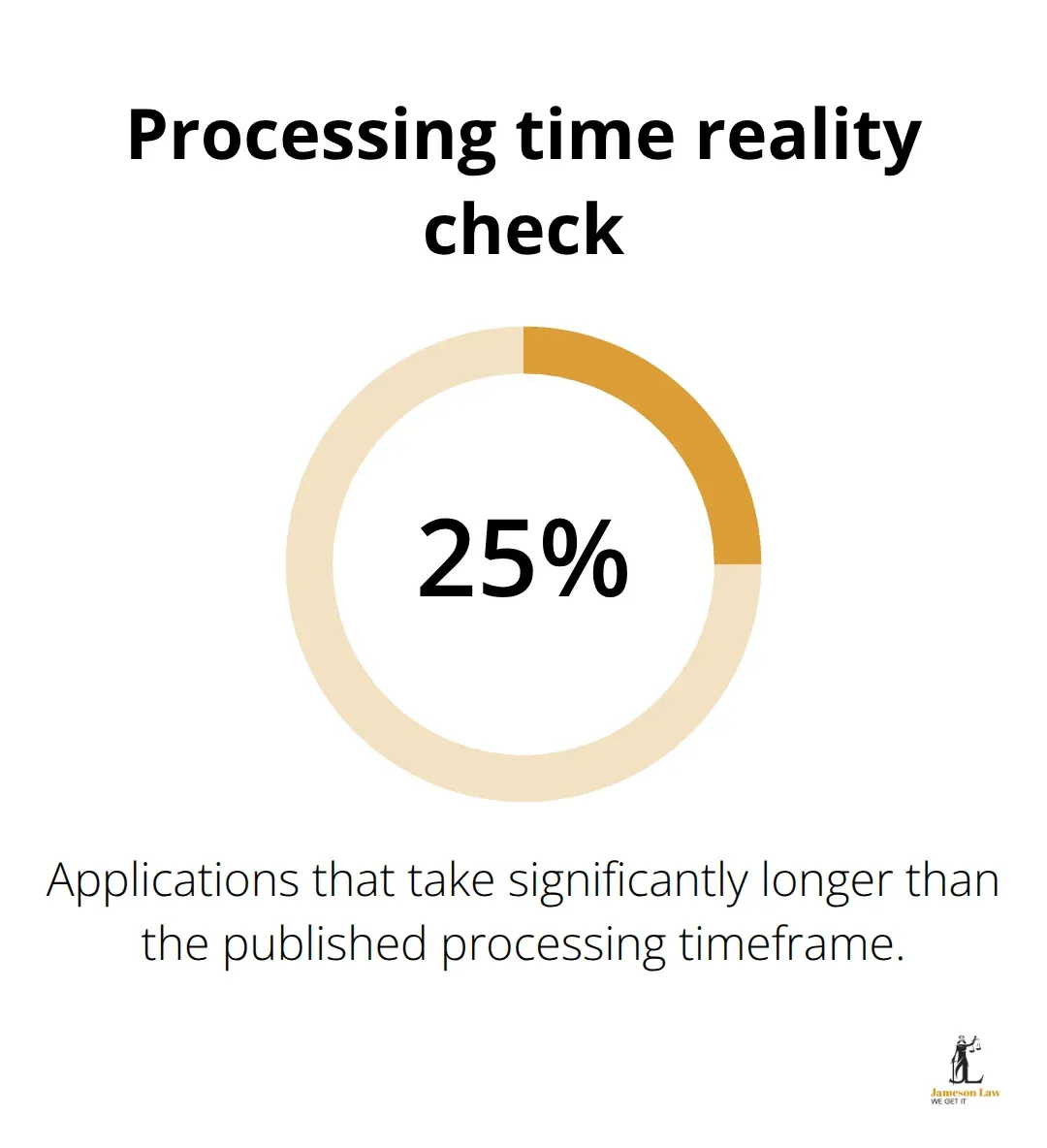
The Department of Home Affairs communicates primarily through your online ImmiAccount portal, and you must monitor this account weekly because official notifications appear there first before reaching your email. Processing times represent the 75th percentile of applications, meaning 25 percent take significantly longer, so applications approaching the published timeframe should not be assumed to be imminent decisions.
Request for further information notices typically arrive between months 3 and 6 of processing, and you generally receive 28 days to respond-missing this deadline results in refusal without further opportunity to provide evidence. Respond to information requests with the same documentation standards applied to your original submission: organised, clearly labelled, and addressing each question specifically rather than sending additional documents hoping something satisfies the case officer’s concerns.
Understanding Processing Delays and External Factors
Communication delays occur when case officers await results from external agencies such as the Australian Federal Police for character clearances or when overseas credentials require verification from educational institutions in your country of origin. These external verification processes sit outside the Department of Home Affairs’ direct control and frequently extend overall timelines beyond the published estimates.
Do not contact the Department of Home Affairs before 12 months have passed unless you have received a specific request for information, as enquiries before this point receive standard responses directing you to check your ImmiAccount. If your application reaches 12 months without a decision, escalation through a Member of Parliament or formal complaint to the Office of the Commonwealth Ombudsman becomes necessary, though this process itself typically requires 2 to 3 months.
Final Thoughts
Your migration to Australia process succeeds when you treat each stage systematically and maintain organisation throughout. The pathway requires identifying your correct visa category, securing your skills assessment, gathering police clearances and health documentation, and submitting a complete application with precision. Processing times extend from 8 to 12 months, and delays occur when external agencies verify your credentials or when incomplete submissions trigger requests for further information.
Start your skills assessment immediately, as this 4 to 12 week process becomes your critical bottleneck before you can lodge your main visa application. Obtain police clearances from every country where you have lived for more than 12 months in the past decade, since these documents frequently take 8 to 16 weeks to acquire. Schedule your health examination only after your skills assessment finalises, ensuring your health results remain current throughout processing. Organise all documentation chronologically with clear labelling, as case officers processing hundreds of files appreciate logical structure and locate required evidence quickly.
The visa application fee costs between AUD 3,700 and 4,600, but the real expense lies in reapplication after rejection (incorrect documentation strategies waste both this fee and the months already invested in processing). Jameson Law provides immigration law assistance to help you avoid costly mistakes in occupation selection, points calculation, and documentation strategy. Contact us to discuss your specific circumstances and ensure your migration to Australia process proceeds efficiently toward approval.