


An Apprehended Violence Order can significantly impact your life, whether you’re seeking protection or facing allegations. At Jameson Law, we help NSW residents navigate these complex legal situations with clarity and confidence.
If you’re considering applying for an AVO or defending against one, understanding the process and your rights is essential. This guide covers everything you need to know about protective orders in NSW.
What an Apprehended Violence Order Actually Means
An Apprehended Violence Order is a court order that protects people from violence, harassment, intimidation, or property damage. Under NSW law, the Crimes (Domestic and Personal Violence) Act 2007 governs AVOs through the Local Court system. The order places legal obligations on a respondent to refrain from specified conduct toward a protected person. Breach of an AVO is a serious criminal offence that can result in fines up to $5,500 or imprisonment for up to two years. Many people underestimate the seriousness of an AVO, whether they apply for one or face allegations. The order isn’t an informal agreement-it’s a legally binding document that police and courts actively enforce.
Domestic Violence Orders and Personal Violence Orders
NSW law recognises two distinct categories of AVOs, and the difference matters significantly for your case. Domestic violence orders apply when a domestic relationship exists between the protected person and the respondent. The Crimes (Domestic and Personal Violence) Act 2007 defines a domestic relationship as one involving current or former intimate partners, family members, or people living in the same household. Personal violence orders cover situations where no domestic relationship exists but a person has used or threatened violence, engaged in harassment, or intimidated another person.
The distinction shapes how your application proceeds and what conditions the court can impose. Domestic violence orders may include additional conditions around property, parenting arrangements, or contact with children. If you’re applying for protection, identifying which category applies to your situation determines the scope of available remedies and the evidence you’ll need to present.
Interim Orders Versus Final Orders
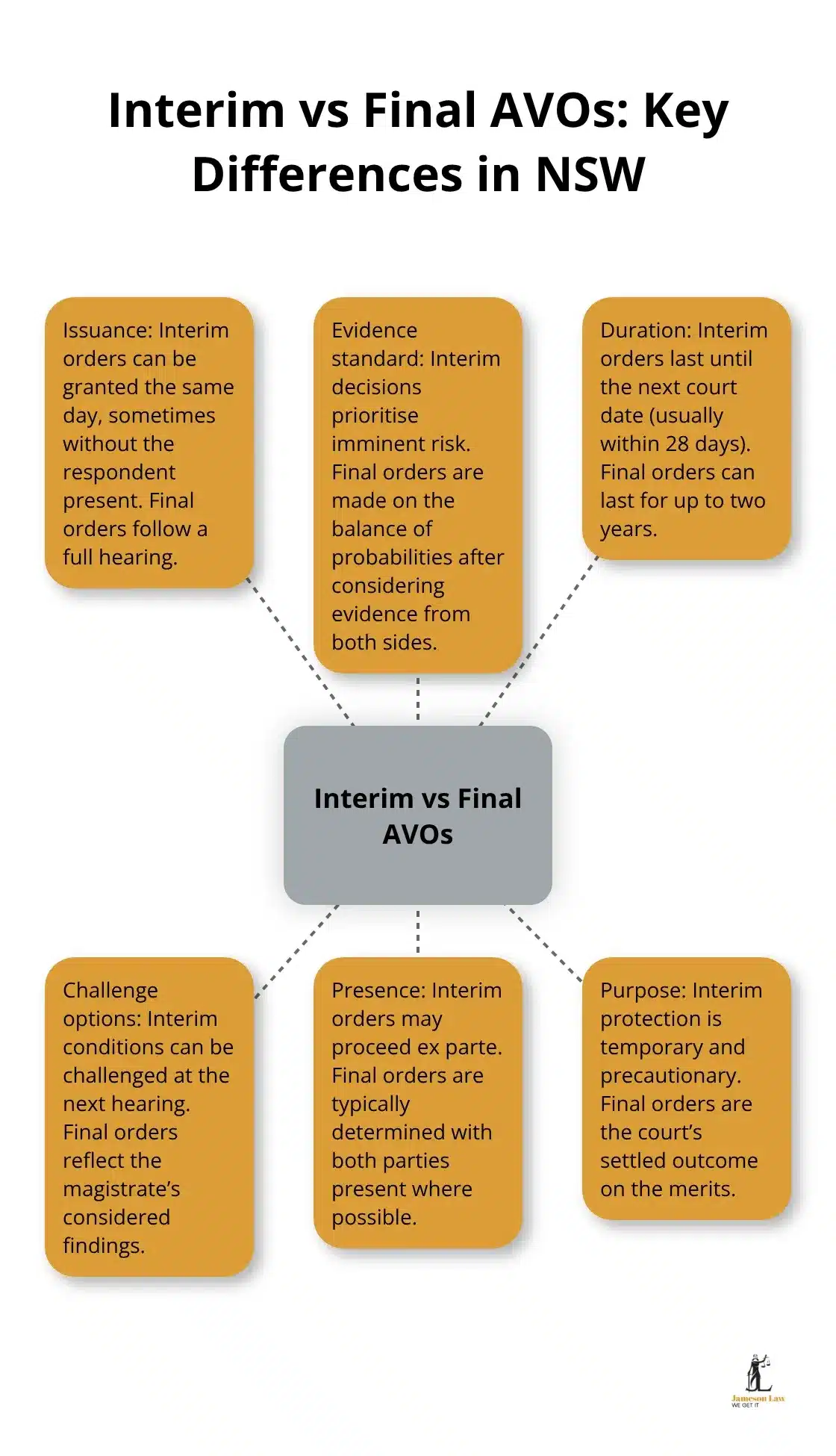
The NSW court system allows magistrates to grant interim AVOs immediately while proceedings continue toward a final order. An interim AVO can be issued on the same day as your application, even without the respondent present, if the court is satisfied that imminent danger of violence or threats exists. These orders typically last until the next court date (usually within 28 days). A final AVO, by contrast, requires both parties to present evidence and and arguments before a magistrate. Final orders can last for up to two years and only follow the court’s finding, on the balance of probabilities, that the applicant has reasonable grounds for apprehending violence or harassment.
The difference is substantial: an interim order provides temporary protection, while a final order represents the court’s considered finding on the merits. Many people don’t realise they can challenge the conditions of an interim order at the next hearing, or that the respondent has genuine opportunities to defend the application before a final order is made. Understanding these distinctions helps you prepare appropriately for each stage of the process and know what to expect when you appear in court.
How to Apply for an AVO at Local Court
Filing Your Application
Applying for an AVO in NSW requires you to attend your local court in person and complete the application process on the day. You don’t need a lawyer to file an application, though legal representation helps if you face complex circumstances or if the respondent will likely contest the order. When you arrive at court, you complete an application form and provide a statement detailing the incidents that prompted your application. The magistrate assesses whether reasonable grounds exist for apprehending violence or harassment, and if satisfied, issues an interim AVO immediately.
Building Your Evidence
Specific documentation strengthens your application significantly. Vague descriptions like “he was aggressive” carry far less weight than concrete details: “on 15 November at 6:30 pm outside my workplace, he approached me in the car park and said he would find me.” You should bring supporting documentation to court, including text messages, emails, photos of injuries or property damage, medical records, witness statements, or police reports.
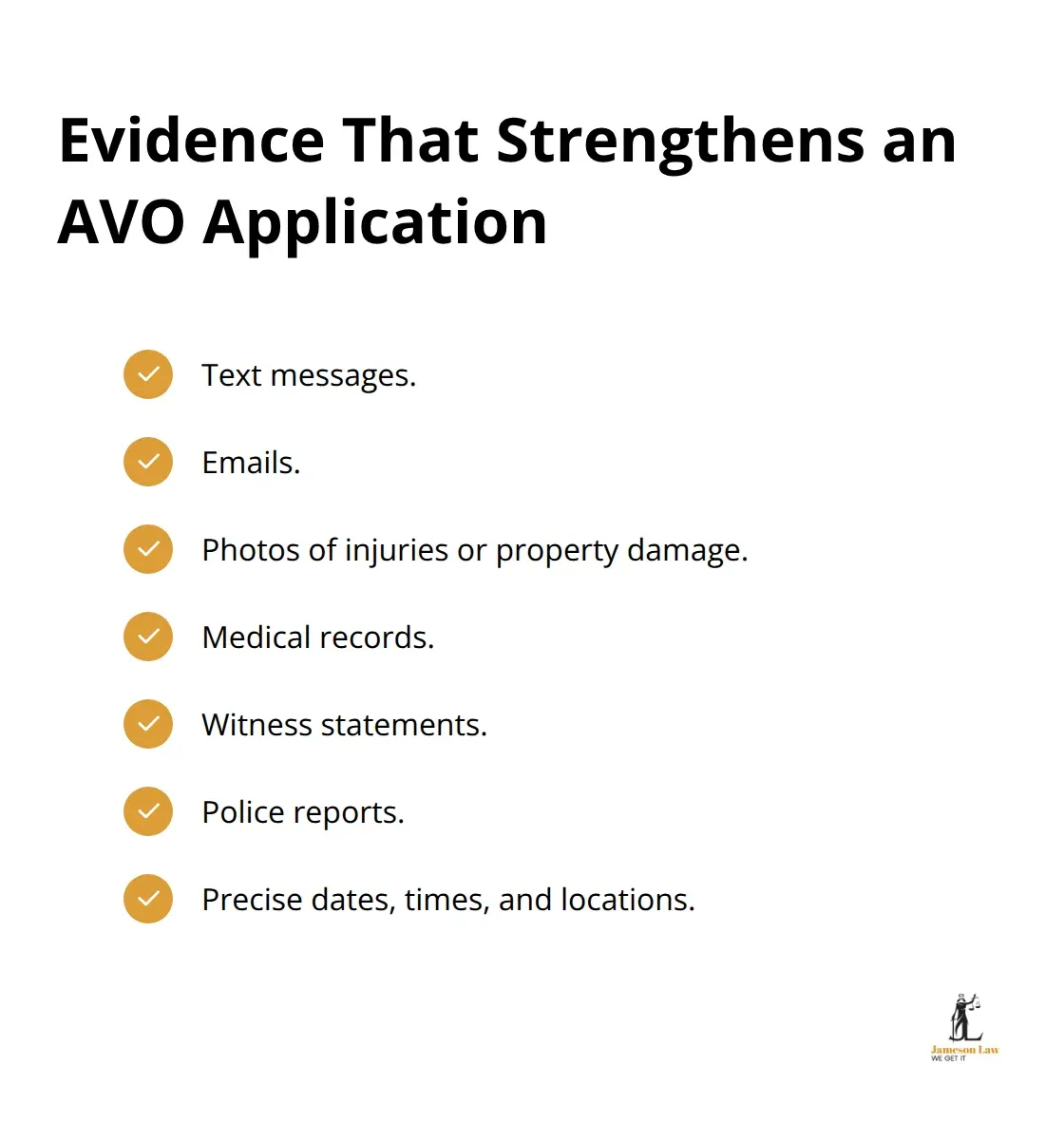
The more specific your evidence about dates, times, locations, and what actually occurred during each incident, the stronger your case becomes.
Understanding the Timeline and Court Process
The timeline from application to final order typically spans 4 to 8 weeks, though contested cases extend longer. An interim AVO lasts until your next court date, usually scheduled within 28 days. After the interim order is granted, the respondent receives notice and has the opportunity to attend the next hearing to contest the application.
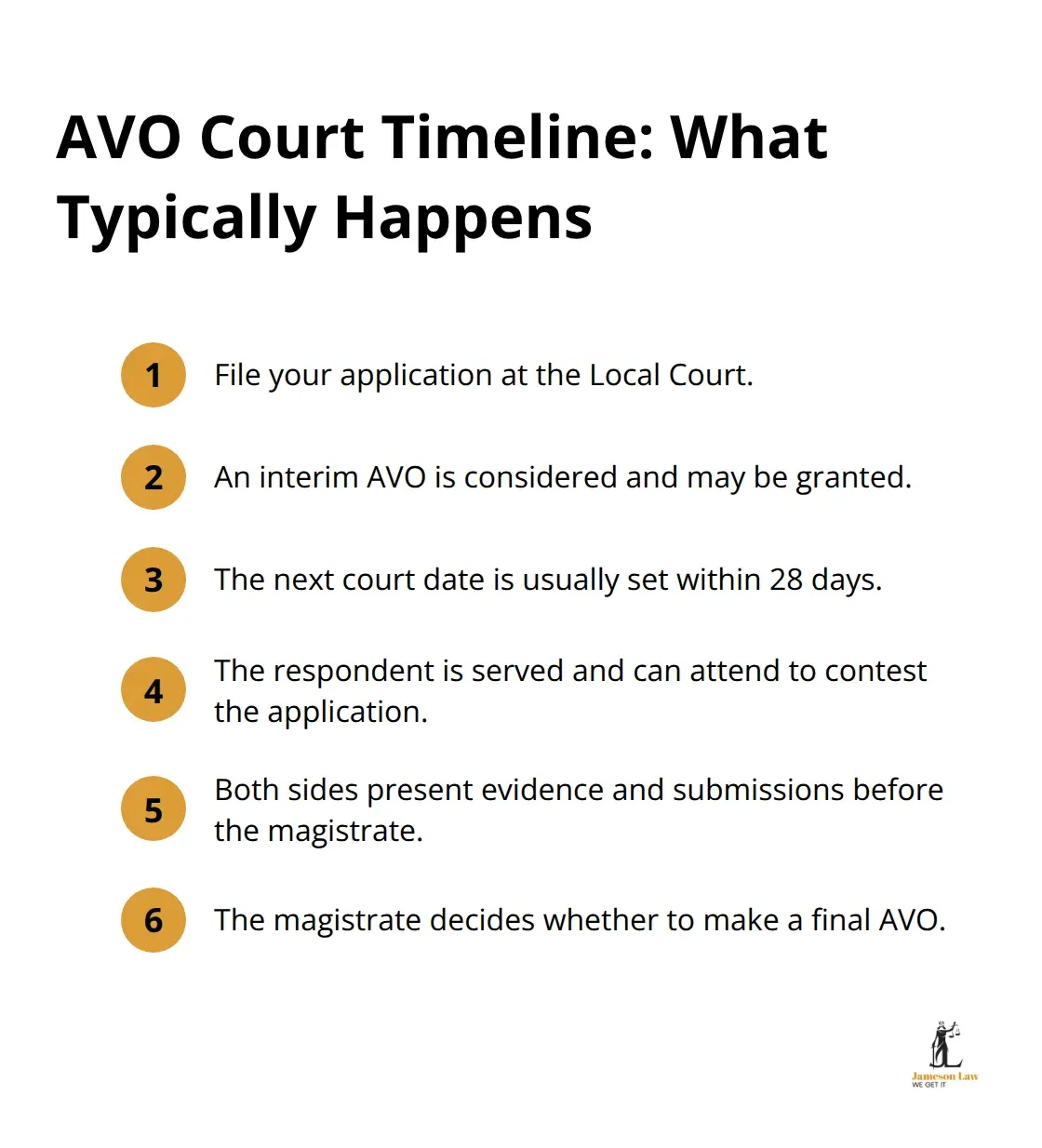
During this hearing, both you and the respondent present evidence and arguments before the magistrate, who then decides whether to make a final AVO. If the respondent doesn’t appear, the magistrate can proceed in their absence and issue a final order based on your evidence alone. If they do appear and contest the application, you answer questions about the incidents and your concerns, while the respondent presents their version of events.
What the Magistrate Must Find
The magistrate must be satisfied on the balance of probabilities that you have reasonable grounds for apprehending violence, harassment, or intimidation before making a final order. Final orders last up to two years, and you can apply to extend them if needed. The respondent cannot simply ignore an interim order while waiting for the final hearing. Breaching an interim AVO carries penalties including a fine of up to 100 penalty units and/or imprisonment for up to three years. Many respondents underestimate the seriousness of interim orders and create additional criminal liability through breach.
Informing the Court of Immediate Danger
If you’re applying for an AVO and the respondent has access to weapons or has made threats, inform the court immediately. This information affects both the type of conditions imposed and the urgency of the interim order. The court takes weapon access and direct threats seriously when determining whether imminent danger exists and what protective conditions are necessary. Your disclosure of these factors can significantly influence how quickly the magistrate acts to protect you.
Defending Against an AVO Application
Facing an AVO application does not mean you are automatically bound by the order. As a respondent in NSW Local Court, you hold genuine legal rights and realistic opportunities to challenge the application before a final order is made. The magistrate must be satisfied on the balance of probabilities that the applicant has reasonable grounds for apprehending violence, harassment, or intimidation. This is a meaningful threshold, and many applications fail or result in modified conditions when respondents present credible evidence.
Common Defence Strategies
The most effective defence strategy depends on your specific circumstances. You might demonstrate that the incidents described did not occur as alleged, that your conduct constituted lawful self-defence, that the applicant has misrepresented events, or that any contact was consensual and not threatening. Detailed evidence matters enormously at this stage. If the applicant claims you sent threatening messages, obtain the actual message records and explain the context. If they allege you attended their workplace, provide your work roster or receipts showing you were elsewhere. Witness statements from people who know you and can speak to your character or refute specific allegations carry substantial weight.
Many respondents make the mistake of simply denying allegations without providing concrete counter-evidence, which rarely persuades a magistrate. You have the right to question the applicant’s evidence in court and present your own version of events. The respondent’s absence from the final hearing can result in the order being made against you based solely on the applicant’s evidence, so attending court and actively participating in your defence is essential.
Your Rights as a Respondent
You possess the right to hear the allegations against you and respond to them in court. The applicant must present evidence that satisfies the magistrate on the balance of probabilities. You can cross-examine the applicant and their witnesses, challenge the credibility of their account, and present your own evidence. Legal representation strengthens your position considerably, particularly if the applicant has legal assistance or if the circumstances are complex. A lawyer can identify weaknesses in the applicant’s case, advise you on the strength of your defence, and present your evidence persuasively to the magistrate.
Impact on Employment and Professional Licences
A final AVO appears on your criminal record and can affect employment prospects, particularly in roles involving child safety, disability support, or positions requiring security clearances. Many employers conduct criminal history checks, and an AVO may disqualify you from consideration or lead to termination if you are already employed. The impact extends to firearms licences: NSW law prohibits a person subject to an AVO from holding or applying for a firearms licence under the Firearms Act 1996, and existing licences are cancelled automatically. If you work in agriculture, security, or sport shooting, this prohibition directly affects your livelihood.
Professional licences in regulated industries can also be jeopardised, as many regulatory bodies consider AVOs as part of their suitability assessments. Housing can become complicated if an AVO requires you to vacate your home or restricts your access to particular areas, potentially forcing relocation or disrupting your living arrangements.
Consequences of Breaching an AVO
The conditions imposed on a final order might prohibit contact with the applicant, restrict your movements, or require you to stay away from specific locations. Breaching these conditions creates additional criminal liability with a maximum penalty of a fine of 50 penalty units or imprisonment for up to two years. Understanding these consequences means you can make informed decisions about your defence strategy and whether negotiating modified conditions might better serve your interests than contesting the application entirely.
Final Thoughts
An Apprehended Violence Order affects your life in concrete ways, whether you apply for protection or respond to allegations. Specific evidence about dates, times, locations, and what actually happened matters far more than general descriptions of behaviour if you seek protection. If you defend against an application, your presence in court and credible counter-evidence can genuinely influence the magistrate’s decision, and the balance of probabilities standard means the applicant must satisfy the court that reasonable grounds exist for apprehending violence or harassment.
The consequences of an AVO extend beyond the courtroom to your employment prospects, professional licences, firearms licences, and housing arrangements. A final order appears on your criminal record and affects your ability to work in regulated industries or hold security clearances. Breaching the conditions of an order creates additional criminal liability with serious penalties, which makes the defence process or the application process itself worth taking seriously from the outset.
An AVO lawyer NSW can identify weaknesses in the applicant’s case if you defend, gather and present evidence persuasively if you apply, or negotiate modified conditions that better reflect your circumstances. We at Jameson Law have extensive experience helping NSW residents navigate these proceedings, and contacting us provides practical advice tailored to your specific situation.