

A Sydney criminal lawyer can explain the charge, protect your rights and guide you through NSW court proceedings, but the correct next step depends on the offence, bail status and court orders. Nearly all NSW criminal cases start in the Local Court. Less serious matters may finish there, while serious indictable matters can be transferred to the District Court or Supreme Court.
Do not rely on generic timelines or assume every case follows the same route. Court dates, disclosure, charge certification, negotiations, hearings and appeals depend on the legislation and the orders made in the individual matter.
Which NSW court will hear a criminal case?
NSW has three main levels relevant to adult criminal matters:
- Local Court: hears summary offences, many indictable offences that may be dealt with summarily, bail applications and the committal stages of serious indictable matters. A magistrate determines defended Local Court hearings without a jury.
- District Court: hears most indictable trials and sentences transferred from the Local Court, except offences reserved to the Supreme Court. It also hears appeals from the Local Court.
- Supreme Court: hears the most serious criminal cases, including murder, as well as matters within the Court of Criminal Appeal.
The District Court states that its criminal jurisdiction covers all criminal offences except murder, treason and piracy. The Local Court’s sentencing jurisdiction is capped: according to the NSW ODPP, the Local Court may generally impose no more than two years for one offence and five years in total for multiple offences.
What happens after police charge you?
The first court date is usually a mention, not a trial. The court may address bail, legal representation, pleas, service of the brief and future dates. Do not plead guilty or make admissions simply to finish the first appearance quickly. A plea can have serious consequences and should be made after informed advice.
Police interviews and the right to silence
Legal Aid NSW explains that a person under investigation usually has a right to silence and can refuse an interview. Exceptions exist, including requirements to provide certain identifying or driving information. In limited cases involving a serious indictable offence, a special caution given in the presence of a lawyer may allow later silence about a relied-on fact to be used against the accused.
You can ask to contact a lawyer. What you say may be recorded and used in evidence, so obtain advice before deciding whether to answer questions.
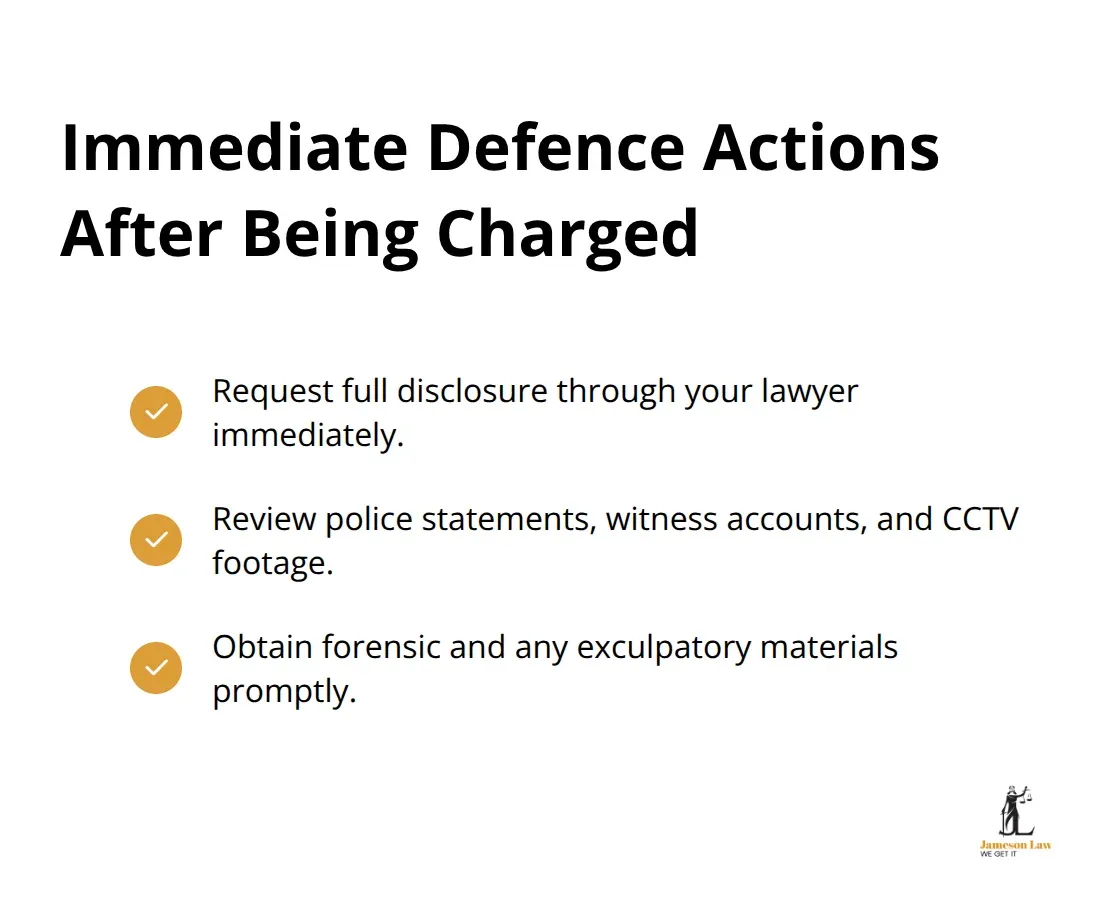
Disclosure and the prosecution brief
The prosecution has continuing disclosure obligations. The material provided can include witness statements, police records, video, photographs, forensic material and other relevant evidence. Disclosure is not always complete on the first court date, and the timetable depends on the kind of proceeding.
How serious indictable matters move to a higher court
For relevant serious matters, the NSW Early Appropriate Guilty Plea process includes:
- Brief service: police serve the evidence brief on the defence and ODPP.
- Charge certification: a senior ODPP prosecutor reviews the evidence and certifies the charges to be prosecuted.
- Case conference: the prosecution and defence discuss the evidence, narrow issues and consider whether an appropriate plea can be agreed.
- Committal: the Local Court transfers the matter to the District Court or Supreme Court for sentence or trial, where appropriate.
This modern committal process is not a general mini-trial in which a magistrate simply decides whether the prosecution has “enough evidence” and dismisses weak charges. The ODPP can alter or withdraw charges during charge certification, and limited applications to call witnesses at committal are governed by statute.
Hearing, trial and sentence
At a defended Local Court hearing, the magistrate hears admissible evidence and decides whether the prosecution has proved each element beyond reasonable doubt. In a District or Supreme Court jury trial, the jury decides guilt and the judge rules on law and, following a conviction, sentence.
For NSW State offences, the jury first attempts to reach a unanimous verdict. Section 55F of the Jury Act 1977 (NSW) permits a majority verdict only in defined circumstances, including at least eight hours of deliberation and the court being satisfied that unanimity is unlikely. Commonwealth criminal trials require unanimity.
There is no reliable universal duration for a criminal case. Complexity, custody status, disclosure, expert evidence, co-accused, court availability and negotiations all affect timing. A lawyer should give a case-specific estimate rather than promise a fixed number of months.
Sentencing
After a guilty plea or finding of guilt, the court applies NSW sentencing law to the offence and the offender’s circumstances. Relevant material can include the objective seriousness, criminal history, plea timing, remorse where established, rehabilitation, personal circumstances and statutory aggravating or mitigating factors. The result cannot be guaranteed.
Appeals from criminal decisions
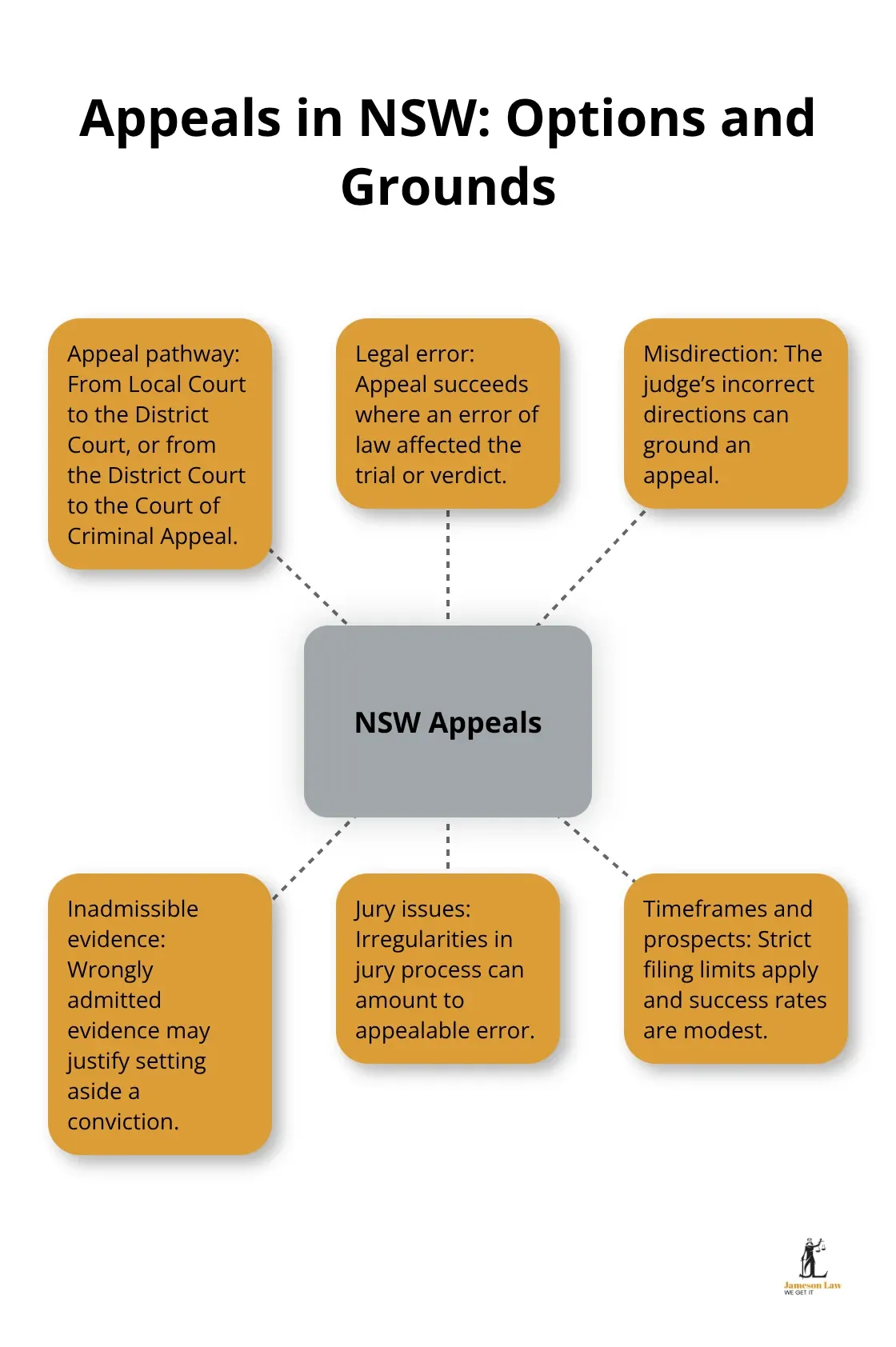
A person can generally appeal a Local Court conviction, sentence or both to the District Court within 28 days. Leave may be sought up to three months after the conviction or sentence. A guilty-plea conviction appeal requires leave. Appeals from the District or Supreme Court go to the NSW Court of Criminal Appeal under different rules and may require leave.
An appeal is not simply a second chance to run the same case. The available grounds, evidence, risks and possible outcomes depend on the type of appeal, so urgent advice is important.
Frequently Asked Questions
Where do NSW criminal cases start?
Nearly all start in the Local Court. Summary matters may finish there, while serious indictable matters pass through the committal process before transfer to a higher court.
Should I answer police questions in NSW?
You usually have a right to silence about alleged offending, but exceptions and special-caution rules exist. Obtain advice before deciding whether to participate in an interview.
What happens in the NSW committal process?
The usual EAGP stages are brief service, charge certification, case conference and committal to a higher court for sentence or trial where appropriate.
How long do I have to appeal a NSW Local Court decision?
The ordinary limit is 28 days. Leave may be sought up to three months after the conviction or sentence.
Must a NSW criminal jury verdict be unanimous?
The jury first considers unanimity. A majority verdict can be accepted for NSW State offences only when statutory conditions are met; Commonwealth offence verdicts must be unanimous.
Get advice before the next court date
Jameson Law can review the charge, bail conditions, evidence and court timetable and explain the available options in plain English. Early advice helps avoid missed dates and uninformed decisions, but no lawyer can promise that a charge will be withdrawn or that a particular result will follow.