


Aggravated assault charges in NSW carry serious consequences that can affect your employment, housing, and reputation. The difference between a conviction and a successful defence often comes down to having the right assault defence strategy from the start.
At Jameson Law, we’ve helped clients navigate these complex charges by identifying weaknesses in the prosecution’s case and building strong defences. This guide walks you through the legal landscape and practical steps to protect your rights.
What Makes Aggravated Assault Different in NSW
The Legal Definition and Core Distinction
Under NSW law, aggravated assault sits in the Crimes Act 1900 and occupies a category above common assault because additional circumstances make the offence more serious. Common assault involves intentionally or recklessly applying force to another person, or causing them to apprehend immediate and unlawful violence. Aggravated assault occurs when that same assault happens in circumstances of aggravation-specifically when the assault takes place in company with other persons, causes actual bodily harm, involves intent to cause grievous bodily harm, or targets certain protected persons such as police officers, health workers, or correctional officers.
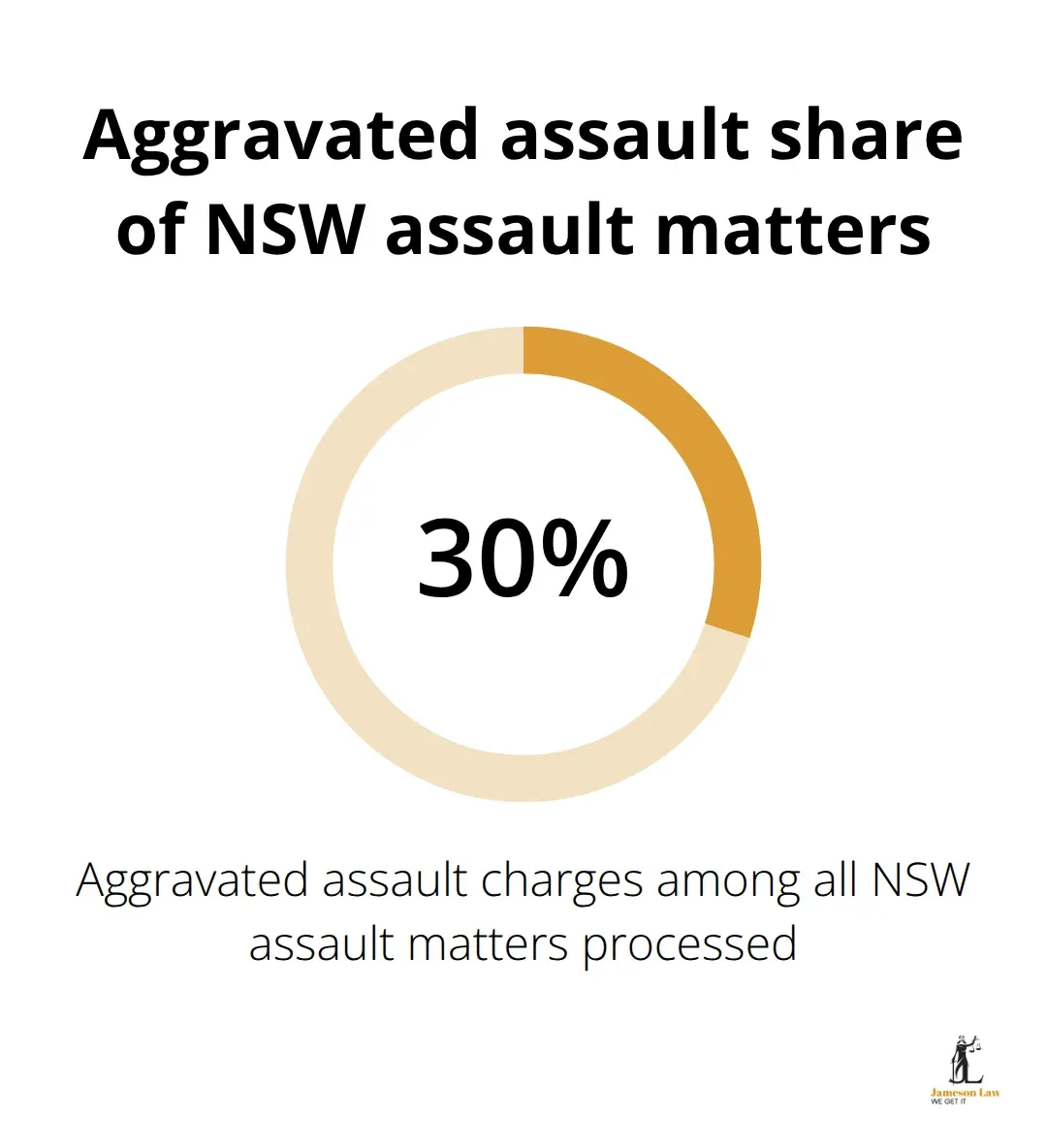
NSW Police data shows that aggravated assault charges represent roughly 30% of all assault matters processed through the criminal justice system. This makes it a common charge that prosecutors pursue when they believe the circumstances elevate the conduct beyond a simple pushing or minor striking incident.
Maximum Penalties by Aggravation Type
The sentencing consequences for aggravated assault in NSW depend heavily on which form of aggravation applies to your case. Assault in company carries a maximum penalty of two years imprisonment. Assault causing actual bodily harm carries a maximum of five years imprisonment. Assault with intent to cause grievous bodily harm carries a maximum of seven years imprisonment.
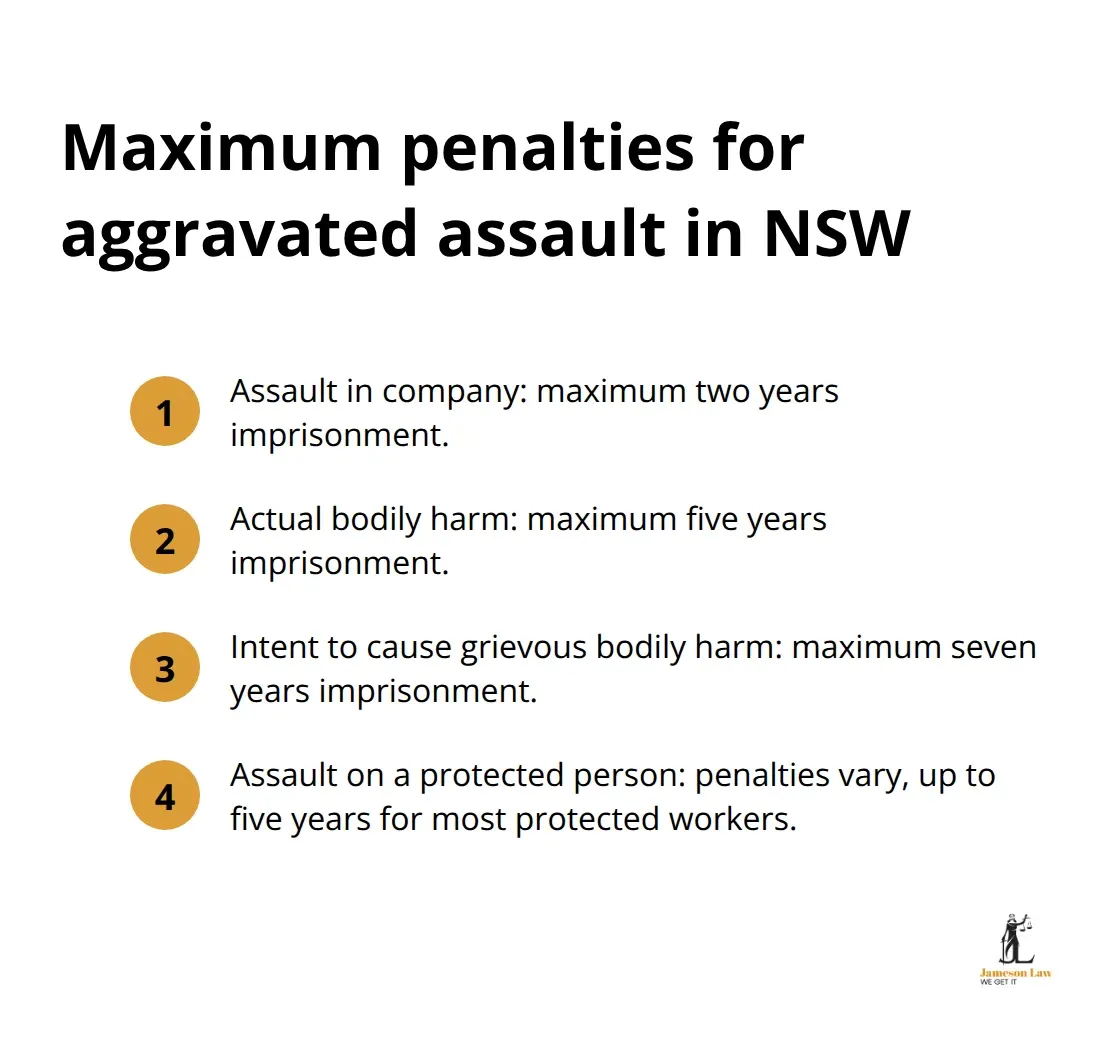
Assault on a protected person carries different penalties depending on the category, ranging up to five years for most protected workers.
The NSW District Court sentencing guidelines define actual bodily harm as more than trivial-this includes bruising, cuts, or temporary loss of consciousness. Courts consistently apply custodial sentences for aggravated assault involving serious injury or professional assault, meaning prison time becomes a realistic possibility rather than just a theoretical maximum.
Why Your Defence Strategy Matters From Day One
The strength of your defence approach from the outset matters enormously because a conviction can result in actual custody, not just a fine or conditional release order. The prosecution must prove each element of aggravated assault beyond reasonable doubt, and weaknesses in their evidence can shift the entire outcome of your case. Understanding which specific form of aggravation the prosecution alleges against you allows you to identify the most effective defence strategies to challenge their case.
Common Defence Strategies That Work
Self-Defence as Your Strongest Option
The prosecution must prove every element of aggravated assault beyond reasonable doubt, and this requirement creates real opportunities to challenge their case. Self-defence remains one of the strongest defences available under NSW law. Section 418 of the Crimes Act 1900 permits you to use force to defend yourself or another person from unlawful violence, provided the force used is reasonably proportionate to the threat you faced.
Courts examine whether you genuinely believed you were under threat, whether that belief was reasonable given the circumstances, and critically, whether your response matched the level of danger. NSW case law shows that juries often accept self-defence claims when the defendant acts instinctively to protect themselves rather than initiating aggression. Gather any evidence showing you were threatened first, including witness statements from people who saw the other person act aggressively toward you. Medical records documenting your injuries support claims that you were defending yourself against a genuine threat. If the prosecution cannot disprove self-defence beyond reasonable doubt, you receive an acquittal regardless of whether contact occurred.
Attacking the Prosecution’s Proof of Intent
The prosecution’s burden of proof also extends to proving your mental state. Aggravated assault requires either intent or recklessness, meaning the prosecution must establish you knowingly or consciously risked causing harm. If your actions were accidental or resulted from the other person’s unexpected movement, this undermines their case substantially.
You can challenge whether the prosecution has actually proven you acted with the required mental element. Accidents happen in physical altercations, and the law recognises this distinction. Evidence that you reacted to circumstances beyond your control (such as the other person suddenly moving into your path) can defeat the recklessness element entirely.
Mistaken Identity and Witness Credibility Problems
Mistaken identity and witness credibility problems frequently plague assault prosecutions. Obtain CCTV footage from the incident location, as this provides objective evidence and often contradicts eyewitness accounts.
Cross-examine whether witnesses had a clear view, adequate lighting, and unobstructed sight lines. Request phone records and location data that place you elsewhere at the time of the alleged assault. Defence counsel can effectively challenge witnesses who have prior convictions, financial incentives to testify, or relationships with the alleged victim. The credibility of prosecution witnesses directly determines case strength, and weaknesses here frequently result in acquittals or withdrawn charges before trial.
Building Your Evidence Response
The evidence you gather in response to the prosecution’s case shapes your entire defence strategy. Photographs taken at the scene (if available), witness contact details, and any communications between you and the alleged victim all matter significantly. CCTV footage proves particularly valuable because it removes subjective interpretation from the equation-the camera records what actually happened, not what someone claims happened.
Your legal representative will identify which specific weaknesses in the prosecution’s case offer the strongest path to acquittal. Some cases turn on identity issues, others on self-defence, and still others on the prosecution’s failure to prove intent. The next chapter examines how to systematically gather and present this evidence to maximum effect.
What Evidence Actually Wins Aggravated Assault Cases
Photograph and Document Everything Immediately
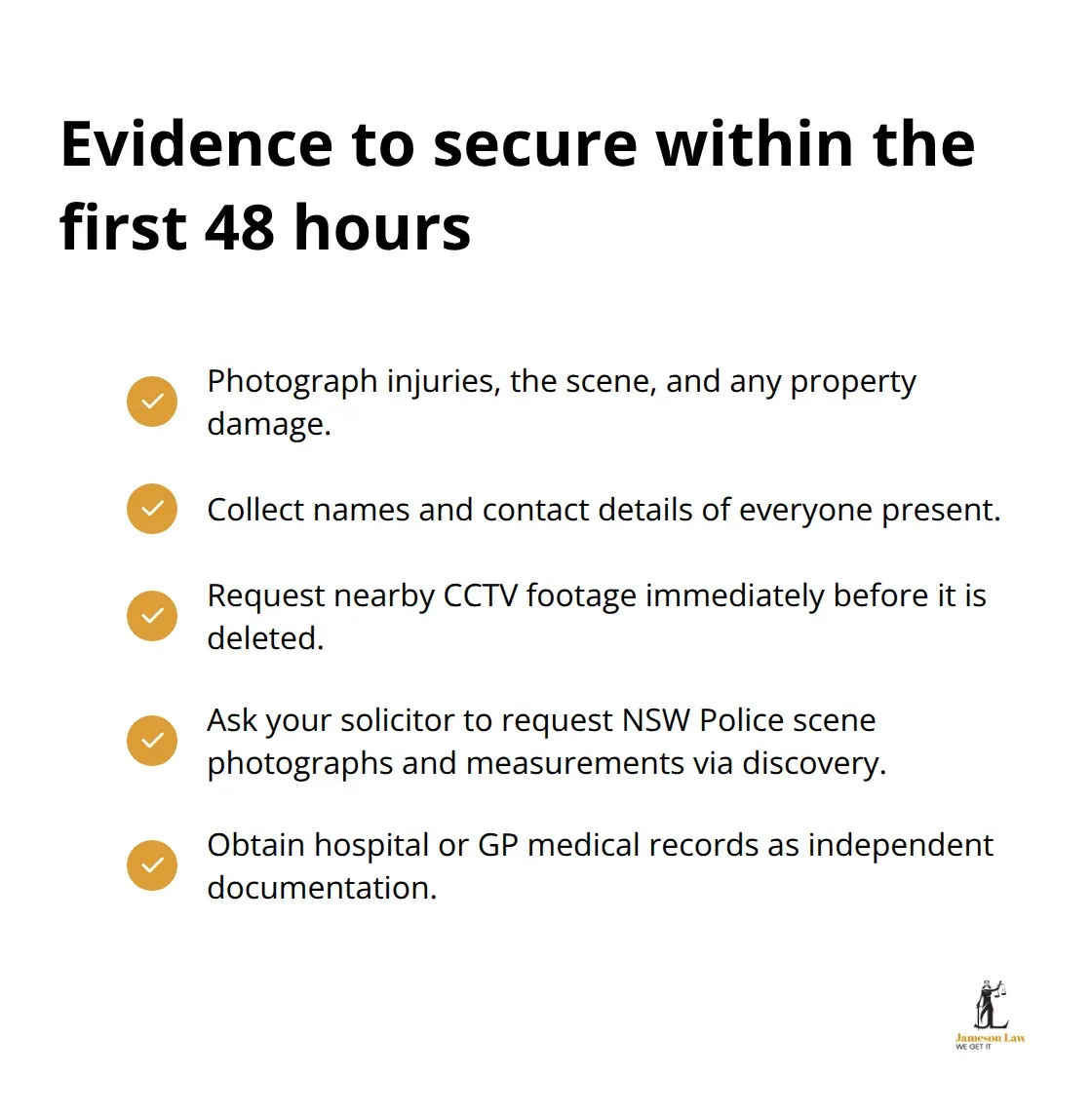
The difference between a conviction and an acquittal often rests on evidence quality, not on what happened during the incident itself. Defendants who systematically gather evidence within the first 48 hours after an incident dramatically improve their defence prospects. Start by photographing any injuries you sustained, the scene where the incident occurred, and any property damage. Obtain the names and contact details of everyone present, even if they didn’t witness the core incident-peripheral witnesses often provide valuable timeline information that undermines the prosecution’s version.
Request CCTV footage immediately from nearby businesses, transport operators, or private properties, as footage degrades or gets deleted within weeks. NSW Police hold incident scene photographs and measurements, which your legal representative can request through discovery. Medical records from hospital or GP visits create independent documentation of your injuries and the date you received treatment. If you sought medical attention the day of the incident, this timing supports self-defence claims far more effectively than waiting weeks.
Gather Witness Statements and Location Data
Witness statements carry real weight when they’re documented early and contain specific details rather than vague recollections. Ask witnesses to write down what they saw, including lighting conditions, their distance from events, and whether they saw the other person act aggressively first. Phone records showing your location through cell tower data can eliminate mistaken identity issues entirely. Text messages, emails, or social media communications between you and the alleged victim establish the relationship dynamic and prior conflict patterns.
Use Medical Evidence to Challenge the Prosecution’s Account
Medical evidence becomes particularly powerful when it contradicts the prosecution’s narrative. If you have injuries consistent with defensive actions-bruising on your forearms or hands-these demonstrate you were protecting yourself rather than initiating aggression. Conversely, if the alleged victim’s injuries don’t match their account of events, expert testimony from medical professionals identifies these inconsistencies. Expert witnesses such as emergency physicians or trauma surgeons testify about injury patterns and whether an injury aligns with the alleged assault method. Toxicology reports matter significantly because alcohol or drug impairment affects whether someone could have formed the intent required for aggravated assault. Obtain these reports from hospital records if you were tested following the incident.
Obtain Legal Advice Before Making Statements
Early legal advice fundamentally changes your approach to evidence gathering because your solicitor identifies which evidence matters most to your specific defence. Different defence strategies require different evidence priorities-self-defence cases prioritise evidence of the other person’s aggression, while mistaken identity cases focus on location data and CCTV. Your legal representative also protects you from inadvertently damaging your case through careless statements to police or social media posts. Contact a solicitor before giving any formal statement to police; this is standard practice, not an admission of guilt. Police often misrepresent statements or omit context that supports your version of events, so legal representation during interviews safeguards your interests. The earlier you obtain legal advice, the earlier your solicitor can lodge a request for disclosure, compelling the prosecution to provide their evidence before trial. This allows your defence team to identify weaknesses, inconsistencies, and credibility problems in their case months before you step into a courtroom.
Final Thoughts
Aggravated assault charges demand an assault defence strategy that starts the moment you face accusation. The defences available to you-self-defence, challenging the prosecution’s proof of intent, and exposing witness credibility problems-only work when solid evidence supports them. Photographs, CCTV footage, medical records, and witness statements collected within days of an incident create the foundation your legal team needs to identify weaknesses in the prosecution’s case.
The prosecution carries the burden of proving every element beyond reasonable doubt, which means their case can collapse if they fail to establish your mental state, if self-defence evidence undermines their narrative, or if witness credibility crumbles under scrutiny. Early legal advice protects your interests in ways that waiting cannot, as your solicitor can request disclosure from police, lodge evidence preservation notices for CCTV footage, and advise you on what to say during police interviews. Many cases turn on decisions made in the first week after charges are laid.
Contact Jameson Law to discuss your case with a criminal law solicitor who can review the allegations against you and map out your defence options. We work with clients to identify the specific weaknesses in each prosecution case and build defences tailored to those vulnerabilities. Your next step is protecting your rights today.