

A personal injury claim can involve unfamiliar forms, medical assessments, insurer decisions and strict time limits. The process depends on how the injury happened. A motor accident claim, for example, follows different rules from a workplace injury, public liability or medical negligence claim.
This guide explains the main stages of a personal injury claim in NSW, the evidence commonly required and the issues to consider before accepting a settlement.
What is a personal injury claim?
A personal injury claim seeks statutory benefits or compensation for an injury. Depending on the type of claim, it may be necessary to establish that another person or organisation failed to take reasonable care and that this caused or contributed to the injury.
The Civil Liability Act 2002 (NSW) governs many negligence and damages claims. Separate laws and statutory schemes apply to motor accidents and workplace injuries. The applicable scheme affects eligibility, procedure, available compensation and time limits.
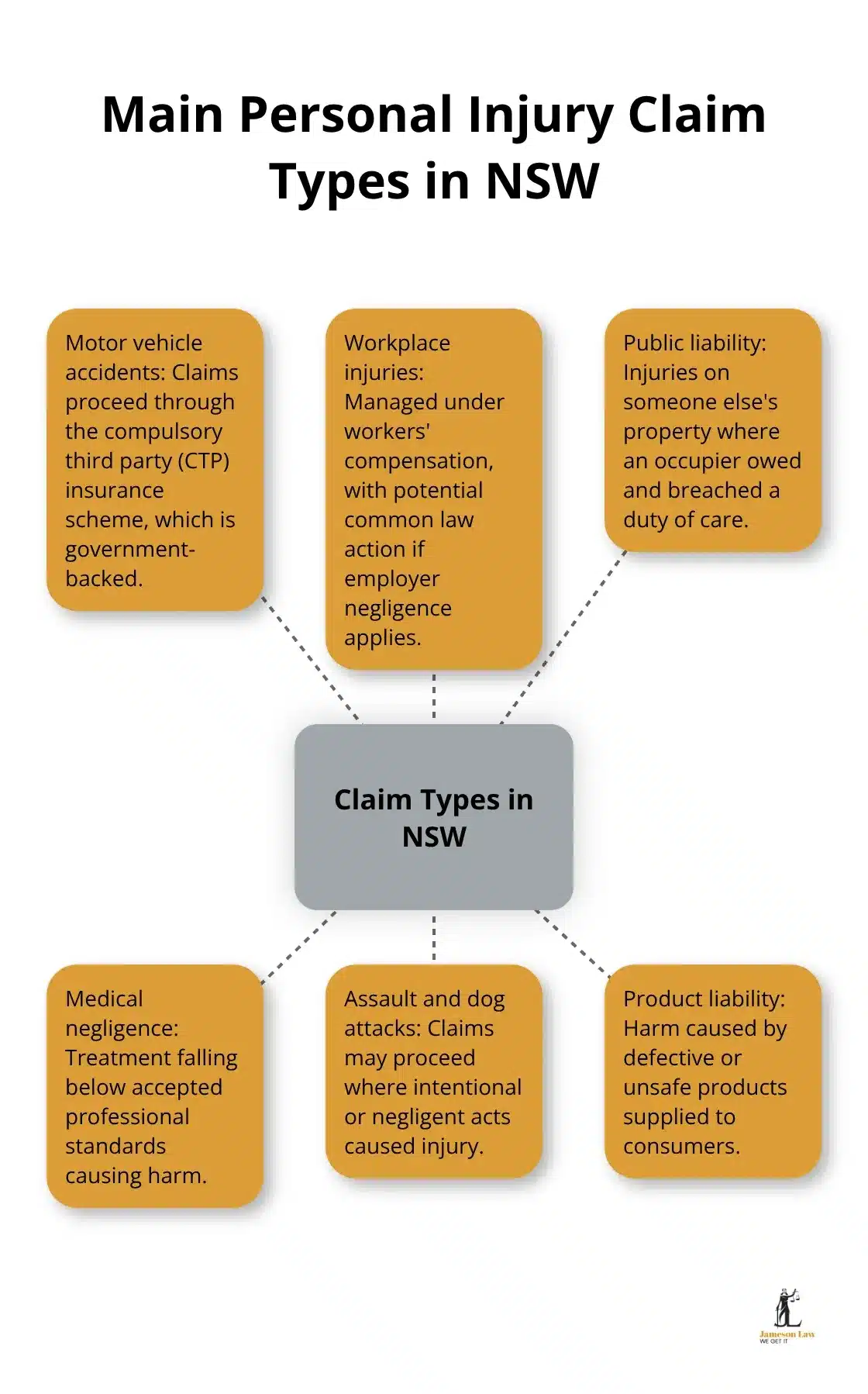
Common types of personal injury claims in NSW
- Motor accident claims: NSW compulsory third party insurance may provide statutory benefits to eligible people injured in a motor crash. A separate damages claim may be available if additional requirements are met.
- Workers compensation claims: An injured worker may be entitled to weekly payments, medical and related expenses or lump-sum compensation for permanent impairment. Additional requirements apply to a work injury damages claim.
- Public liability claims: These may arise from an injury at a business, rental property, public place or other premises where a person or organisation allegedly failed to take reasonable precautions.
- Medical negligence claims: These generally require evidence about the standard of care, breach, causation and the harm resulting from the treatment or omission.
- Product liability and other negligence claims: The appropriate pathway depends on the facts, the parties involved and the applicable legislation.
Personal injury claim time limits in NSW
There is no single deadline for every personal injury claim. Limitation periods, claim lodgement deadlines and notice requirements vary between schemes. Obtain advice promptly rather than attempting to calculate a deadline without considering the relevant legislation and facts.
General negligence claims
Under the Limitation Act 1969 (NSW), many personal injury actions are subject to whichever expires first: a three-year post-discoverability limitation period or a 12-year long-stop period running from the relevant act or omission.
Discoverability depends on when the claimant knew, or ought to have known, specified facts concerning the injury, its cause and whether it was sufficiently serious to justify bringing proceedings. Extensions and different rules may apply in some circumstances.
Motor accident claims
Under the current NSW CTP scheme, a statutory benefits claim generally must be lodged within three months after the crash. Lodgement within 28 days is required to receive eligible weekly payments from the day after the crash. Late claims may be possible in some circumstances, but payment periods can be affected.
The crash must generally be reported to NSW Police within 28 days unless a police officer attended. The insurer may request other evidence where a police event number is unavailable.
A common law damages claim generally must be made within three years after the crash. A claim lodged outside that period requires a satisfactory explanation for the delay. Eligibility, impairment and fault requirements also apply. See the SIRA guide for people injured in NSW motor crashes.
Workplace injury claims
A worker should notify their employer of a work-related injury or illness as soon as possible. A workers compensation claim should generally be made within six months after the injury or death, although exceptions may apply.
A work injury damages claim requires an injury caused by the employer’s negligence and permanent impairment of at least 15%. The impairment assessment must be accepted by the insurer or determined through the applicable process. These damages are limited to past loss of earnings and future loss of earning capacity.
Court proceedings for work injury damages generally must begin within three years after the injury unless the court gives permission. SIRA provides information about what to do after a workplace injury and work injury damages.
What happens after you contact a personal injury lawyer?
1. Initial assessment
The lawyer will usually ask how and when the injury occurred, who may be responsible and whether an insurer, employer or other party has been notified. Questions may also cover medical treatment, employment, previous injuries and the injury’s effect on daily activities.
The initial assessment should identify the likely claim pathway, urgent deadlines and evidence that still needs to be obtained. A claim generally cannot be assessed properly without sufficient medical, liability and financial evidence.
2. Evidence collection
Documents and other evidence may include:
- medical records, certificates, referrals and treatment plans;
- incident, police, workplace or hazard reports;
- photographs, video or records of the incident location;
- witness names and contact details;
- payslips, tax records and employment information;
- receipts for treatment, medication, travel and paid assistance; and
- correspondence from insurers, employers and other parties.
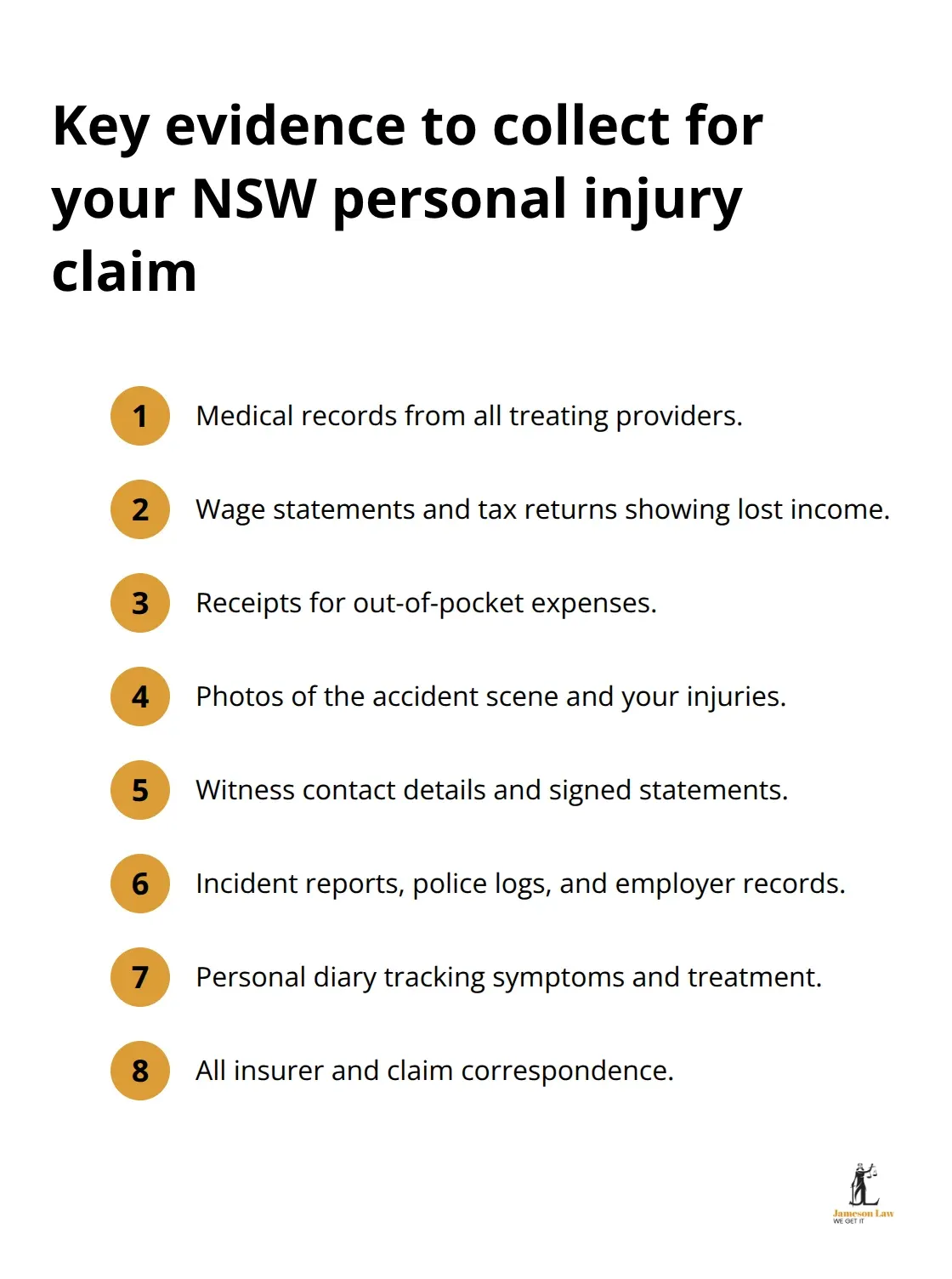
Keep original documents where possible and do not alter photographs or other records. A factual diary recording symptoms, treatment, work absences and assistance required at home may also be useful.
3. Claim notification and insurer response
Your lawyer may assist with the required claim form or notice and supporting material. The insurer may investigate eligibility, liability, the injury and the claimed losses. It can request documents, statements and medical examinations where permitted.
Acceptance of a treatment expense or statutory benefit does not necessarily mean that liability for every part of a damages claim has been accepted. Read decision notices carefully because review or dispute periods may apply.
4. Medical assessment and stabilisation
Medical evidence can help establish the diagnosis, cause of the injury, treatment needs, work capacity, permanent impairment and prognosis. The parties may obtain reports from treating practitioners or independent medical assessors.
Final settlement is often considered after the injury has stabilised sufficiently for its likely long-term effects to be assessed. Settling before the evidence is sufficiently developed may make it difficult to account for future treatment, care or reduced earning capacity. The appropriate timing depends on the claim and any applicable deadline.
5. Negotiation and dispute resolution
Many claims resolve through negotiation or a formal dispute-resolution process. A settlement proposal should be assessed against the available evidence, applicable law, legal costs, statutory repayments and the risks of continuing the dispute.
If the parties cannot resolve the claim, proceedings may be required in a court or the Personal Injury Commission, depending on the type of dispute. Starting proceedings does not prevent the parties from later reaching a settlement.
What compensation may be available?
The available benefits or damages depend on the claim type and may include:
- reasonable and necessary treatment and rehabilitation expenses;
- statutory weekly payments or damages for past income loss;
- damages for future loss of earning capacity;
- domestic, nursing or personal care in qualifying cases;
- lump-sum compensation for permanent impairment where statutory requirements are met; and
- damages for non-economic loss where the applicable threshold is satisfied.
For claims within its scope, the Civil Liability Act regulates economic and non-economic loss. Damages for non-economic loss are unavailable under that Act unless the severity of the loss is assessed as at least 15% of a most extreme case.
Other schemes use different thresholds. In a motor accident damages claim, non-economic loss is available only if the degree of permanent impairment caused by the crash is greater than 10%. Work injury damages require at least 15% permanent impairment and are confined to past loss of earnings and future loss of earning capacity.
There is no standard payment for a particular injury. The outcome depends on the governing scheme, medical evidence, causation, liability, contributory negligence, financial loss and likely future consequences.
CTP benefits where the injured person was at fault
Most people injured in a NSW motor crash can apply for statutory benefits regardless of fault. However, fault and injury classification can affect how long weekly payments and treatment benefits continue.
For crashes occurring on or after 1 April 2023, weekly payments generally cease after 52 weeks if the injured person was wholly or mostly at fault or their only injuries were threshold injuries. Other eligibility rules and exclusions may apply. A person who caused the crash will not ordinarily be eligible to recover common law damages from another driver.
Legal costs and conditional costs agreements
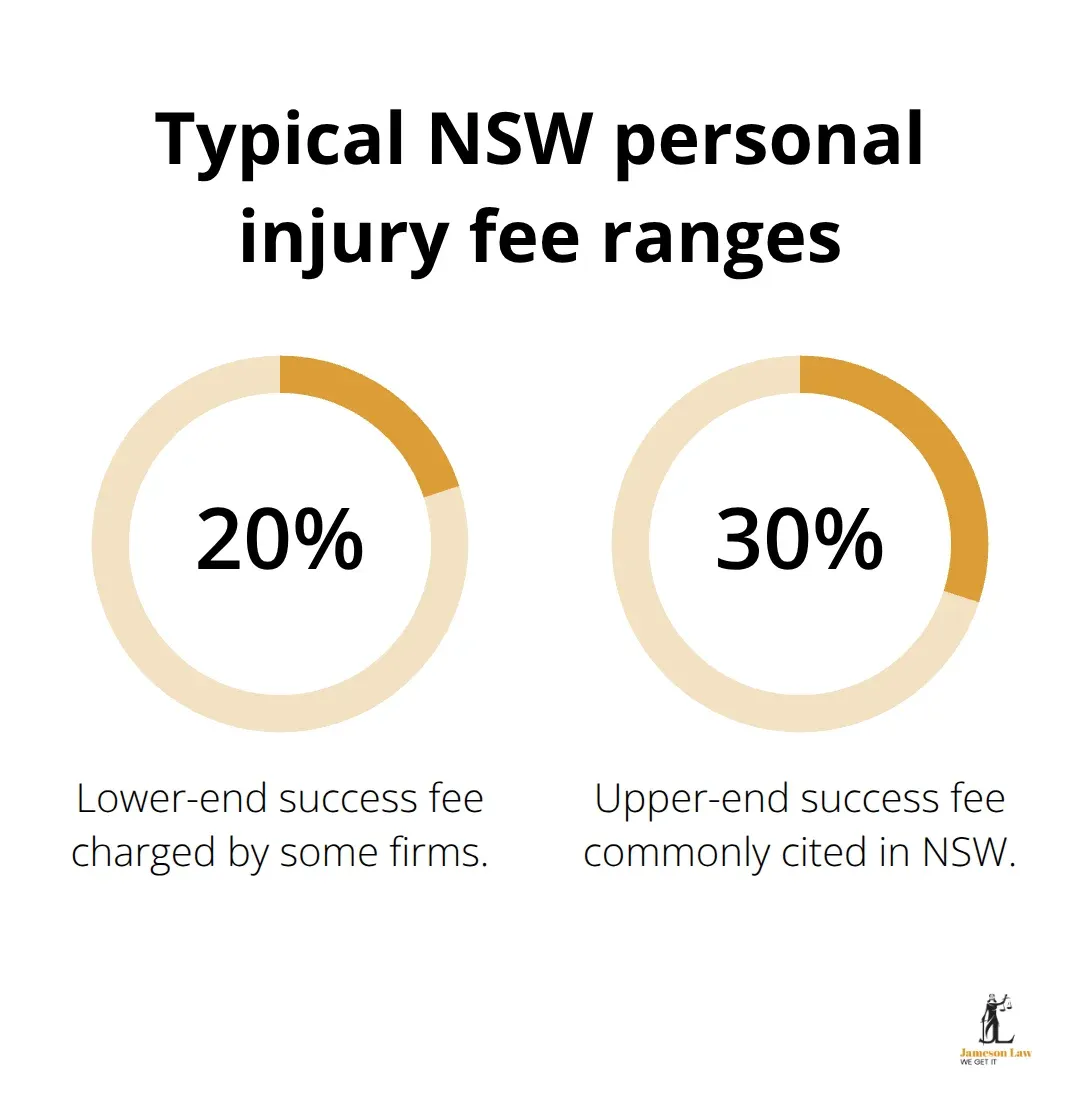
Some personal injury lawyers offer conditional costs agreements, commonly described as “no win, no fee”. The meaning and financial effect depend on the written agreement. Such an arrangement does not necessarily remove responsibility for disbursements, such as medical report fees, barristers’ fees or court fees. Court proceedings may also create a risk of paying part of another party’s costs.
Under the Legal Profession Uniform Law (NSW), legal fees generally cannot be calculated as a percentage of the compensation or settlement recovered. A conditional costs agreement may provide for an uplift fee. For a litigious matter, the uplift cannot exceed 25% of the legal costs otherwise payable, excluding disbursements, and other statutory requirements apply.
Before signing a costs agreement, ask for an explanation of:
- how professional costs will be calculated;
- whether an uplift fee applies and how it is calculated;
- who pays disbursements and when payment is due;
- what costs are payable if the claim does not succeed;
- whether another party’s costs could become payable; and
- how legal costs and statutory repayments may affect the net settlement amount.
Preparing for your first appointment
Bring any available medical certificates, insurer correspondence, incident reports, photographs, witness details and financial records. It can help to prepare a short chronology covering the incident, treatment, periods away from work and important communications.
Useful matters to discuss include:
- which legislation and claim process apply;
- which deadlines and notice requirements must be met;
- what evidence is missing;
- how legal costs and disbursements will be handled;
- what statutory repayments or deductions may apply; and
- the practical risks of settlement, dispute resolution or litigation.
Before accepting a settlement
A settlement may bring the damages claim to an end and prevent a further claim for losses that later become apparent. Before accepting an offer, consider whether the medical evidence addresses your prognosis, future treatment, work capacity and care needs.
You should also obtain an explanation of legal costs, insurer or government repayments, any outstanding disbursements and the estimated net amount you would receive. The effect of settlement differs between statutory schemes, so advice should be based on the terms of the proposed agreement and your circumstances.
Get advice about your claim
Personal injury deadlines and entitlements depend on how the injury occurred and the legislation that applies. Early advice can help identify the correct claim pathway, preserve evidence and meet applicable notice or filing requirements.
Contact Jameson Law to discuss the circumstances of your injury and the next steps that may be available.
Frequently Asked Questions
How long do I have to make a personal injury claim in NSW?
It depends on the claim. Many negligence actions are subject to a three-year post-discoverability period and a 12-year long-stop period. CTP statutory benefits claims generally must be lodged within three months, while workers compensation claims should generally be made within six months. Earlier notice requirements may apply.
Can I claim CTP benefits if I caused the accident?
Most people injured in a NSW motor crash can apply for statutory benefits regardless of fault. Fault and injury classification can affect how long benefits continue. Common law damages are subject to separate fault, impairment and eligibility requirements.
What evidence should I keep after an injury?
Keep medical records, certificates, photographs, incident reports, witness details, insurer correspondence, income records and receipts. A factual diary of symptoms, treatment, work absences and assistance required at home may also help.
Does “no win, no fee” mean I pay nothing?
Not necessarily. The costs agreement may make you responsible for disbursements or other expenses. Court proceedings can also create a risk of paying part of another party's costs. Ask for a written explanation before signing.
How much compensation will I receive?
There is no standard amount. Compensation depends on the claim type, liability, medical evidence, financial loss, future needs, statutory thresholds and any contributory negligence.
Should I accept the insurer's settlement offer?
Consider whether the medical and financial evidence addresses your future treatment, work capacity, care needs and likely losses. You should also understand legal costs, repayments, deductions and whether settlement will finally end the claim.