Applying for an Australian visa without professional guidance can lead to costly mistakes and rejections. A registered migration agent understands the complexities of visa law and knows exactly what the Department of Home Affairs expects.
At Jameson Law, we’ve seen how the right support at the right time makes the difference between approval and rejection. This guide helps you decide whether hiring a migration agent is worth the investment for your situation.
Who Can Legally Help with Your Visa Application
Legal Authority and Registration Requirements
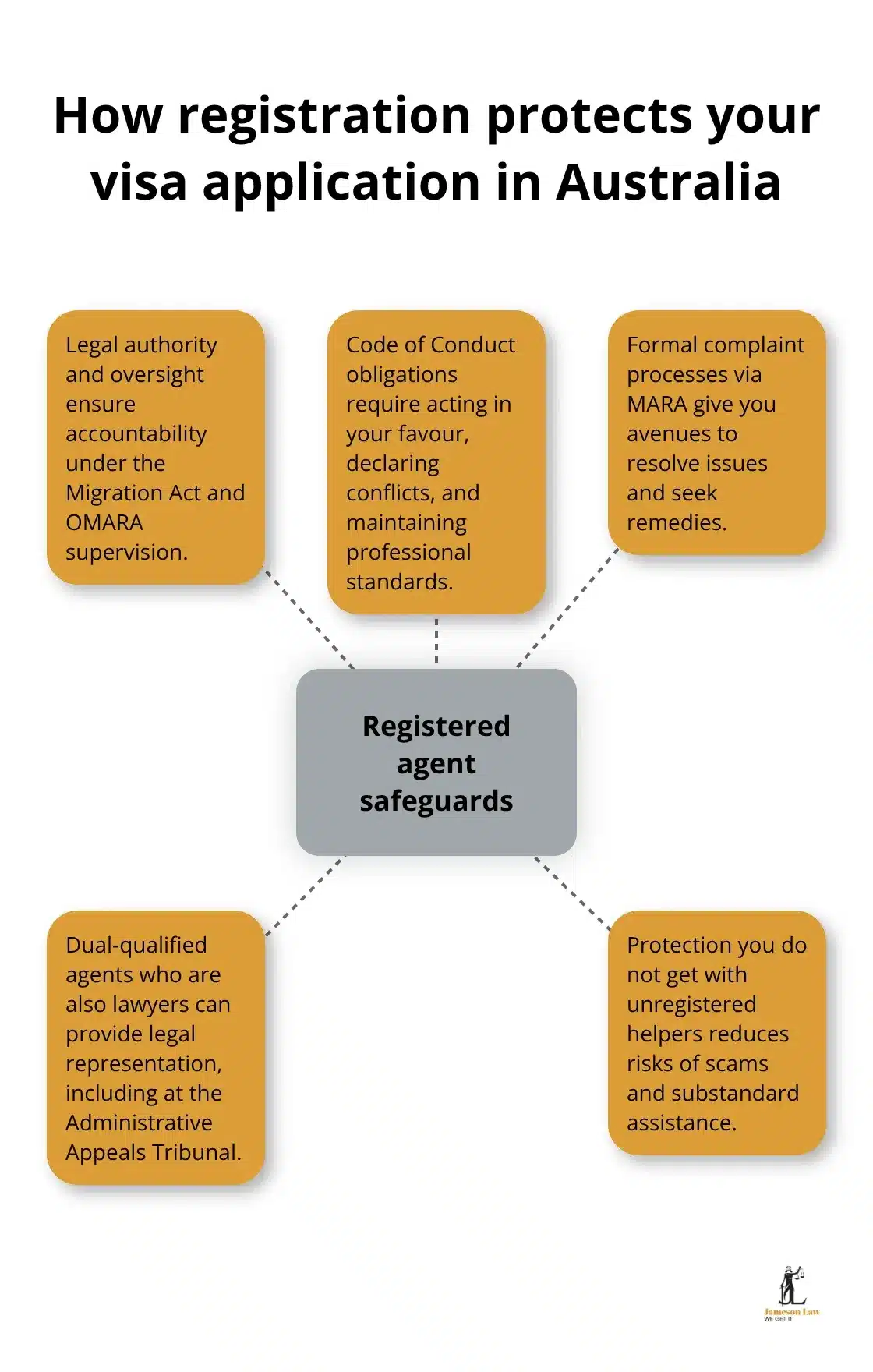
A registered migration agent holds authorisation from the Australian government to provide immigration assistance. Under the Migration Act 1958, only registered migration agents and immigration lawyers can legally offer advice on visa applications, prepare your documents, and represent you before the Department of Home Affairs. The Office of the Migration Agents Registration Authority (OMARA), which operates within the Department of Home Affairs, maintains a register of all authorised agents across Australia. You can verify whether an agent holds current registration by searching the MARA register on the Department of Home Affairs website. This verification matters because offering immigration advice without registration constitutes an offence, and unregistered agents expose you to scams and substandard assistance.
Protection Through Registration and Code of Conduct
When you hire a registered agent, the Code of Conduct protects your interests. Registered agents must act in your favour, declare any conflicts, and handle complaints through formal channels. Many migration agents also hold law degrees and registration as immigration lawyers, which means they can offer both immigration advice and legal representation if your case proceeds to the Administrative Appeals Tribunal.

The key difference between a registered agent and other service providers lies in their legal authority and accountability. If something goes wrong, you have formal complaint mechanisms through MARA and the ability to seek compensation if the agent breaches the Code of Conduct. This protection does not exist with unregistered helpers, accountants, or friends who claim knowledge of the system.
Training and Specialisation
To become a registered migration agent, candidates complete a six-month certificate program before registering with MARA. This training covers visa law, application procedures, and compliance obligations. Agents operate at varying experience levels-some handle straightforward visa types while others specialise in complex categories like employer sponsorships or visa cancellations. Your choice of agent should reflect the complexity of your visa subclass and the agent’s demonstrated experience in that area.
Selecting and Verifying Your Agent
When selecting an agent, request their MARA registration number upfront and check their disciplinary history on the register. Ask for evidence of experience with your specific visa subclass. The agent should provide a written engagement letter that outlines services, fees, timelines, and what happens if your application is refused. This written agreement protects both you and the agent by establishing clear expectations from the start. The agent’s willingness to provide transparent documentation signals professionalism and accountability.
Moving Forward with Confidence
Understanding who can legally assist you forms the foundation for your next decision: whether your particular visa situation warrants professional help or whether you can manage the application yourself.
When You Need Professional Migration Help
Employer-Sponsored and Business Visas
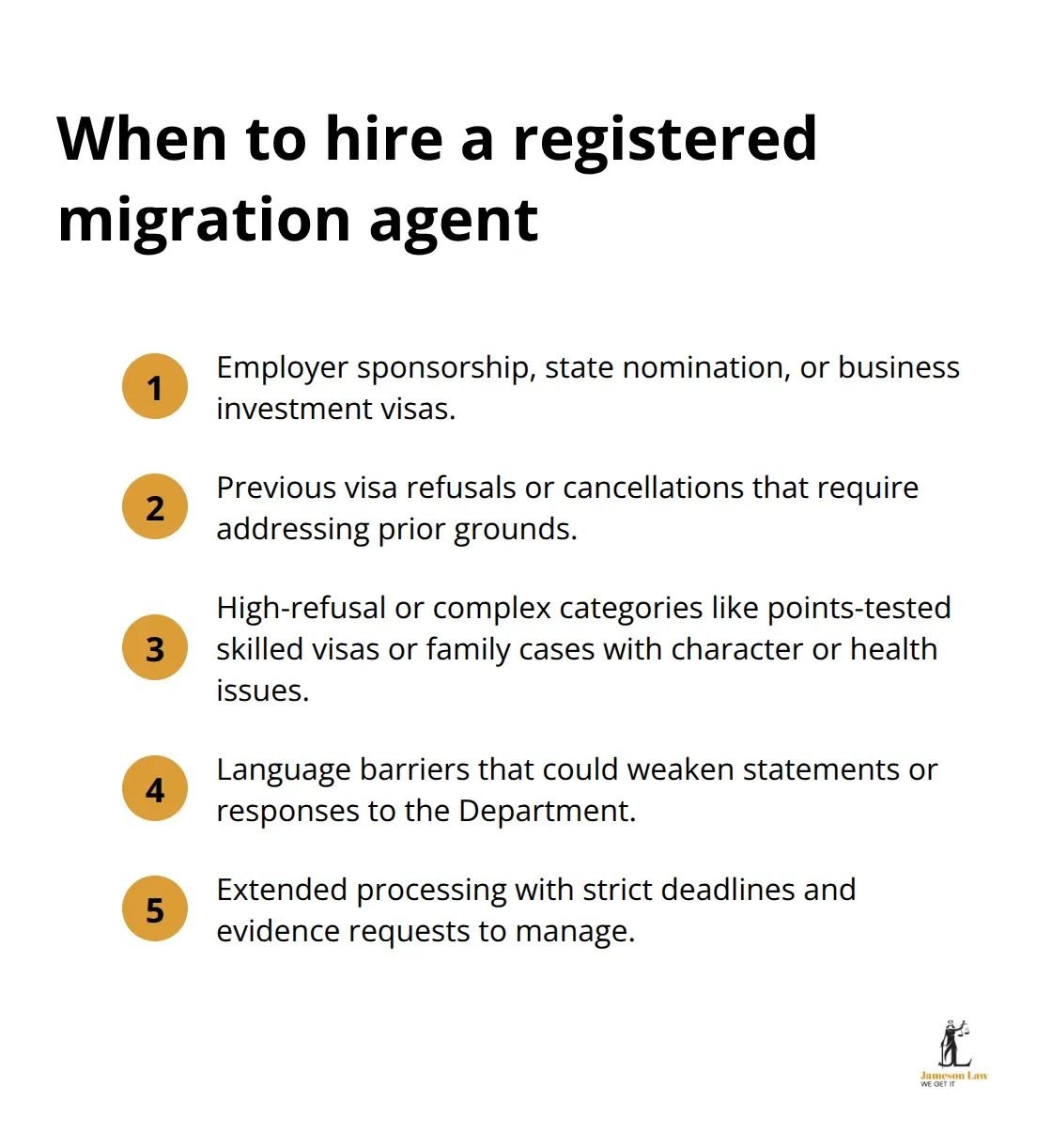
Certain visa applications demand professional guidance because the stakes are too high and the rules too intricate for self-management. If your visa category involves employer sponsorship, state nomination, or business investment, a registered migration agent becomes a practical necessity rather than an optional extra. Employer-sponsored visas like the Temporary Skill Shortage visa require your employer to demonstrate labour market testing, prove no Australian citizens are available for the role, and meet specific payroll thresholds. The Department of Home Affairs rejects applications when employers fail to document these requirements properly, and reapplication fees compound quickly. Business visa applications for investor or entrepreneur pathways involve financial documentation, business plans, and compliance with state-based requirements that vary across New South Wales, Victoria, and other jurisdictions. An agent familiar with your state’s specific criteria saves months of back-and-forth with authorities.
Previous Visa Refusals and Cancellations
If you have previously had a visa refused or cancelled, professional assistance becomes essential because you must address the original grounds for refusal in any new application. The Department of Home Affairs maintains detailed records, and your next application will face closer scrutiny. An agent can assess whether your circumstances have genuinely changed, prepare statements that directly counter previous concerns, and determine whether an appeal through the Administrative Review Tribunal or a fresh application offers better prospects. Previous refusals also signal that your case contains complexities you may not have recognised initially, making DIY reapplication particularly risky.
High-Complexity Visa Categories
The complexity threshold matters here. Visa categories with high refusal rates-such as skilled migration applications where points assessments determine eligibility, or family sponsorships involving character or health considerations-warrant professional review before you lodge your application. An agent conducts an early eligibility assessment and identifies gaps in your profile, potentially saving the application fee and processing time if your circumstances do not currently meet requirements.
Language and Communication Barriers
If English is your second language, an agent ensures your written statements and responses to Department requests communicate your circumstances clearly and persuasively. The Department receives applications from applicants worldwide, and poorly expressed English can inadvertently weaken your case even when your circumstances would otherwise qualify. An agent translates your intentions into language that strengthens your position rather than undermining it.
Managing Extended Processing Timelines
Visa processing times vary significantly by category. During this extended waiting period, an agent manages correspondence with the Department, responds to requests for evidence within strict timeframes, and keeps your application progressing. Missing a Department deadline or submitting incomplete documentation can result in automatic refusal, and an agent prevents these administrative failures. The difference between approval and rejection often hinges on whether you meet procedural requirements as much as substantive eligibility criteria-a reality that makes professional oversight valuable when processing extends across years rather than months.

What Goes Wrong When You Apply Alone
High Refusal Rates for Self-Managed Applications
Self-managed visa applications fail far more often than applications prepared with professional assistance, and the financial and emotional cost of rejection extends well beyond the initial application fee. The Department of Home Affairs processes over 140 different visa types, each with distinct documentation requirements, assessment criteria, and procedural rules that shift regularly. When you lodge an application without professional guidance, small errors in form completion, missing documents, or poorly articulated statements of purpose trigger automatic refusals rather than requests for further information. The Department operates under strict assessment frameworks and conducts a single careful review before making a decision. If the Department identifies gaps or inconsistencies, they issue a request for evidence with a strict deadline. Missing this deadline results in automatic refusal, and no second chance exists.
Common Mistakes That Lead to Rejection
Many applicants who attempt DIY applications discover too late that they misunderstood eligibility criteria, failed to gather supporting documents in the required format, or submitted evidence that did not address the specific grounds on which the Department assesses their visa category. A registered migration agent prevents these failures through upfront eligibility assessment, identification of documentation gaps before lodgement, and preparation of written statements that directly address assessment criteria. The agent’s experience with your specific visa type means they recognise which documents carry weight and which ones the Department typically overlooks or rejects.
The Escalating Financial Penalty of Refusal
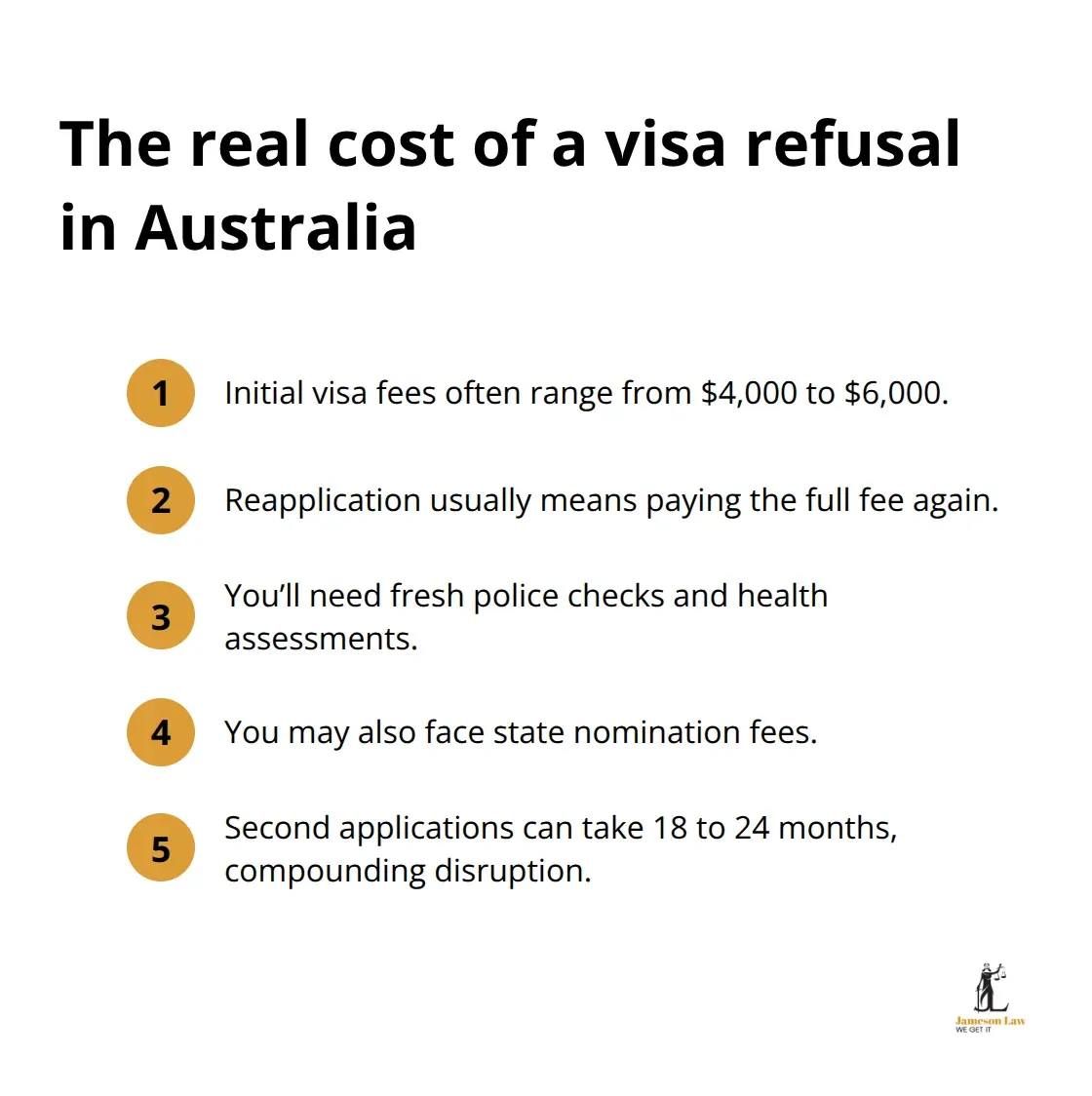
The financial penalty for visa refusal compounds quickly and extends well beyond the reapplication fee itself. The initial visa application charge for skilled migration visas ranges from around $4,000 to $6,000 depending on the category, and reapplication means paying this fee again. If your circumstances have genuinely changed since the first refusal, you must also gather updated documentation, pay for new police checks or health assessments, and potentially wait months for processing of the second application. Processing delays increase substantially for reapplications because the Department conducts more thorough scrutiny when an applicant has previously faced refusal.
Extended Waiting Periods and Compounding Complications
Some applicants wait 18 to 24 months for a decision on a second application, during which time their employment situation, family circumstances, or visa status may shift again, creating new complications. An agent familiar with the grounds for your original refusal assesses whether a fresh application has realistic prospects or whether alternative visa pathways might succeed more quickly. This strategic guidance prevents the costly cycle of repeated rejections and wasted application fees. Additionally, if your visa application involves employer sponsorship or state nomination, delays and refusals damage your credibility with sponsoring employers and state authorities, potentially closing off future visa opportunities with those organisations.
Final Thoughts
Your visa application’s complexity determines whether a registered migration agent justifies the investment. If your situation involves employer sponsorship, state nomination, previous refusals, or intricate documentation requirements, professional assistance reduces the risk of costly rejection and protects you from the cascading expenses that follow a refusal decision. The Department of Home Affairs applies strict assessment criteria, and small errors trigger automatic refusal rather than requests for clarification-a reality that makes professional guidance practical when your circumstances fall outside straightforward categories.
The financial case for hiring a registered migration agent becomes clear when you calculate the true cost of rejection. Initial visa fees range from $4,000 to $6,000 for many categories, and reapplication means paying this fee again plus updated police checks, health assessments, and potentially state nomination fees. Processing times for second applications often extend to 18 to 24 months, during which your circumstances may shift and create new complications that compound your difficulties.

If your visa category is straightforward and your circumstances uncomplicated, you may successfully lodge an application yourself using official Department of Home Affairs resources. However, if uncertainty exists about your eligibility or documentation requirements, professional guidance becomes practical rather than optional. Contact Jameson Law to speak with our immigration law team about your visa situation and whether professional assistance suits your circumstances.