



A theft charge can derail your life, affecting employment, housing, and your reputation. The difference between conviction and acquittal often comes down to the quality of your defence lawyer.
At Jameson Law, we’ve seen how proper theft charges defence strategies can expose flaws in police investigations and prosecution evidence. Getting legal representation early gives you the best chance of a better outcome.
What Constitutes Theft in NSW
The Five Elements of Theft
Theft under the Crimes Act 1900 (NSW) requires the prosecution to prove five specific elements, and understanding these forms your first line of defence. The person must dishonestly take property belonging to another with the intention of permanently depriving that person of it. Dishonesty represents the critical element-it’s not simply about taking something, but about your state of mind when you took it. NSW courts have consistently held that dishonesty requires proof of both knowledge that the taking was unauthorised and an intention to act dishonestly by ordinary community standards. A person can physically take property without being guilty of theft if they genuinely believed they had permission or a lawful right to take it.
How Prosecutors Prove Dishonesty
The prosecution must establish dishonesty beyond reasonable doubt, and this requirement creates significant opportunities for defence. Many cases fail at this stage because police investigations don’t adequately test whether you actually held the necessary dishonest intent. Your defence lawyer can identify gaps in the evidence that prosecutors rely on to establish your state of mind.
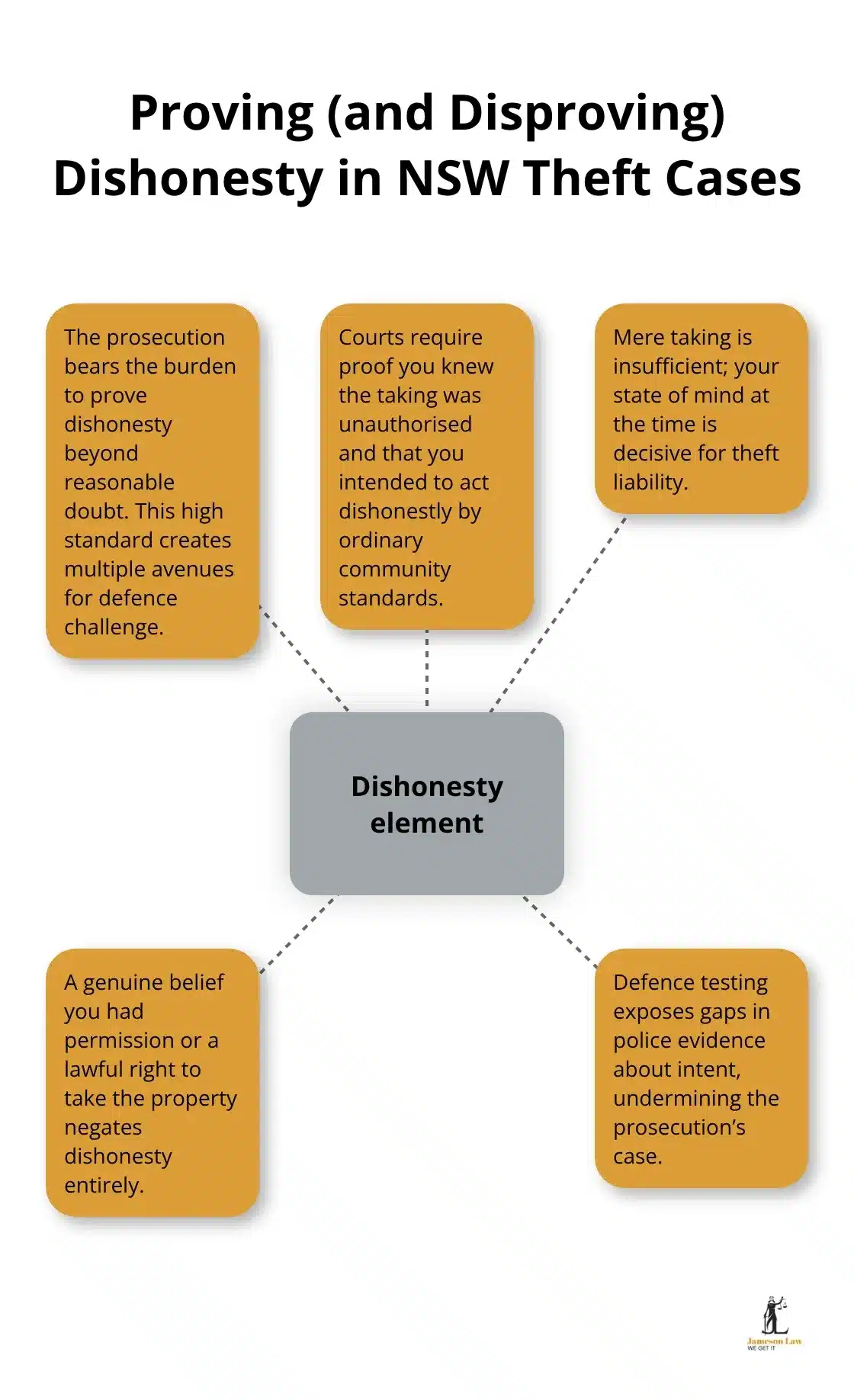
When the prosecution cannot prove dishonesty with sufficient clarity, the entire theft charge collapses.
Theft Charges and Penalty Ranges
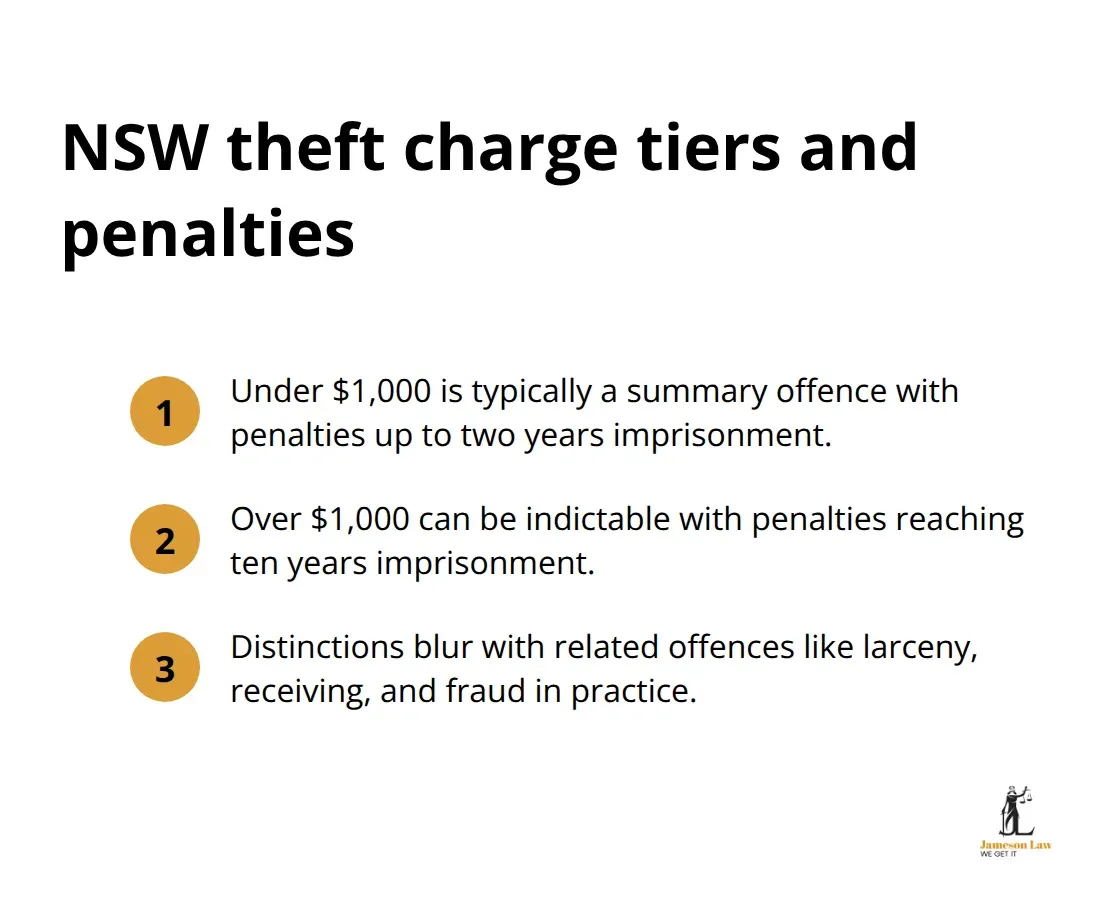
Common theft charges in NSW range significantly in seriousness and penalties. Stealing property valued under $1,000 typically attracts summary offence treatment, with penalties up to two years imprisonment, whilst stealing property valued over $1,000 can be prosecuted as an indictable offence with penalties reaching ten years imprisonment. The distinction between theft and related offences like larceny, receiving stolen property, or fraud often blurs in practice.
Related Offences and Their Different Requirements
Receiving stolen property requires proof that you knew the property was stolen when you received it-a much higher threshold than simply possessing stolen goods. Fraud involves deception to obtain property, whereas theft does not require deception. These distinctions matter enormously because a charge framed as theft might actually be more appropriately charged as receiving, which carries different evidentiary requirements and penalties. Police and prosecutors sometimes charge theft when the evidence more accurately supports a lesser offence, and identifying this discrepancy early can substantially improve your position before trial.
Understanding these distinctions between theft and related offences sets the foundation for recognising how a defence lawyer protects your rights from the moment police question you.
How a Defence Lawyer Protects Your Position
What Happens During Police Questioning
The police station represents your most vulnerable moment in a theft investigation. When police question you about a theft allegation, you hold the right to remain silent and the right to legal representation, yet many people waive these rights without understanding the consequences. A defence lawyer present during questioning stops police from misrepresenting your words, prevents them from pressuring you into admissions you didn’t intend to make, and holds them accountable to proper procedures.

NSW Police must caution you about your rights before questioning, but this caution alone doesn’t shield you from skilled interrogation techniques. Police can legally lie about evidence they claim to have, tell you that witnesses have identified you, or suggest that cooperation will result in leniency-and without a lawyer present you may respond in ways that later damage your defence. The moment police arrest or question you about theft, contacting a defence lawyer should be your first action. Police questioning can last hours, and fatigue combined with pressure creates an environment where innocent people make statements they later regret. A lawyer ensures you answer only questions you choose to answer and advises when silence serves your interests better than speech.
Identifying Weaknesses in the Prosecution’s Case
Once formal charges are laid, the prosecution must disclose their evidence to your defence lawyer before trial, and this disclosure stage determines whether your case proceeds to court or gets resolved earlier. A skilled defence lawyer identifies weaknesses in police investigations, inconsistencies in witness statements, gaps in the chain of custody for alleged stolen property, and flaws in how police proved your dishonest intent. Many theft prosecutions rely heavily on circumstantial evidence or witness identification that hasn’t been properly tested, and a defence lawyer knows exactly which questions expose these vulnerabilities. If the prosecution’s case contains serious weaknesses, your lawyer negotiates with prosecutors to withdraw charges, reduce them to lesser offences, or recommend they proceed to trial knowing they face real challenges.
Negotiating Better Outcomes Before Trial
In NSW District Court, prosecutors often hold discretion to offer pleas to lesser charges before trial, and securing these negotiations requires a lawyer who understands both the evidence and the prosecutor’s assessment of case strength. Early engagement with a defence lawyer means these negotiations happen at a point when prosecutors still hold flexibility, rather than after they’ve committed resources to trial preparation. The prosecution’s willingness to negotiate typically decreases as trial approaches, making early legal representation a significant advantage. Your defence lawyer presents the weaknesses in their case in a way that makes prosecutors reconsider their position, potentially leading to withdrawn charges, reduced penalties, or alternative resolutions that protect your future employment and reputation prospects.
Building Your Defence Against Theft Charges
Targeting the Elements the Prosecution Must Prove
Your defence strategy must target the specific elements the prosecution must prove, and this focus separates effective defences from generic arguments that waste court time. The prosecution bears the burden of proving dishonesty beyond reasonable doubt, and many theft cases collapse when your lawyer systematically challenges how they’ve established this critical element. If police charged you based on CCTV footage showing you took property, your defence doesn’t need to prove you didn’t take it. Instead, your lawyer demonstrates you believed you had permission or a lawful right to take it, which destroys the dishonesty element entirely.
Challenging Witness Identification
Witness identification presents another avenue worth pursuing, particularly when the witness saw you only briefly or under poor lighting conditions. Eyewitness identification remains unreliable, yet prosecutors frequently rely on it as their primary evidence. Your defence lawyer cross-examines witnesses about their visibility, distance from the alleged theft, and whether they identified you at the time or only later from a photograph. Police sometimes present property they claim you stole without establishing an unbroken chain of custody, meaning they cannot prove the item in court is actually the one allegedly taken. Gaps in this chain weaken the prosecution’s case substantially.
Proving Intent to Permanently Deprive
The prosecution must also prove you intended to permanently deprive the owner of their property. If you took something temporarily intending to return it, theft charges fail regardless of other evidence. This element often receives insufficient attention in police investigations, yet it forms a cornerstone of any theft conviction. Your lawyer identifies situations where your conduct suggests temporary rather than permanent deprivation, which can eliminate the theft charge entirely.
Understanding Sentencing Factors and Mitigation
Sentencing outcomes depend heavily on circumstances surrounding your conduct and your personal history, and understanding these factors allows your lawyer to present compelling mitigation before a judge. NSW courts consider factors including prior convictions, your age at the time of the offence, employment status, family responsibilities, and whether you acted under financial pressure or duress. Judges frequently impose lower sentences or defer them entirely when you demonstrate genuine remorse and steps toward rehabilitation. If you’ve already secured employment since the charge was laid, your lawyer presents this to the court as evidence of positive change.
Mental health issues, addiction, or financial hardship sometimes explain your conduct without excusing it, but courts consider these factors when determining appropriate punishment. The value of property stolen significantly influences sentencing-stealing $200 attracts vastly different treatment than stealing $5,000. Your lawyer negotiates with prosecutors before trial about whether they’ll agree to a statement of facts that portrays your conduct in the most favourable light consistent with the evidence, because judges rely heavily on agreed facts when sentencing.
Timing Your Plea and Securing Sentencing Discounts
Early guilty pleas typically result in sentencing discounts depending on how early you enter the plea and how seriously contested the case would have been. The District Court holds discretion to impose sentences up to ten years for serious theft, but actual sentences rarely approach this maximum unless the theft involved violence, planning, or substantial amounts. Your defence lawyer knows which judges typically impose custodial sentences and which prefer community corrections orders for first-time offenders (information that informs whether trial or negotiated resolution better serves your interests).
Final Thoughts
A theft charge demands immediate legal action. The moment police question you or lay charges, contact a defence lawyer to protect your position. Early intervention changes outcomes because prosecutors assess case strength at the beginning, when they hold maximum flexibility to negotiate, whereas waiting weeks or months means prosecutors have already committed to their position and become far less willing to withdraw or reduce charges.
We at Jameson Law understand how theft charges defence works in NSW courts. We’ve identified weaknesses in police investigations that prosecutors initially missed, negotiated reduced charges before trial, and presented mitigation that resulted in sentences far below what clients initially feared. Our experience across criminal law means we recognise how theft charges interact with your employment prospects, housing applications, and family circumstances.
Contact Jameson Law today to discuss your theft charges. We provide practical, accessible legal advice focused on your specific circumstances and the realistic options available to you. The sooner you engage representation, the sooner we can assess the prosecution’s evidence and begin protecting your position.