


Civil disputes in NSW can be complex and costly if you don’t understand the process. Whether you’re facing a breach of contract, property dispute, or debt recovery claim, knowing how civil litigation works makes a real difference to your outcome.
At Jameson Law, we’ve guided hundreds of clients through civil litigation in NSW. This guidance covers everything from pre-litigation steps through to trial, so you can make informed decisions about your matter.
Understanding Civil Litigation in NSW
What Civil Litigation Covers
Civil litigation in NSW handles disputes between individuals, businesses, or organisations where money or property is at stake, rather than criminal conduct. The NSW court system manages these disputes through the District Court, Supreme Court, and Local Court depending on the claim’s value and complexity. Property disputes, contract breaches, and debt recovery make up the bulk of civil cases in NSW, and each type follows slightly different procedural rules.
Which Court Handles Your Matter
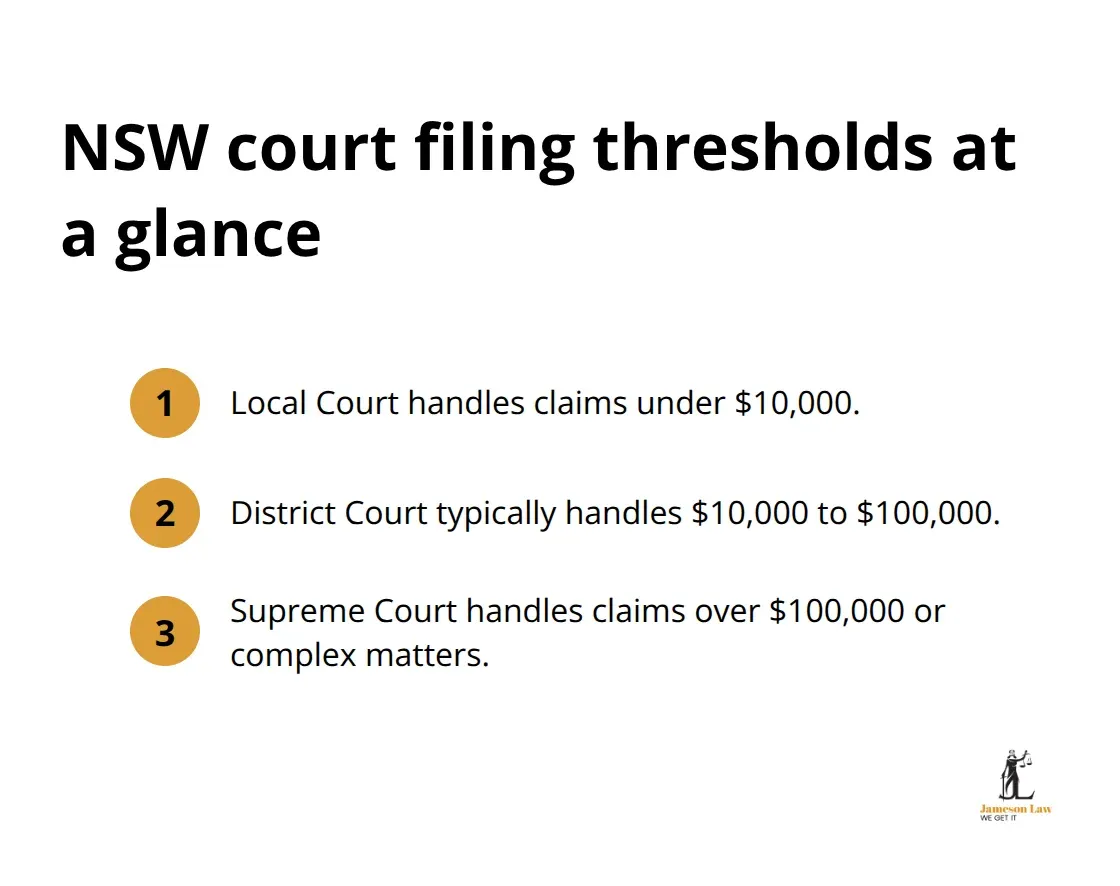
Claims under $10,000 go to the Local Court, those between $10,000 and $100,000 typically go to the District Court, and claims exceeding $100,000 or involving complex legal issues go to the Supreme Court. This tiered system means you need to file your claim in the correct court from the start, or you risk delays and additional costs. Filing in the wrong court can set your matter back weeks or months and add unnecessary legal expenses.
Civil Law vs Criminal Law
The key distinction from criminal law is that civil disputes don’t result in prison sentences but rather financial compensation or court orders forcing someone to act or refrain from acting. In criminal cases, the prosecution must prove guilt beyond reasonable doubt, whereas civil cases only require proof on the balance of probabilities (meaning it’s more likely than not that the defendant is liable). This lower threshold makes civil litigation more accessible for ordinary disputes, though it doesn’t make the process simpler or cheaper.
How Most Civil Claims Resolve
Most civil claims never reach trial because parties settle during the pre-litigation or discovery phases. Understanding your options early can save tens of thousands in legal fees. The NSW Civil Procedure Act 2005 governs how cases move through the system, requiring parties to attempt resolution before escalating to court proceedings. Many disputes resolve through mediation or negotiation without formal litigation, which typically costs less and takes less time than a full court hearing.
Taking Action Early
The decisions you make in the first few weeks of a civil dispute often determine whether your matter settles quickly or becomes protracted and expensive. Getting legal advice early helps you understand your position, assess the strength of your claim, and identify the most cost-effective path forward. The next section walks through the actual steps involved in civil litigation, from the moment a dispute arises through to potential trial.
How the Civil Litigation Process Works in NSW
From Dispute to Court Filing
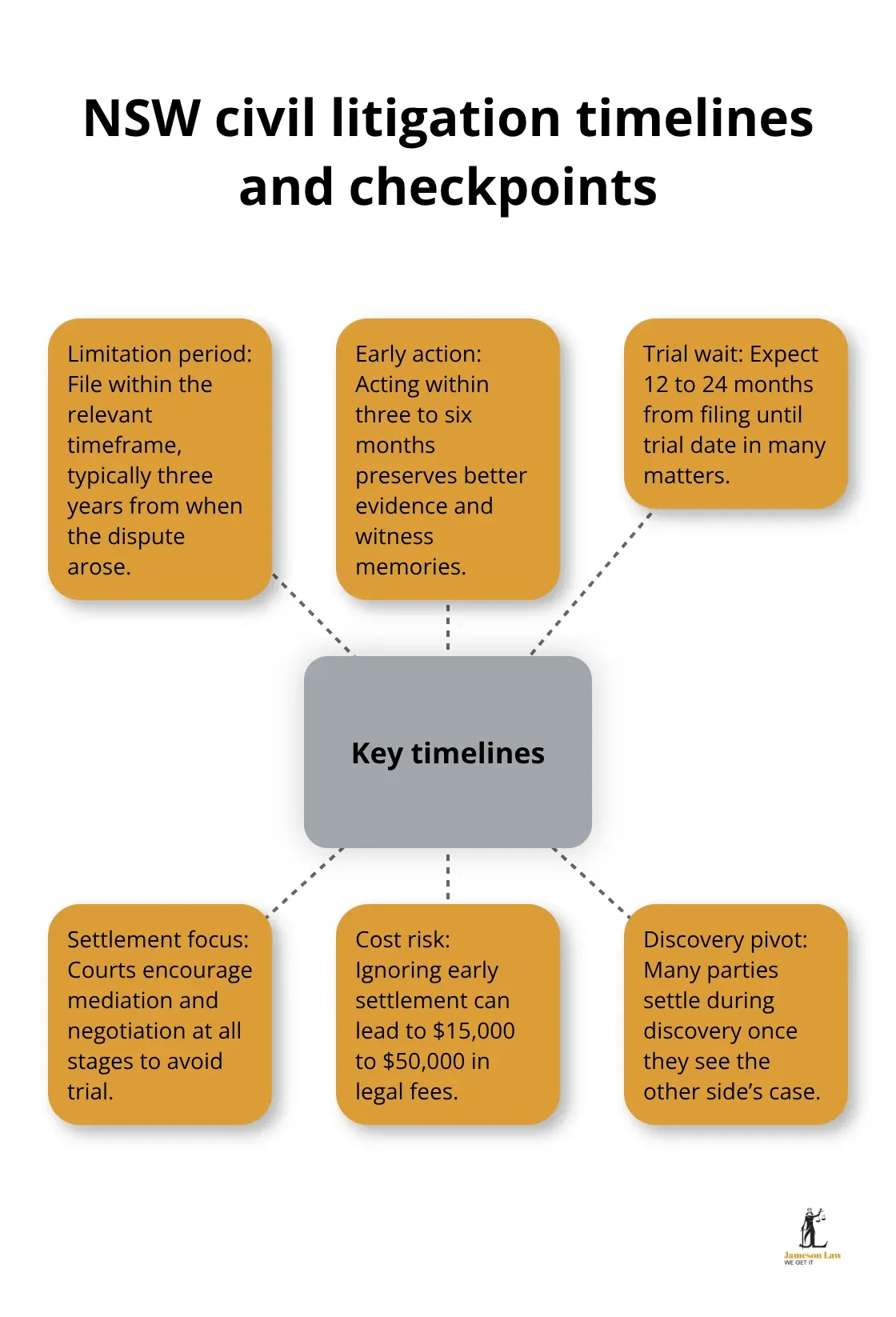
Civil disputes in NSW follow a structured path, and understanding each stage helps you avoid costly mistakes. Most civil cases start with a dispute letter or formal demand, which gives the other party a chance to respond before court involvement. This pre-litigation phase often determines whether your matter settles affordably or escalates into expensive court proceedings. Courts actively encourage mediation and negotiation throughout the process. If you ignore early settlement opportunities, you risk spending $15,000 to $50,000 on legal fees for disputes that could have resolved for a fraction of that cost through negotiation or mediation.
When settlement fails, you must file your claim in the correct court within the relevant timeframe, typically three years from when the dispute arose (though some claims have shorter or longer periods depending on the cause of action). Filing in the wrong court wastes weeks and money, so getting this decision right from the start matters significantly.
Discovery and Evidence Exchange
Once filed, your matter enters the discovery phase, where both sides exchange documents and evidence relevant to the claim. This process can be time-consuming and expensive, particularly in commercial disputes involving thousands of documents, but it also clarifies each side’s position and often prompts settlement negotiations. Many parties settle during discovery once they see the full strength of the other side’s case.
Preparing for Trial
If discovery doesn’t lead to settlement, your matter progresses toward trial preparation, with courts setting deadlines for evidence, witness statements, and expert reports. Trial itself typically lasts days or weeks depending on complexity, and you should expect to wait 12 to 24 months from filing until trial date (though some matters resolve faster through negotiation or mediation at any stage). The key to managing costs is acting decisively at each stage, taking professional legal advice early, and recognising settlement opportunities when they arise rather than pursuing litigation for its own sake.
Once you understand how the court works, the next step involves identifying which specific disputes fall into civil litigation and how different claim types move through the NSW courts.
The Three Most Common Civil Disputes in NSW
Breach of Contract Claims
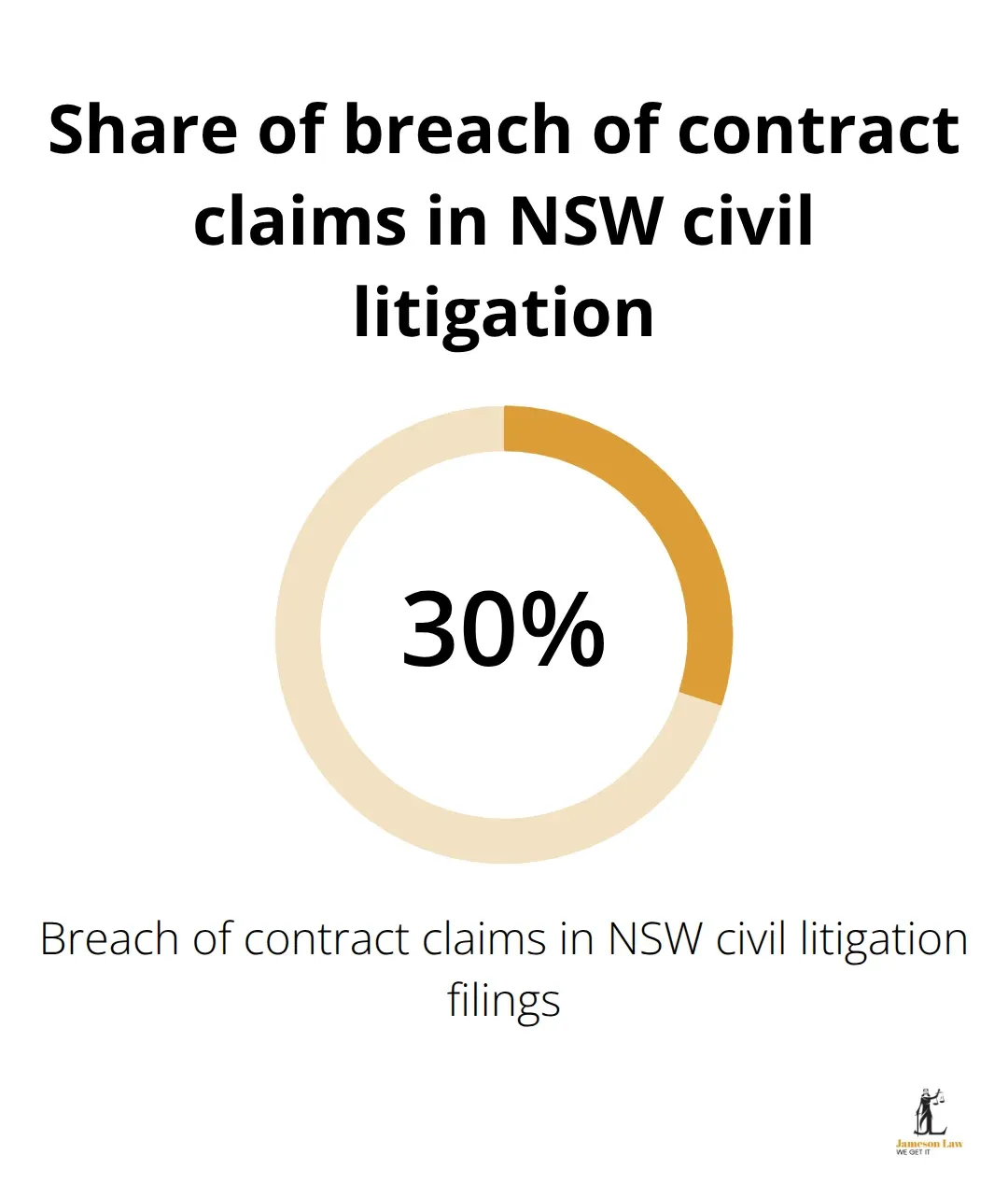
Breach of contract claims make up roughly 30 per cent of civil litigation filed in NSW courts, according to NSW Courts annual reports. These disputes arise when one party fails to perform obligations outlined in a written or verbal agreement, and they range from small service contracts to major commercial deals worth millions. The challenge with contract disputes is that courts won’t rewrite your agreement or force performance if it becomes inconvenient-they simply award damages if breach occurred.
The strength of your original contract matters enormously. Vague terms, missing payment schedules, or unclear performance obligations make claims harder to prove and more expensive to litigate. If you’re entering any agreement worth more than $5,000, a lawyer should review the contract before you sign to prevent most disputes from arising in the first place. Once a breach occurs, you typically have three years to file a claim, but acting within three to six months of the breach gives you better evidence and fresher witness memories.
Courts often award only the direct financial loss from the breach, not lost profits or speculative damages. Calculate what you’ve actually lost rather than what you might have earned. This distinction affects how much you can realistically recover and whether pursuing litigation makes financial sense.
Property Disputes and Boundary Issues
Property disputes and boundary issues represent another major category of civil claims in NSW, particularly in residential areas where neighbours disagree about fences, easements, or land boundaries. These disputes frequently cost $20,000 to $60,000 in legal fees before reaching resolution, yet many could have been avoided through a professional boundary survey costing $1,500 to $3,000 upfront.
If you’re buying property or planning renovation work near your boundary, obtain a current survey and review it carefully-boundary disputes almost always escalate if ignored. The NSW Land and Property Information database provides historical records that clarify ownership and boundaries, and this information should form your first step before any legal action. A surveyor can identify potential issues before they become expensive court battles, and this investment typically pays for itself many times over.
Debt Recovery and Commercial Disputes
Debt recovery and commercial disputes round out the third major category, with small business owners and larger corporations regularly pursuing unpaid invoices through civil courts. The Local Court handles claims under $10,000 efficiently, and many businesses recover debts through this pathway without expensive lawyers, though proper documentation of the original agreement and payment terms remains essential.
If you’ve provided goods or services without a written contract, proving the debt becomes substantially harder and more costly. Insist on written agreements before extending credit, and maintain clear records of all transactions. This documentation protects you if the matter reaches court and significantly improves your chances of successful recovery.
What These Disputes Teach
These three dispute types teach the same lesson: prevention through clear documentation and early professional advice costs far less than litigation after problems develop. A contract reviewed before signing, a boundary survey before renovation, or a written agreement before extending credit each cost a fraction of what you’ll spend defending or pursuing a claim later. The pattern holds across all civil disputes-the decisions you make at the outset determine whether your matter resolves affordably or becomes protracted and expensive.
Final Thoughts
Civil litigation in NSW involves complex procedures, significant costs, and decisions that shape your outcome from the moment a dispute arises. The pattern across all civil disputes remains consistent: prevention through clear documentation costs far less than litigation after problems develop. A contract reviewed before signing, a boundary survey before renovation, or a written agreement before extending credit each cost a fraction of what you’ll spend defending or pursuing a claim later.
The decisions you make in the first few weeks determine whether your matter settles affordably or becomes protracted and expensive. Most civil claims never reach trial because parties recognise settlement opportunities during pre-litigation or discovery phases. Understanding your position early through legal advice helps you assess the strength of your claim and identify the most cost-effective path forward, while waiting months or years before seeking advice weakens your position and increases costs.
When disputes do arise, act within three to six months to preserve better evidence and fresher witness memories. The NSW Civil Procedure Act 2005 requires parties to attempt resolution before escalating to court proceedings, and courts actively encourage mediation and negotiation throughout the process. If you’re facing a civil dispute or want to protect yourself through proper documentation before problems develop, contact Jameson Law for civil litigation NSW guidance tailored to your specific situation.