

An immigration medical exam in Australia is a mandatory health assessment for most visa applicants. The Department of Home Affairs requires these checks to protect public health and assess whether you can access healthcare services without placing undue burden on the system.
At Jameson Law, we help clients navigate the visa process, including understanding what medical requirements apply to your situation. This guide walks you through each stage, from finding an approved panel doctor to receiving your results.
Who Needs a Medical Exam for Australian Visas
The Department of Home Affairs requires medical examinations for most visa categories, but the specific requirements depend on your visa type and intended length of stay. Temporary visas under 12 months, such as visitor visas and some student visas, often don’t require health assessments unless you work in restricted occupations like healthcare or childcare. However, if you apply for a skilled migration visa, employer-sponsored visa, or any permanent residency pathway, a medical examination becomes mandatory. The rules are strict: without clearance from an approved panel doctor, your application will not progress, regardless of your qualifications or employment prospects.
Understanding Health Requirement Thresholds
The Department of Home Affairs assesses whether your health condition poses an unacceptable risk to public health or would place significant costs on Australia’s healthcare system. This second criterion, known as the health cost threshold, currently sits at around AUD 45,000 in estimated healthcare expenditure over five years. Applicants with chronic conditions requiring ongoing treatment, such as dialysis or chemotherapy, frequently exceed this threshold and face visa refusal. Conditions like HIV, tuberculosis, and hepatitis B trigger automatic further investigation, though modern treatments mean these diagnoses no longer automatically result in refusal.
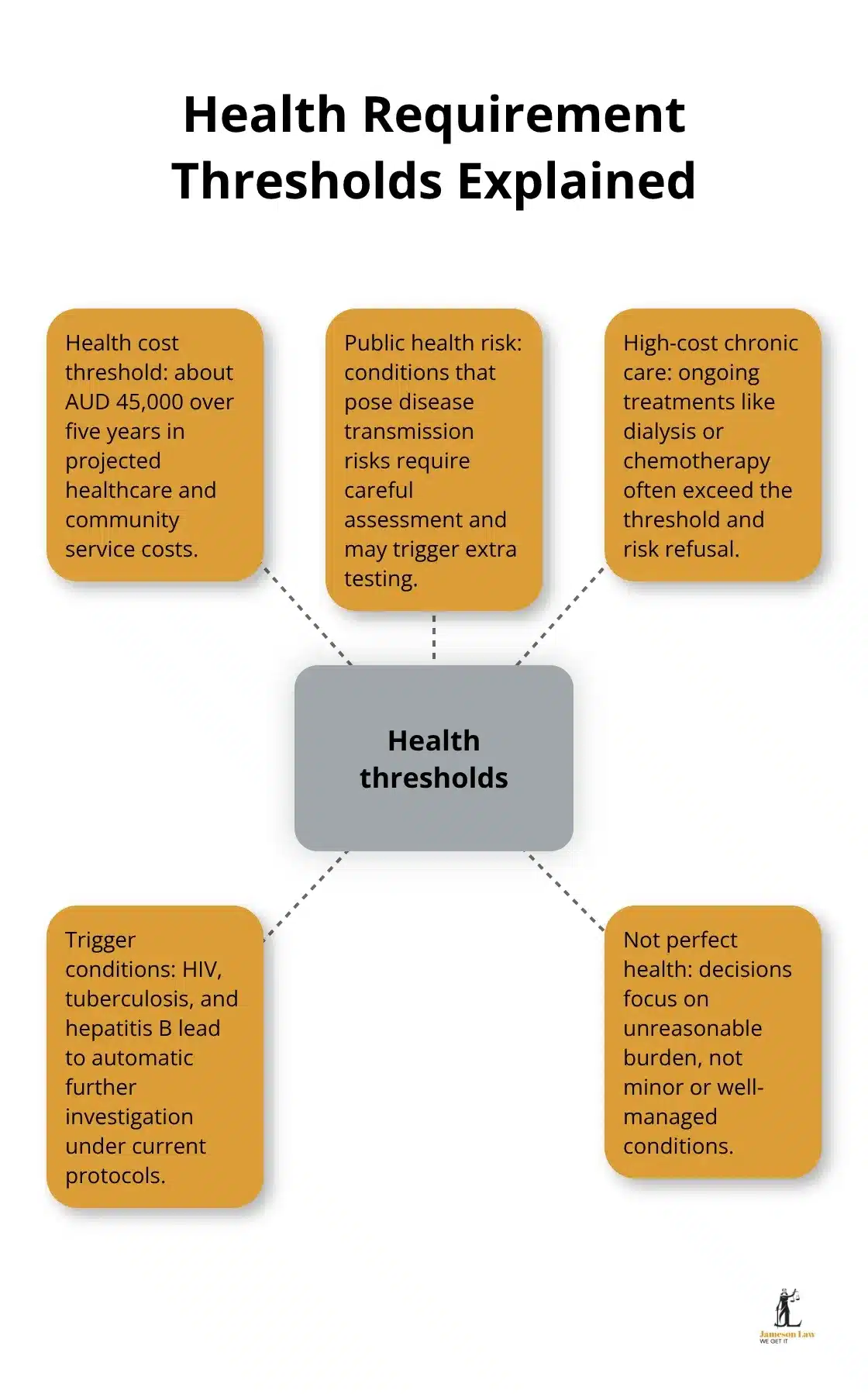
The assessment isn’t about perfect health-it’s about whether your condition creates an unreasonable burden on public resources or poses disease transmission risks.
Which Visas Require Medical Clearance
Skilled Independent visas, Skilled Nominated visas, and Employer Sponsored visas all mandate medical examinations as non-negotiable requirements. Family reunion visas, including spouse and parent categories, require health checks for all applicants. Student visas for courses exceeding 12 months typically require medical clearance, though short-term English language courses may not. Working Holiday visas for certain countries require examinations, while others don’t, depending on bilateral agreements Australia maintains.
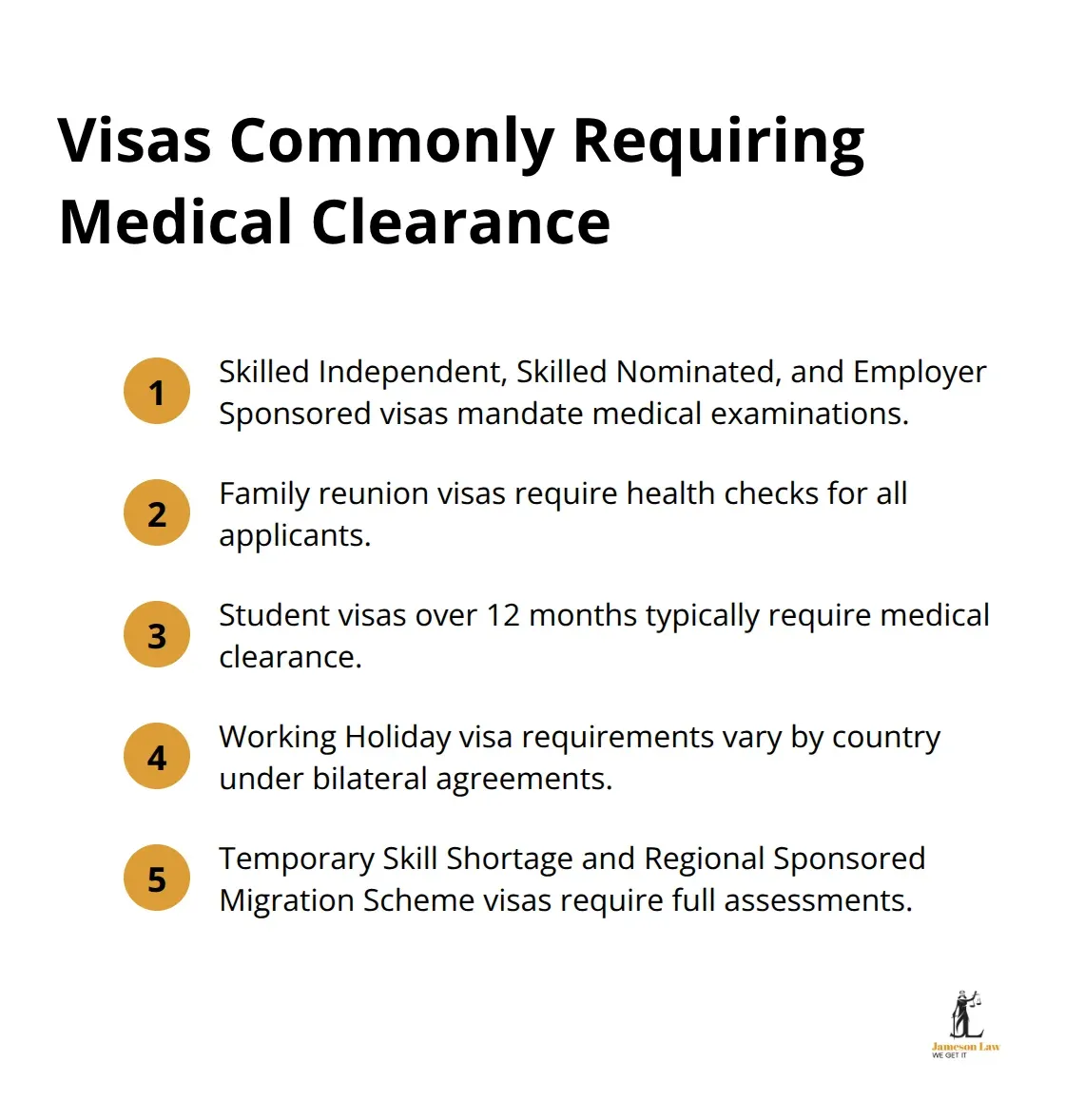
Temporary Skill Shortage visas and Regional Sponsored Migration Scheme visas both require full medical assessments. If you’re uncertain whether your specific visa category requires an examination, the Department of Home Affairs website lists requirements by visa type-though confirming your obligations before you book an appointment helps you avoid unnecessary costs.
What Happens When Health Issues Arise
The discovery of a health condition during your medical examination doesn’t automatically mean visa refusal. The Department of Home Affairs considers the severity, treatability, and financial impact of your condition. Some applicants receive conditional approval, which means they must undergo additional testing or provide specialist reports before the department makes a final decision. Others receive a request for further information, allowing them to submit medical records or specialist assessments that demonstrate their condition won’t exceed the health cost threshold. The timeline for these additional assessments can extend your visa processing by several weeks or months, so understanding your health status before your examination helps you prepare appropriate documentation.
Preparing for Your Panel Doctor Appointment
Finding an approved panel doctor is your first practical step. The Department of Home Affairs maintains a list of authorised doctors who conduct immigration medical examinations according to strict protocols. You cannot use your regular GP for this examination, even if they’re highly experienced, because only panel doctors have access to the specific reporting systems the department requires. Once you book your appointment, bring your passport, visa application details, and any existing medical records (particularly for chronic conditions or previous hospitalisations). Panel doctors typically complete the examination within 30 minutes, though the full appointment may take longer if additional tests are needed. Results usually reach the Department of Home Affairs within two weeks, after which your visa application can progress to the next assessment stage.
What the Panel Doctor Examines
Your Health History Assessment
Your immigration medical examination follows a standardised protocol that the Department of Home Affairs requires all approved panel doctors to implement. When you arrive at your appointment, the panel doctor reviews your health history form, which you complete before the examination begins. This form asks detailed questions about previous hospitalisations, chronic conditions, medications, mental health history, and any conditions that might affect your ability to work or study in Australia. The doctor uses this information to identify areas requiring closer investigation during the physical examination.
You must answer these questions truthfully and comprehensively. Incomplete or dishonest disclosures can result in visa refusal even after approval, particularly if discovered during security checks. The panel doctor relies on your accuracy to conduct a proper assessment and report findings to the Department of Home Affairs.
The Physical Examination
The examination itself takes 20 to 40 minutes and involves standard checks: blood pressure measurement, heart and lung auscultation, abdominal examination, and assessment of your general health status. The panel doctor asks about your current medications, any allergies, and whether you have experienced recent illness or injury. For applicants over 45 years old, the examination typically includes more detailed cardiovascular assessment, as the Department of Home Affairs considers age-related health risks when calculating potential healthcare costs.
The doctor observes your overall presentation and notes any visible health concerns. This physical assessment forms the foundation for determining which additional tests you require.
Mandatory and Conditional Tests
The panel doctor orders specific tests based on your age, health history, and visa category. Chest X-rays are standard for nearly all applicants and screen for tuberculosis, which remains a condition triggering automatic further investigation. Urine and blood tests are routine and check for conditions including HIV, hepatitis B and C, and syphilis, as these infections trigger mandatory additional assessment under Department of Home Affairs protocols.
Applicants aged 50 and over may require additional blood work assessing kidney and liver function, particularly if they have diabetes or hypertension. If your health history indicates mental health concerns, the panel doctor may request psychological assessment, though mental health conditions alone do not automatically lead to refusal. Women of childbearing age sometimes face additional questioning about pregnancy status and intentions, though pregnancy itself is not grounds for refusal.
Reporting and Timeline
The panel doctor cannot refuse to examine you or make assumptions based on protected attributes, but they must report findings accurately to the Department of Home Affairs. Results typically take 10 to 14 days to reach the department after your examination, though complex cases requiring additional specialist reports can take 4 to 6 weeks (depending on the complexity of your health situation and the availability of specialists).
During this waiting period, your visa application remains in assessment, and you cannot progress to other stages until health clearance is finalised. Understanding what happens next helps you prepare for potential outcomes and any additional documentation the department may request.
Getting Ready for Your Medical Examination
Finding an Approved Panel Doctor
Locating an approved panel doctor is non-negotiable, and this decision directly affects your timeline and examination quality. The Department of Home Affairs publishes the complete list of authorised panel doctors on its website, organised by location and visa type. You cannot substitute your regular GP, even if they have decades of experience, because only panel doctors access the specific reporting systems the Department of Home Affairs requires. When searching for a panel doctor, try to prioritise those located near your home or workplace to minimise travel time on examination day.
Many panel doctors book appointments 2 to 4 weeks in advance during peak migration seasons, so contact them as soon as you receive your visa application reference number. Panel doctors typically charge between AUD 300 to AUD 600 for the examination, though prices vary by location and whether additional tests are required. Ask about their turnaround time for results-reputable panel doctors typically lodge reports within 10 business days. Confirming the panel doctor’s experience with your specific visa category matters, as some doctors specialise in particular migration pathways and understand category-specific health requirements more thoroughly.
What to Bring to Your Appointment
Bring your passport, current visa application details, and comprehensive medical records to your appointment. If you’ve been hospitalised, had surgery, or manage chronic conditions like diabetes or hypertension, gather discharge summaries, specialist reports, and medication lists before your appointment-the panel doctor will request this information anyway, and having it ready accelerates the examination. Wear loose, comfortable clothing to facilitate blood pressure checks and physical examination.
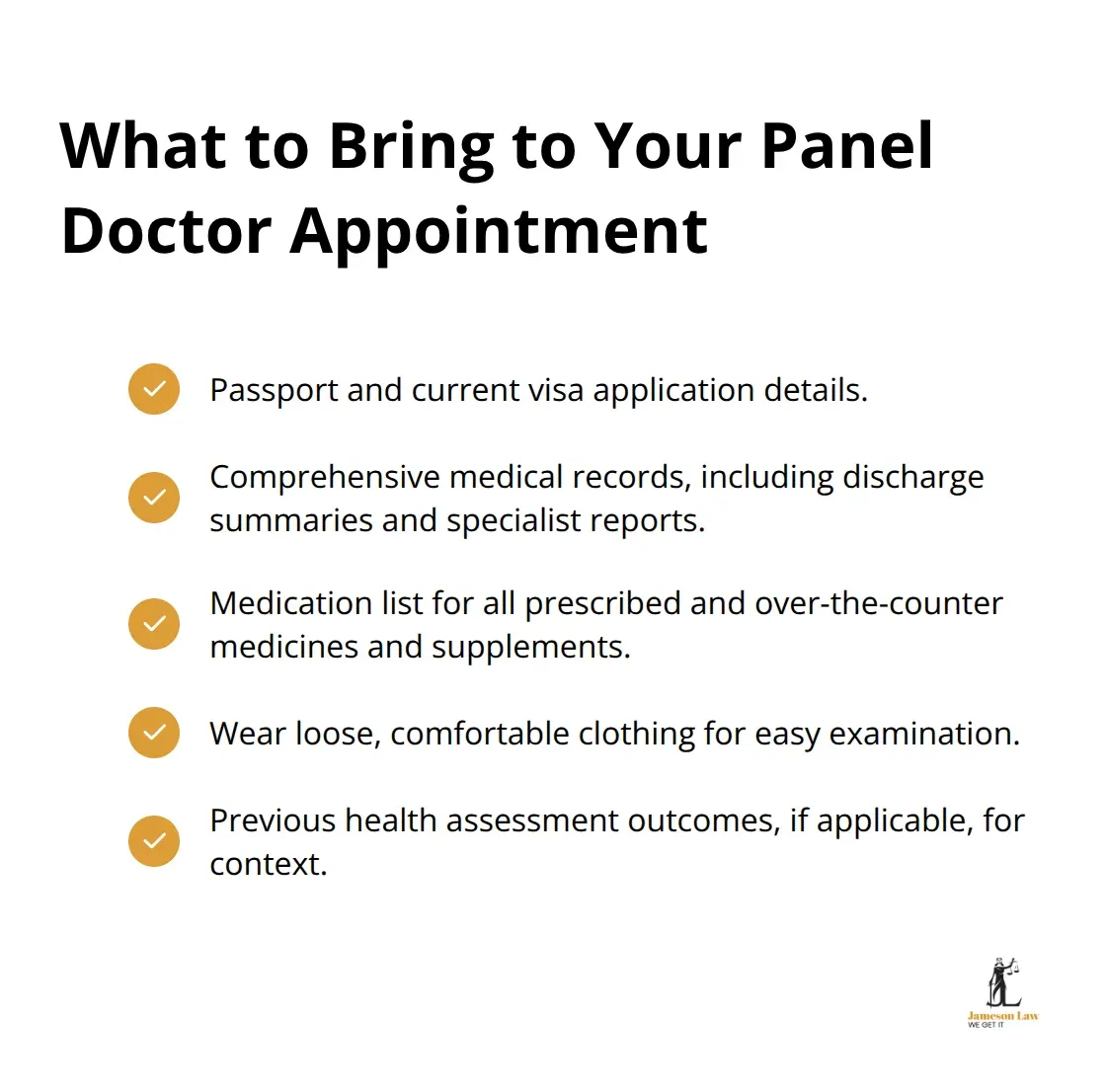
List all current medications, including over-the-counter supplements and herbal remedies, as some affect test results or require reporting. If you’ve previously failed health assessments for other countries or have known conditions affecting your health status, disclose this upfront rather than hoping the panel doctor overlooks it.
Conditions Requiring Additional Investigation
Conditions requiring additional investigation-including tuberculosis exposure, hepatitis B or C, HIV, syphilis, or significant mental health diagnoses-trigger mandatory specialist reports that extend your visa processing timeline by 4 to 8 weeks. Applicants with these conditions should gather specialist assessments demonstrating current treatment status and prognosis before the panel doctor examination.
If health issues emerge during your assessment, the panel doctor provides a detailed report explaining findings and recommended next steps. You then submit this report to the Department of Home Affairs alongside any additional medical evidence supporting your case.
Final Thoughts
Your immigration medical exam Australia represents a straightforward health assessment, not a barrier designed to reject applicants. The Department of Home Affairs uses these examinations to identify genuine public health risks and assess potential healthcare costs, not to exclude people based on minor health concerns. Understanding what panel doctors assess and preparing your medical records in advance positions you for a smooth process.
After your examination, results typically reach the Department of Home Affairs within two weeks, and if additional investigation is needed, the department contacts you directly with specific requests. Respond promptly to any requests for further information, as delays in providing specialist reports or medical evidence extend your visa processing timeline unnecessarily. Modern treatments for HIV, hepatitis B, and other previously problematic conditions mean diagnosis alone no longer automatically results in rejection.
If health issues emerge during your assessment, gathering comprehensive specialist reports demonstrating your condition’s treatability and cost impact strengthens your case significantly. Our immigration law team at Jameson Law assists clients navigating immigration matters, including understanding health requirements for your visa category and how health conditions might affect your application.