A visa refusal or cancellation doesn’t mean the end of your case. You have immigration appeal rights that allow you to challenge decisions made by the Department of Home Affairs.
At Jameson Law, we help clients navigate the appeal process every day. Understanding your options and acting quickly can make the difference between a successful outcome and missing critical deadlines.
What Can You Appeal and When
Reviewable Decisions and Non-Reviewable Decisions
Not every Department of Home Affairs decision is reviewable, and the ones that are have strict time limits you cannot extend. Migration visa refusals, visa cancellations, protection visa decisions, Australian citizenship refusals, nomination refusals, and sponsorship decisions can all be appealed to the Administrative Review Tribunal. However, character-based cancellations and certain ministerial decisions fall outside the Tribunal’s jurisdiction. Your decision letter will specify whether your decision is reviewable and what deadline applies to your case. If you’re uncertain, contact the Tribunal directly to confirm your eligibility before time runs out.
Understanding Your Deadline
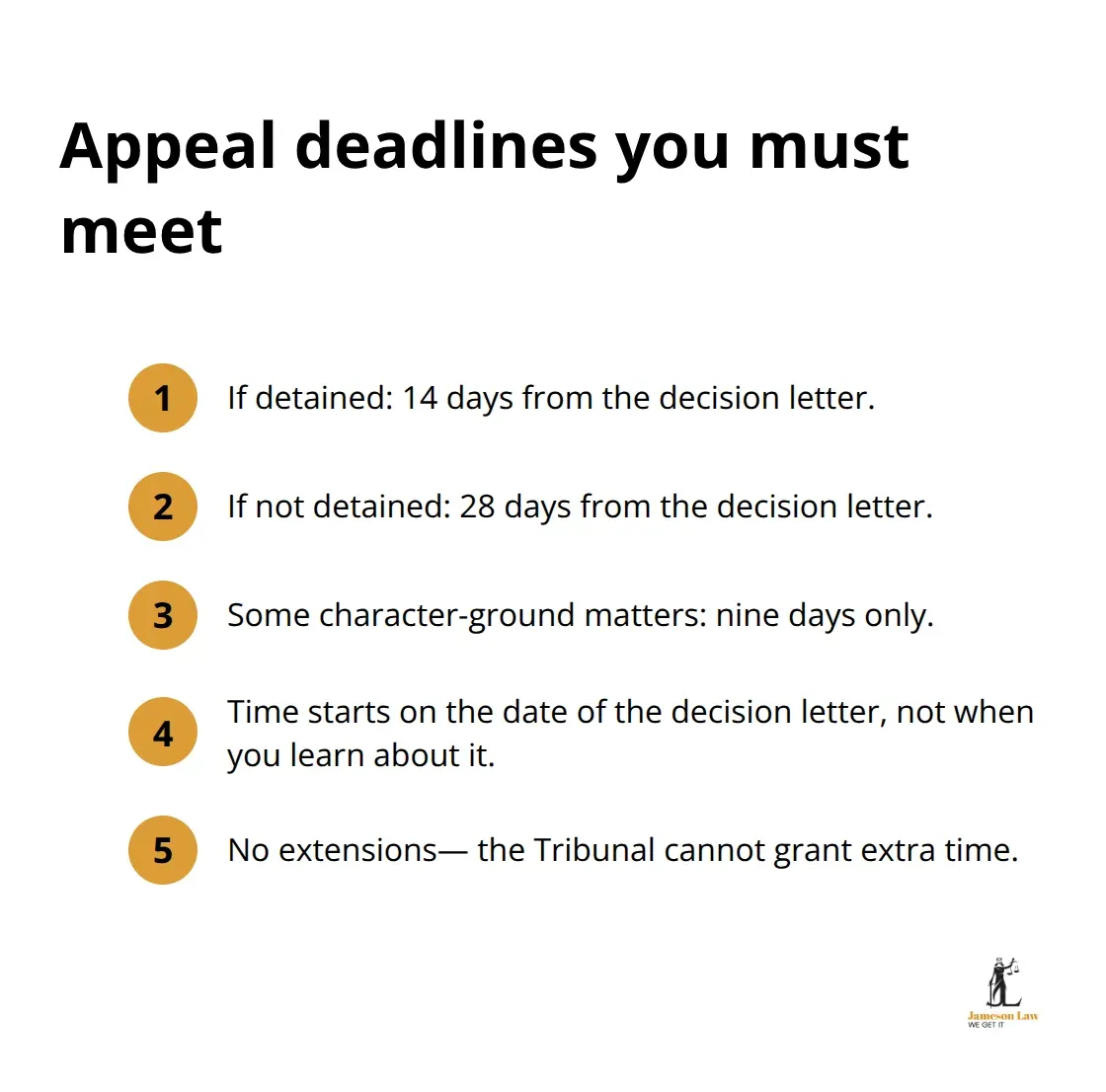
The clock starts from the date of your decision letter, not when you learn about it. If you’re in immigration detention, your deadline is typically 14 days; if you’re not detained, you usually have 28 days, though some character-ground decisions allow only nine days. These deadlines cannot be extended under any circumstances, and the Tribunal has no power to grant you extra time. Missing your deadline means you lose your right to appeal permanently, so act immediately once you receive your decision.
Appeal Fees and Financial Hardship Options
The fee to lodge an appeal varies by decision type. General migration decisions cost around 3,496 AUD, while protection visa appeals have no upfront fee but require payment of 2,151 AUD if unsuccessful. Character cancellation appeals cost 1,121 AUD, though concessional rates apply in severe financial hardship cases. If paying the fee would cause financial hardship, you can ask for a 50% reduction on general migration appeals.
Who Can Lodge an Appeal
You have the right to appeal if you received the original decision, but you can also lodge an appeal on behalf of someone else if you’re their spouse, family member, sponsor, nominator, or authorised representative. If multiple family members received the same refusal, you can often lodge a single appeal covering all of them and pay one fee. If you’re overseas when your visa is refused, a family member, sponsor, or nominated representative can lodge the appeal on your behalf, but you must act immediately-the sooner you lodge, the sooner the Tribunal can begin reviewing your case.
Representation and Next Steps
Registered migration agents and Australian lawyers can represent you throughout the appeal, though you can also represent yourself. When you appoint a representative, provide their details using the MR5 form, and all future correspondence will go to them instead of you. Early action gives you time to gather evidence and address the Department’s concerns before any hearing takes place, which is why understanding the appeal process itself becomes your next critical step.
How the Appeal Process Works in Australia
What Happens After You Lodge Your Appeal
Once you lodge your appeal with the Administrative Review Tribunal, your case enters a structured review process. The Tribunal sends you a confirmation letter that outlines the next steps and key dates you need to know. Your appeal will follow one of two pathways: a merits review (where the Tribunal reassesses the original decision) or a legal challenge (where you argue the Tribunal made an error of law). Which pathway applies depends on your decision type and the grounds you’re pursuing.
Expedited Review and Standard Timelines
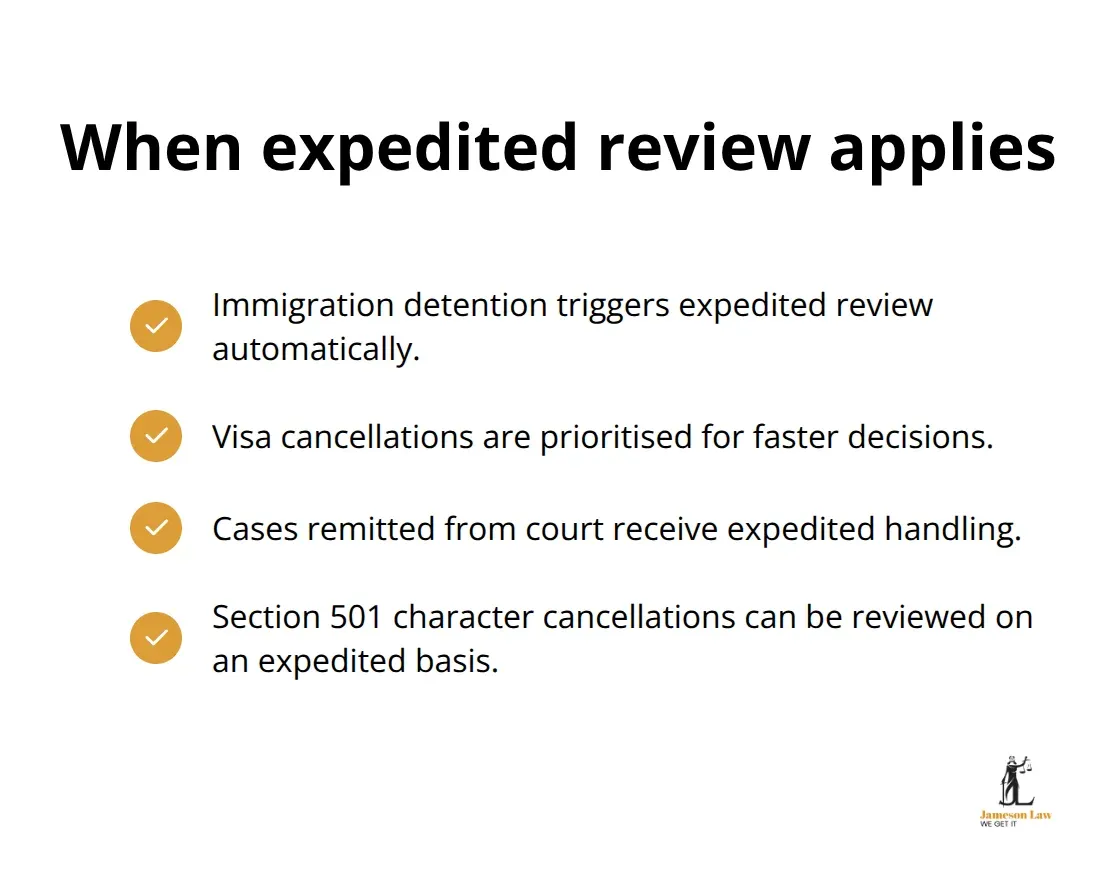
If your appeal qualifies for expedited review, the Tribunal prioritises your hearing and reaches a decision much faster than standard cases. Expedited review applies automatically if you’re in immigration detention, if your visa was cancelled, or if your case has been remitted from court. For character-based cancellations reviewed under section 501, expedited reviews are available through the Tribunal’s review process.
Standard reviews without expedited status take considerably longer, so understanding whether your circumstances trigger faster processing matters significantly for your planning.
The Tribunal’s Initial Assessment
When the Tribunal receives your documents, a member reviews them to determine whether the original Department of Home Affairs decision was correct. If the evidence you’ve provided clearly supports a favourable outcome on its own, the appeal can be finalised without a hearing-you won’t need to attend in person or present arguments. However, if the Tribunal needs additional information to make a decision, it will request this from you within a specified timeframe, and you must respond promptly to avoid delays. The Tribunal will also notify you if it holds adverse information and give you an opportunity to respond before any hearing takes place.
Your Hearing and Evidence Presentation
If your case proceeds to a hearing, the process is generally informal and open to the public. You can give evidence or have witnesses testify on your behalf (though interpreters are provided free of charge if you need language support). This is your opportunity to directly address the Department’s concerns and present information that wasn’t available at the original decision stage. The Tribunal member will ask questions and listen to your arguments, allowing you to explain why the original decision was wrong.
What Happens If the Tribunal Decides Against You
If the Tribunal’s decision is unfavourable, you typically have 28 days to arrange departure from Australia unless you pursue further review options. However, you may also apply for a Bridging Visa E to stay while you explore other avenues, or you can consider a limited appeal to the Federal Court if you believe the Tribunal made a legal error. This distinction between a merits review (where the Tribunal reassesses facts) and a legal appeal (where you argue the law was applied incorrectly) becomes critical at this stage, as the Federal Court will not reconsider the facts of your case or hear new evidence.
Why Appeals Succeed or Fail
Identifying the Error in the Original Decision
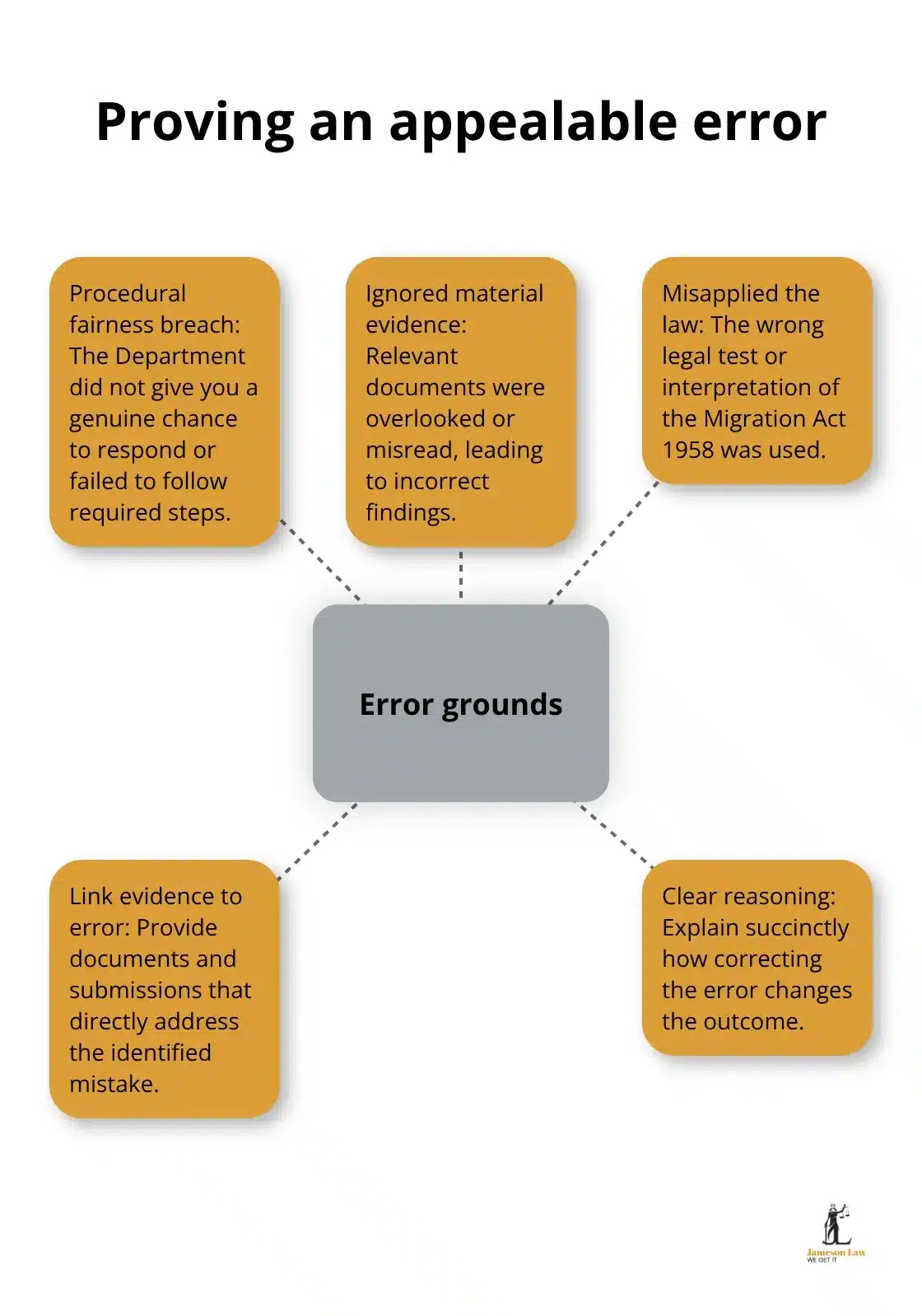
The difference between a successful appeal and an unsuccessful one often comes down to identifying what went wrong in the original Department of Home Affairs decision and presenting evidence that directly addresses that error. Appeals fail when applicants focus on arguing why they deserve a visa rather than pinpointing the specific legal or procedural mistakes the Department made. The Administrative Review Tribunal does not grant visas based on sympathy or hardship alone; it overturns decisions when the Department applied the law incorrectly, ignored material evidence, or breached procedural fairness. Your appeal must clearly show one of these errors occurred.
Procedural Errors in Decision-Making
Procedural errors occur when the Department fails to follow the correct process before making a decision. This includes not giving you a genuine opportunity to respond to concerns before refusing your application, or not properly considering information you submitted. These errors matter because they undermine the fairness of the decision-making process itself, regardless of whether the final outcome might have been the same. The Tribunal takes procedural breaches seriously, and if you can prove the Department did not follow its own procedures, you have a strong ground for appeal. If your visa application was refused without the Department issuing you a request for information or giving you notice of concerns, that procedural failure becomes your strongest argument.
Material Information the Department Overlooked
Failure to consider relevant information is equally powerful but requires you to identify what the Department actually ignored or misunderstood. This means obtaining your Department of Home Affairs file using Freedom of Information Act 1982 requests on Form 424, which reveals exactly what documents the Department reviewed and what it claimed you failed to provide. Many applicants assume the Department considered everything they submitted, but the file often shows the Department never received certain documents, misread key evidence, or made factual findings that contradict the information you provided. If your file shows the Department stated you had no employment history when you provided payslips and tax records, that becomes a material failure to consider relevant information. Accessing your file before lodging your appeal allows you to identify gaps and address them with fresh evidence.
Misapplication of Immigration Law
Misapplication of immigration law occurs when the Department correctly understood the evidence but applied the wrong legal test or misinterpreted what the Migration Act 1958 actually requires. If the Department refused your partner visa because it decided your relationship was not genuine based on brief visits, but the law does not require constant physical presence to prove genuineness, then the Department applied the law incorrectly. These legal errors require careful analysis of the specific visa criteria and what the case law says those criteria mean. Understanding the distinction between what the law actually requires and what the Department claimed it requires forms the foundation of a strong legal appeal.
Building Your Appeal Strategy
Identifying which type of error applies to your case determines how you structure your appeal and what evidence you present to the Tribunal. Procedural errors require you to document what the Department failed to do; failures to consider information require you to show what the Department missed or misread; legal errors require you to explain what the correct interpretation of the law actually is. Each error type demands different evidence and different arguments, so obtaining proper legal advice before lodging your appeal makes a measurable difference to your chances of success.
Final Thoughts
Immigration appeal rights protect you when the Department of Home Affairs makes a wrong decision, but only if you act within strict deadlines and present your case strategically. Identify the specific error in the original decision rather than arguing why you deserve a visa. Obtain your Department of Home Affairs file to understand exactly what the Department reviewed and what it missed, then lodge your appeal immediately because time limits cannot be extended under any circumstances.
You can represent yourself throughout the appeal process, but the complexity of immigration law and the high stakes involved make professional legal assistance genuinely valuable. A registered migration agent or Australian lawyer helps you identify which type of error applies to your case, gathers evidence that directly addresses the Department’s concerns, and presents arguments that the Tribunal will take seriously. The cost of representation often proves far less than the cost of missing a deadline or presenting a weak appeal that fails.
If you face a visa refusal or cancellation, contact Jameson Law for advice on your specific circumstances. We help clients navigate immigration appeals across Australia, with a primary focus on New South Wales. The sooner you seek advice, the sooner you can lodge your appeal and move forward with your case.