Navigating Australia’s migration system requires expert guidance. A registered migration agent NSW can handle your visa applications, communicate with Home Affairs on your behalf, and provide legal advice tailored to your circumstances.
At Jameson Law, we understand that migration decisions shape your future. Whether you’re sponsoring family members, appealing a decision, or applying for your first visa, having a qualified professional in your corner makes a real difference.
Who Can Legally Practise as a Registered Migration Agent
A registered migration agent NSW operates under strict legal authority granted by the Office of the Migration Agents Registration Authority. This means they hold a Migration Agent Registration Number (MARN) that uniquely identifies them as an authorised practitioner. The registration process involves demonstrating specific qualifications, passing assessments, and committing to ongoing professional development. Without this registration, someone cannot legally provide migration advice in Australia. The distinction matters because unregistered individuals offering migration assistance breach federal law, leaving clients vulnerable to poor advice and wasted money.
What Registration Actually Means
When you engage a registered migration agent, you work with someone bound by the Migration (Migration Agents Code of Conduct) Regulations 2021. This Code sets out mandatory standards for professional conduct, fee transparency, record-keeping, and client money handling. If an agent breaches the Code, the Office of the Migration Agents Registration Authority can discipline them through caution, suspension, cancellation of registration, or a bar from re-registering for up to five years. This regulatory framework protects you because it creates accountability. You can verify any agent’s registration status through the official register and lodge complaints if service falls short.
Standards That Protect You
The Code requires agents to disclose all fees upfront, maintain proper client records, and respond to complaints promptly-protections that unregistered advisers do not provide. Agents must work with clients in a professional and ethical manner, handling client money appropriately and communicating clearly about costs and charges. They also comply with specific record-keeping requirements and follow guidelines on how they interact with other agents and their own employees. These obligations exist because migration decisions affect your future, and the law recognises that clients need protection from poor practice or misconduct.
Qualifications That Matter
Registered agents must meet specific qualification standards before they can practise. The Code defines the qualities and abilities agents must demonstrate, including knowledge of migration law, professional competence, and the capacity to act ethically. Agents must obtain 10 continuing professional development points each year to stay registered. This ongoing training matters because migration law shifts regularly. An agent who completed training years ago but has not updated their knowledge may miss recent policy changes that affect your application.
Verifying Your Agent’s Credentials
You can search the official register to confirm an agent holds a valid MARN and check their registration status before you engage them, giving you direct access to information about who can legally represent you. If you have concerns about an agent’s conduct or wish to lodge a complaint, you can contact the Office of the Migration Agents Registration Authority directly. The ability to verify credentials and report problems distinguishes registered agents from unregistered practitioners who operate without oversight.
Understanding who can legally practise sets the foundation for knowing what services a registered migration agent can actually provide for your visa application or appeal.
What Registered Migration Agents Actually Handle
Assessing Your Eligibility and Visa Options
Registered migration agents assess your eligibility against current visa requirements and identify which visa category suits your circumstances. They compile the supporting documents Home Affairs demands and understand exactly what the department expects because they lodge applications constantly and recognise Home Affairs processing patterns. This is not theoretical work-agents spend hours gathering evidence, organising files, and ensuring translations meet government standards. If your application is missing a single required document or contains an error in a critical field, Home Affairs will request further information or refuse your application outright.
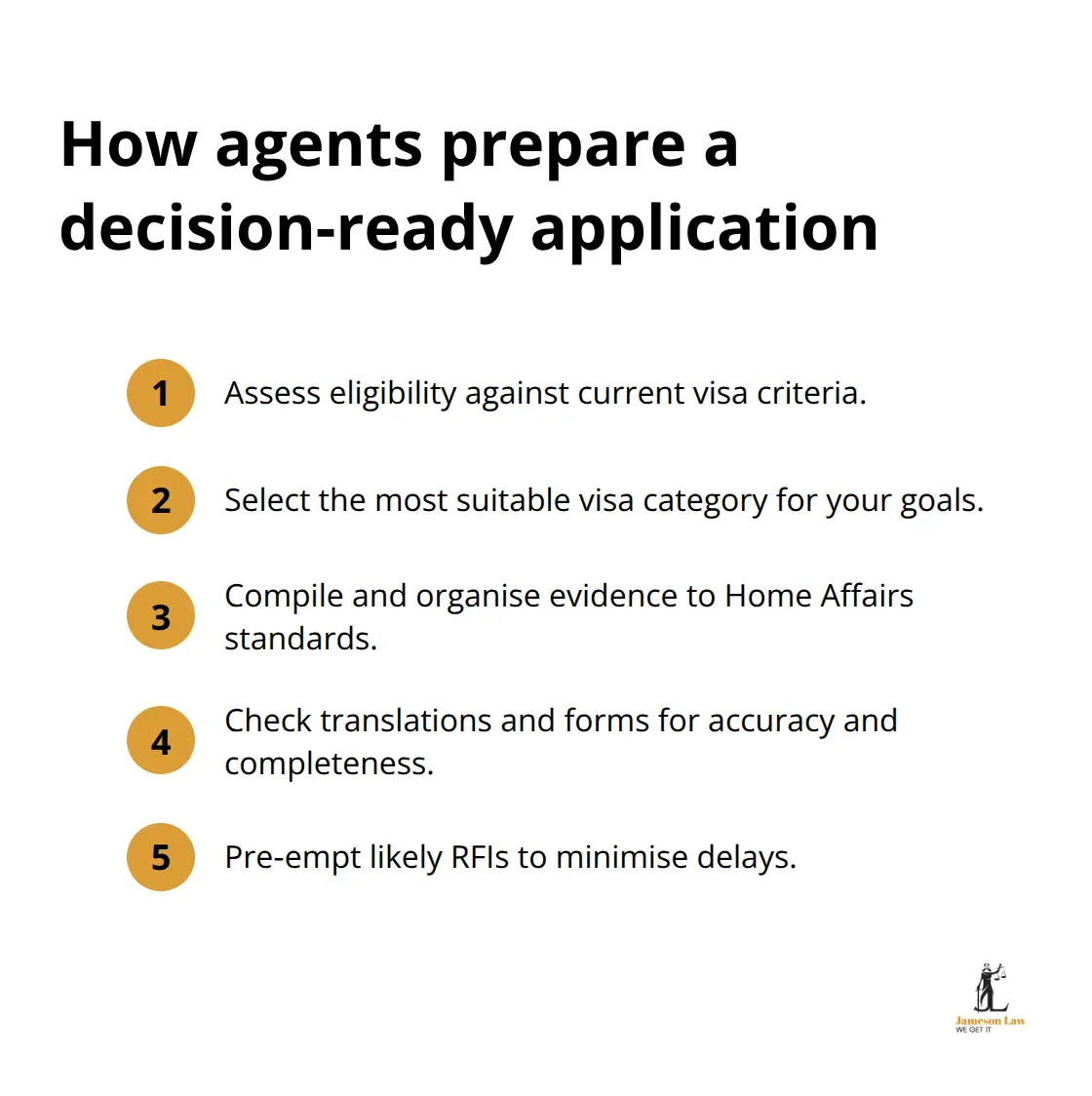
A registered agent prepares your application to minimise delays, reduce requests for additional information, and increase the likelihood of approval.
Managing Your Communication with Home Affairs
Communication with Home Affairs becomes your agent’s responsibility once your application is lodged. You do not contact the department directly-your agent does. If Home Affairs requests evidence or clarification, your agent responds promptly and strategically, framing your response to address the department’s concerns. They handle visa condition explanations after approval and guide you through ongoing compliance obligations. This ongoing support matters because visa conditions are complex and breaching them can result in cancellation. A registered agent ensures you understand what your visa allows and what it prohibits.
Handling Applications That Face Refusal
When your application faces refusal, agents prepare submissions for requests for additional information or reconsideration, substantially improving your chances in a review process. They also assist with visa changes or renewals down the track, providing continuity throughout your migration journey. The strategic approach agents take to these submissions reflects their experience with Home Affairs’ decision-making patterns and what evidence persuades the department to reconsider.
Providing Tailored Legal and Compliance Advice
Beyond applications, agents provide compliance and legal advice tailored to your specific circumstances-not generic information from websites. They explain how recent policy changes affect your situation, whether you qualify for a particular visa, and what risks exist in your migration journey. This advice protects you because migration law shifts regularly and mistakes can derail your plans for years. Agents stay updated on Home Affairs requirements and respond promptly, ensuring your case does not stall due to missed deadlines or incomplete responses.
Understanding When You Need Professional Representation
The complexity of your visa category and the stakes involved in your migration decision determine whether professional representation becomes essential. Some applications involve straightforward circumstances and standard documentation, while others require strategic navigation of complex family sponsorship rules, appeals processes, or eligibility assessments that demand specialist knowledge.
When to Engage a Registered Migration Agent
Family Sponsorship Applications Require Professional Guidance
Family sponsorship applications demand professional representation because Home Affairs scrutinises these cases heavily. The department assesses whether your relationship is genuine, whether you meet financial capacity requirements, and whether you pose health or character risks. These applications involve multiple forms, statutory declarations, financial documents, and evidence of your relationship spanning years. A single missing document or poorly explained financial situation can trigger a refusal. Agents who handle family sponsorship applications regularly know exactly what Home Affairs expects and structure applications to address the department’s concerns before they arise.
Appeals and Review Processes Demand Specialist Knowledge
Appeals and review processes require specialist knowledge because you’re arguing against a Home Affairs decision, not simply lodging an initial application. When your visa is refused, you have limited options: request further information, seek administrative review through the Administrative Appeals Tribunal, or pursue judicial review through the courts. Each pathway requires different evidence and strategic framing. Agents understand Home Affairs’ decision-making patterns and know which arguments persuade reviewers to reconsider. They prepare submissions that directly address the reasons for refusal and present new evidence or legal arguments the department missed.
First-Time Applicants Often Underestimate Complexity
First-time applicants frequently underestimate how complex visa law can be. You might assume your situation is straightforward, but visa law contains traps that skilled migration agents identify early. They assess whether your work history creates visa condition issues, whether your qualifications meet Australian standards, or whether character assessments might raise concerns. Agents also understand processing timeframes and what Home Affairs typically requests from applications in your visa category, allowing them to prepare comprehensive submissions upfront rather than responding reactively to requests for further information.
When Professional Representation Becomes Essential
An agent becomes essential when your circumstances involve multiple dependants, previous visa refusals, character concerns, or visa categories with high refusal rates. The Department of Home Affairs processes hundreds of thousands of applications annually, and applications with incomplete documentation or unclear explanations face longer processing times and higher refusal rates. Agents compress timeframes because Home Affairs recognises their applications meet standards and contain required information. If you’re sponsoring family members, appealing a decision, or navigating a visa category you don’t fully understand, professional representation protects your migration outcome and prevents costly delays or refusals.
Final Thoughts
A registered migration agent NSW operates as your advocate throughout your visa journey, handling tasks that extend far beyond form completion. They assess your eligibility, compile supporting documents to Home Affairs standards, manage all communication with the department, and respond strategically to requests for further information. When applications face refusal, they prepare submissions that directly address the department’s concerns and substantially improve your chances in review processes.
The regulatory framework protects you because agents must disclose fees upfront, maintain proper records, handle client money appropriately, and respond to complaints (breaching the Code of Conduct results in suspension or cancellation of registration). You can verify any agent’s credentials through the official register before engaging them, giving you direct access to information about who can legally represent you. This oversight creates accountability that unregistered practitioners do not provide.
Professional representation becomes essential when your circumstances involve family sponsorship, appeals against refusal, or visa categories with high complexity. If your migration journey involves uncertainty or complexity, Jameson Law provides immigration law assistance tailored to your circumstances and can discuss your visa application, appeal, or compliance questions with experienced legal professionals.