Building disputes NSW can derail your project, drain your finances, and create months of stress. Whether it’s defective workmanship, payment disagreements, or delays, construction conflicts need swift action.
At Jameson Law, we’ve helped countless clients navigate these disputes and find practical solutions. This guide walks you through your options-from negotiation to court-so you can resolve your situation efficiently.
What Disputes Actually Happen in NSW Building Projects
Defective Workmanship and Construction Defects
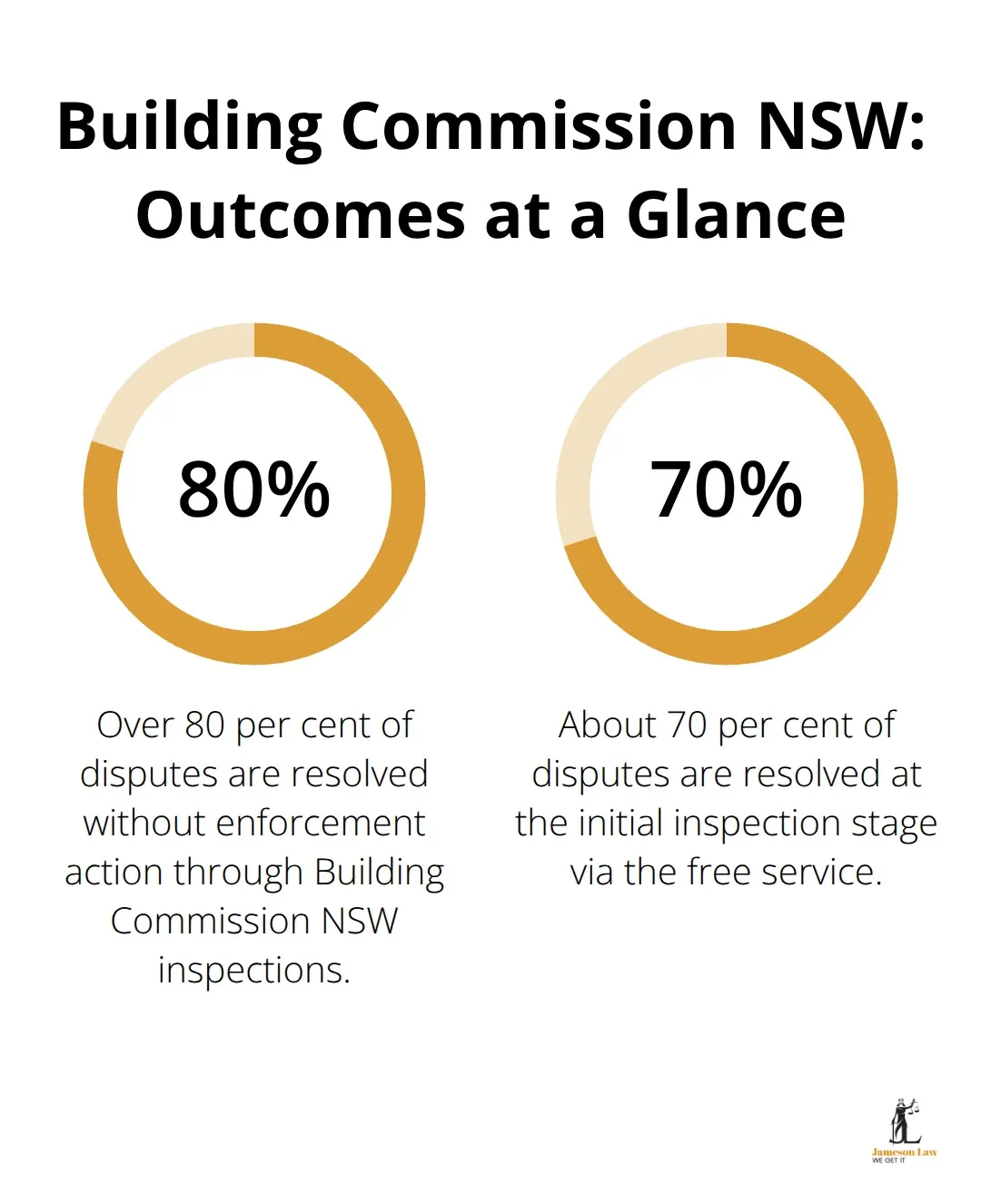
Defective workmanship stands as the primary source of building disputes in NSW under the Home Building Act 1989. This covers everything from cracked walls and water ingress to structural failures that compromise safety. When defects emerge, the clock starts ticking. Major defects-such as load-bearing failures, fire safety system failures, or waterproofing problems-give you six years to act, while other defects have a two-year window. You must photograph damage immediately and lodge a complaint with Building Commission NSW because inspectors typically visit sites within 22 working days. Building Commission NSW handles roughly 2,500 disputes annually, with over 80 per cent resolved without enforcement action, meaning most defect claims get sorted through their inspection process rather than escalating to court.
Payment Disputes and Contract Clarity
Payment disputes and incomplete work claims create different pressures. A written contract is required for residential building work over $5,000 (including GST) and must clearly state the scope and statutory warranties according to the Building Commission NSW. When contractors fail to complete work or demand payment before finishing, disputes often hinge on whether the contract terms are clear enough to prove breach. You need to understand what your contract actually says about payment milestones and completion obligations before disputes arise.
Delays and Timeline Issues
Delays compound these problems because they affect your timeline and costs, but delay claims only succeed if your contract specifically addresses completion dates and penalties. The key difference between these dispute types is that defects involve quality and safety, while payment and delay issues involve contract interpretation and financial obligations.
Why Speed Matters
You must act promptly because statutory warranties expire, and you cannot claim after those deadlines pass regardless of when you discovered the problem. If a defect becomes apparent in the last six months of the warranty period, you have a further six months after the warranty ends to enforce your rights, but this grace period only applies if you lodge your complaint before expiry. Understanding which type of dispute you face-and which deadline applies to your situation-shapes your entire resolution strategy.
How to Resolve Building Disputes in NSW
Start with Written Communication
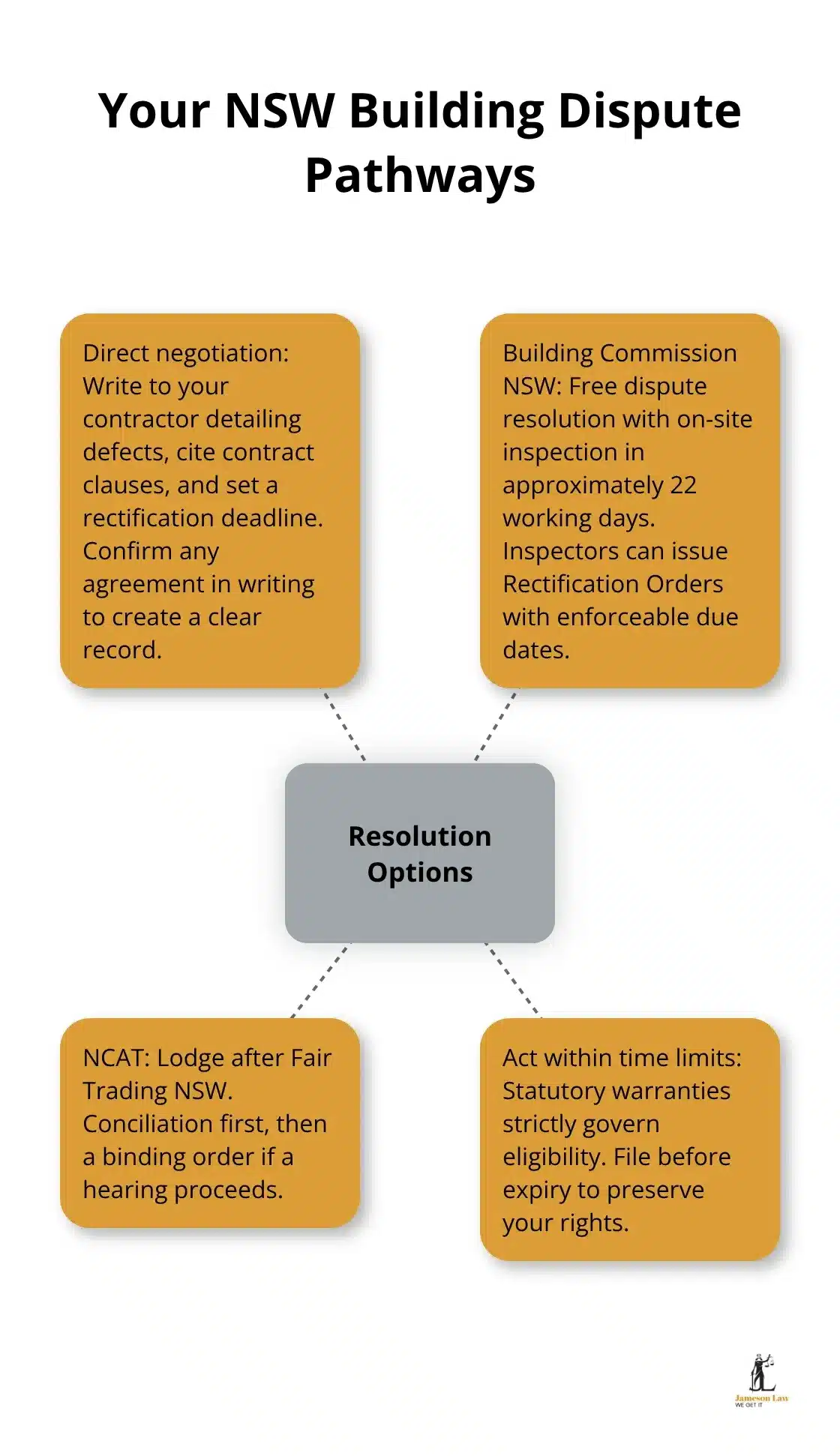
Contact your builder or contractor in writing and describe the specific defect, reference relevant contract clauses, and set a realistic timeline for rectification. Keep copies of all correspondence, dates, and agreements because documentation forms the backbone of any dispute resolution pathway. If the contractor agrees to fix the work, confirm what was agreed in writing with a dated letter or email outlining exactly what will be done and by when, then keep proof of sending via registered post or email. This written approach works because it creates a clear record and often prompts faster resolution than phone calls alone.
Use Building Commission NSW Dispute Resolution
If direct negotiation stalls, Building Commission NSW operates a free dispute resolution service that resolved about 70 per cent of disputes at the initial inspection stage. Both you and the contractor must agree to engage in this process, and once you do, inspectors assess the disputed items on-site within approximately 22 working days. The inspector produces a complaint inspection report and can issue a Rectification Order directing the contractor to fix defects by a specified due date. Non-compliance with a Rectification Order constitutes a breach of the Home Building Act 1989, which gives the order genuine teeth. If the inspector finds the contractor responsible, this pathway avoids court entirely and typically resolves disputes in about 39 days on average. Contact Building Commission NSW on 132700 or through their website to start this process.
Prepare Your Evidence for NCAT
When Building Commission inspection fails to resolve the matter, the NSW Civil and Administrative Tribunal handles formal disputes. You must first lodge a complaint with Fair Trading NSW, which investigates the dispute before NCAT accepts your application. Assemble essential evidence before applying: your building contract, all invoices, dated photographs of defects, the contractor’s licence details, and any witness statements. NCAT typically lists home building matters for conciliation first, where a neutral third party facilitates discussion. If conciliation fails, the matter proceeds to a contested hearing where NCAT issues a binding order on payment or rectification.
Understand NCAT’s Scope and Timelines
NCAT can hear disputes up to $500,000 and has jurisdiction within statutory warranty periods, so acting before expiry is critical. Most people represent themselves at NCAT, though you can engage a lawyer if you choose. The tribunal’s binding orders mean you need solid evidence and a clear understanding of what relief you seek (payment, rectification, or both). Your next step involves gathering that evidence and understanding whether your dispute fits within the statutory warranty windows that govern your claim.
Building a Winning Case Before You Need Help
Assemble Your Essential Evidence
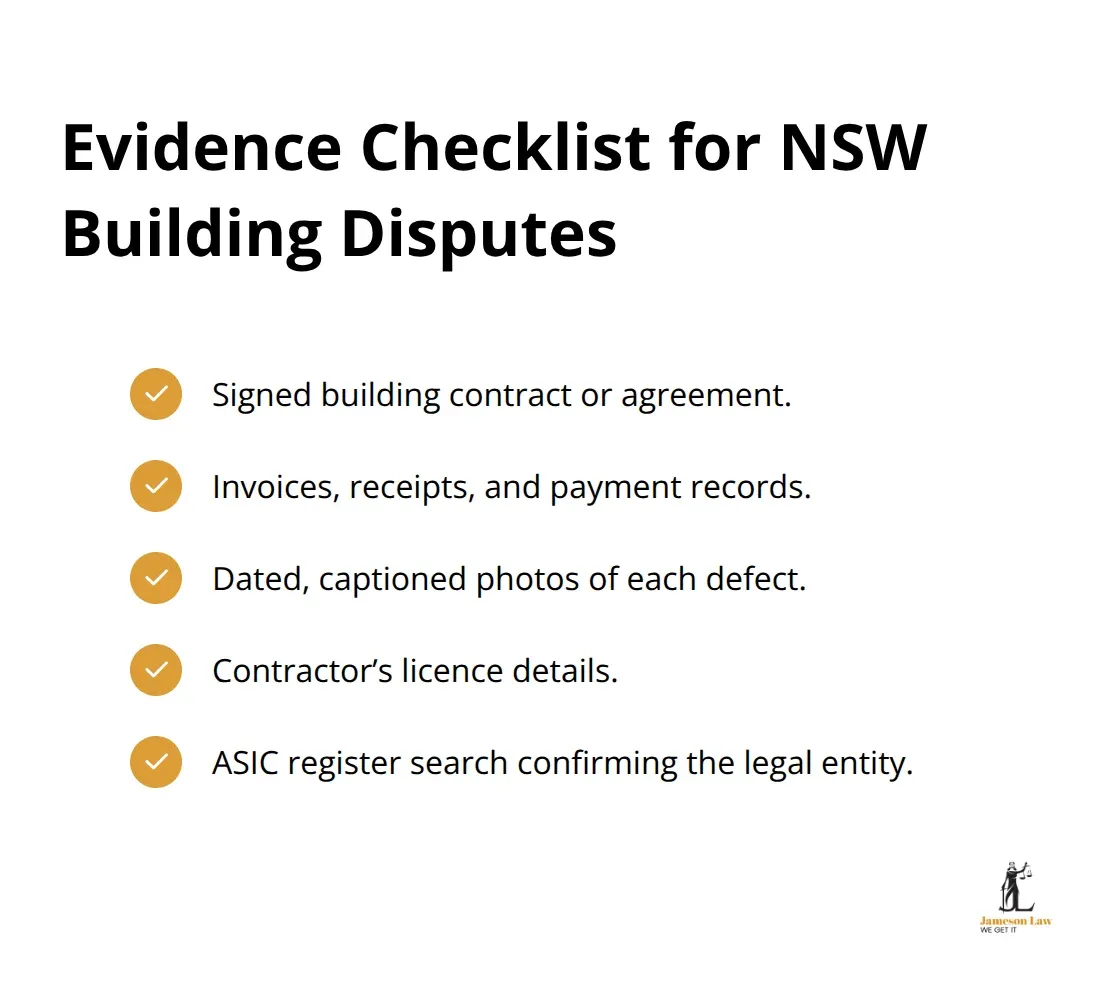
Building Commission NSW requires specific evidence before inspectors assess your dispute, and you must gather this material upfront to determine whether your case succeeds or stalls. Start with your building contract or agreement because inspectors and NCAT need to see the exact terms you’re relying on, including payment schedules, completion dates, and warranty clauses. Collect every invoice, receipt, and payment record showing what you’ve paid and when, then photograph all defects from multiple angles with timestamps and dated captions explaining what each image shows. Your contractor’s licence details matter because NCAT requires correct legal identification to issue enforceable orders, so search the ASIC Registers and attach the search result to your application to avoid delays.
Create a Written Record of All Communications
Document every conversation in writing after it happens, even if you spoke by phone. Email a summary to the contractor confirming what was discussed and what they agreed to do. This written trail demonstrates good faith and creates evidence of their acknowledgement or rejection of your claims. Witness statements from other tradespeople, inspectors, or neighbours who saw the defects carry weight at NCAT, particularly for structural or safety issues where professional observation strengthens your position.
Understand Your Statutory Warranty Window
The Home Building Act 1989 gives you six years for major defects like load-bearing failures or waterproofing breaches, and two years for all other defects. A grace period extends six months beyond expiry only if you lodge your complaint before the original deadline passes. This means if you discover a major defect in year five, you still have a full six-month window to lodge with Building Commission NSW, but if you wait until year six and one month, you’ve lost the right to claim. NCAT cannot hear disputes outside warranty periods, so timing your application matters more than having perfect evidence.
Act Quickly to Preserve Your Rights
Many homeowners lose winnable cases simply because they delayed lodging, thinking they had more time than they actually did. Building Commission NSW contacts inspectors within two working days of receiving your complaint, then completes most resolutions within 39 days, so the process moves quickly once you lodge. Professional legal advice at this stage prevents costly mistakes because a lawyer identifies which defects fall under the six-year window, which fall under the two-year window, and which claims are worth pursuing given your evidence strength and the costs involved.
Final Thoughts
Building disputes NSW demand swift action and clear strategy. You now understand the three main pathways available: direct negotiation with your contractor, Building Commission NSW’s free inspection and dispute resolution service, and formal proceedings through NCAT when earlier steps fail. Most disputes resolve at the inspection stage because Building Commission inspectors assess the facts objectively and issue binding Rectification Orders that carry legal weight.
The critical factor separating winning cases from losing ones is timing. Your six-year window for major defects and two-year window for other defects are absolute deadlines, not suggestions. Homeowners who delay lodging complaints often discover too late that their warranty period has expired, leaving them without legal recourse regardless of how serious the defect, and Building Commission NSW processes complaints within 39 days on average, so acting immediately protects your position.
Professional legal advice at the outset prevents costly mistakes. A lawyer identifies which defects fall under which warranty period, assesses whether your evidence supports your claims, and guides you toward the most efficient resolution pathway for your specific situation (we at Jameson Law specialise in building disputes and understand how NSW’s statutory framework protects homeowners). Contact us early to review your contract, assess your evidence, and determine your next steps before deadlines pass.