Many Australians don’t realise what they can and can’t do when police ask them questions. Getting NSW police interview rights wrong can seriously affect your legal position.
At Jameson Law, we’ve seen how quickly a conversation with police can escalate when people don’t understand their options. This guide walks you through what happens during a police interview, what you’re legally entitled to do, and the mistakes that cost people dearly.
What Happens When Police Question You
A police interview in NSW is any questioning by officers who suspect your involvement in a crime. This covers informal questions on the street, conversations at your home, and formal recorded interviews at the station. Under the Law Enforcement Powers and Responsibilities Act 2002, police must caution you as soon as practicable after detention, informing you that you do not have to say anything but that anything you do say can be used as evidence.
The distinction most people miss is that a police interview isn’t a conversation where you’re gathering information-it’s evidence collection aimed at building a prosecution case. Police can question you for up to six hours in most circumstances, though extensions are possible in certain cases. If you’re not charged within this period, you must be released.
Many people assume that cooperating with police helps their bail prospects, but legal advice before making any statement to police confirms that refusing an interview does not automatically harm bail decisions, as courts consider multiple factors beyond your willingness to talk. What matters most is understanding that anything you say becomes part of the official record and can be used against you later in court.
Your Absolute Right to Silence
You have a right to silence under both common law and section 89 Evidence Act 1995. This means you can refuse to answer questions, decline to participate in an interview, and remain silent at any stage-whether you’re in custody or not. The court cannot draw an adverse inference or treat you unfavourably simply because you stayed silent.
This protection is fundamental, yet many people feel pressured to speak because they believe silence looks suspicious. It doesn’t. The burden of proof rests entirely with police and the prosecution, not with you. If you tell police clearly that you do not wish to be interviewed, they cannot force you into an interview room. You can also decline being recorded if you choose to speak.
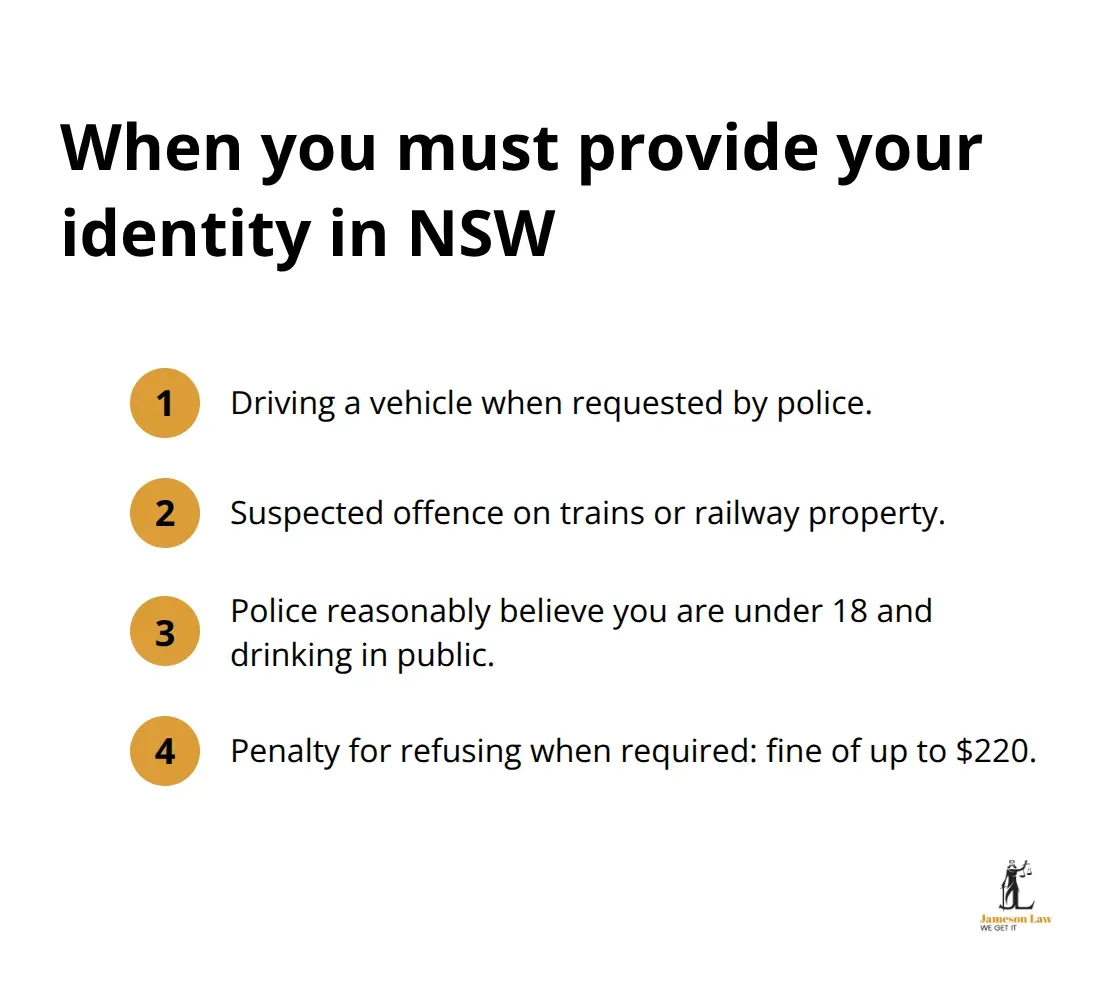
However, there’s an important exception: police can require you to provide your name and address in specific situations, such as if you’re driving a vehicle, if an offence is suspected on trains or railway property, or if police believe you’re under 18 and drinking in public. Failure to provide your identity when legally required is a criminal offence with a fine of up to $220. The distinction between your right to silence and identity requirements matters-silence protects you from self-incrimination, but your identity is a separate legal obligation in defined circumstances.
Why Legal Representation Changes Everything
Having a lawyer present during police questioning is not an admission of guilt-it’s protection against making statements that damage your case. A criminal lawyer can attend the station with you, provide advice before the interview, raise concerns about inappropriate questions or procedures, and ensure police follow the law. This is particularly important because anything you say during questioning can be used as evidence against you or others involved.
If you’re detained, you have the right to call a lawyer and to reasonable facilities for confidential discussions. For those under 18, an independent adult must be present during formal police interviews to protect your rights. Legal Aid NSW operates a free hotline at 1800 10 18 10 for immediate guidance, and the Legal Aid Youth Hotline provides free advice for people under 18.
The reality is that most people who speak to police without legal advice later regret what they said. Police are trained in questioning techniques and can ask questions in ways that lead you toward answers that harm your position. A lawyer protects you by ensuring you understand the implications of what you’re saying and can advise whether speaking serves your interests. In some limited circumstances, your lawyer may advise that an interview is in your best interests, but this decision should only be made after proper legal consultation, never before.
What Happens Next in Your Case
Understanding these rights sets the foundation for protecting yourself, but the interview itself presents specific challenges that most people don’t anticipate.
How Police Conduct Interviews in NSW
The Legal Framework for Police Questioning
Police in NSW must follow strict procedural rules when questioning you, though many people don’t realise what these rules actually are or how to enforce them. Under the Law Enforcement Powers and Responsibilities Act 2002, officers must provide you with reasonable facilities to speak with a lawyer, including privacy for confidential discussions. If you’re detained, you have the right to call a lawyer before any interview begins. For those under 18, an independent adult must be present during formal interviews to protect your rights and ensure you understand what’s happening.
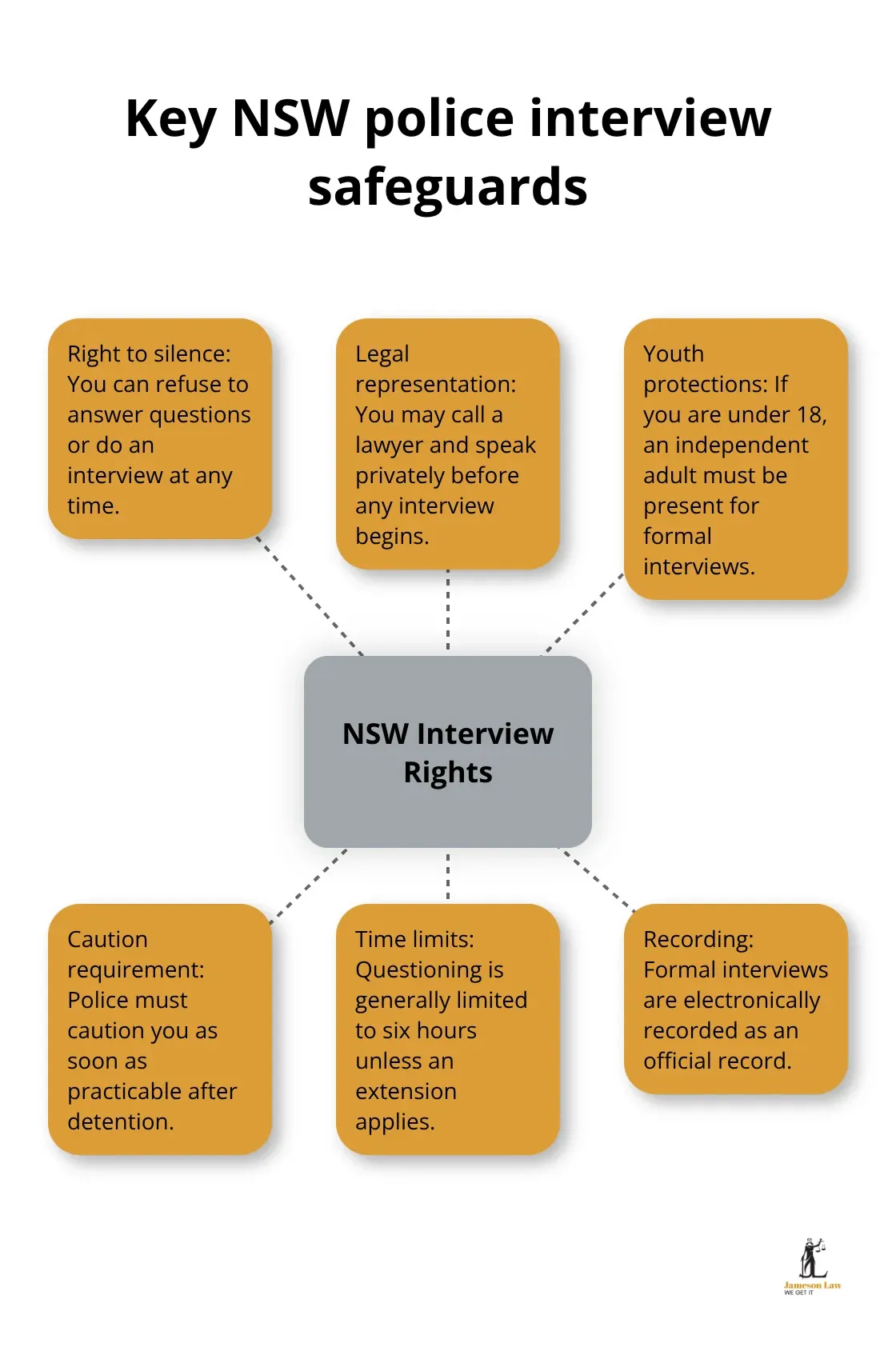
The moment police detain you, they must caution you under Section 122 of LEPRA, telling you that you have the right to silence but that anything you do say can be used as evidence. This caution must happen as soon as practicable after detention, not later during questioning. Police can question you for up to six hours in most circumstances, though extensions are possible in certain cases. If you’re not charged within this period, you must be released.
Recording and What It Means for Your Case
What happens during the interview itself matters enormously. Formal interviews are electronically recorded in a police interview room, which creates an official record of everything said. Informal questioning-on the street, at your home, or during initial contact-is often not recorded, which means there’s no objective record of what was actually said. This distinction is critical because your account of what happened may differ from the officer’s account later in court.
If police question you informally without recording, you have no proof of exactly what was discussed or how questions were framed. Two officers typically present during formal interviews, which can be deliberately intimidating. This setup is designed to influence how you respond, and it’s one reason having your own lawyer present makes a substantial difference to the dynamic in the room.
Your Options When Police Approach You
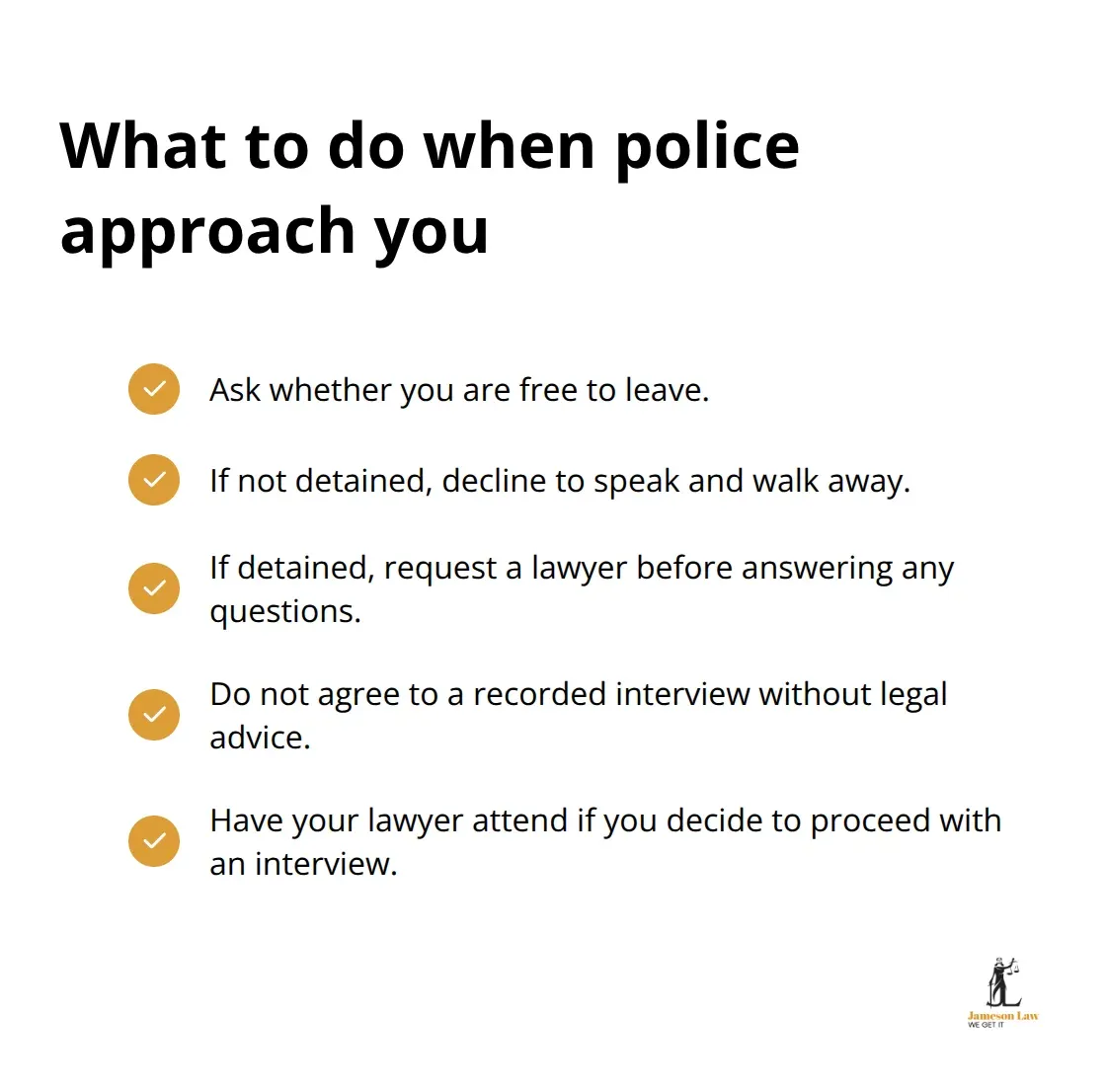
When police approach you, your immediate options depend on whether you’re being detained or simply questioned. If you’re on the street or at your home and police want to talk, you can tell them clearly that you do not wish to be interviewed and walk away-provided you’re not under arrest. If police say you’re detained, ask immediately whether you’re free to leave. If the answer is no, you’re in custody and the detention rules apply. At this point, request a lawyer before answering any questions.
Police cannot proceed with a formal interview until you’ve had the opportunity to speak with legal representation, though they may continue informal questioning. If you choose to participate in an interview after speaking with a lawyer, that lawyer can attend with you and intervene if questions become inappropriate or if police breach procedures. Never agree to an interview without legal advice first.
Making the Decision to Speak
The decision to speak should be made with your lawyer after they understand the allegations against you and the evidence police have. In some limited circumstances, your lawyer may advise that an interview serves your interests, but this is a strategic decision made with full knowledge of your case. If you’re under 18 and police offer a warning, caution, or youth justice conference, your lawyer must assess whether these options are available and what they mean for your record.
These alternatives exist specifically because the criminal justice system recognises that young people need protection during police processes. Taking one of these options might be better than proceeding to court, but only if your lawyer advises it’s in your best interests. The key point is that you control whether the interview happens. Police cannot force you into a room, cannot force you to speak, and cannot treat your refusal to participate as evidence of guilt.
What you say during an interview-or what you choose not to say-sets the direction for your entire case, which is why the next section examines the specific mistakes that most severely damage people’s legal positions.
The Mistakes That Damage Your Case Most
The gap between what people think they should do during a police interview and what actually protects their legal position is where most cases fall apart. We at Jameson Law have observed countless situations where a person’s own words become the prosecution’s strongest evidence, not because they were guilty, but because they made preventable mistakes during questioning.
Speaking Without Legal Advice First
The most damaging error is speaking without legal advice first. This single decision costs people more than any other factor in criminal cases. When you speak without a lawyer present, you lose the ability to have someone assess whether answering serves your interests, whether the question is designed to trap you, or whether what you’re about to say contradicts evidence police already have.
Police are trained to ask questions in ways that lead you toward incriminating answers, and they do this routinely. They ask open-ended questions that invite you to fill silences, they ask follow-up questions that contradict your earlier answers to establish inconsistency, and they present evidence selectively to make you believe they know more than they actually do. Without a lawyer there to intervene, you operate without protection.
Misunderstanding Your Legal Obligations
The second major mistake is misunderstanding your legal obligations. In most cases, you have the right to silence if police are investigating you. This means you don’t have to do an interview, provide a statement or talk to police. Many people believe that refusing to answer questions makes them look guilty, so they speak when they have no legal obligation to do so. Others believe that cooperating with police will help their bail application, but refusing an interview does not automatically harm bail prospects, as courts consider multiple factors beyond your willingness to talk.
The legal reality is stark: you are not obliged to answer questions, you are not obliged to participate in an interview, and you are not obliged to make a statement. The only exception is providing your name and address when police legally require it in specific situations (such as if you’re driving or if an offence is suspected on trains or railway property). Everything else is optional. Yet people answer questions they don’t have to answer because they’ve misunderstood their obligations.
Agreeing to an Interview Without Representation
The third mistake is agreeing to an interview without representation. It is important to remember that police can only give you a special caution if you have a lawyer physically present with you in the police station. Your lawyer can stop questioning if it becomes oppressive, can clarify questions that are unclear or unfair, can advise you not to answer if a particular question is designed to incriminate you, and can create a record of what actually happened in the room. Without that protection, you rely entirely on your own judgment about whether you should answer, and under the stress of police questioning, that judgment is rarely reliable.
How These Mistakes Compound
These three mistakes often happen together. A person is detained, police question them informally without a lawyer, they answer some questions thinking it will help their situation, and by the time they realise they should have legal advice, they’ve already made statements that damage their case. The path forward from this point becomes much harder.
If you’re facing police questioning, contact a criminal lawyer before you speak to anyone. Legal Aid NSW provides free advice at 1800 10 18 10, but if you need representation during questioning itself, you’ll need to arrange proper legal support. The cost of getting legal advice upfront is far lower than the cost of fixing a case damaged by statements made without that advice.
Final Thoughts
Your NSW police interview rights protect you from self-incrimination and hold police accountable to proper procedures when they question you. Three core protections stand out: you have the right to remain silent, you have the right to legal representation, and police must follow the law during detention and questioning. Most people who speak to police without legal advice later regret what they said, because anything you state becomes part of the official record and can be used against you in court.
When police approach you, ask immediately whether you are free to leave. If you are detained, request a lawyer before answering any questions. If you are not detained, you can decline to speak and walk away without consequence. Do not feel pressured to cooperate because you think it will help your bail prospects or because silence appears suspicious-the burden of proof rests entirely with police and the prosecution, not with you.
Contact Jameson Law if you face police questioning or investigation, or call Legal Aid NSW at 1800 10 18 10 for immediate guidance. Your first conversation should be with a lawyer, not with police.