Moving to Australia requires navigating multiple visa pathways, each with distinct requirements and timelines. We at Jameson Law help thousands of people understand the migration to Australia process and find the right visa option for their situation.
This guide walks you through every stage-from choosing your visa type to receiving your grant letter. You’ll learn what documentation you need, how assessments work, and what happens after approval.
Which Visa Path Matches Your Circumstances
Understanding Australia’s Three Primary Pathways
Australia offers three primary migration pathways, and identifying which one suits your situation is the first critical step. The skilled migration route targets workers with qualifications in occupations Australia needs, the family stream serves those with relatives already settled here, and the student pathway welcomes international students pursuing education. According to the Australian Bureau of Statistics, May 2026 data shows 11,830 permanent arrivals, demonstrating ongoing demand across multiple visa categories. The key difference between these pathways lies in eligibility criteria and processing expectations.
How Skilled Migration Works
Skilled migration visas operate on a points-based system requiring a minimum of 65 points, assessed through factors like work experience, English proficiency, and qualifications. Skilled migration visas remain the most competitive route because Australia actively recruits workers in shortage occupations. New South Wales actively invites highly skilled migrants to apply for state nomination under subclass 190 (Skilled Nominated) and subclass 491 (Skilled Work Regional) visas, with the NSW Skills Lists identifying in-demand occupations that commonly qualify for nomination. The points calculation rewards English language proficiency, work experience in your nominated occupation, and relevant qualifications, meaning improving your IELTS score or gaining additional years of experience directly strengthens your application.
Family Reunion Sponsorship
Family reunion visas move slower than skilled migration but offer certainty if your sponsor meets financial thresholds and genuine relationship criteria are satisfied. Your sponsor must demonstrate they can support you financially, and the Australian Department of Home Affairs verifies both the relationship and the sponsor’s capacity before approval. This pathway suits those with established family connections in Australia who prioritise certainty over speed.
Student Visa Requirements
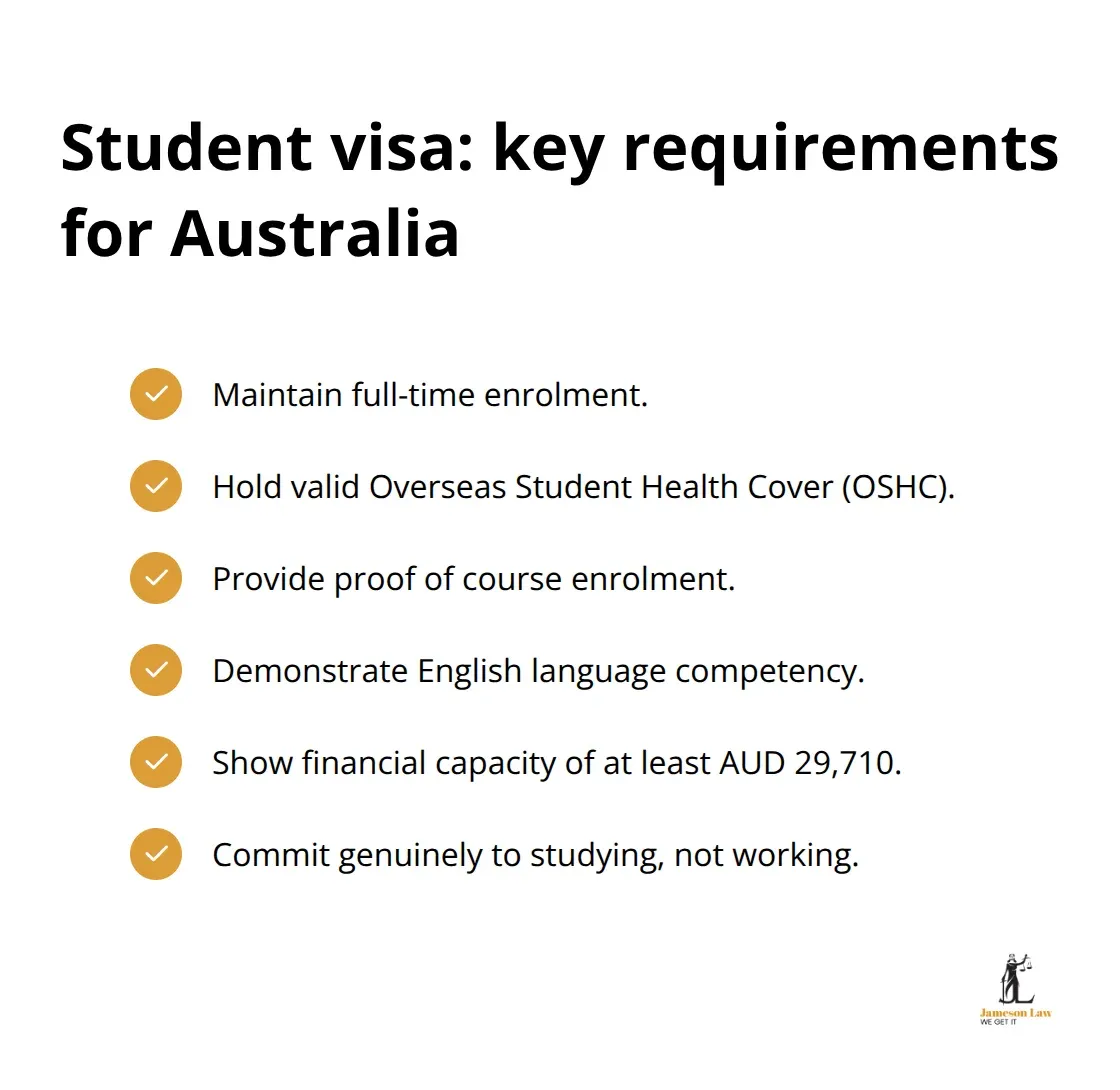
Student visas process faster than skilled migration but impose strict conditions including mandatory Overseas Student Health Cover for the duration of your stay, restrictions on work hours, and requirements to maintain full-time enrolment. You must provide proof of course enrolment, English language competency, financial capacity of at least AUD 29,710, and demonstrate genuine commitment to studying rather than working. The Australian Department of Home Affairs administers all three pathways, and your choice determines which documentation you’ll need, how long processing typically takes, and what obligations you’ll face after arrival.
Making Your Choice
Understanding these distinctions prevents wasted applications and helps you invest time and money into the pathway with realistic approval odds. Each pathway has distinct advantages and limitations that directly affect your timeline and likelihood of approval. Your next step involves gathering the specific documentation your chosen pathway requires-a process we’ll walk you through in detail.
Building Your Application Foundation
Successful migration applications stand or fall on documentation quality, not optimism. Countless applications face delays or rejection because applicants misunderstand what evidence matters most or submit incomplete paperwork. The Australian Department of Home Affairs processes border crossings monthly, yet visa assessment focuses intensely on your individual file.
Documentation Requirements by Visa Pathway
If you pursue skilled migration, the points-based system demands precise evidence for every claim. Your work experience must be verified through employment contracts and references, your English proficiency requires an approved test certificate (IELTS, TOEFL, or PTE), and your qualifications need official transcripts or certified copies. For skilled visas in NSW, the Department of Customer Service cross-references your nominated occupation against the NSW Skills Lists, meaning your job title must match exactly what’s listed.
Student visa applicants face different documentation demands. Your Confirmation of Enrolment from your education provider is non-negotiable, financial proof of at least AUD 29,710 requires bank statements or sponsor declarations, and your health examination must be completed through the My Health Declaration service before you lodge your application. Family reunion visas require your sponsor to prove financial capacity through tax returns and employment letters, plus evidence of your genuine relationship through correspondence, photos, or statutory declarations.
Health and Character Assessments
Health and character requirements apply across all pathways without exception. The Australian Department of Home Affairs requires police background checks from every country where you lived for more than 12 months, and health examinations typically cover chest X-rays and blood tests to screen for communicable diseases.
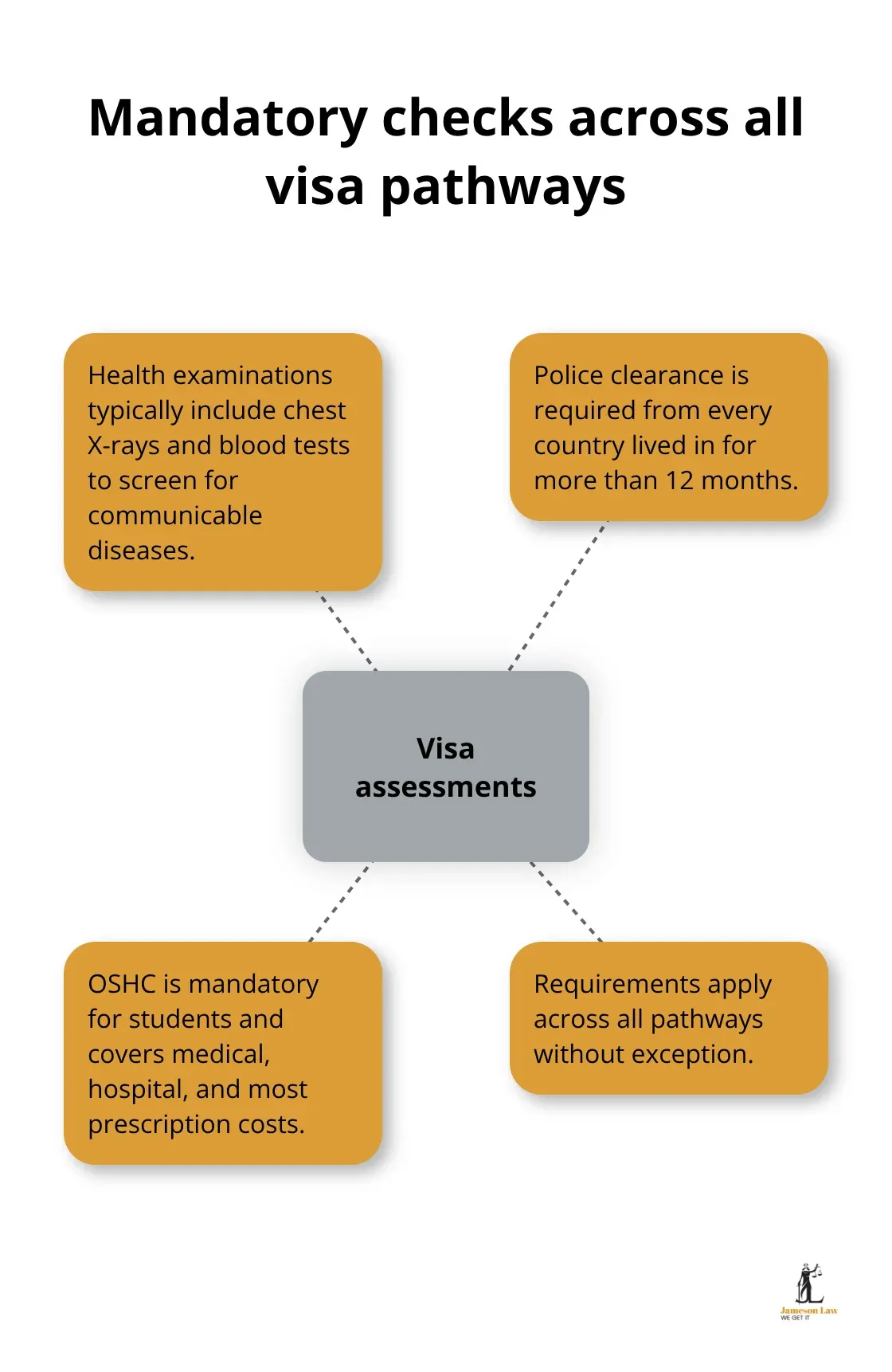
Your existing health insurance does not cover these requirements; Overseas Student Health Cover is mandatory for students and covers medical, hospital, and most prescription costs during your stay.
The character assessment examines more than criminal convictions. It reviews character references, financial conduct, and immigration compliance history. Processing delays often stem from incomplete health documentation or character checks, not visa category complexity.
Timing and Currency of Evidence
Gather original documents now rather than rushing to collect them after you lodge your application. Requests for additional information can extend timelines by months. Your evidence must be current; employment references older than 12 months carry less weight, and English test results expire after three years in most cases. This attention to detail and timing directly determines whether your application moves forward smoothly or stalls at assessment stage.
Submitting Your Application and What Happens Next
Lodging Your Application Through ImmiAccount
Submission through ImmiAccount marks the moment your application becomes official, but this step represents only the start of a process that demands active monitoring. The Australian Department of Home Affairs processes applications in stages, and your engagement during these stages directly affects approval speed. When you submit through ImmiAccount, the system generates an application reference number immediately-record this number and keep it accessible because all future communication references it. The Department does not assign a case officer until your application passes initial compliance checks, a stage that typically takes 2–4 weeks.
Initial Compliance Checks
During the compliance phase, the system verifies your documents are readable, your personal details match your passport, and your health examination has been completed through the My Health Declaration service. Incomplete applications stall here indefinitely, so before submission, cross-check every document against the Department’s checklist specific to your visa subclass. For skilled migration visas in NSW, verify your occupation code matches exactly with the NSW Skills Lists because misalignment between your nominated occupation and the list creates rejection grounds that delay reapplication by months.
Processing Timelines by Visa Type
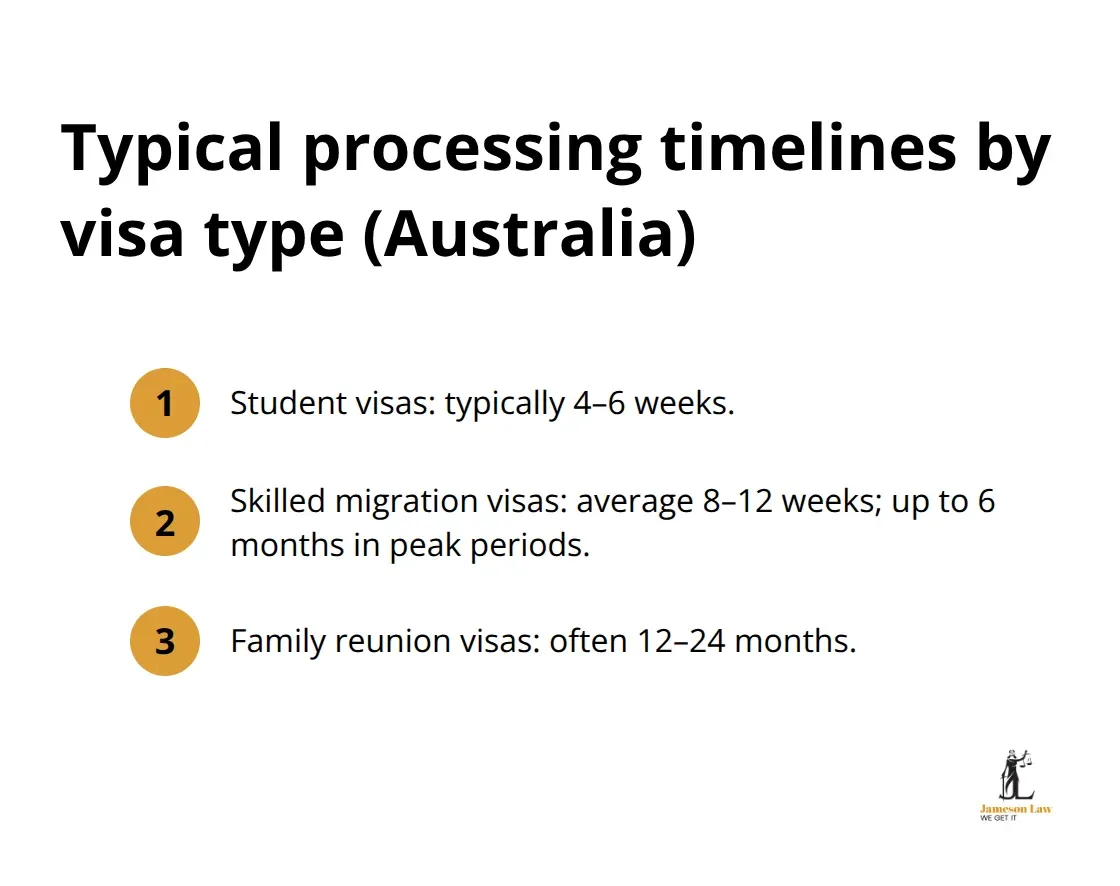
Once your application passes compliance, processing timelines vary dramatically by visa type and current demand. Student visas typically process within 4–6 weeks because education providers pre-verify your enrolment details, whereas skilled migration visas average 8–12 weeks but can extend to 6 months during high-volume periods. Family reunion visas process slower, often requiring 12–24 months because the Department conducts thorough verification of sponsor financial capacity and relationship genuineness.
The Department of Home Affairs publishes processing time estimates on its website, but these represent median times, not guarantees.
Monitoring Your Application and Responding to Requests
If your application exceeds published timeframes by 4 weeks, contact the Department through ImmiAccount with your reference number rather than calling-written inquiries create a record and trigger priority review. The Department may request additional information at any stage, and your response timeline directly determines whether processing continues or stalls. Respond to information requests within the specified timeframe (typically 28 days) with complete documentation; partial responses or late submissions restart the assessment clock.
Understanding Your Visa Grant Letter and Conditions
After approval, you receive a visa grant letter via email within 48 hours, and this letter contains your visa conditions, which you must read carefully. Some visas carry no-further-stay conditions, meaning you cannot lodge a subsequent visa application while holding that visa. If you plan to transition from a student visa to skilled migration, you must apply for your skilled visa before your student visa expires, not after. The Department of Home Affairs website provides visa condition guides explaining restrictions on work hours, study requirements, and travel obligations specific to each subclass, so download and retain your condition guide immediately upon grant.
Final Thoughts
Your visa grant letter marks the start of your Australian journey, not the end of your obligations. Read your conditions thoroughly because some visas restrict your ability to lodge subsequent applications, and misunderstanding these restrictions can derail your long-term plans. If you hold a student visa and plan to transition to skilled migration, apply before your student visa expires.
The Australian Department of Home Affairs publishes processing time estimates and visa condition guides on its website, and these resources should be your first reference point for questions about timelines and obligations. ImmiAccount provides your application reference number and allows you to track progress and respond to information requests, so monitor it regularly rather than waiting passively for updates. The migration to Australia process demands attention at every stage, from documentation quality through to understanding your conditions after approval.
We at Jameson Law provide immigration law assistance to help you navigate this process with confidence. Whether you need guidance on documentation requirements, visa condition interpretation, or application strategy, our team brings practical experience to your specific circumstances. Contact us to discuss your migration situation and receive tailored advice for your chosen pathway.