Applying for an Australian visa can feel overwhelming, but the process becomes manageable when you break it down into clear steps. We at Jameson Law have helped countless people navigate how to lodge a visa application successfully.
This guide walks you through each stage, from choosing the right visa type to tracking your application after submission. You’ll know exactly what documents to prepare and how to avoid common mistakes that delay approvals.
Which Visa Category Matches Your Plans
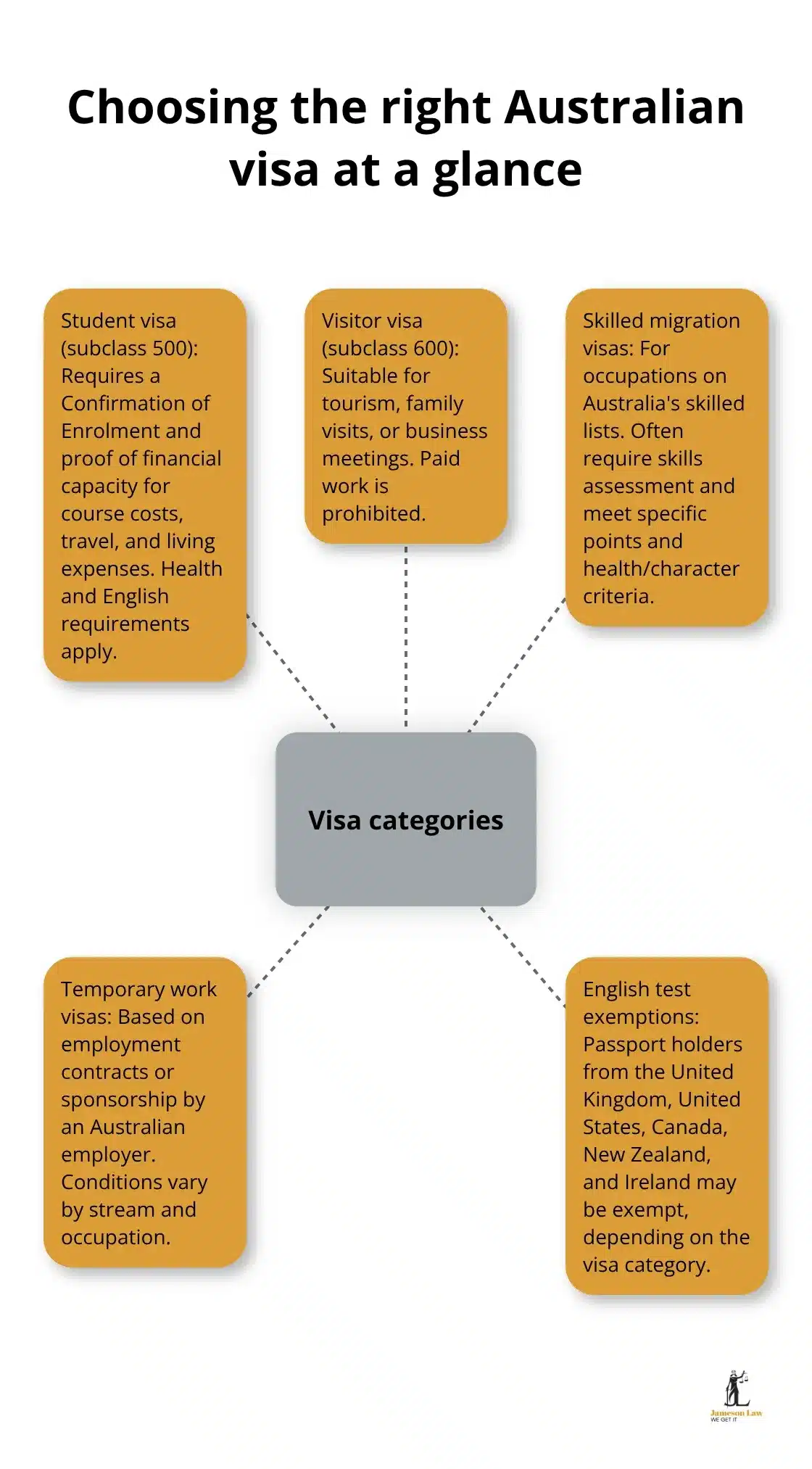
The Australian visa system offers different pathways depending on why you’re coming to Australia, and selecting the wrong category creates delays that can cost weeks or months. The Department of Home Affairs provides a Visa Finder tool that matches your travel purpose to the correct visa subclass-your first critical step. Student visas, visitor visas, skilled migration visas, and temporary work visas all have different eligibility requirements, documentation demands, and processing timeframes.
Many applicants waste time preparing documents for the wrong visa type, then face rejection and must start over. Getting this decision right at the beginning saves significant frustration and expense.
Matching Your Purpose to the Right Visa
Your visa category depends on your primary reason for travelling to Australia. If you’re studying, you’ll need a Student visa (subclass 500), which requires a Confirmation of Enrolment from an Australian education provider and proof of financial capacity to cover course costs, travel and living expenses according to the Department of Home Affairs. Visitor visas (subclass 600) suit tourism, family visits, or business meetings but prohibit paid work. Skilled migration visas are for people with occupations on Australia’s skilled occupation lists, while temporary work visas cover various employment arrangements from harvest work to speciality occupations. Each category has different health examination requirements, character assessment standards, and English language proficiency thresholds. The Department of Home Affairs states that passport holders from the United Kingdom, United States, Canada, New Zealand, and Ireland may be exempt from providing English language test results, though this depends on your specific visa category. Applicants from other countries typically need results from approved English tests to demonstrate minimum proficiency levels for their course or visa type.
Understanding Fees and Processing Timeframes
Visa application charges are payable in Australian dollars only, and the Visa Pricing Estimator on the Department of Home Affairs website calculates your exact cost based on your visa subclass and whether you include dependants. A single adult’s visitor visa costs significantly less than a skilled migration visa, which can reach several thousand dollars. Processing times vary dramatically between visa types. Visitor visas typically process faster than skilled migration applications, which can take several months depending on your occupation and whether your qualifications require assessment. Student visa processing generally takes 1–2 months if your application is complete and correct from submission. The Department of Home Affairs emphasises getting it right the first time, as incomplete applications or missing documents extend processing indefinitely. This is why many people choose to work with a registered migration agent or legal practitioner who understands these timelines and can identify potential issues before lodgement.
Preparing for Your Specific Visa Requirements
Once you confirm your visa category, you’ll need to understand the exact documentation that category demands. Each visa type has a tailored checklist on the Department of Home Affairs website, and you should read all available information and instructions on the front of the application form and on the Home Affairs site before you start collecting documents. Student visas require your Confirmation of Enrolment, financial evidence, and health clearance. Visitor visas require proof of ties to your home country and sufficient funds for your stay. Skilled migration visas require occupation assessment, qualifications verification, and often police clearances from multiple countries. Temporary work visas require employment contracts or sponsorship letters from Australian employers. The Visa Finder tool and the step-by-step guidance tailored to each visa category will show you exactly what you need to prepare, so you avoid collecting unnecessary documents or missing critical ones that delay your application.
What Documents You Actually Need to Submit
Collecting the right documents is where most visa applications either succeed or stall. The Department of Home Affairs provides a tailored checklist for each visa category, but many applicants gather far too much unnecessary paperwork while missing the critical items that determine approval. Start with the official checklist specific to your visa type, then work backwards to understand why each document matters. A student visa applicant needs a Confirmation of Enrolment, proof of financial capacity covering at least AUD 29,710 for course costs, travel and living expenses, and English language evidence from an approved test unless you hold a passport from the United Kingdom, United States, Canada, New Zealand, or Ireland. A visitor visa applicant needs evidence of ties to their home country, proof of sufficient funds for the stay, and a valid passport. A skilled migration visa requires occupation assessment from the relevant assessing authority, qualifications verification, police clearances from every country you’ve lived in for more than three months, and employment history spanning five years. Not all documents carry equal weight. Your Confirmation of Enrolment or occupation assessment determines whether your application proceeds at all, while a poorly formatted payslip merely creates processing delays.
Personal Identification Documents Form Your Foundation
Personal identification documents form the foundation of every application. You need a certified copy of your passport showing your full name, date of birth, and passport number, plus a certified copy of your birth certificate, national identification card, or driver’s licence if available. Certification matters more than people realise-a standard photocopy fails, and the Department of Home Affairs will reject your application and ask you to resubmit.
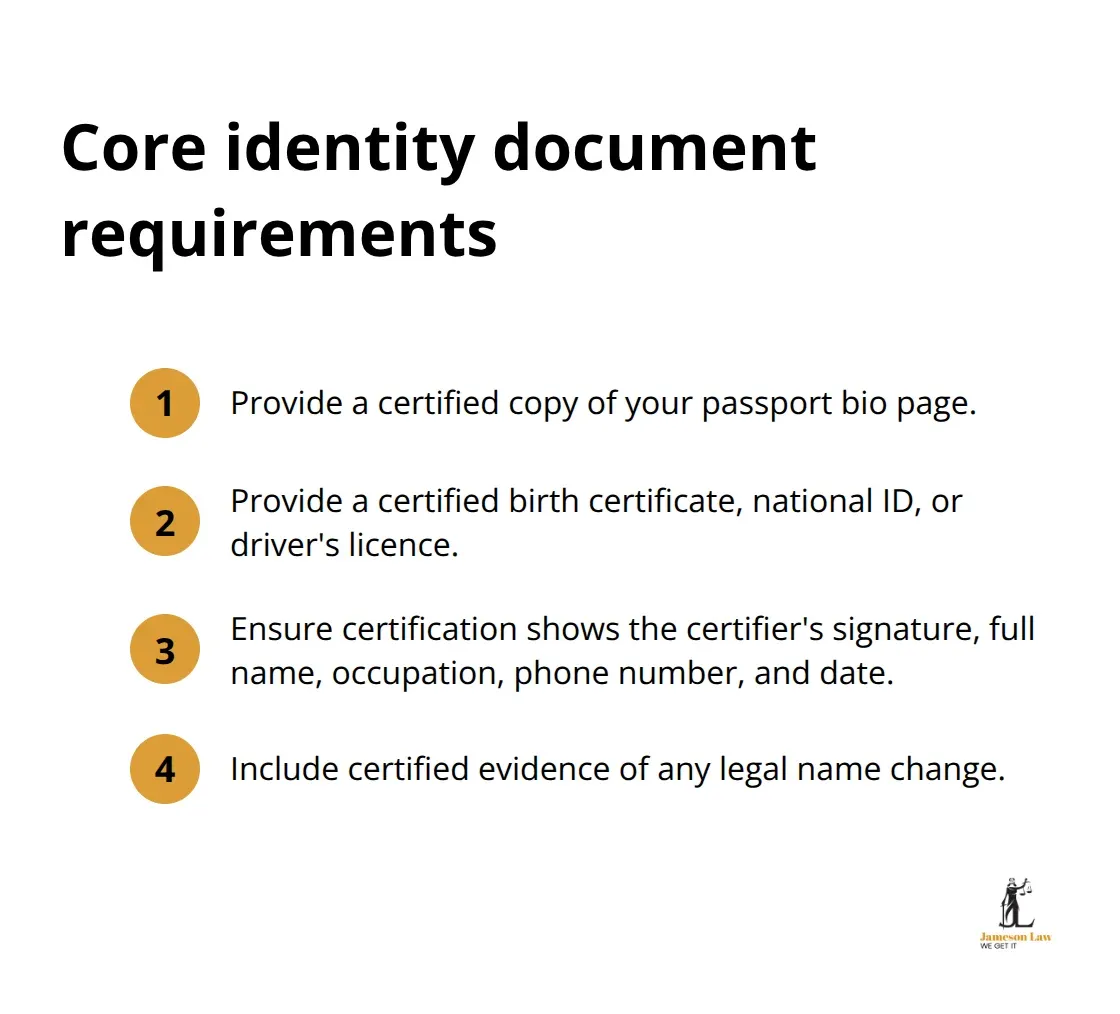
Certified copies must be signed by an authorised certifier such as a lawyer, accountant, or police officer, and they must include the certifier’s signature, full name, occupation, phone number, and date. If you changed your name through marriage, deed poll, or court order, you must provide certified documentation of that change.
Financial Evidence Requires Specificity and Clarity
Financial evidence is equally specific. The Department of Home Affairs accepts bank statements showing funds available for at least 12 months of living costs plus tuition, payslips and employment contracts showing ongoing income, or evidence that a spouse or parent can sponsor you with a minimum annual income. Bank statements should cover the last three to six months and clearly show your name, account balance, and transaction history. Payslips should be recent and show your name, employer, salary amount, and tax deductions. Many applicants submit vague financial documents that raise questions about whether the funds are genuinely available or simply borrowed for the application.
Medical Examinations Demand Approved Providers
Medical examinations and police clearances are non-negotiable for most visa types. The Department of Home Affairs maintains a list of approved Panel Physicians in Australia and overseas, and you must use one of these approved doctors for your health examination. A standard general practitioner examination will not suffice. The examination takes approximately 45 minutes, costs around AUD 300–500 depending on the provider, and generates a report sent directly to the Department of Home Affairs through the eHealth system. You cannot submit the report yourself.
Police Clearances Take Time From Multiple Countries
Police clearances must come from every country where you lived for more than three months in the past ten years. Australian police clearances are obtained through your state or territory police service, while overseas clearances vary by country and can take weeks or months to acquire. Many applicants underestimate the time required for overseas police clearances and lodge their visa application before these documents arrive, creating unnecessary delays. Start requesting police clearances from overseas authorities as soon as you decide to apply, rather than waiting until your other documents are ready. This parallel approach (rather than sequential) means your application moves forward faster once you submit it online.
Lodging Your Application Online
Create Your ImmiAccount and Start Your Application
All Australian visa applications from the Philippines must be lodged through ImmiAccount, the Department of Home Affairs’ online portal. Paper submissions are not accepted from the Philippines, so ImmiAccount is your only option. Visit the Department of Home Affairs website and register with your email address and a secure password to create your account.
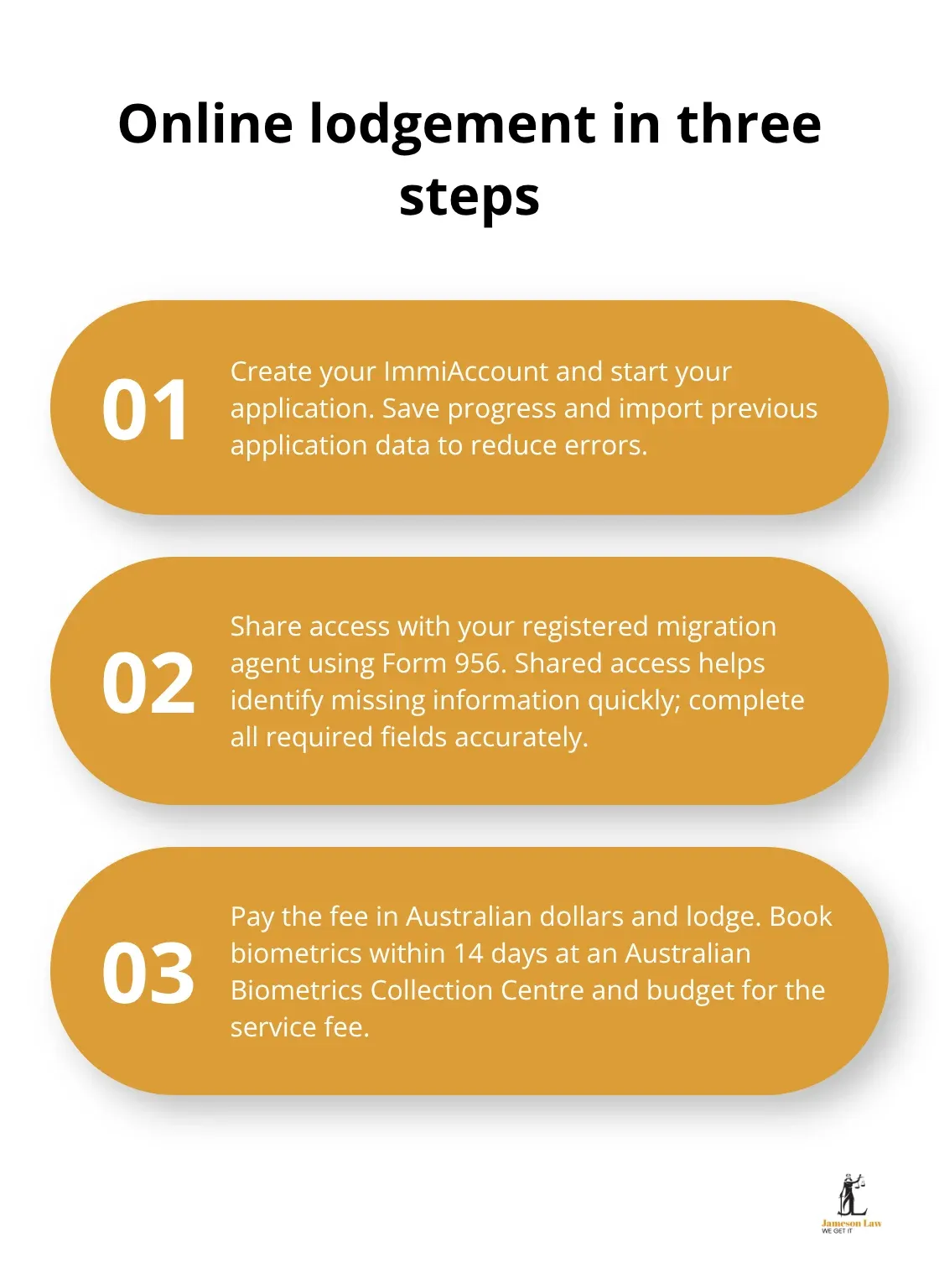
The system allows you to start your application, save your progress, and return later without losing your work-this matters because most applications take several hours to complete properly. If you’ve applied before, import data from previous applications to save time and reduce transcription errors. The platform generates a customised document list based on your visa category and personal circumstances, so attach exactly what that list requests rather than guessing what might be needed.
Share Your Application With Your Migration Agent
If you work with a registered migration agent or legal practitioner, you can share your ImmiAccount with them so they can view, edit, or submit on your behalf using Form 956 (Advice by a migration agent). This shared access accelerates the process significantly because your agent identifies missing documents immediately rather than waiting for email exchanges. Complete every required field in the online form accurately. Incomplete submissions delay processing indefinitely because the Department of Home Affairs won’t process your application until you provide the missing information, and you won’t know what’s missing until they contact you weeks later. Read all instructions on the front of the application form and use the tailored checklist for your specific visa type to ensure nothing is overlooked.
Pay Your Application Fee and Submit
Pay your application fee in Australian dollars only using the Visa Pricing Estimator to confirm your exact amount before payment. The system accepts credit and debit cards, and payment must be completed before you can lodge your application. Common payment issues include invalid card details, expired cards, or payment gateway timeouts, so verify your payment method works before starting the application to avoid frustration near the end. After you lodge online, the Department of Home Affairs will send you a request to provide biometrics within 14 days. Biometric collection involves a 10-digit electronic fingerprint and facial photograph taken at an Australian Biometrics Collection Centre operated by VFS Global in Manila, Cebu, or Davao. The ABCC charges a service fee for processing, so budget approximately AUD 85–150 depending on the centre. Book your biometric appointment immediately after receiving the request because appointment slots fill quickly, and missing the deadline forces you to notify the visa processing office and explain the delay.
Track Your Application Status and Troubleshoot Technical Issues
Track your application status by logging into ImmiAccount, where you’ll see updates as the Department processes your submission. The status page shows whether your application is awaiting documents, under assessment, or ready for decision. Some visa types display estimated processing times on the Department of Home Affairs website, though these are guidelines rather than guarantees. If you encounter technical problems with ImmiAccount, first check whether the system is undergoing maintenance by visiting the Department’s system status page. Common issues include attachment errors where your documents don’t upload because they exceed file size limits or use unsupported formats. PDF files and image files (JPG, PNG) upload reliably, so convert all documents to these formats before submission. If attachment problems persist, delete the problematic file, resize it using free online tools, and try uploading again. Contact the Department of Home Affairs Global Service Centre at +61 2 6196 0196 (Monday to Friday, 9am–5pm Australian Eastern Time) if technical issues continue after troubleshooting, and request a Translating and Interpreting Service interpreter if you need language support during the call.
Final Thoughts
Accuracy matters more than speed when you lodge a visa Australia application. The Department of Home Affairs will not process incomplete applications, and even small errors like a missing certification signature or an unsupported file format force you to resubmit and extend your processing time by weeks or months. Read the tailored checklist for your specific visa type, verify every document meets the stated requirements, and double-check that all information in your online form matches your supporting documents exactly.
After you submit your application online, you must book your biometric appointment within 14 days-this step is mandatory and non-negotiable. Track your application status regularly through ImmiAccount to identify any requests for additional information before deadlines pass. If your visa application involves complex circumstances such as character concerns, health issues, or sponsorship arrangements, a registered migration agent or legal practitioner can identify potential problems before lodgement and maximise your chances of approval.
We at Jameson Law provide immigration law assistance to help you navigate these complexities and move forward with confidence. Contact Jameson Law to discuss your specific situation and determine whether professional guidance will benefit your application.