Buying property in NSW involves more than just finding the right home and making an offer. The conveyancing process handles the legal transfer of ownership, and understanding each step protects your interests and prevents costly mistakes.
At Jameson Law, we’ve guided hundreds of NSW buyers through this journey. This guide breaks down the NSW conveyancing steps so you know exactly what happens from contract to settlement.
Understanding the Conveyancing Process in NSW
What Conveyancing Involves
Conveyancing is the legal process that transfers property ownership from the seller to you. It involves preparing and reviewing contracts, conducting searches to verify the property’s legal status, checking for any restrictions or encumbrances on the title, arranging finance, and coordinating settlement. The conveyancing process in NSW operates under the Conveyancing Act 1919 and the Conveyancing (Sale of Land) Regulation 2022. These laws set out strict timeframes and disclosure requirements that protect both buyers and sellers. A residential contract of sale must be prepared by an Australian legal practitioner or licensed conveyancer before the property can even be marketed, which means the legal framework is built into the transaction from the start. Your conveyancer or solicitor handles the technical work-title searches, enquiries to the seller’s legal team, coordination with your lender, and settlement logistics-so you don’t navigate complex legal documents alone.
Who Handles Your Conveyancing
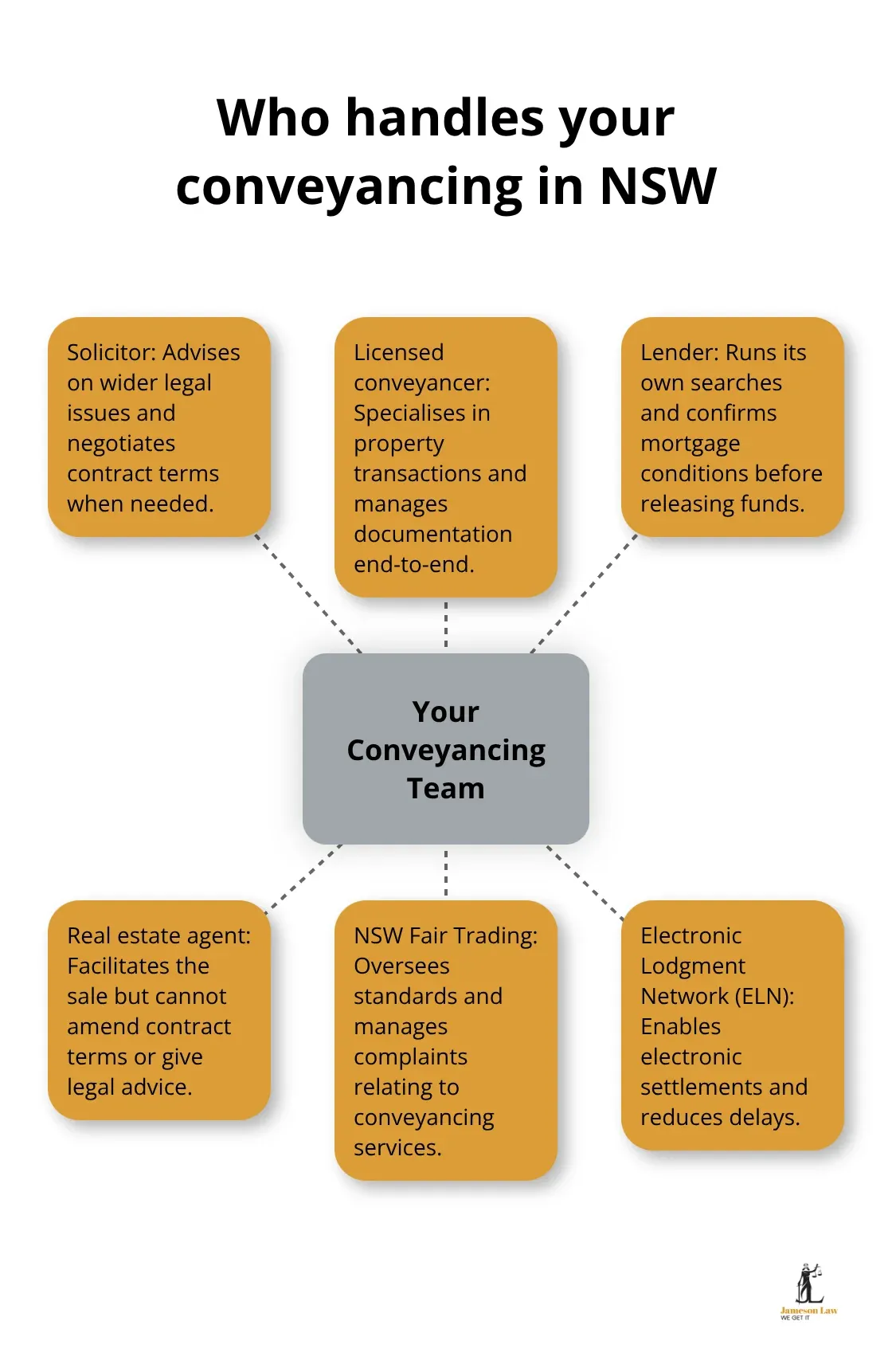
You have two options for professional representation: a solicitor or a licensed conveyancer. Both are authorised to conduct conveyancing in NSW and must hold professional indemnity insurance to protect you if something goes wrong. Solicitors can handle broader legal matters, while conveyancers specialise exclusively in property transactions. Your lender also plays a role, as they conduct their own searches and require certain conditions to be met before releasing mortgage funds. The real estate agent facilitates the sale but cannot change contract terms or provide legal advice. NSW Fair Trading oversees conveyancing standards and handles complaints if issues arise. The settlement process itself now occurs electronically through the Electronic Lodgment Network, so your conveyancer must be an ELN subscriber to complete the transaction. This electronic system replaced paper-based settlements and significantly reduced settlement delays-most transactions now complete within hours rather than days.
Timeline from Offer to Ownership
The standard residential settlement period in NSW is 42 days (six weeks) from contract exchange, though you can negotiate this timeframe. Before exchange, you typically have 5 business days to exercise cooling-off rights if you want to back out; off-the-plan purchases extend this to 10 business days. At exchange, you pay a deposit-usually 10 per cent of the purchase price-which the seller’s conveyancer holds in trust. Between exchange and settlement, your conveyancer reviews the title in detail, liaises with your lender to confirm mortgage approval, conducts final searches to check for any changes, and prepares settlement adjustments for council rates, water charges, and strata levies. On settlement day, you pay the remaining balance, the seller’s mortgage is discharged, and the transfer document is lodged electronically with NSW Land Registry Services. Your conveyancer will confirm when the transfer has been registered and title is officially in your name. The entire process from making an offer to holding the keys typically takes 8 to 10 weeks, depending on how quickly you arrange finance and respond to enquiries.
What Happens Between Exchange and Settlement
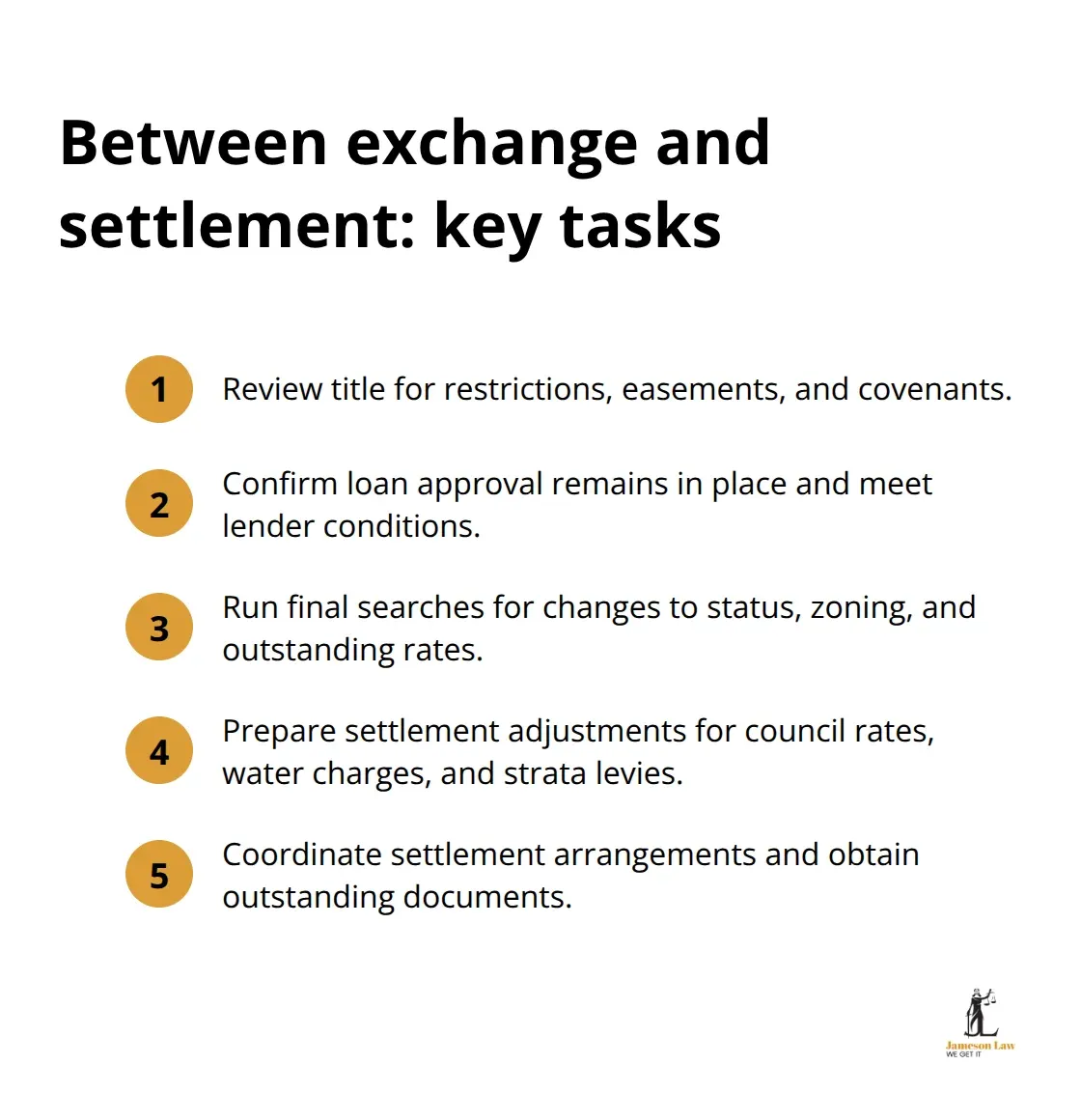
After you exchange contracts, your conveyancer takes on several critical tasks to prepare for settlement. They review the title in detail to identify any restrictions, easements, or covenants that could affect your use of the property. They also liaise with your lender to confirm that mortgage approval remains in place and that all conditions have been satisfied. Your conveyancer conducts final searches to check for any changes to the property’s status, zoning, or outstanding rates. They prepare settlement adjustments to apportion council rates, water charges, and strata levies between you and the seller, ensuring accurate liability sharing. They also coordinate with the seller’s conveyancer to confirm settlement arrangements and obtain any outstanding documents needed to complete the transfer.
Settlement Day and Beyond
On settlement day, you pay the remaining balance of the purchase price to the seller’s conveyancer. The seller’s existing mortgage is discharged from the sale proceeds, and the transfer document is lodged electronically with NSW Land Registry Services. Your conveyancer will confirm when the transfer has been registered and title is officially in your name. Once registration is complete, you own the property and can take possession. Understanding these steps helps you prepare for what comes next-managing your new property and addressing any issues that may arise after settlement.
Contract Exchange and Cooling-Off Period
Review the Contract Before You Sign
Before you exchange contracts, you have one window to investigate the property thoroughly and negotiate changes to the contract terms. This phase determines whether you proceed with confidence or walk away. NSW Fair Trading emphasises that a residential contract of sale must be reviewed by your solicitor or conveyancer before you sign anything, because once you exchange, you become legally bound to complete the purchase.
Request a copy of the contract early from the real estate agent, then have your legal team review it line by line. Pay attention to special conditions that may affect your obligations, settlement timing, or what the sale includes. If changes are needed, your solicitor or conveyancer negotiates directly with the vendor’s legal representative-the agent cannot alter contract terms, so don’t expect them to facilitate modifications.
Conduct Your Searches and Inspections
Before exchange, conduct preliminary title searches to verify ownership, check for easements or encumbrances that could restrict your use of the property, and confirm zoning compliance. Order a building and pest inspection report; this identifies structural issues, termite damage, or maintenance problems that could cost thousands after settlement.
For strata properties, obtain a strata search report to understand by-laws, sinking fund contributions, and any planned special levies. Check council records for any planned developments nearby that could affect property value or amenity. Once you complete these searches and inspections, you’ll have the information needed to decide whether to proceed, renegotiate terms, or withdraw before exchange.
What Happens at Contract Exchange
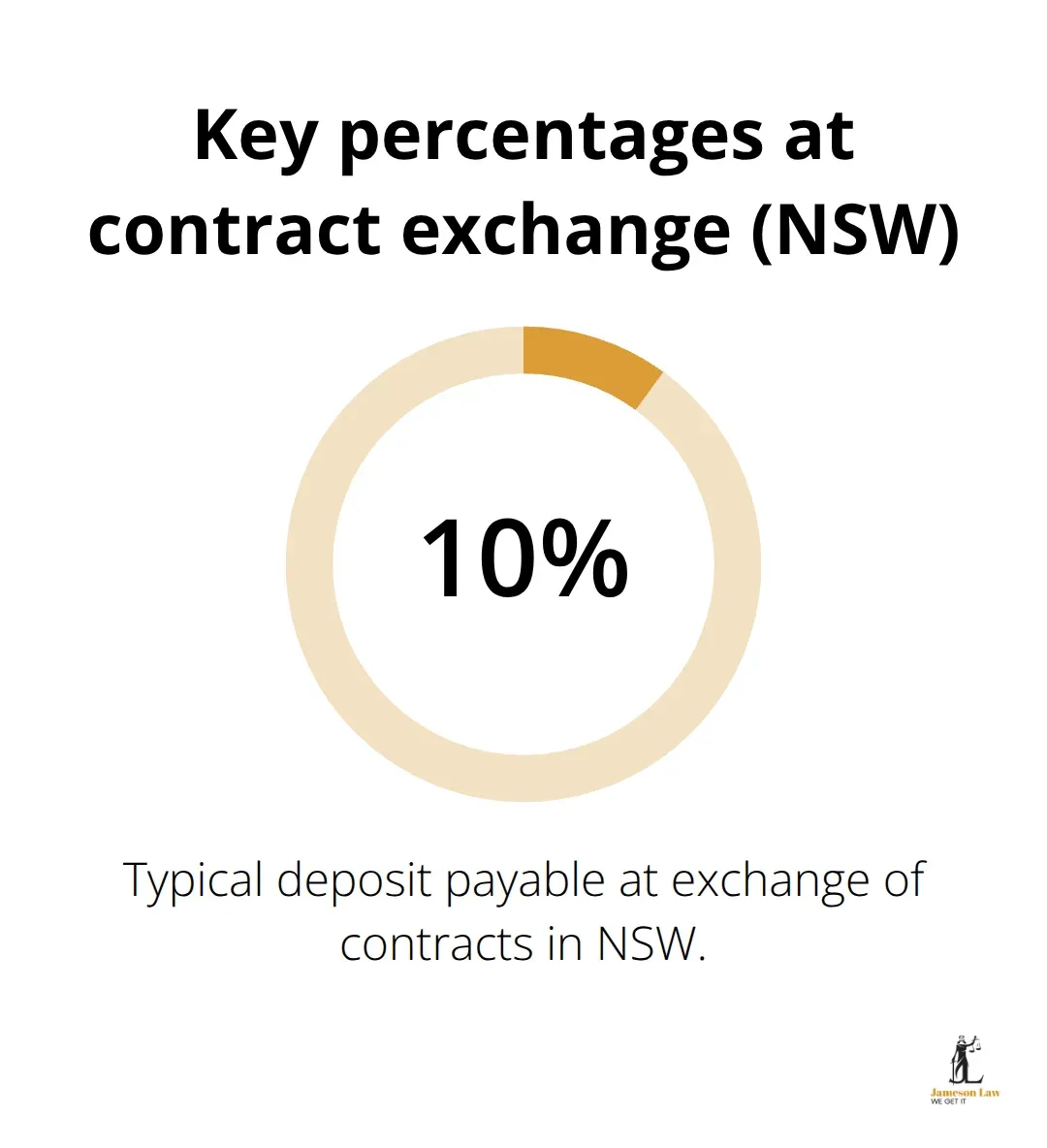
When you exchange contracts, both you and the vendor sign identical copies and your deposit becomes payable-typically 10 per cent of the purchase price. The deposit is held in trust by the vendor’s conveyancer, not released to the vendor immediately, which protects your money. At this moment, the cooling-off period begins.
For standard residential purchases, you have 5 business days to change your mind and withdraw, ending at 5pm on the fifth business day according to NSW Fair Trading. Off-the-plan purchases extend this to 10 business days, giving you longer to reconsider. If you exercise cooling-off rights, you forfeit 0.25 per cent of the purchase price to the vendor-roughly $250 per $100,000-so use this period strategically to review the contract terms and seek legal advice about any clauses that concern you. No cooling-off period applies to auction purchases, so if you buy at auction, you must be certain before bidding.
Key Deadlines That Lock In at Exchange
After the cooling-off period expires or you waive it, you become legally committed to complete the sale. Exchange also fixes critical deadlines: your lender’s finance approval period, the settlement date (typically 42 days later), and when your conveyancer must submit final documents to NSW Land Registry Services. Between exchange and settlement, your conveyancer prepares settlement adjustments to apportion council rates, water charges, and strata levies, ensuring you don’t pay the vendor’s costs beyond settlement day.
These deadlines create urgency, so your conveyancer must act quickly to obtain all necessary documents, conduct final searches, and coordinate with your lender. Any delays in responding to enquiries or providing documents can push settlement back and create additional costs. The next phase-between exchange and settlement-requires careful management to meet these fixed deadlines and prepare for the final transfer of ownership.
Common Issues and How to Avoid Them
Title Defects and Restrictions
Title defects catch buyers off guard because they surface after exchange when you cannot easily walk away. Easements, restrictions, or covenants registered against the property limit how you can use it-an easement enables a parcel of land to have the use of other land that may be in different ownership for a specific non-exclusive purpose. Your conveyancer’s title search must identify these before exchange; if missed, you inherit the problem. Check the title report carefully and ask your conveyancer to explain every restriction in plain terms. Some defects are minor and won’t affect your use, while others substantially diminish value or development potential. If defects emerge during the cooling-off period, you have grounds to renegotiate the purchase price or withdraw entirely. After exchange, you’re committed regardless, so this pre-contract phase is non-negotiable.
Building and Pest Inspection Issues
Building and pest inspections reveal structural damage, termite activity, or deferred maintenance that could cost tens of thousands to repair. Many buyers skip this step to save money on the inspection fee, then discover rotting timber or failing foundations after settlement. The inspection report is your leverage during cooling-off-if major issues appear, you can demand price reductions or walk away. Request any existing inspection reports from the seller and compare findings if available. For strata properties, obtain a strata search report to understand by-laws, sinking fund contributions, and any special assessments planned. Sinking funds cover administration costs, building costs and planned works for the next 10 years, so review the sinking fund status carefully before you commit.
Finance and Valuation Problems
Finance complications arise when lenders impose conditions you cannot meet or when property valuations come in lower than the purchase price. Your lender conducts their own searches and may require additional work before releasing funds. Confirm your loan approval in writing before exchange and verify that all conditions can be satisfied by settlement. If the valuation is lower than your offer, you may need to increase your deposit or renegotiate the price. Delays in lender approval are the single largest cause of settlement postponements, so engage your bank early and respond immediately to document requests.
Outstanding Rates and Final Inspections
Council rates searches can reveal outstanding charges that transfer to you at settlement, so your conveyancer must verify the property has no arrears. Water authority searches show similar outstanding amounts for water usage or sewerage. These costs adjust at settlement, but if the seller has not paid them, you inherit the debt. Check these searches before exchange and factor any arrears into your negotiations. A final inspection on settlement morning confirms the property is in the same condition as when you exchanged contracts-no removed fixtures, structural damage, or unauthorised changes. If problems appear, notify your conveyancer immediately so they can raise the issue before funds are released. These practical steps taken before and during conveyancing prevent costly surprises and give you leverage to address problems while you still have options.
Final Thoughts
The NSW conveyancing steps outlined in this guide show that property transactions involve multiple phases, strict deadlines, and legal requirements designed to protect both buyers and sellers. From your initial offer through to settlement, each stage demands attention to detail and timely action. Understanding what happens at contract exchange, during the cooling-off period, and between exchange and settlement gives you the confidence to navigate the process without surprises. Professional guidance matters because conveyancing involves significant financial commitments and legal complexity-your conveyancer or solicitor identifies title defects, coordinates with your lender, conducts essential searches, and manages settlement logistics so you don’t miss critical deadlines or overlook problems that could cost thousands after settlement.
Engage a conveyancer or solicitor before you make an offer or sign any contract. This early engagement allows your legal team to review the contract, explain your rights during cooling-off, and advise on due diligence steps like building inspections and title searches. Confirm your loan approval in writing, budget for all costs including stamp duty and inspection fees, and respond promptly to any enquiries from your conveyancer or lender to keep settlement on track.
We at Jameson Law have guided NSW buyers through hundreds of property transactions and understand the complexities that arise at each stage. If you need expert advice on conveyancing or have questions about your specific situation, contact Jameson Law to discuss your property purchase with our experienced team.