A slip and fall accident can happen in seconds, leaving you with serious injuries and mounting medical bills. In NSW, property owners have a legal obligation to maintain safe premises, and when they fail to do so, you may have grounds for a personal injury claim.
At Jameson Law, we help injured people understand their rights and pursue the compensation they deserve. This guide walks you through how liability works, what evidence matters, and the steps involved in making a slip and fall NSW claim.
What Constitutes a Slip and Fall in NSW
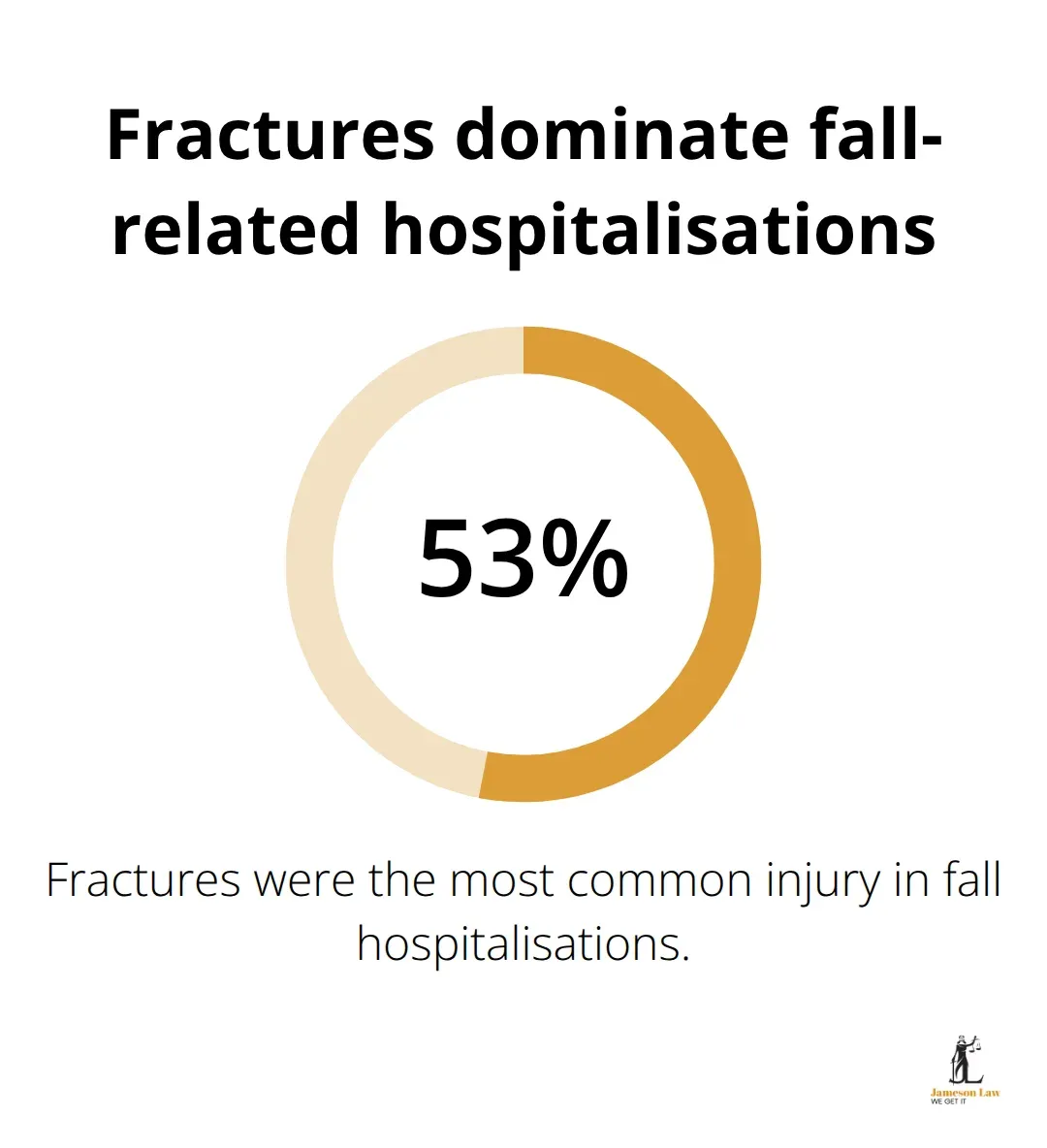
A slip and fall in NSW is far more specific than simply tripping or losing your balance. The Australian Institute of Health and Welfare reports that fractures were the most common type of injury during fall hospitalisations (53%), making them a serious legal and health concern. For a slip and fall to form the basis of a personal injury claim, it must occur on someone else’s property due to a hazard they controlled or should have controlled.
The Civil Liability Act 2002 (NSW) establishes that property owners and occupiers owe a duty of care to visitors. This means they must take reasonable steps to identify and fix hazards or warn people about them. Wet floors, uneven surfaces, damaged walkways, poor lighting, and obstacles in high-traffic areas like supermarkets, shopping centres, and restaurants are the typical culprits.
Where Accidents Most Commonly Occur
Slip and fall claims arise most frequently in supermarkets and shopping centres, hospitals, cafes and restaurants, fast-food outlets, gyms, airports, and large commercial buildings. These venues have high foot traffic and multiple cleaning cycles, which means hazards can appear and disappear rapidly. Local councils may be responsible for certain footpath hazards, though such claims are less common and carry different procedural requirements. Private property owners and retail managers face far more frequent liability because they directly control the premises and have clear insurance obligations. Shopping centres typically employ cleaning staff and maintenance teams, which strengthens a claim if records show negligence in their duties.
Workplace Falls: A Different Path
If your slip and fall occurs at work, you cannot pursue a personal injury claim against your employer in NSW. Instead, you would claim workers’ compensation through the relevant scheme, regardless of fault. This distinction matters because workplace injuries follow entirely different rules and compensation caps than public liability claims.
The Timing Factor in Liability
The timing of a hazard significantly affects your claim. If a spill occurred seconds before your fall, proving the owner was negligent becomes harder because they had no reasonable opportunity to act. Conversely, if CCTV footage or cleaning records show a hazard existed for hours, liability becomes much clearer. You must have actually suffered an injury with documented medical evidence. A fall without injury, even on a hazardous property, will not support a viable claim.
Proving the Owner Knew or Should Have Known
The core of any slip and fall claim rests on showing that the property owner knew about the hazard or should have known about it within a reasonable timeframe. Section 5B of the Civil Liability Act sets the standard: what would a reasonable person in the same circumstances have done? If a supermarket manager failed to conduct regular floor inspections, or if cleaning logs show a gap in coverage when the hazard appeared, negligence is evident. Strong cases often hinge on identifying documented failures in hazard identification or maintenance procedures. CCTV footage is invaluable here because it establishes exactly when the hazard appeared and how long it existed before your fall. Witness statements from other customers or staff members can corroborate that the hazard was visible and posed an obvious risk. Medical evidence matters too. You must obtain a medical report documenting your injuries and their connection to the fall itself. Fall injuries are estimated to have cost the health system over $5 billion in 2023–24, and severe injuries like spinal cord injuries can cost over $5 million throughout a lifetime. This financial reality underscores why property owners must maintain safe premises and why courts take negligence seriously. Acting quickly to gather evidence immediately after the fall dramatically improves your position because details remain fresh and physical evidence is less likely to be lost or altered. Understanding what the property owner knew and when they knew it forms the foundation for establishing liability-and it directly influences the evidence you need to collect and preserve.
Establishing Liability in Slip and Fall Claims
Establishing liability in a slip and fall claim requires you to prove four distinct elements under NSW law: the property owner owed you a duty of care in slip and fall incidents, they breached that duty, their breach caused your injuries, and you suffered measurable damages. The Civil Liability Act 2002 (NSW) sets the standard at Section 5B: what would a reasonableness standard under Section 5B Civil Liability Act 2002 reasonable person in the same circumstances have done? This is not about perfection or eliminating every possible hazard. It is about whether the owner took reasonable steps to identify and manage known risks.
Proving Breach of Duty
If a supermarket manager never conducted floor inspections during peak trading hours, that failure establishes breach. If cleaning logs show a four-hour gap in coverage when a spill occurred, negligence becomes obvious. If CCTV footage reveals a hazard existed for two hours before your fall, liability is strong. Conversely, if a customer created a spill seconds before you fell, proving the owner should have known about it becomes much harder. The timing factor matters enormously.
Courts examine whether the hazard was long-standing or temporary, whether the owner had systems to detect it, and whether staff members should have spotted it. A wet floor in a shopping centre during rainy weather with no warning signs or floor markings points to negligence. The same wet floor with clear signage, staff actively monitoring, and documented inspection logs points away from negligence.
Medical Evidence and Causation
Your medical evidence must establish a direct connection between the fall and your injuries. A doctor’s report stating you fell and sustained a fractured wrist carries weight. A report that simply notes you attended with a wrist complaint does not. The Australian Institute of Health and Welfare reports that fractures account for 53% of fall-related hospitalisations, making medical documentation particularly important in demonstrating the severity of your injury and its link to the incident.
Common Defences Property Owners Raise
Property owners commonly defend slip and fall claims by arguing the hazard was obvious, you contributed to the accident through your own carelessness, or they took reasonable precautions. Section 5H of the Civil Liability Act shields them from liability for obvious risks, though courts interpret this narrowly. A clearly wet floor in a shopping centre is not automatically obvious if the owner failed to place warning signs.
Contributory negligence under Section 5R allows courts to reduce your compensation if you were partly at fault, such as wearing unsuitable footwear or failing to look where you were walking. This does not eliminate your claim, but it may reduce the payout.
Building a Strong Evidence Base
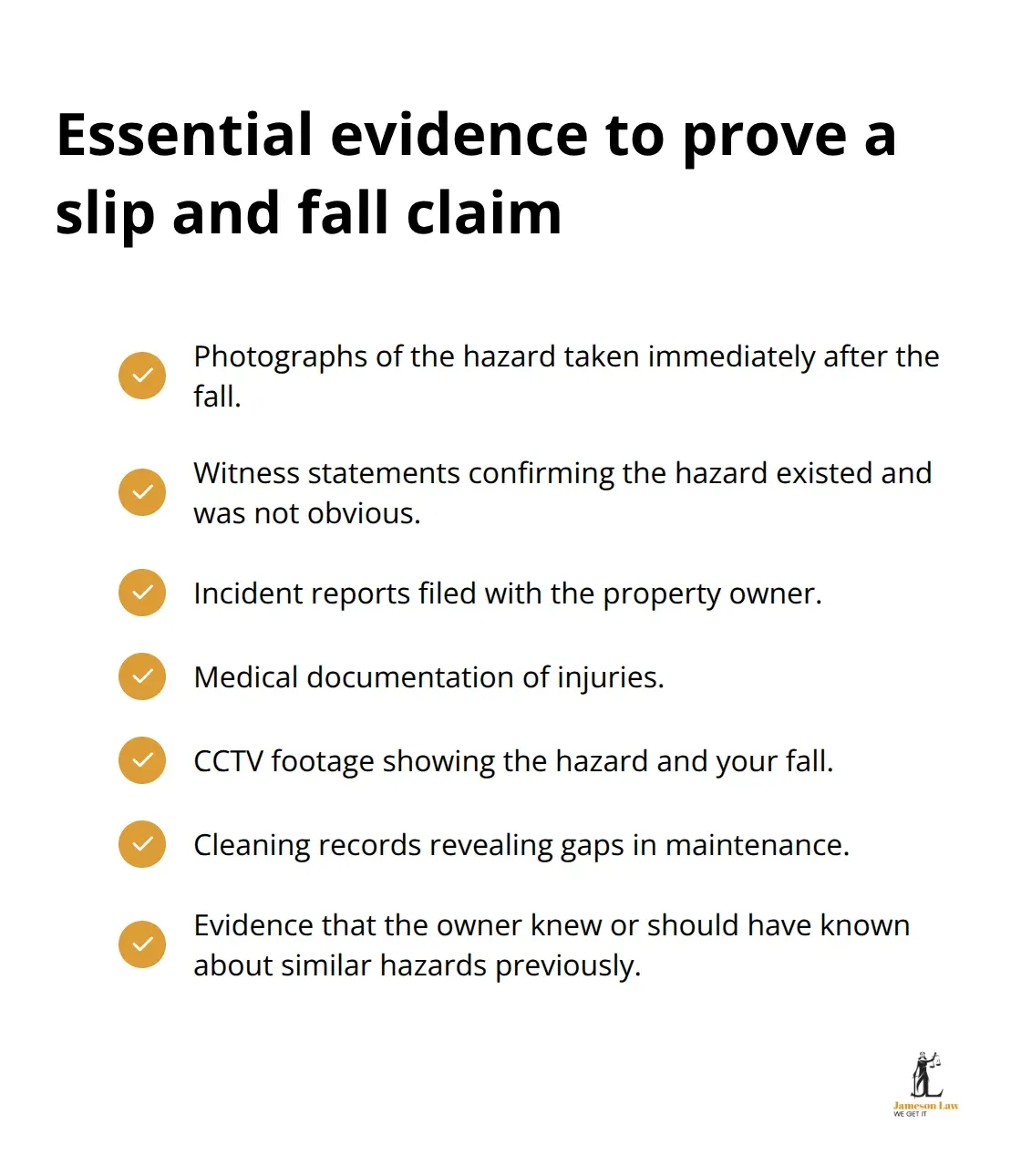
The strongest slip and fall claims combine multiple evidence types: photographs of the hazard taken immediately after the fall, witness statements confirming the hazard existed and was not obvious, incident reports filed with the property owner, medical documentation of injuries, CCTV footage showing the hazard and your fall, cleaning records revealing gaps in maintenance, and evidence that the owner knew or should have known about similar hazards previously.
Most slip and fall claims in Australia settle out of court within six to twelve months after injuries stabilise. This timeline depends heavily on the strength of evidence and the clarity of liability. A well-documented case with CCTV footage and multiple witnesses settles faster than one relying solely on your account. The sooner you collect evidence after the fall, the stronger your position becomes. Scene photographs fade in memory, witness contact details become harder to locate, and CCTV footage may be overwritten within weeks. Understanding what evidence matters most and how to preserve it directly shapes your ability to lodge a successful claim and recover fair compensation.
How to Lodge and Strengthen Your Slip and Fall Claim
Report the Incident Immediately
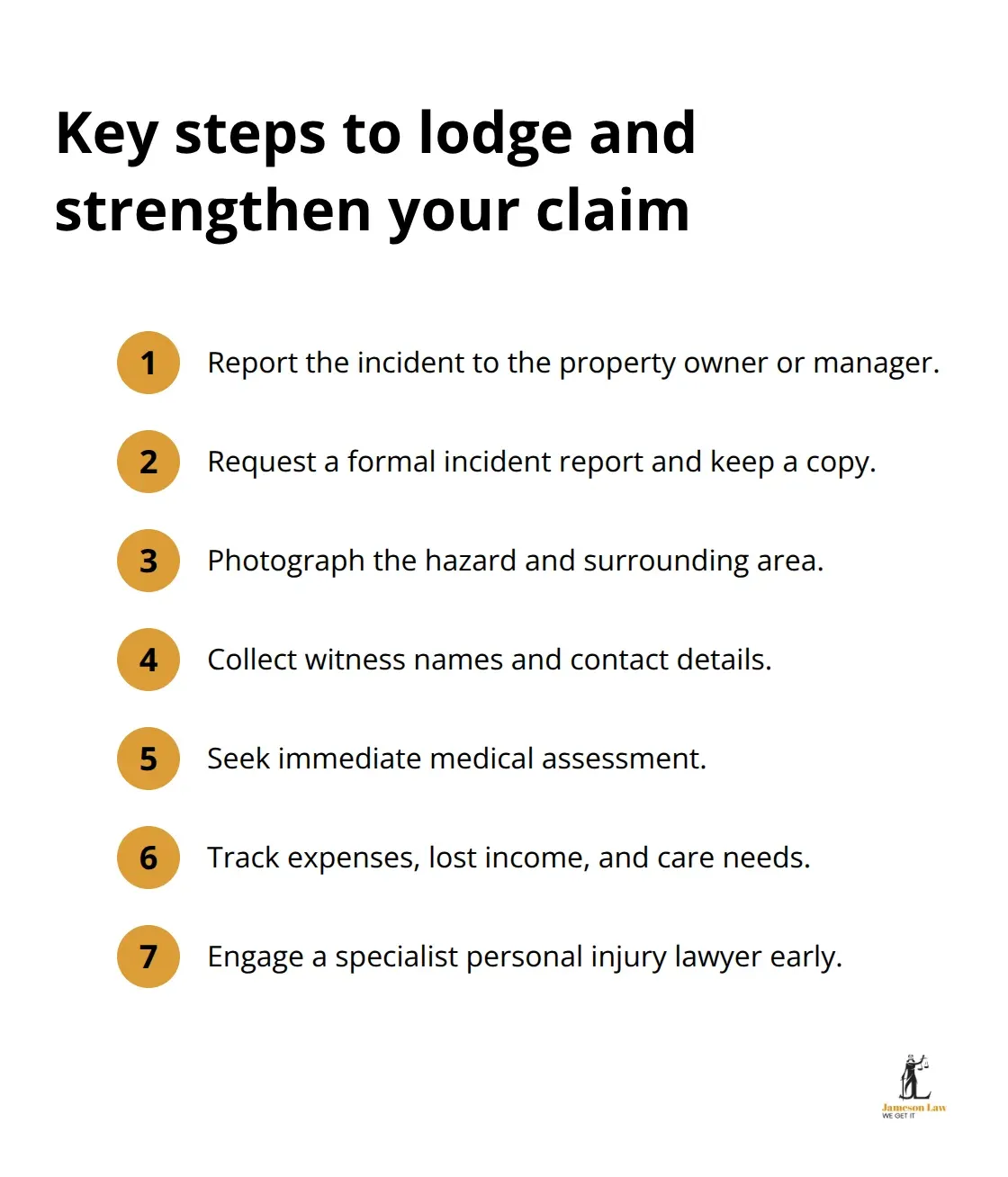
The moment you hit the ground, your claim has already begun. Report the incident to the property owner or manager on the day it happens and request a formal slip and fall accident report to create an official record. This step matters far more than most people realise because it establishes a paper trail showing when the owner first learned about your fall. Do not wait days or weeks; act immediately. Request the incident report in writing within 48 hours and keep a copy for your records.
Photograph and Document the Scene
Take photographs of the hazard, the surrounding area, and any visible injuries before you leave the premises. Photograph the wet floor, the uneven surface, the broken step, or whatever caused your fall. Note the exact time and date on your photos or in a separate document. Ask staff members if CCTV covers that area and note the camera locations. These details establish what the hazard looked like and how long it may have existed.
Collect Witness Information
Gather the names, phone numbers, and email addresses of any witnesses who saw your fall or the hazard. Witness statements corroborate your account and strengthen your claim significantly. The sooner you collect this information, the easier it becomes to locate witnesses later if your claim proceeds to negotiation or court.
Seek Medical Assessment and Document Injuries
Seek medical assessment immediately, even if you feel fine. Falls can cause injuries that emerge hours or days later, and a medical report creates the documentary evidence you need to link your injuries directly to the incident. The Australian Institute of Health and Welfare data shows that fractures, head injuries, and spinal cord injuries are the most serious fall outcomes, and medical documentation proves you suffered these specific injuries from this specific fall. Do not accept an early settlement offer before your injuries have stabilised. Injuries can worsen over weeks or months, and accepting compensation before you understand the full extent of your harm means you cannot claim additional damages later. Most slip and fall claims in Australia settle within six to twelve months after injuries stabilise, so patience at this stage directly increases your compensation.
Gather Financial Records and Engage Legal Help
Collect all receipts for medical expenses, prescriptions, physiotherapy, travel to appointments, and any equipment you purchased for recovery. Track every day you missed work and calculate the income you lost. If you required domestic assistance or personal care because of your injuries, document those costs too. The Civil Liability Act 2002 (NSW) allows you to claim both economic losses like medical expenses and lost earnings, and non-economic losses like pain and suffering and loss of enjoyment of life.
Engaging a personal injury lawyer who understands slip and fall claims significantly improves your outcome. A specialist personal injury lawyer will prepare your claim carefully, present the strongest possible case to the property owner’s insurer, and fight for fair compensation that reflects your actual losses and suffering. The three-year time limit under the Limitation Act 1969 (NSW) applies to most slip and fall claims, so you must lodge your claim within three years of the incident. Starting earlier is always better because evidence remains fresh, witnesses are easier to locate, and the claim process moves faster.
Final Thoughts
Slip and fall NSW claims succeed when you combine strong evidence with timely action. The foundation of any successful claim rests on proving the property owner owed you a duty of care, breached that duty, and caused your injuries-which means you must photograph the hazard, collect witness statements, obtain medical reports, and preserve CCTV footage before it disappears. The three-year time limit under the Limitation Act 1969 (NSW) gives you a window to act, but waiting months or years weakens your position because evidence fades and witnesses become harder to locate.
Most slip and fall claims settle within six to twelve months after your injuries stabilise, provided you document your losses thoroughly. Economic losses like medical expenses and lost wages are straightforward to prove with receipts and payslips, while non-economic losses like pain and suffering require medical evidence showing the extent and duration of your suffering. Property owners often defend claims by arguing the hazard was obvious or you contributed to the accident through carelessness, but a well-prepared claim with multiple evidence types overcomes these defences far more effectively than relying on your account alone.
A personal injury lawyer who understands slip and fall NSW law will identify weaknesses in your evidence, gather additional documentation, negotiate with the property owner’s insurer, and represent you if the matter proceeds to court. We at Jameson Law help injured people understand their rights and pursue fair compensation. Contact us to discuss your claim and learn what compensation you may be entitled to recover.